
What a Sewer Scope Can Find That a Home Inspection Cannot

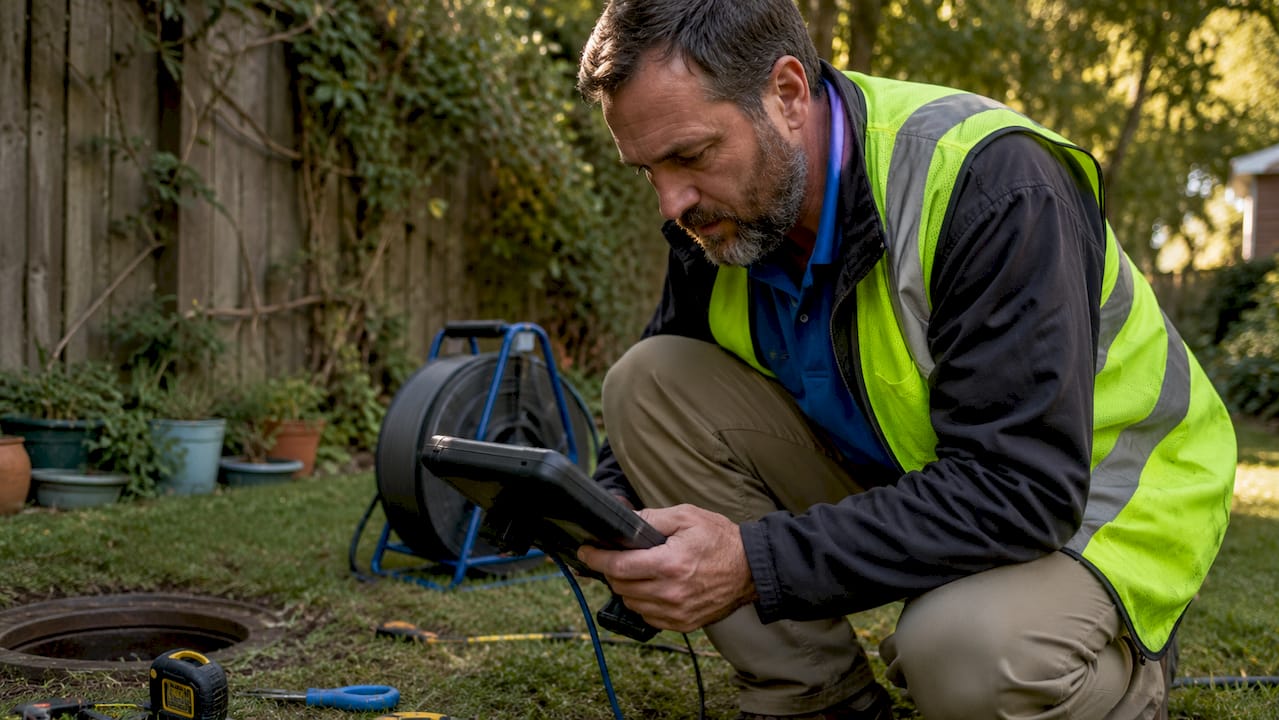
A sewer scope inspection is a specialized video camera inspection of underground sewer lines that a standard home inspection cannot perform. The industry term is “sewer lateral inspection,” and it uses waterproof HD cameras inserted directly into your sewer line to reveal defects buried 4–8 feet underground. A standard home inspection covers your roof, foundation, electrical panels, HVAC, and visible plumbing fixtures. It does not touch the sewer lateral running from your house to the city main. That buried pipe is where some of the most expensive surprises in real estate hide. A sewer scope inspection typically takes 30–60 minutes and costs $125–$400, making it one of the most cost-effective add-ons available to homebuyers and investors.
What a sewer scope can find that a home inspection cannot
A standard home inspection is thorough above ground. It is completely blind below it. Trinity Home Inspections follows InterNACHI standards, which define the scope of a home inspection clearly. Sewer lateral lines are excluded because they are buried underground and physically inaccessible to any inspector working at the surface.
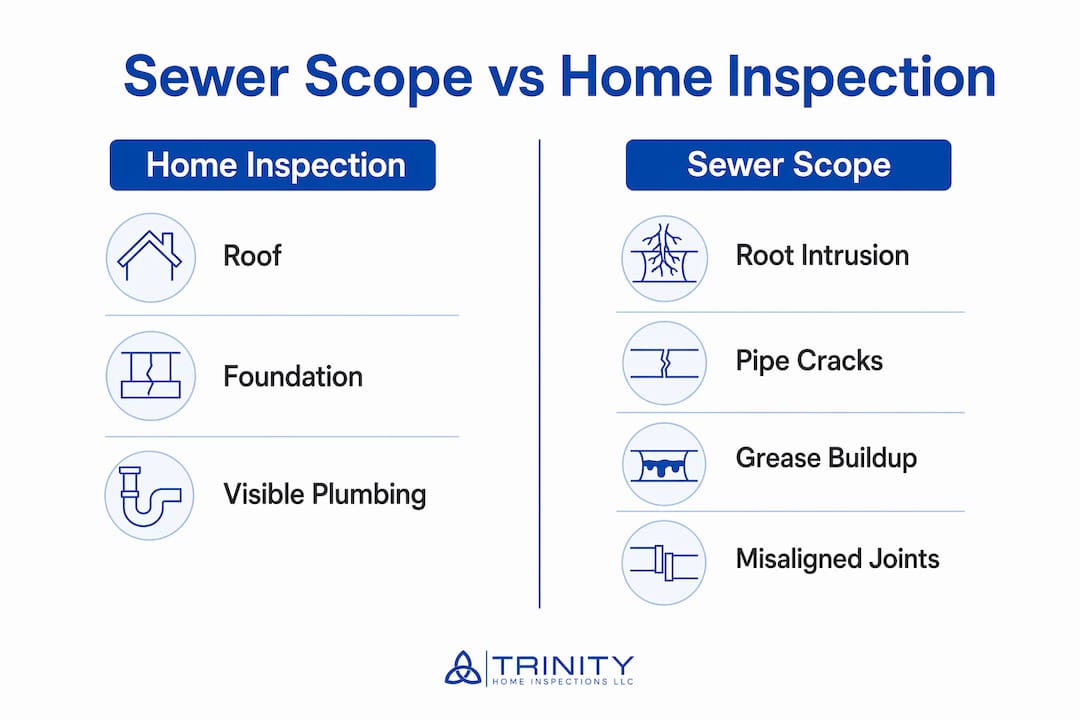
Here is what a standard home inspection covers versus what a sewer scope inspection covers:
Inspection type | What it covers |
Standard home inspection | Roof, foundation, visible plumbing fixtures, electrical systems, HVAC, attic, crawl space |
Sewer scope inspection | Underground sewer lateral from house to city main, pipe material, internal condition, blockages, root intrusion, cracks, bellies |
The gap between those two columns is where costly defects live. A standard inspector will flush toilets and run faucets. That functional test confirms water flows. It does not confirm the pipe carrying that water is structurally sound. Functional tests like flushing do not prove sewer line health. Small cracks and early-stage root intrusion pass that test every time, right up until they cause a backup or require full excavation.
The financial stakes make this gap significant. Standard home inspections typically cost $300–$500. A sewer scope adds $125–$400. A sewer line replacement, by contrast, costs $10,000–$25,000 or more. Skipping the scope to save a few hundred dollars is a trade-off that rarely works in a buyer’s favor.
What defects does a sewer scope actually detect?
A sewer camera inspection reveals six categories of defects that no surface-level inspection can identify. Each one carries real repair costs and real negotiation value.
Root intrusion is the most common finding. Tree and shrub roots seek moisture. Tiny cracks in older pipe joints are enough for roots to enter. Once inside, they grow, trap debris, and eventually cause complete blockages. Root intrusion is the leading finding in sewer scope inspections, and experts estimate root-related damage costs thousands of dollars if left unaddressed. Catching roots early means a relatively simple hydro-jetting treatment. Missing them means excavation.
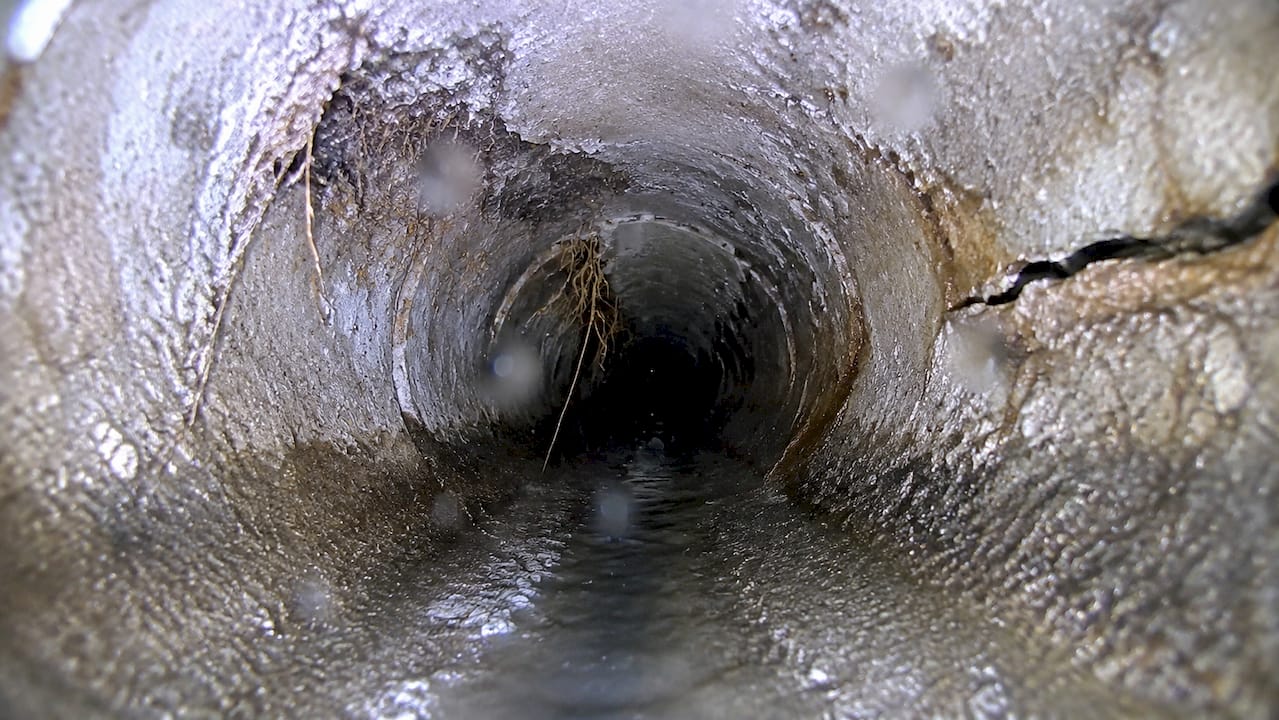
Pipe bellies and sags are a different problem entirely. When soil settles unevenly beneath a sewer line, sections of pipe sink and create low spots. Wastewater pools in those low spots rather than flowing freely. Pipe bellies caused by soil settling trap debris and create recurring blockages that require excavation and pipe regrading to fully resolve. A camera shows the sag clearly on video. No other inspection method finds it without digging.
Cracks, fractures, and misaligned joints appear in pipes of every age, but they are especially common in clay and cast iron lines installed before the 1980s. Soil movement, freeze-thaw cycles, and ground settling all stress pipe joints over time. A misaligned joint creates a ledge inside the pipe where debris catches and builds up.
Internal corrosion and scale buildup are specific to cast iron pipes. Cast iron pipes corrode internally, creating rough scaling that traps debris and leads to blockages that often appear suddenly after long periods of gradual degradation. The exterior of the pipe can look fine. The interior can be nearly closed off. Only a camera sees that.
Grease and debris accumulation builds up in any pipe over time, but it accelerates in lines that have served multiple households for decades. A scope shows the degree of buildup and whether it poses an immediate risk or simply needs routine maintenance.
Offset joints and separated pipes occur when two pipe sections pull apart at a joint. Sewage can leak directly into surrounding soil, creating contamination and structural risk to the surrounding ground.
Pro Tip: Schedule a sewer scope on any home built before 1980 or on any property with mature trees within 20 feet of the sewer line. Clay and cast iron pipes from that era are the highest-risk candidates for root intrusion and internal corrosion.
One important limitation: a sewer scope inspects the interior of the pipe. It cannot detect external soil erosion, ground movement pressing on the pipe from outside, or pipe crushing if the interior surface still appears intact. A clear scope is good news. It is not a guarantee of zero external pressure issues.
How does a sewer scope inspection work?
The process is straightforward. A technician inserts a flexible, waterproof HD camera into the sewer line through one of three access points: a cleanout fitting (a capped pipe near the foundation), a toilet after temporary removal, or a roof vent stack. The camera transmits real-time video to a monitor on-site.
Here is what happens during a typical sewer scope inspection:
Access point identification. The technician locates the best entry point. A cleanout is preferred because it is the least disruptive. If no cleanout exists, toilet removal or roof vent access is used.
Camera insertion and real-time video. The camera travels the full length of the sewer lateral, transmitting live footage. The technician watches for defects, noting their location and severity as the camera moves.
Defect location mapping. A built-in transmitter pinpoints defect location so repair crews can dig in exactly the right spot rather than guessing. This alone saves significant excavation cost.
Digital recording. The full inspection is recorded. You receive video footage as part of your report, not just written notes.
Report delivery. The report identifies pipe material, condition rating, specific defects, their location in the line, and recommended next steps. Trinity Home Inspections delivers reports the same day, including video.
The full process takes 30–60 minutes in most cases. If part of the sewer line is inaccessible due to a missing cleanout, a severe blockage, or a collapsed section, the report must note any unscoped sections clearly. You deserve to know exactly what was and was not inspected.
Pro Tip: Book your sewer scope at the same time as your home inspection, early in the due diligence period. If the scope reveals a major defect, you have time to get repair estimates and negotiate before your inspection contingency expires.
Why is a sewer scope inspection valuable for buyers and investors?
A sewer scope inspection converts uncertainty into information. That information has direct financial value before closing.
The cost comparison is the clearest argument. A scope costs $125–$400. Sewer line replacement costs exceed $10,000 and can reach $25,000 or more depending on depth, length, and access. Catching root intrusion early means a hydro-jetting treatment that costs a few hundred dollars. Missing it means a five-figure repair after you own the property.
“Video footage from sewer scopes empowers buyers by turning defects into opportunities for negotiation and maintenance planning, reducing anxiety around hidden problems.” — Sewer Gurus
That quote captures the practical reality. Buyers who have video evidence of a pipe belly or root intrusion walk into seller negotiations with documentation, not just a verbal claim. Sellers respond differently to a recorded video showing a defect than to a buyer’s verbal request for a price reduction.
Here is how sewer scope findings translate into buyer outcomes:
Negotiated repair credits. A documented defect gives you grounds to request a seller credit at closing to cover repair costs.
Price reduction. If the seller will not credit repairs, you can negotiate a lower purchase price that reflects the known liability.
Walk away with confidence. If the defect is severe enough, the scope gives you clear justification to exit the contract during the inspection period.
Maintenance planning. A scope showing a pipe in fair but functional condition tells you what to budget for and when. You buy the house knowing the pipe has five to ten years of life remaining, not wondering.
Sewer scopes are considered cheap insurance that converts a potential five-figure post-purchase liability into manageable maintenance costs through informed negotiations. For real estate investors managing multiple properties, that framing is especially useful. A $300 scope on each acquisition protects against the kind of surprise that wipes out a year of rental income.
The industry is moving in this direction. More real estate agents in markets like Mobile and Baldwin County, Alabama, now recommend sewer scopes as a standard part of the due diligence process, not an optional add-on. Buyers who skip it are increasingly the exception, not the rule.
Key Takeaways
A sewer scope inspection is the only tool that reveals underground sewer line defects before closing, giving buyers documented evidence to negotiate repairs or price reductions that a standard home inspection cannot provide.
Point | Details |
Standard inspections miss sewer lines | Underground sewer laterals are excluded from all standard home inspections by definition. |
Six defect types go undetected | Root intrusion, pipe bellies, cracks, corrosion, grease buildup, and offset joints are invisible without a camera. |
Cost difference is significant | A scope costs $125–$400; sewer line replacement costs $10,000–$25,000 or more. |
Video evidence supports negotiation | Recorded footage gives buyers documented proof to request seller credits or price reductions. |
Older homes carry higher risk | Homes built before 1980 with clay or cast iron pipes and mature trees nearby are the highest priority for scoping. |
What I have learned after scoping hundreds of sewer lines
I have run sewer scopes on properties across Mobile and Baldwin County for years now, and the pattern I see most often surprises buyers every time. The homes that look the cleanest above ground are sometimes the ones with the worst sewer conditions below it. A freshly renovated kitchen, new paint, updated bathrooms. And then the camera goes in and finds a cast iron line so scaled up internally that it is running at maybe 40 percent capacity.
The misconception I hear most from buyers is that a functional toilet means a functional sewer line. That is not how it works. A line can be partially blocked, sagging, or cracked and still drain slowly enough to pass a flush test. The problem shows up six months after closing when the first major backup happens.
The other thing I want buyers to understand is that a bad scope result is not automatically a deal-breaker. I have seen buyers use scope findings to negotiate $8,000 in seller credits on properties they absolutely loved. The scope did not kill the deal. It saved them from paying full price for a known problem. That is the right way to think about it.
My advice for real estate investors is even more direct. If you are buying a rental property and you skip the sewer scope, you are accepting a risk that your tenants will eventually surface for you in the worst possible way. A tenant calling about a sewage backup is not a maintenance call. It is a liability event. A $300 scope before closing is the most straightforward way to avoid that outcome.
The inspection industry is getting better about this. More InterNACHI-certified inspectors now offer sewer scope as a bundled service rather than a separate referral. That matters because it keeps the process simple for buyers and keeps the report in one place. At Trinity Home Inspections, we offer sewer scopes as an add-on to any home inspection so you get everything in a single same-day report.
— Matt
Schedule your sewer scope with Trinity Home Inspections
[

Trinity Home Inspections provides sewer scope inspections using HD waterproof cameras across Mobile, Baldwin, Escambia, and surrounding Gulf Coast Alabama counties. Every scope is recorded and delivered as part of your same-day digital report, alongside your full home inspection findings. You get video footage, pipe material identification, defect location mapping, and plain-English recommendations in one organized report. If you are buying a home and want to know what is underground before you sign, add a sewer scope inspection to your order. If you are selling and want to get ahead of buyer objections, our pre-listing home inspection with sewer scope add-on gives you that advantage. Call us at 251-210-7376 or visit TrinityInspectionsLLC.com to schedule.
FAQ
What does a sewer scope inspection include?
A sewer scope inspection includes a waterproof HD camera inspection of your underground sewer lateral, real-time video assessment, defect location mapping using a built-in transmitter, and a digital report with recorded footage identifying pipe material, condition, and any defects found.
How much does a sewer scope inspection cost?
A sewer scope inspection typically costs $125–$400. That cost is a fraction of sewer line replacement, which ranges from $10,000 to $25,000 or more depending on the extent of damage and access requirements.
Does a standard home inspection cover sewer lines?
No. Standard home inspections do not include sewer lateral inspections because underground pipes are inaccessible to surface-level inspection. A sewer scope is a separate add-on service that requires specialized camera equipment.
When should I get a sewer scope inspection?
Schedule a sewer scope during your inspection contingency period, as early as possible. Homes built before 1980, properties with mature trees near the sewer line, and any home with a history of slow drains or backups are the highest priority candidates.
Can a sewer scope find all sewer line problems?
A sewer scope inspects the interior of the pipe and detects root intrusion, pipe bellies, cracks, corrosion, buildup, and offset joints. It cannot detect external soil pressure or pipe crushing if the interior surface appears intact. Any sections that are inaccessible during the inspection must be noted in the report.
Recommended
