
Best Sewer Line Maintenance Tips That Work for Gulf Coast Homes

Updated: 2 days ago
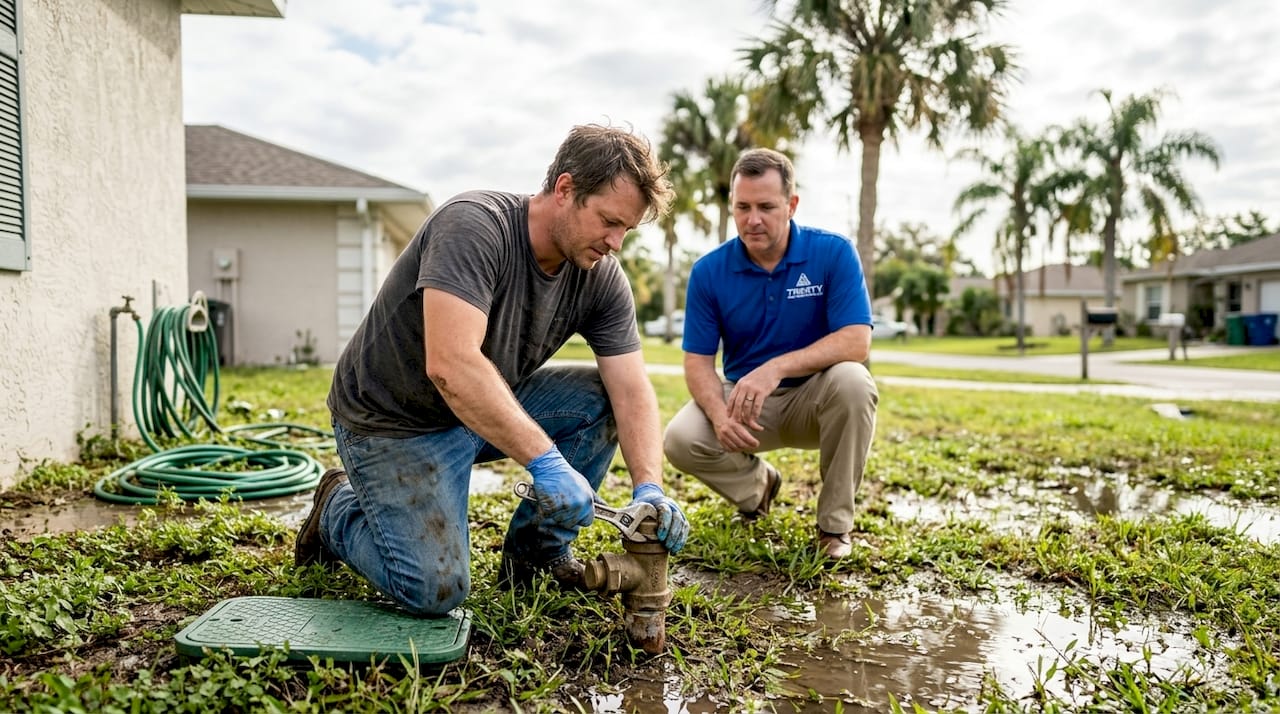
Homeowners in Gulf Coast Alabama face unique sewer line challenges that can lead to repair bills ranging from $1,200 to $20,000 if problems go undetected. Clay soil expansion, heavy rainfall, and aggressive tree root systems create the perfect storm for pipe damage in our region. Understanding how to maintain your sewer system proactively can save you thousands while protecting your home’s foundation and yard from costly water damage. This guide delivers practical, evidence-backed maintenance strategies specifically designed for the environmental conditions we face along the Alabama coast.
Key Takeaways
Point | Details |
Regular inspections catch damage early | Periodic professional sewer camera checks reveal cracks, root intrusion, and misalignments before they lead to backups or collapses. |
Hydrojetting cleans pipes thoroughly | Hydrojetting removes debris around the entire pipe circumference for a superior clean compared to traditional snaking. |
Strategic landscaping reduces roots | Maintaining proper plant distance from sewer lines lowers the risk of root intrusion and future damage. |
Monitor drainage after storms | Watching for signs after heavy rains helps detect issues early and prevent emergencies. |
Understanding sewer line challenges in Gulf Coast Alabama
The Gulf Coast region presents specific environmental factors that accelerate sewer line deterioration faster than in other parts of the country. Our clay-heavy soil expands during wet seasons and contracts during dry periods, creating constant pressure shifts that crack pipes and displace connections. This cycle repeats year after year, gradually weakening even newer sewer systems.
Heavy rainfall events compound these soil movement issues. When torrential rains saturate the ground, the soil surrounding your sewer line shifts and settles unevenly. This movement can bend pipes, separate joints, and create low spots where debris accumulates. Tree roots seeking moisture are drawn to even microscopic cracks in sewer pipes, where they find a constant water source and nutrients from waste.
In Gulf Coast AL, clay soil expansion/contraction, heavy rain, and tree roots are primary failure accelerators, making proactive inspection and hydrojetting critical over DIY approaches. Once roots enter a pipe, they grow rapidly and create dense mats that trap toilet paper, grease, and other materials. The blockage grows larger with each flush until water backs up into your home.
Common challenges include:
Clay soil creating pressure on aging pipes during expansion cycles
Root systems from oak, magnolia, and pine trees seeking pipe moisture
Heavy spring and summer rains causing soil shifts around sewer lines
Older cast iron and clay pipes more vulnerable to cracking than modern PVC
Flooding events that overwhelm systems and deposit sediment in lines
Pro Tip: If your home was built before 1980, your sewer line likely consists of clay or cast iron pipes that are particularly vulnerable to root intrusion and soil pressure damage.
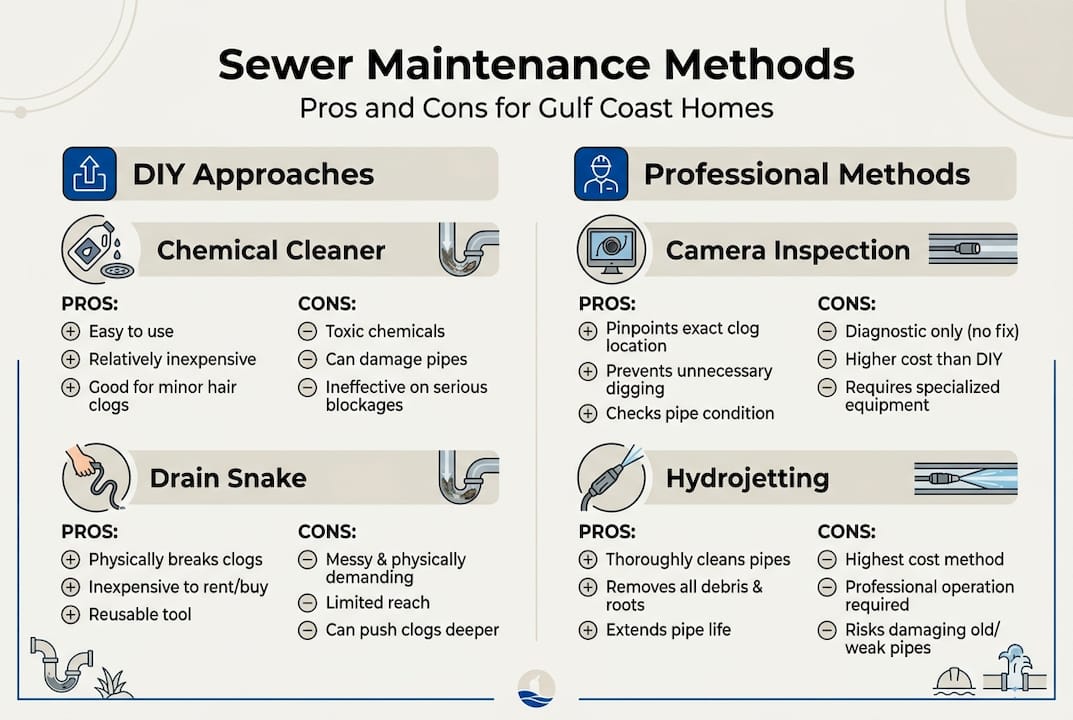
DIY chemical treatments and mechanical snakes provide temporary relief at best. Chemicals can damage older pipe materials and harm the beneficial bacteria in septic systems. Snakes only puncture through blockages rather than removing them, so clogs return quickly. Professional maintenance addresses root causes rather than symptoms, which is why understanding sewer line inspection signs becomes essential for every Gulf Coast homeowner.
Professional inspections: the cornerstone of effective maintenance
Regular professional sewer camera inspections represent your best defense against catastrophic sewer line failures. A specialized waterproof camera travels through your entire sewer line, transmitting real-time video that reveals cracks, root intrusions, bellied sections, and blockages before they cause backups or collapses. This technology allows inspectors to pinpoint problems without excavating your yard.
Homes built more than 30 years ago face the highest risk in our region. Older construction typically used clay tile or cast iron pipes that deteriorate faster than modern PVC materials. Schedule professional sewer camera inspections every 1-3 years, especially for homes over 30 years old in Alabama Gulf Coast with clay soil and trees. The inspection cost of $100 to $500 can save you $1,200 to $20,000 on emergency repairs.
Timing your inspection strategically maximizes its value. Schedule your first inspection when purchasing a home, even if the seller claims recent sewer work. Follow up inspections should occur:
Every year if you have large trees within 50 feet of your sewer line
Every 1-2 years for homes over 30 years old
Every 2-3 years for newer homes without nearby trees
Immediately after major flooding events or foundation settling
Before landscape renovations that involve heavy equipment near sewer lines
Pro Tip: Request a recording of your sewer camera inspection. This video documentation helps you track deterioration over time and provides valuable evidence if you need to file an insurance claim or negotiate repairs with a previous owner.
The inspection process typically takes 60 to 90 minutes. A technician inserts the camera through a cleanout access point and guides it through your main sewer line to the street connection. The camera head features bright LED lights and can rotate to examine pipe walls from all angles. Modern systems measure the exact distance to any problem areas, making future repairs more efficient and less expensive.
Professional sewer line inspections provide peace of mind and actionable data. You receive a detailed report identifying specific issues, their severity, and recommended timelines for repairs. This information helps you budget for necessary work and avoid emergency situations. Understanding sewer scope inspections importance transforms sewer maintenance from reactive crisis management to proactive home care.
Hydrojetting for thorough sewer line cleaning and root prevention
Hydrojetting uses high-pressure water streams to clean sewer pipes more effectively than any other method available to homeowners. A specialized nozzle sprays water at 1,500 to 4,000 PSI in multiple directions, scouring the entire pipe circumference and removing roots, grease buildup, mineral deposits, and accumulated debris. The process restores pipes to nearly original flow capacity.
Unlike traditional snaking that simply punches a hole through blockages, hydrojetting cleans the pipe circumferentially rather than just creating a channel through the obstruction. This thorough cleaning prevents rapid re-clogging and extends the time between service calls. Tree roots get shredded and flushed away instead of being pushed aside where they quickly regrow.
Annual or biennial hydrojetting uses 1500-4000 PSI water pressure to remove debris, roots, and grease, with residential costs ranging from $350 to $1,500 depending on line length and blockage severity. This investment extends pipe life significantly by preventing the buildup that leads to cracks and breaks.
Cleaning Method | Effectiveness | Pipe Safety | Longevity of Results | Cost Range |
Hydrojetting | Removes 95-100% of buildup | Safe for most pipes | 1-2 years | $350-$1,500 |
Mechanical snaking | Punctures blockage only | Can scratch older pipes | 2-6 months | $150-$400 |
Chemical treatments | Limited, surface level | Damages older pipes | 1-3 months | $20-$100 |
Pro Tip: Schedule hydrojetting in late fall or early spring before your busiest home use seasons. This timing ensures clear lines during holiday gatherings and summer guests.
Chemical drain cleaners pose serious risks to older sewer systems. These harsh products can corrode cast iron pipes, damage clay tile joints, and kill beneficial bacteria in septic systems. The temporary relief they provide comes at the cost of long-term pipe integrity. Professional hydrojetting avoids these risks while delivering superior results.
The hydrojetting process begins with a camera inspection to identify pipe condition and locate problem areas. This step ensures the pipes can withstand high-pressure cleaning without damage. The technician then inserts a specialized hose with a forward-facing jet nozzle that pulls itself through the line while cleaning. Backward-facing jets scour the pipe walls as the nozzle advances.
Recommended hydrojetting frequency depends on your specific situation. Homes with large trees nearby benefit from annual service, while properties without significant root intrusion can extend to every two years. Following essential home maintenance tips that include regular sewer maintenance prevents the gradual deterioration that leads to complete line replacement.
Landscaping and ongoing monitoring to protect your sewer line
Strategic landscaping choices significantly reduce your sewer line maintenance burden and repair costs. The location of trees and shrubs relative to your sewer line determines whether roots will eventually invade your pipes. Plant trees and shrubs at least 10+ feet from sewer lines to minimize root intrusion risks, with larger species requiring even greater separation.
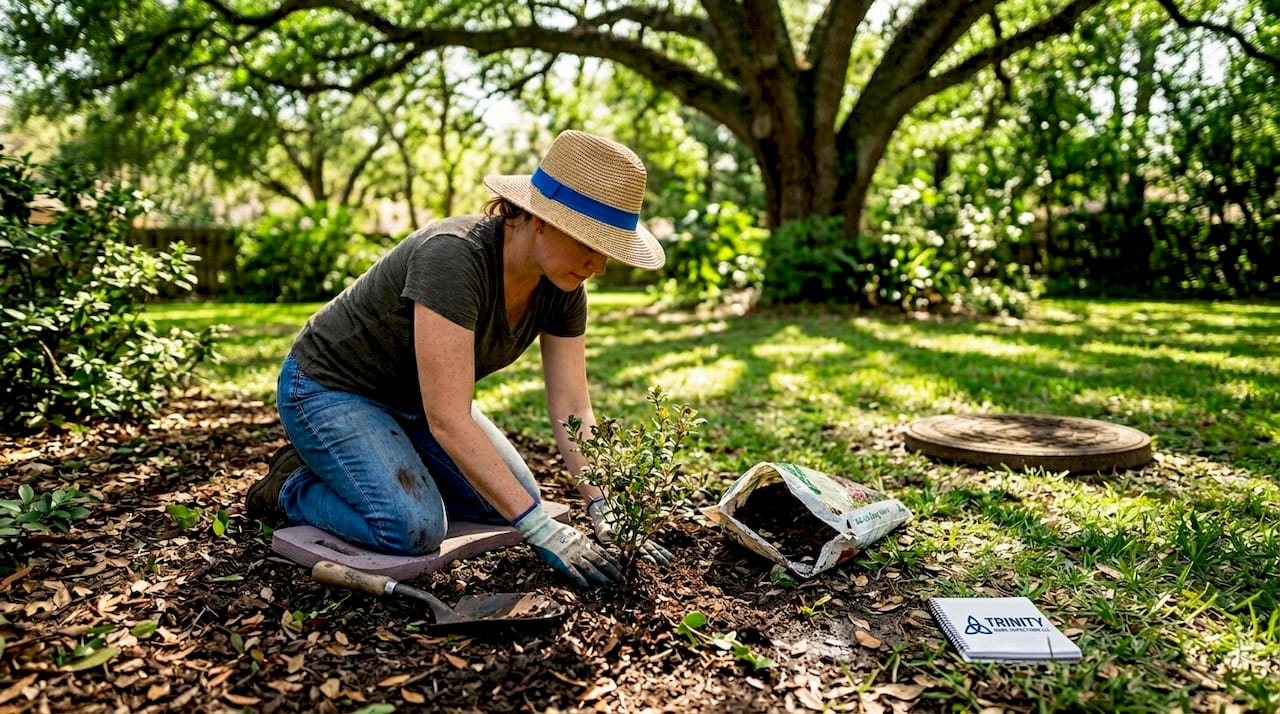
Root barriers provide an additional layer of protection for existing landscaping that cannot be relocated. These vertical panels installed between trees and sewer lines redirect root growth downward rather than laterally toward pipes. Professional installation ensures barriers extend deep enough to prevent roots from growing underneath, typically 24 to 36 inches for most residential applications.
Tree species selection matters when planning new landscaping near sewer lines. Avoid planting willows, poplars, silver maples, and elm trees within 50 feet of your sewer system. These aggressive root systems actively seek water sources and can damage pipes even at significant distances. Better choices include:
Dogwood trees with shallow, non-invasive root systems
Crepe myrtles that stay relatively small and compact
Japanese maples with contained root structures
Ornamental fruit trees like crabapples with moderate root spread
Native shrubs and perennials for areas directly above sewer lines
Homeowners must actively monitor for early warning signs that indicate developing sewer problems. Monitor for signs post heavy rain including slow drains, backups, gurgling sounds, soggy yard spots, and sewage odors, as clay soil shifts worsen these issues. Catching problems at the first symptom allows for less invasive and less expensive repairs.
Warning Sign | What It Indicates | Urgency Level |
Multiple slow drains | Developing main line blockage | Medium |
Gurgling toilet sounds | Air trapped by partial blockage | Medium |
Sewage backup in lowest drain | Complete or near-complete blockage | High |
Soggy spots in yard | Possible pipe leak or break | High |
Persistent sewage odor | Cracked pipe or failed seal | Medium |
Lush grass patches over sewer line | Fertilization from leaking sewage | Medium |
Regular visual inspections of your property help you spot trouble early. Walk your yard monthly looking for unexplained wet areas, unusually green grass patches, or settling spots that might indicate a collapsed pipe section. Pay special attention after heavy rains when soil movement and increased flow stress weakened pipes. Understanding sewer line inspection signs empowers you to act quickly before minor issues become major emergencies.
Protect your home with expert sewer line inspections and maintenance services
Maintaining your sewer line properly requires specialized knowledge and equipment that most homeowners don’t possess. Trinity Home Inspections brings InterNACHI-certified expertise and advanced camera technology to every sewer line inspection, delivering same-day reports with clear video documentation of your system’s condition. Our team understands the unique challenges Gulf Coast Alabama homeowners face with clay soil and aggressive tree roots.

We offer bundled services that save you time and money while protecting your investment. Combine sewer scope inspections with our real estate permit search services to verify previous repair work was properly permitted. Add mold testing services if your sewer backup caused water damage. Our faith-based, family-owned business treats your home with the same care we’d want for our own families, providing honest answers and actionable recommendations you can trust.
Frequently asked questions about sewer line maintenance
What is the black sludge in drain pipes?
The black sludge in your drain pipes consists primarily of decomposed organic matter, grease, soap residue, and bacteria. Hair, food particles, and body oils accumulate on pipe walls where bacteria break them down into a sticky, dark biofilm. This buildup reduces flow capacity and traps additional debris, eventually causing slow drains or complete blockages if not removed through professional cleaning.
How often should sewer lines be cleaned?
Sewer lines should be professionally cleaned every one to two years for optimal performance and longevity. Homes with large trees near sewer lines benefit from annual hydrojetting, while properties without significant root intrusion can extend to biennial service. Older homes with cast iron or clay pipes may require more frequent cleaning to prevent buildup that accelerates pipe deterioration in Gulf Coast clay soil conditions.
Can I clean my sewer line myself?
You can attempt basic drain cleaning with a manual snake for minor clogs near fixtures, but main sewer line cleaning requires professional equipment and expertise. DIY chemical treatments damage older pipes and provide only temporary relief. Rental sewer machines lack the power and specialized nozzles needed for thorough cleaning, and improper use can crack pipes or cause injuries. Professional hydrojetting safely removes roots and buildup that DIY methods cannot address.
How to keep sewer pipes clean?
Keep sewer pipes clean by avoiding flushing anything except toilet paper and human waste, never pouring grease down drains, using sink strainers to catch food particles, and running hot water after each use. Schedule professional hydrojetting every one to two years to remove accumulating debris before it causes blockages. Plant trees at least 10 feet from sewer lines and monitor for sewer line warning signs after heavy rains.
How to clear a main line blockage?
Clearing a main line blockage requires professional equipment in most cases. A plumber inserts a motorized snake or hydrojetting equipment through your cleanout access point to break up or flush away the obstruction. Attempting to clear main line blockages yourself with rental equipment risks pipe damage and personal injury. If multiple drains back up simultaneously or your lowest drain overflows, call a licensed plumber immediately rather than attempting DIY repairs that may worsen the problem.
Recommended


