
Interview Script to Pick a Home Inspector: 5 Things to Verify

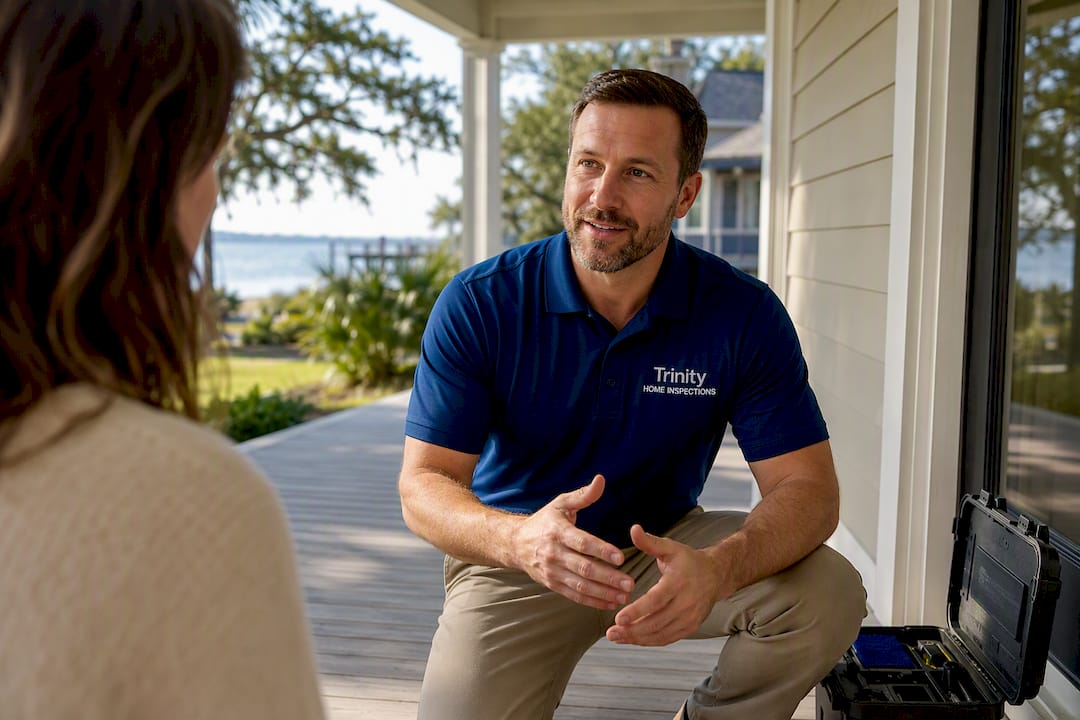
The best way to pick a home inspector comes down to five things: verified certification, real experience with homes like yours, adequate insurance, a sample report you can actually read, and a willingness to let you tag along. Before you hire anyone, interview two or three candidates, ask each for a sample report, and confirm their insurance and credentials in writing. Skip any of those steps and you’re gambling on the biggest purchase of your life.
TL;DR:
A home inspector should hold verified certification, extensive relevant experience, and possess insurance limits well above state minimums to ensure quality and accountability.
Refusal to allow you to attend the inspection, along with vague reports or very short inspection times, signals a major red flag indicating potential issues with transparency or thoroughness.
Reviewing sample reports for clear photos, severity codes, and actionable recommendations provides insight into an inspector’s professionalism and attention to detail.
Ask for proof of insurance upfront, verify certifications independently, and clarify what is included or costs extra to avoid surprises during the inspection process.
Attending the inspection offers valuable understanding of potential issues and allows immediate questions about safety, maintenance, and repair priorities.
What to Look for in a Home Inspector: Credentials, Experience, and Insurance
Certification and state licensure are not the same thing, and mixing them up costs buyers real money. A license means the state allows someone to legally perform inspections. A certification, such as those from ASHI or InterNACHI, means the inspector has passed additional testing and met ongoing standards. ASHI certification typically requires passing the National Home Inspector Examination and documenting a substantial number of paid inspections, while InterNACHI certification requires passing its exam and submitting sample reports for review.
Here’s the catch: Consumers’ Checkbook’s undercover study found that licensing and certification alone don’t guarantee a thorough inspection. Diligence varies wildly between individuals, even within the same credentialing body.
That’s why experience matters just as much as the letters after someone’s name. Inspectors who’ve completed 1,000 or more inspections tend to develop sharper pattern recognition for subtle, connected issues, like moisture pathways or deferred maintenance patterns, that a newer inspector working strictly off a checklist might miss.
When you’re comparing candidates, ask about:
Whether they hold ASHI, InterNACHI, or an equivalent certification, and how they maintain it annually
How many inspections they’ve completed, and whether that includes homes similar in age or construction to yours
Their Errors & Omissions (E&O) and general liability insurance limits, since state minimums can run low and may leave you exposed if something goes wrong on-site
Our own checklist for what to look for in a home inspector breaks this down further if you want a printable version.
What Should You Ask a Home Inspector Before Hiring?
Choosing a home inspector goes smoother when you walk into every call with the same set of questions. Ask these in order and you’ll cover the ground that actually matters:
Are you certified, and can I see proof? Ask for the certifying body and license number, then verify it independently.
How many inspections have you completed, and how many were homes like mine? Volume matters, but relevant volume matters more.
Can I see a sample report? This alone eliminates weak inspectors faster than any other question, according to Consumer Reports.
What’s your E&O and general liability coverage? Ask for a certificate of insurance, not just a verbal assurance.
What’s included, and what costs extra? Radon, sewer scope, and mold testing are common add-ons rather than standard inclusions.
Can I attend the inspection? InspectandTest groups this under logistics, but it’s really a trust question.
How soon will I get the report? Same-day or next-day turnaround is realistic and worth asking about directly.
Our page of home inspector questions to ask before hiring walks through follow-up questions for each of these, in case an answer raises more questions than it answers.
What Is the Biggest Red Flag in a Home Inspection?
Refusing to let you attend is the single biggest warning sign, full stop. Travelers Insurance calls attendance refusal a significant red flag, and for good reason: a confident inspector wants you there to see what they find in real time.
Other deal-breakers worth watching for:
No sample report available on request, or one that’s vague and photo-light
No proof of insurance, or coverage that sits right at the state minimum
An inspection that wraps up in under an hour on a normal-sized home, when the typical span runs about two to three hours
An inspector who also offers to perform the repairs they just flagged, or who’s tied closely to a specific contractor
That last one is a genuine conflict of interest. An inspector shouldn’t profit from the problems they discover.
Pro Tip: If a candidate hesitates when you ask for their insurance certificate, that hesitation is your answer. A properly insured inspector will hand it over without a second thought.
How Do You Judge a Sample Report or Compare Pricing?
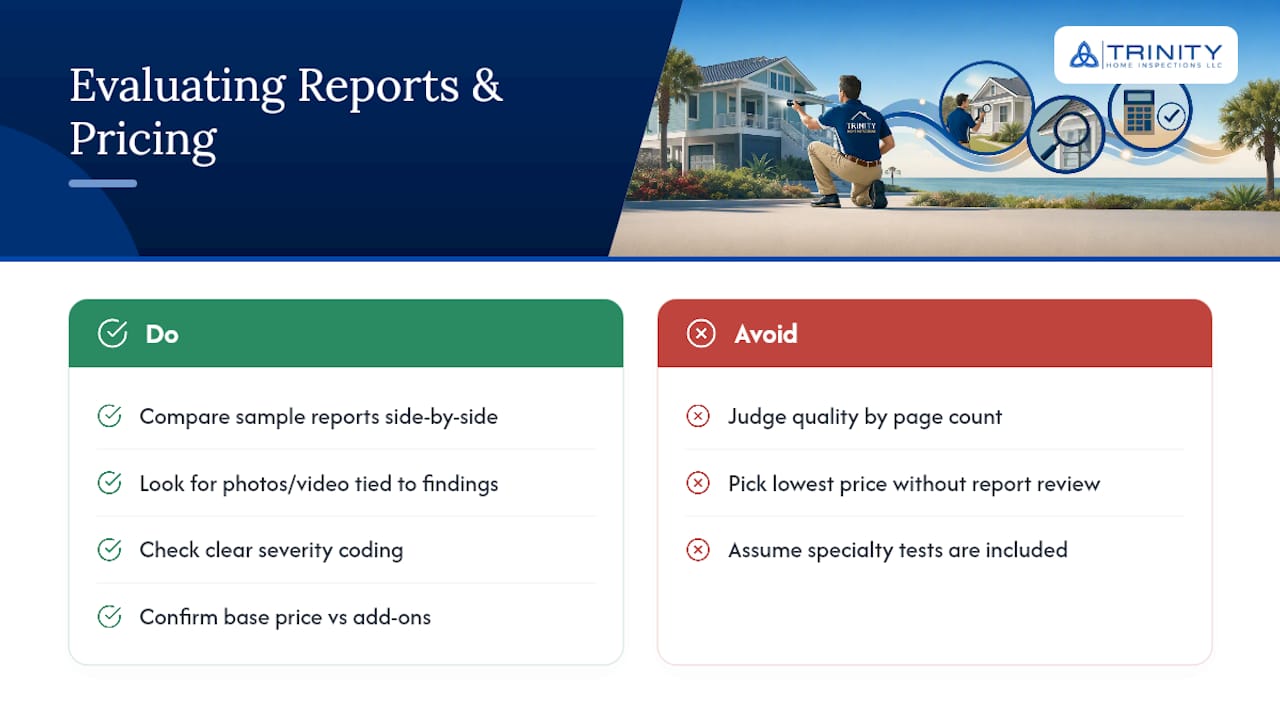
A strong sample report tells you almost everything about how an inspector operates before you ever hire them. Look for photos and video tied to specific findings, clear severity coding (something urgent versus something to simply budget for), and next-step recommendations written in plain language rather than dense code citations.
Pricing varies by home size, age, and region, so there’s no single number to anchor on. What matters more is understanding what’s included in the base price versus what counts as an add-on. Standard visual inspections typically stop short of specialty testing, and radon, sewer scope camera work, and mold testing usually require separate certification or equipment beyond a general home inspection.
When comparing quotes, resist judging by page count alone. A 40-page report stuffed with boilerplate disclaimers tells you less than a 15-page report with sharp photos and specific, actionable notes. Comparing sample reports side by side, rather than comparing prices side by side, is the comparison that actually predicts quality.
Should You Attend the Home Inspection?
Yes, and it may be the single most valuable hour or two you spend in the entire homebuying process. Attending gives you direct access to explanations you’d otherwise only get secondhand through a written report, and it lets you ask follow-up questions on the spot.
While you’re there, walk through this short list with your inspector:
Locate the main water shutoff valve and understand how to use it in an emergency.
Look inside the electrical panel and ask about its age and capacity.
Check the furnace filter’s condition, which often hints at overall maintenance habits.
Note any visible signs of moisture or staining near ceilings, windows, and baseboards.
Ask how the roof was accessed and reviewed, especially if walking it wasn’t safe.
Inspectors typically sort findings into tiers, from safety hazards to minor cosmetic notes, and understanding that hierarchy helps you decide what belongs in negotiations versus what simply goes on next year’s maintenance budget. Our before, during, and after inspection guide covers this in more depth if you want the full walkthrough script.
What Does a Well-Equipped Inspector Actually Provide?
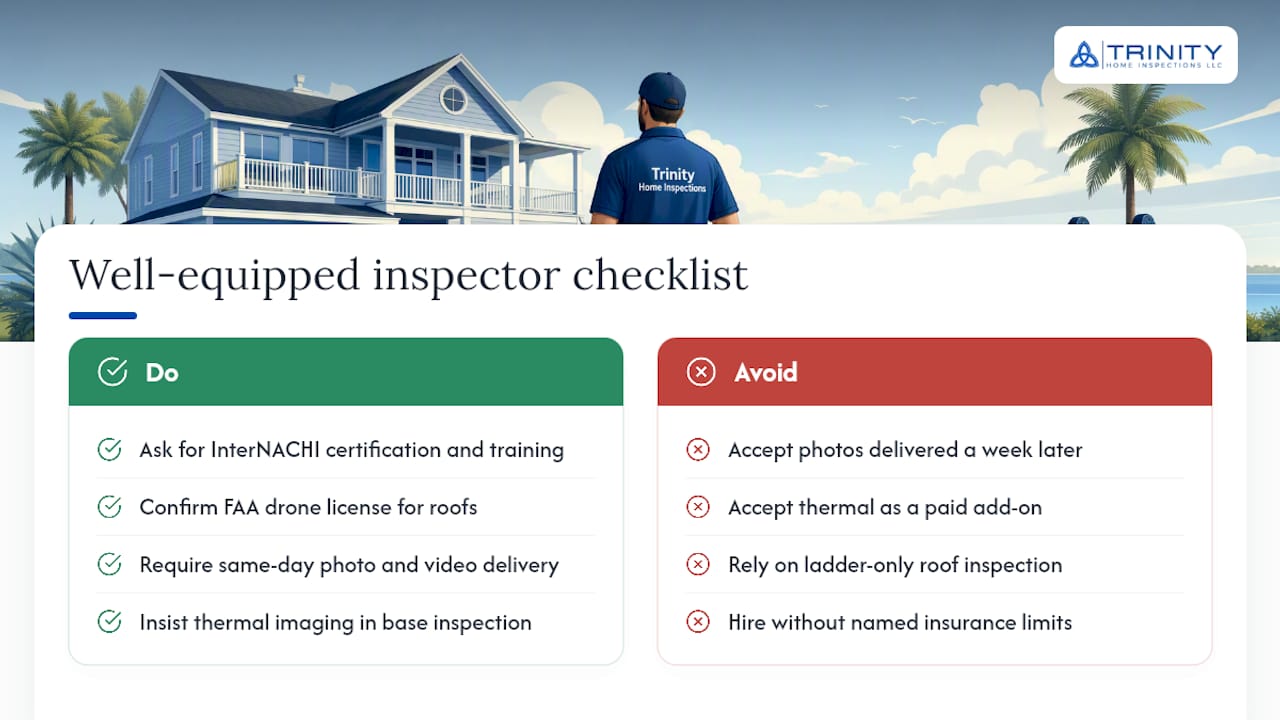
A properly equipped inspection looks different from a bare-minimum one, and the difference shows up in the evidence you receive. Look for verifiable proof points: InterNACHI certification with Standards of Practice training completed, FAA drone licensing if roof access requires it, and photo/video documentation delivered the same day rather than a week later.
Thermal imaging should be part of the base inspection, not a pricey add-on, since it helps catch insulation gaps and hidden moisture that a visual-only inspection would miss entirely. Drone footage matters too, particularly for steep or unsafe roofs where a ladder walk-around alone leaves gaps in coverage.
Ask any inspector you’re considering to name their insurance limits specifically. A national standard for coverage doesn’t exist, so an inspector carrying limits well above state minimums is telling you something about how seriously they take the job.
A Note From the Inspector’s Chair
What separates a good inspection from a rushed one usually isn’t the equipment. It’s whether the inspector is willing to explain what they’re seeing and why it matters, instead of handing you a report full of jargon and walking away. Every home has issues. Your job isn’t to find a perfect house. It’s to understand what you’re buying so you can budget, negotiate, and sleep well after closing.
— Matt
How Trinity Home Inspections Fits Into Your Search
Once you know what to ask, the next step is finding an inspector who answers those questions without hesitation, and that’s exactly where Trinity Home Inspections fits. We’re InterNACHI-certified, FAA drone licensed, and we carry $1M in E&O coverage and $2M in general liability, well above Alabama’s minimum requirements.
[

Here’s what is commonly included with home inspections:
Digital reports with photos and video, organized by priority levels
Thermal imaging to detect insulation gaps and moisture
Optional add-ons such as sewer scope, mold testing, indoor air quality sampling, and drone roof inspections when needed
If you’re buying, selling, or just want clarity on a property before you commit, our real estate deed and permit search service pairs well with a full inspection for a complete picture of a home’s history. Call us at 251-210-7376 or visit TrinityInspectionsLLC.com to check availability and get your inspection scheduled.
Sources
FAQ
What Should You Look for When Choosing a Home Inspector?
Prioritize verified certification, relevant experience, adequate E&O and general liability insurance, a clear sample report, and willingness to let you attend the inspection.
What Is the Biggest Red Flag in a Home Inspection?
A refusal to let you attend is widely considered the most significant warning sign, along with missing insurance proof or an inspection that finishes far faster than the typical two to three hours.
What Are the Main Areas a Home Inspector Checks?
Most inspections focus on the structure, roof, electrical system, and plumbing, though a thorough inspector also checks HVAC systems, insulation, and safety hazards throughout the home.
How Long Does a Home Inspection Take?
A typical single-family home inspection runs about two to three hours, with reports commonly delivered within 24 hours.
Does Trinity Home Inspections Let Buyers Attend?
Yes. Attending is welcomed and encouraged, since it gives you direct access to explanations and helps you prioritize findings before closing.
Recommended