
Certified Inspectors: Everything You Need to Know

Did you know that over 90 percent of home buyers request a home inspection before closing on a property? Choosing a certified inspector can make the difference between a sound investment and unexpected costs. Certified professionals have the training and strict credentials to spot issues that others might miss, offering real peace of mind when making one of life’s biggest financial decisions.
Key Takeaways
Point | Details |
Certification Significance | Becoming a certified home inspector indicates a commitment to excellence through training, examinations, and adherence to ethical standards. |
Investment Protection | Certified inspectors provide essential evaluations that can prevent costly repairs and protect significant property investments. |
Legal and Ethical Standards | Home inspection compliance involves extensive legal regulations and professional guidelines that ensure consumer protection. |
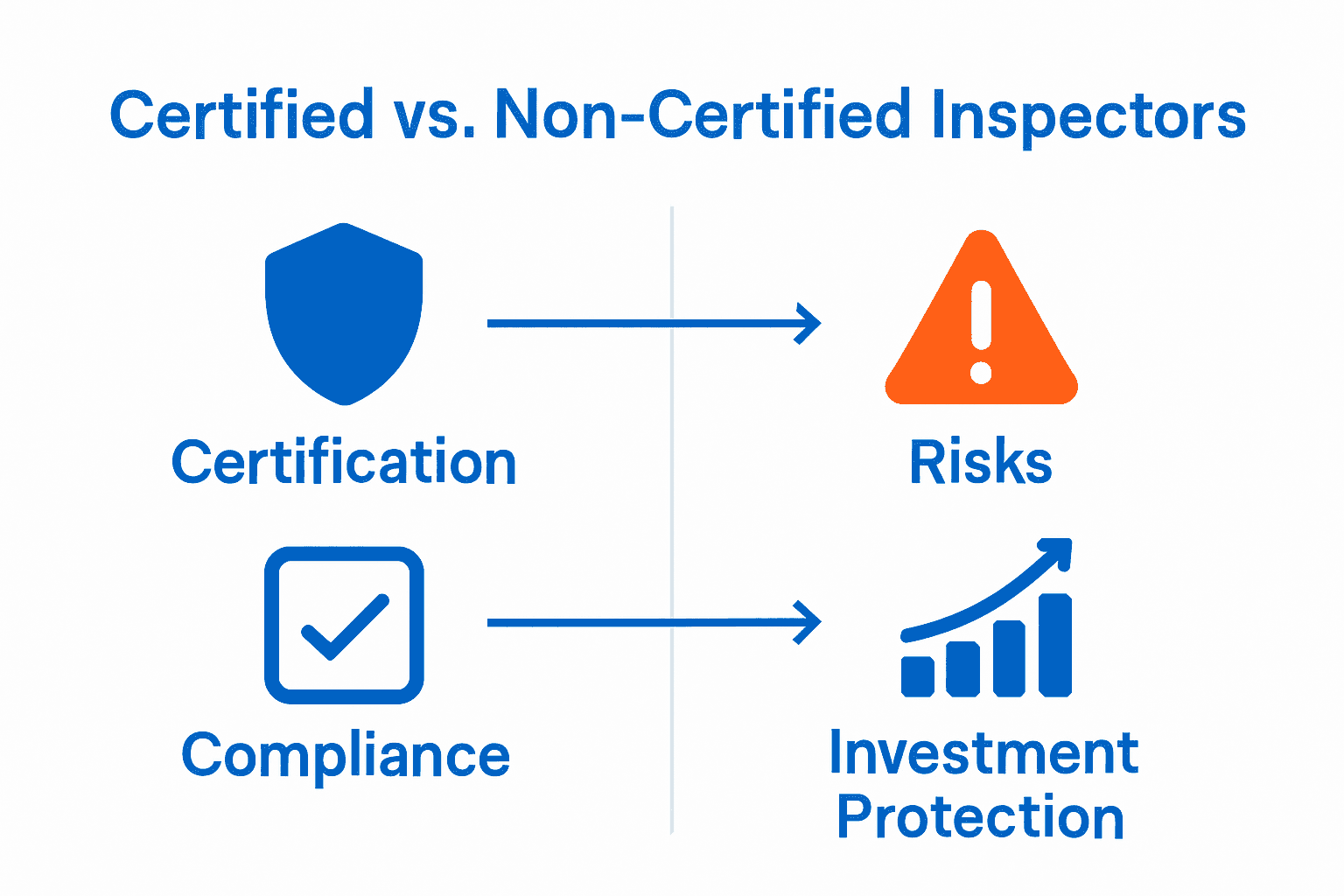
Risks of Non-Certification | Using non-certified inspectors poses risks, as they may miss critical property issues, leading to potential financial losses. |
Table of Contents
What It Means To Be A Certified Inspector
Becoming a certified home inspector represents more than just passing a test - it’s a professional commitment to excellence, rigorous training, and maintaining the highest standards of property assessment. These professionals undergo extensive training and meet specific national credentials that demonstrate their expertise and dedication to providing comprehensive, reliable home inspection services.
According to the American Society of Home Inspectors (ASHI), certification involves several critical requirements:
Passing the National Home Inspector Examination (NHIE)
Completing at least 250 fee-paid professional inspections
Submitting sample inspection reports for professional review
Adhering to strict Standards of Practice and Code of Ethics
Maintaining ongoing continuing education credits annually
Similarly, organizations like InterNACHI provide additional pathways to certification. Their Certified Professional Inspector (CPI)® credential requires inspectors to pass an online exam, complete professional courses, demonstrate understanding of industry standards, and commit to ongoing professional development. Learn more about professional home inspector credentials to understand the depth of expertise these professionals bring to property assessments.
Certified inspectors are not just technicians - they are trained professionals who provide critical insights into a property’s condition, helping homebuyers, sellers, and real estate professionals make informed decisions. Their comprehensive training ensures they can identify potential issues, understand complex building systems, and communicate findings clearly and professionally.
Types Of Home Inspection Certifications
Home inspection certifications represent professional credentials that validate an inspector’s expertise, knowledge, and commitment to high-quality property assessment. Two prominent national organizations stand out in providing rigorous certification pathways for home inspectors: the American Society of Home Inspectors (ASHI) and the International Association of Certified Home Inspectors (InterNACHI).
ASHI Certified Inspector (ACI) credentials are particularly prestigious. According to their official documentation, this certification is:
Nationally recognized
Accredited by the National Commission for Certifying Agencies (NCCA)
Demonstrates comprehensive professional competence
Requires adherence to strict industry standards
InterNACHI offers the Certified Professional Inspector (CPI)® certification, which is a federally registered certification mark requiring inspectors to complete specific educational requirements. Learn more about the detailed requirements for professional home inspector certifications.
Beyond these two primary certifications, some inspectors also pursue specialized credentials in areas like residential, commercial, or specific system inspections. These additional certifications demonstrate an inspector’s commitment to continuous learning and expertise in niche areas of property assessment, providing clients with highly specialized and reliable inspection services.
Here’s a comparison of leading home inspection certifications:
Certification | Provider | Key Requirements | Recognition |
ACI (ASHI Certified Inspector) | ASHI | Pass NHIE 250 fee-paid inspections Adhere to Code of Ethics Submit sample reports | Nationally recognized NCCA accredited |
CPI® (Certified Professional Inspector) | InterNACHI | Pass online exam Complete courses Commit to ongoing education | Federally registered Widely accepted |
How Certified Inspectors Protect Your Investment
Property investment is one of the most significant financial decisions most people make, and certified home inspectors serve as crucial guardians protecting your financial interests. These professionals go far beyond a simple visual assessment, providing comprehensive evaluations that can save homebuyers thousands of dollars in potential repair costs and unexpected surprises.
According to the American Society of Home Inspectors (ASHI), certified inspectors protect consumers through:
Third-party accredited inspection programs
Rigorous professional standards
Strict ethical codes
Mandatory recertification processes
Comprehensive technical knowledge
InterNACHI-certified inspectors further enhance consumer protection by completing extensive ethics and standards training, ensuring that inspections meet recognized professional guidelines. Discover how home inspection services can safeguard your property investment.
Beyond immediate financial protection, certified inspectors provide long-term value by identifying potential structural issues, safety hazards, and maintenance requirements that could escalate into costly repairs. Their detailed, professional assessments give homebuyers the critical information needed to make informed decisions, negotiate effectively, and plan for future property maintenance, ultimately protecting both your immediate and future financial interests.
Legal And Industry Standards Explained
Home inspection standards represent a complex framework of legal requirements and professional guidelines designed to protect consumers and maintain the integrity of property assessments. These standards vary significantly across different states, creating a nuanced landscape of professional regulation that ensures inspectors meet rigorous performance and ethical criteria.
According to research on state licensing requirements, the legal standards for home inspectors can be quite comprehensive. For instance, in New York, the licensing process involves:
Completing specified education hours
Undergoing supervised professional inspections
Maintaining liability insurance
Passing comprehensive professional examinations
Completing ongoing continuing education credits
At the national level, certification programs like the American Society of Home Inspectors (ASHI) provide additional layers of professional accountability. Learn more about the professional standards governing home inspector certifications.
The National Commission for Certifying Agencies (NCCA) plays a critical role in maintaining these standards, accrediting certification programs that demonstrate fairness, competence, and ongoing professional evaluation. This external validation ensures that certified inspectors not only meet legal requirements but also adhere to the highest ethical and technical standards in the industry, providing homebuyers with reliable and professional property assessment services.
Risks Of Using Non-Certified Inspectors
Home inspection risks can escalate dramatically when working with non-certified professionals who lack the structured training and accountability required of certified inspectors. These uncertified individuals may miss critical structural, safety, and potential financial liability issues that could cost homebuyers thousands in unexpected repairs and compromised property investments.
According to industry research, non-certified inspectors typically demonstrate significant professional limitations:
Inconsistent inspection methodologies
Lack of standardized training protocols
Minimal ongoing professional education
Reduced ethical oversight
Potential gaps in technical knowledge
Learn what truly separates professional home inspectors from amateur assessments, ensuring you make an informed decision about your property evaluation.
The most substantial risk involves potential financial exposure. Non-certified inspectors might overlook serious structural problems, electrical hazards, or hidden maintenance issues that certified professionals are trained to identify. This oversight can transform what seems like a minor saving on inspection costs into a potentially catastrophic long-term financial burden, making the initial investment in a certified professional not just recommended, but essentially crucial for protecting your property investment.
Feel Confident About Your Home with Certified Inspections
Are you anxious about making a major home purchase or worried that an uncertified inspector might overlook hidden problems? The article “Certified Inspectors: Everything You Need to Know” explains how the right credentials protect your investment and give you peace of mind. At Trinity Home Inspections, we understand these concerns because we see every day how important it is to choose a professional you can trust. Our certified inspectors provide the detailed reports and ethical standards highlighted in the article, ensuring that you get full transparency and truly accurate information about your property.
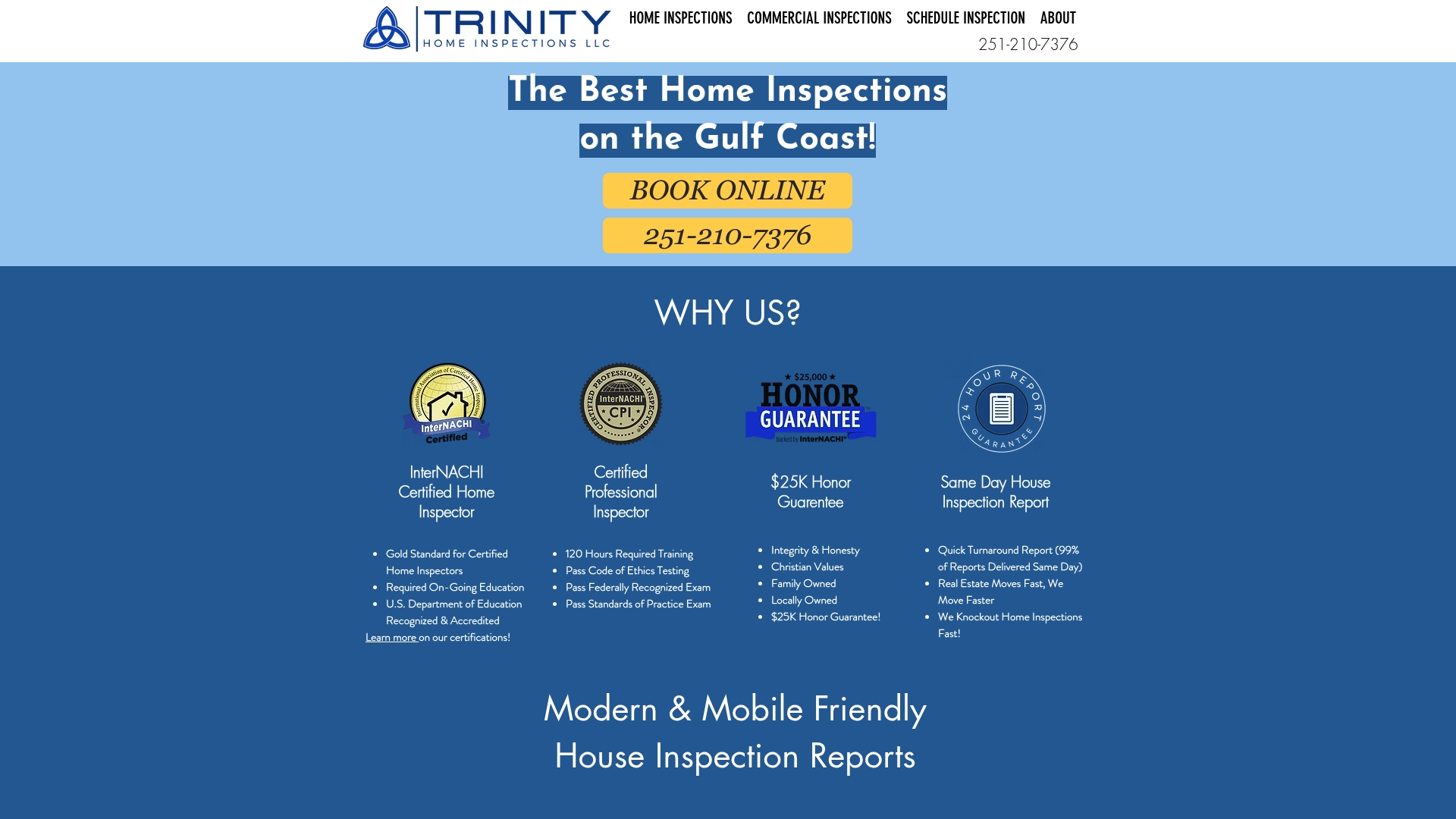
Do not leave your biggest investment up to chance or take risks with an uncertified inspection. Visit Trinity Home Inspections today to see our commitment to professionalism and customer care in the Gulf Coast region. Ready for total peace of mind? Schedule your inspection now and experience the difference of working with a certified local expert who values integrity and service. Your safest next step begins here.
Frequently Asked Questions
What are the key requirements to become a certified home inspector?
To become a certified home inspector, you need to pass the National Home Inspector Examination (NHIE), complete at least 250 fee-paid inspections, submit sample inspection reports, adhere to strict Standards of Practice and Code of Ethics, and maintain ongoing continuing education credits annually.
How do certified inspectors protect homebuyers’ investments?
Certified home inspectors provide thorough assessments that identify potential structural issues, safety hazards, and maintenance needs. Their detailed evaluations can save homebuyers significant money by highlighting necessary repairs and enabling informed negotiations during property transactions.
What are the risks of using non-certified home inspectors?
Using non-certified inspectors can lead to overlooked structural and safety issues, inconsistent inspection methodologies, and minimal ethical oversight. This can result in significant financial burdens down the line due to hidden problems that don’t get addressed during the inspection process.
What distinguishes ASHI-certified inspectors from those certified by InterNACHI?
ASHI-certified inspectors hold the ACI credential, which is nationally recognized and accredited by the National Commission for Certifying Agencies (NCCA). In contrast, InterNACHI-certified inspectors hold the CPI® credential, which requires completion of specific educational courses and ongoing professional development. Both certifications demonstrate a commitment to high standards in home inspections.
Recommended