Home Inspection Income in Alabama
- Matt Cameron

- Mar 12
- 7 min read
Many people think home inspectors earn modest salaries regardless of experience or expertise. That assumption misses the full picture. Income varies dramatically based on certifications, years in the field, and business structure. This guide breaks down what home inspectors in the US earn between $35,000 for entry-level to $150,000+ for experienced owners, with specific insights for Alabama professionals.
Key takeaways
Point | Details |
Experience drives earnings | New inspectors average $40,000 annually while senior inspectors exceed $120,000. |
Certifications boost income | ASHI and InterNACHI credentials increase client trust and justify higher fees. |
Per-inspection fees vary widely | New inspectors charge around $350 per inspection; experienced ones charge approximately $550. |
Add-on services increase revenue | Mold testing, sewer scopes, and air quality inspections expand income potential. |
Business ownership scales earnings | Self-employed inspectors with strong marketing can surpass $150,000 annually. |
How home inspector income varies by experience level
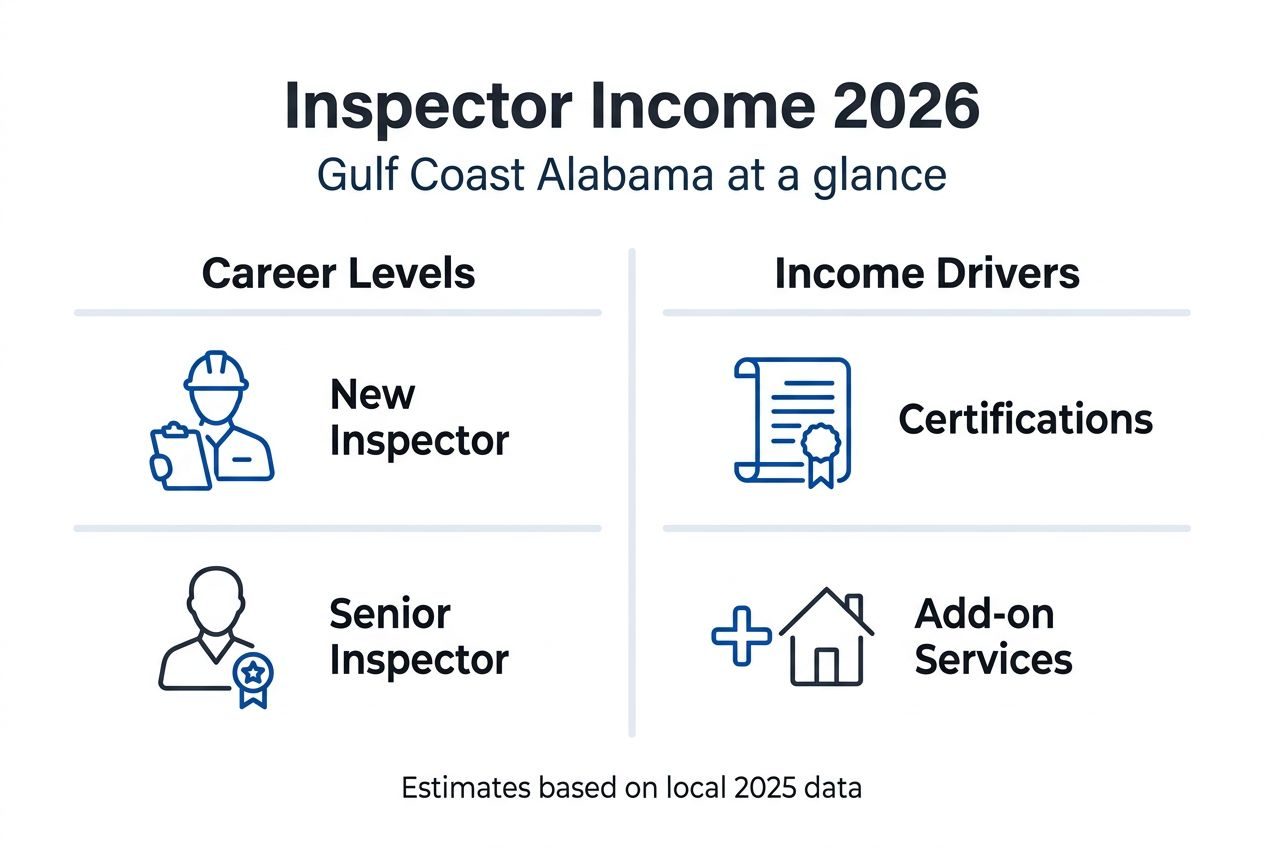
Understanding income potential starts with recognizing how earnings change as inspectors gain experience and build reputations. Entry-level inspectors just starting out typically earn $35,000 to $55,000 annually, averaging around $40,000 in their first year. These professionals are still learning systems, refining inspection techniques, and building client trust.
Mid-level inspectors with three to five years of experience see significant income growth. Their annual earnings range from $55,000 to $85,000 as they handle more complex properties and develop referral networks. This stage represents the transition from beginner to established professional.
Senior inspectors commanding strong local reputations earn between $75,000 and $120,000 per year. In 2025, experienced inspectors earned over $127,000 by completing higher volumes of inspections and charging premium rates. Their expertise allows them to identify issues newer inspectors might miss, justifying higher fees.
Master inspectors and business owners represent the top tier. These professionals often exceed $150,000 annually by combining inspection work with team management, training, and strategic business growth. They leverage their inspector certification to build brands that attract steady client flow.
Income progression by career stage:
Career Level | Annual Income Range | Inspections per Year | Average Fee per Inspection |
Entry-level (0-2 years) | $35,000 - $55,000 | 80-130 | $430 |
Mid-level (3-5 years) | $55,000 - $85,000 | 130-200 | $550 |
Senior (6-10 years) | $75,000 - $120,000 | 180-250 | $650 |
Master/Owner (10+ years) | $120,000 - $150,000+ | 200-300+ | $735+ |
Geographic factors also matter. Gulf Coast Alabama inspectors benefit from steady real estate activity across Baldwin, Mobile, and surrounding counties, creating consistent demand for quality inspection services.
Impact of certifications and professional associations on earnings
Certifications validate an inspector’s knowledge and professionalism, directly influencing income potential. The two leading certifying bodies in the US are ASHI (American Society of Home Inspectors) and InterNACHI (International Association of Certified Home Inspectors). Both organizations set rigorous standards that separate qualified professionals from those with minimal training.
ASHI requires passing NHIE and completing 250 inspections plus peer review before granting certification. This extensive process ensures members demonstrate practical competence, not just theoretical knowledge. ASHI-certified inspectors typically command higher fees because clients recognize the credential as evidence of thorough training.
InterNACHI requires an online exam and continuing education of 24 hours per year to maintain certification. The organization emphasizes ongoing learning, ensuring inspectors stay current with building codes, safety standards, and inspection technologies. InterNACHI members gain access to extensive resources, templates, and marketing support that help grow their businesses.
Certified inspectors enjoy several income advantages. They attract more discerning clients who research credentials before hiring. They justify premium pricing by demonstrating adherence to recognized standards. They reduce liability through proper training, lowering insurance costs and protecting profit margins.
Pro Tip: When hiring certified inspectors, verify their credentials directly through the certifying organization’s website. Legitimate professionals welcome this verification and display their certification numbers prominently.
Continuing education requirements keep inspectors sharp. Technologies evolve, building materials change, and new safety concerns emerge. Accredited home inspectors in Alabama who invest in ongoing training position themselves as experts, attracting clients willing to pay for superior knowledge and detailed reporting.
Key certification benefits:
Enhanced client trust through recognized credentials
Access to professional development resources and networking
Higher fee justification based on proven competence
Lower liability through adherence to industry standards
Marketing advantages in competitive markets
Typical fees per inspection and factors influencing income
Per-inspection fees represent the foundation of inspector income. In 2025, new inspectors earned $430 per inspection while experienced inspectors charged about $735 per inspection. This variation reflects differences in speed, thoroughness, reporting quality, and reputation.
Several factors determine what an inspector can charge. Property size matters most. A 1,200-square-foot condo takes less time than a 3,500-square-foot house with multiple HVAC systems, crawl spaces, and outbuildings. Inspectors adjust pricing based on square footage, often using tiered rate structures.
Property age and condition affect inspection complexity. Older homes require more attention to outdated systems, potential safety hazards, and grandfathered code violations. Historic properties in Gulf Coast Alabama demand specialized knowledge of construction methods no longer in use.
Add-on services significantly boost revenue per job. Mold testing, radon screening, sewer scope inspections, and thermal imaging each command separate fees. Bundling these services creates convenience for clients while increasing inspector income per appointment. Smart inspectors package add-ons strategically, making it easy for clients to say yes.
Service Type | Typical Fee Range | Time Required | Revenue Impact |
Standard home inspection | $350 - $600 | 2-4 hours | Base income |
Mold inspection/testing | $300 - $500 | 1-2 hours | +65% per job |
Sewer scope | $150 - $300 | 30-60 minutes | +40% per job |
Radon testing | $150 - $250 | Setup/pickup | +35% per job |
Regional market conditions shape pricing power. Areas with high real estate activity and educated buyers support premium fees. Gulf Coast Alabama’s growing population and steady home sales create favorable conditions for inspectors who deliver value through comprehensive reporting and proper preparation guidance.
Pro Tip: Request sample reports before hiring an inspector. The report quality, photo documentation, and clarity of recommendations reveal whether you’re getting value matching the fee.
Efficiency directly impacts annual income. An inspector completing three inspections daily at $500 each generates more than one completing two inspections at $600 each. Fast, thorough inspectors using modern reporting tools maximize earning potential without sacrificing quality.
How home inspectors in Gulf Coast Alabama can grow their income
Growing inspector income requires strategic thinking beyond simply raising fees. Self-employed inspectors who improve efficiency and offer add-ons can boost income substantially through smart business practices and client relationship building.
Five proven income growth strategies:
Build a referral network with real estate agents, attorneys, and lenders who recommend your services repeatedly
Expand service offerings to include mold testing, indoor air quality assessments, and sewer inspections
Invest in marketing that showcases your certifications, sample reports, and client testimonials
Streamline operations with mobile inspection software that reduces report completion time
Create maintenance inspection packages for past clients, generating recurring revenue from the same customer base
Leveraging technology separates top earners from those struggling to grow. Modern inspection tools like thermal cameras, moisture meters, and drone imaging help identify issues competitors miss. These technologies justify premium pricing while reducing inspection time through more efficient data collection.
Drone inspections deserve special mention. Roof access limitations no longer prevent thorough evaluation when inspectors use licensed drone operations to capture detailed imagery. This capability expands the properties you can inspect thoroughly, opening markets competitors cannot serve effectively.
Client communication quality impacts referral rates and repeat business. Inspectors who explain findings clearly, remain available for follow-up questions, and provide actionable next steps earn loyalty that translates into steady work. Your report becomes a marketing tool when clients share it with their network, impressed by its thoroughness.
Pro Tip: Offer permit search services as an add-on that helps buyers verify whether renovations were properly permitted, addressing a common concern that builds trust.
Professional development never stops. Attending local inspector meetings, participating in online forums, and pursuing advanced certifications keep your skills sharp and your knowledge current. The keys to a knockout home inspection include staying ahead of industry changes and bringing fresh insights to every job.
Additional revenue streams to consider:
Pre-listing inspections for sellers wanting to address issues before listing
New construction phase inspections at foundation, framing, and pre-drywall stages
Annual maintenance inspections for homeowners wanting to prevent costly repairs
Real estate investor property evaluations requiring rapid turnaround
Expert witness services for litigation involving property defects
Location strategy matters too. Focusing on high-value neighborhoods or specialized property types like waterfront homes allows premium pricing. Gulf Coast Alabama’s diverse housing stock from Mobile historic districts to Orange Beach vacation properties creates opportunities for inspectors willing to develop niche expertise.
Find expert home inspection services in Gulf Coast Alabama
Understanding inspector income helps you appreciate the expertise behind quality inspections. When you’re ready to move forward with a property purchase, working with experienced professionals protects your investment and negotiating position.
Trinity Home Inspections brings InterNACHI certification, same-day reporting, and free thermal imaging to every inspection across Baldwin, Mobile, and surrounding Gulf Coast Alabama counties. Our comprehensive services include pre-listing seller inspections that help you address issues before listing, indoor air quality testing for health-conscious buyers, and detailed permit search services that verify renovation compliance. We deliver photo and video-rich reports the same day as your inspection, giving you the clarity to negotiate confidently and close with peace of mind.
Frequently asked questions
How much can a new home inspector expect to earn in Gulf Coast Alabama?
New inspectors earn about $35,000 to $55,000 annually, averaging around $40,000 in their first year. Alabama offers similar earning potential to national averages, with income growing significantly as inspectors gain experience and build local reputations through quality work and strong client relationships.
What certifications boost a home inspector’s income the most?
ASHI and InterNACHI certifications are highly recognized and can increase fees and client trust substantially. These credentials demonstrate commitment to professional standards and ongoing education. Certified inspectors justify premium pricing and attract clients who research qualifications before hiring, making inspector certification a valuable income investment.
How do additional services affect a home inspector’s income?
Add-on services like mold, indoor air quality, and sewer inspections increase revenue potential by 30-70% per job. Clients appreciate bundled packages that address multiple concerns in one appointment. Offering specialized testing through services like mold inspections differentiates inspectors from competitors while boosting per-job income significantly.
What factors help experienced inspectors command higher fees?
Reputation, certification credentials, comprehensive reporting, and specialized equipment justify premium pricing. Inspectors who invest in thermal imaging, drone technology, and advanced testing tools provide more value, supporting higher fees. Speed and efficiency also matter; completing thorough inspections quickly demonstrates expertise while maximizing daily earning potential.
How many inspections per week do successful inspectors typically complete?
Successful inspectors average 8-15 inspections weekly, depending on property complexity and add-on services. New inspectors may complete 3-5 weekly as they build speed and client base. Experienced professionals optimize scheduling, travel routes, and reporting efficiency to maximize volume without sacrificing quality or thoroughness.
Recommended