
Accredited Inspectors—Why It Matters for Homebuyers

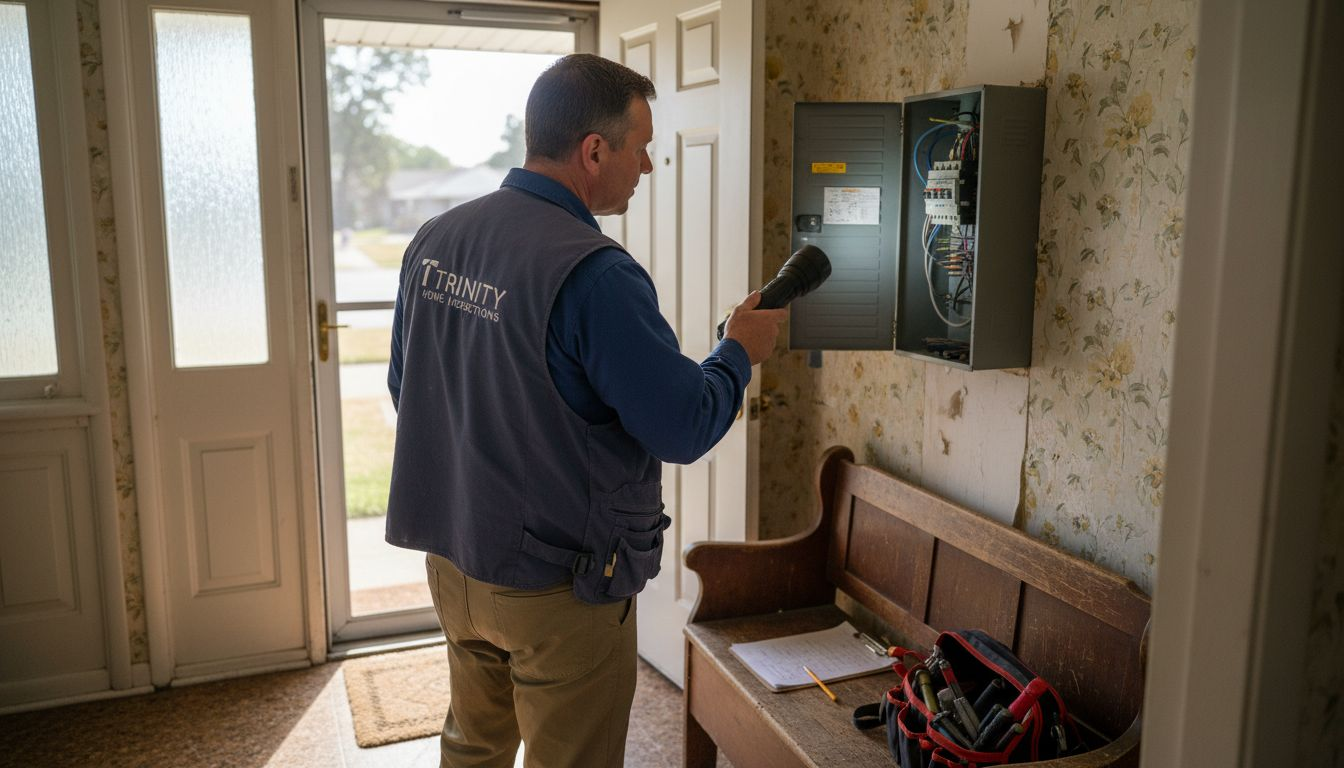
Buying your first home in Baldwin County brings excitement but also plenty of questions. One of the most crucial steps is finding a trusted, accredited home inspector who meets strict professional standards and ongoing education requirements. Understanding what sets an inspector apart helps ensure your property investment is protected. This guide breaks down the differences and highlights the importance of accredited inspector credentials, so you can make confident choices during your home search.
Table of Contents
Key Takeaways
Point | Details |
Accreditation is Essential | Accredited home inspectors undergo rigorous training and certification to ensure quality and expertise. |
Verify Credentials | Always check an inspector’s current certifications and ongoing education before hiring. |
Understand Certification Types | Different certification types indicate various areas of expertise; choose one that fits your property needs. |
Avoid Common Pitfalls | Don’t rely solely on referrals; ensure you verify the inspector’s qualifications and request sample reports. |
What Makes an Inspector Accredited
Being an accredited home inspector involves far more than simply carrying a clipboard and walking through a house. It requires extensive training, rigorous certification processes, and a commitment to professional standards. At Trinity Home Inspections, we understand that accreditation represents a critical benchmark of quality and expertise for homebuyers.
An accredited inspector typically meets specific professional requirements established by recognized national organizations. Professional certification standards involve passing comprehensive examinations, demonstrating technical knowledge, and maintaining ongoing education. These standards ensure inspectors possess the skills necessary to thoroughly evaluate a home’s structural integrity, electrical systems, plumbing, and potential safety concerns.
The accreditation process includes several key components:
Passing standardized national examinations
Completing comprehensive training programs
Demonstrating knowledge across multiple home inspection domains
Adhering to strict ethical and professional conduct guidelines
Maintaining current certifications through continued professional development
The significance of accreditation goes beyond a simple credential. Independent evaluation processes provide consumers confidence that their inspector meets recognized professional standards. This independent oversight removes technical barriers and ensures the inspector’s qualifications are legitimate and trustworthy.
Pro tip: Always verify an inspector’s current certifications and ask about their ongoing professional training before hiring them for your home inspection.
Types of Home Inspector Certifications
Home inspector certifications represent specialized credentials that validate an inspector’s expertise across different domains of property evaluation. These certifications are not simply generic credentials, but rigorous professional qualifications that demonstrate advanced knowledge and commitment to professional standards.
Certification programs offer diverse specializations that allow inspectors to develop targeted expertise. InterNACHI, for instance, provides over 60 distinct certifications including specialized credentials like Certified Chimney Inspector, Certified Electrical Inspector, Certified Mold Inspector, and Certified Radon Tester. These specialized certifications enable inspectors to develop deep knowledge in specific areas of home systems and potential risk assessment.
The most prominent home inspector certification types include:
Certified Professional Inspector (CPI): A general comprehensive certification covering broad home inspection standards
Residential Inspection Certification: Focused specifically on residential property evaluations
Commercial Property Inspector Certification: Specialized in assessing commercial building systems
Specialized System Certifications: Targeting specific domains like electrical, plumbing, or environmental testing
Certification requirements typically involve multiple rigorous components such as:
Passing standardized national examinations
Completing comprehensive training programs
Submitting professional inspection reports for review
Maintaining ongoing professional education credits
Adhering to strict ethical conduct guidelines
Pro tip: When hiring an inspector, request documentation of their current certifications and ask about their specific areas of specialized expertise.
Here’s a summary table comparing general, residential, and specialized home inspector certifications:
Certification Type | Focus Area | Typical Use Case |
Certified Professional Inspector (CPI) | Broad home inspection standards | Standard home purchases |
Residential Inspection Certification | Residential property evaluation | Single-family or condo inspections |
Commercial Property Inspector | Commercial building systems | Office or retail property evaluation |
Specialized System Certifications | Specific systems (e.g., electrical, radon) | High-risk or unique property features |
Required Training and Ongoing Education
Professional home inspectors must undergo extensive initial training and commit to continuous learning throughout their careers. This commitment ensures they remain current with evolving building technologies, inspection methodologies, and industry standards that protect homebuyers and property owners.
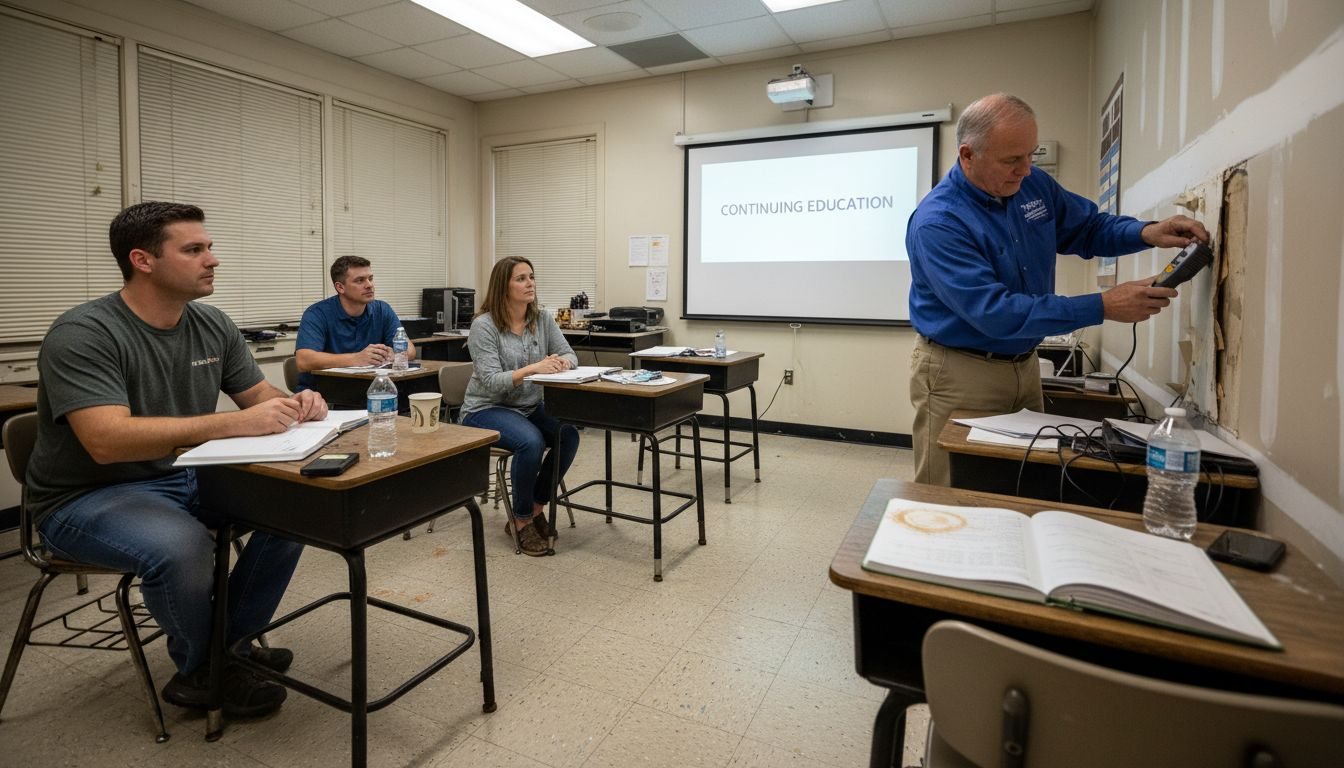
Certification requirements involve a comprehensive process that goes far beyond a simple examination. Aspiring inspectors must complete rigorous online courses covering critical areas like Code of Ethics, Standards of Practice, and detailed technical training. These initial educational programs encompass comprehensive modules on structural systems, electrical components, plumbing networks, roofing techniques, and potential property risks.
The ongoing education process typically includes several key components:
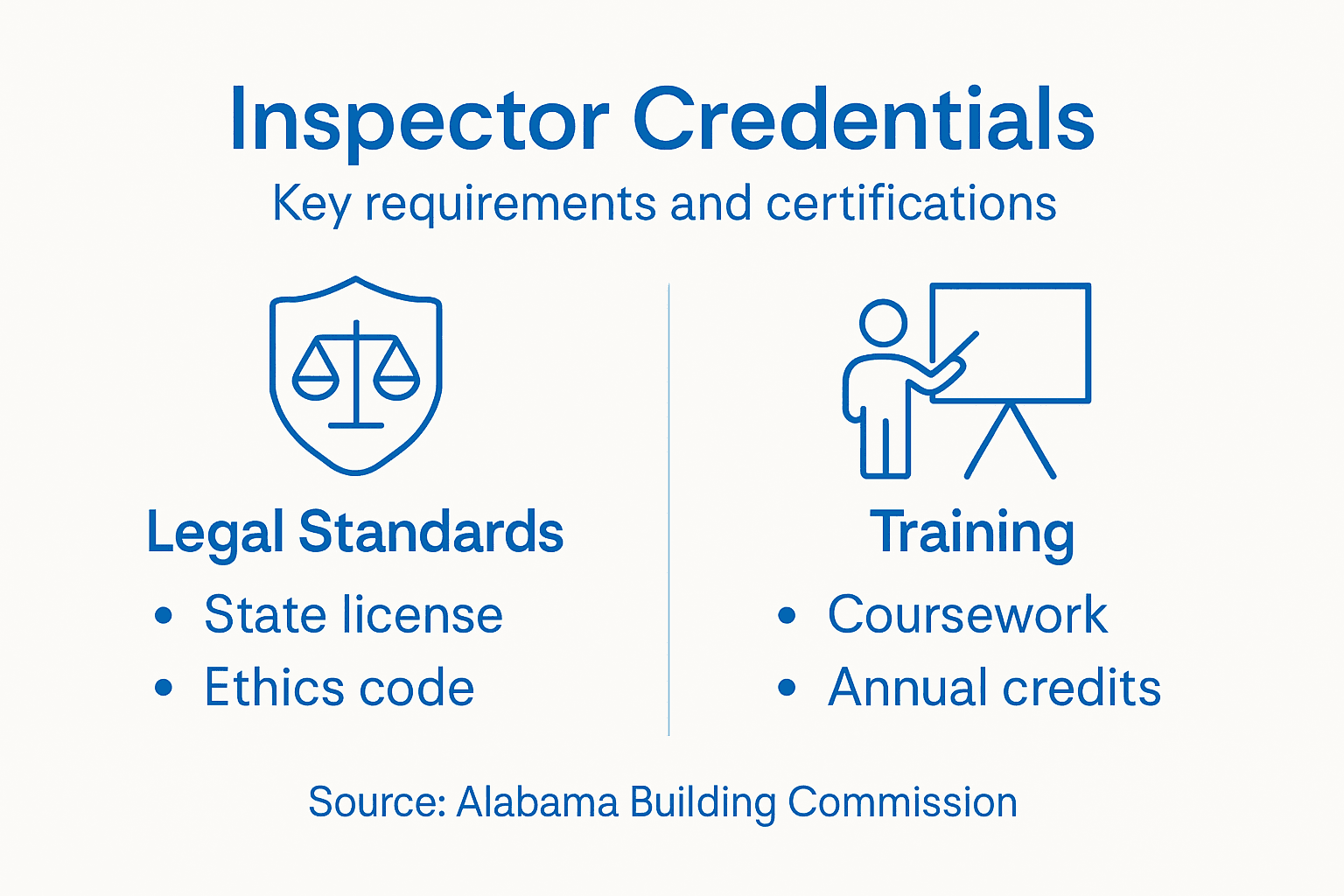
Annual mandatory continuing education credits
Free online courses covering emerging industry technologies
Specialized training in specific inspection domains
Mandatory refresher courses on building codes and standards
Technical updates on new construction methodologies
Professional certification programs require inspectors to earn continuing education credits annually, ensuring they maintain high professional standards. These educational requirements are designed to keep inspectors updated on the latest building technologies, safety protocols, and inspection techniques. By mandating ongoing education, certification bodies guarantee that home inspectors provide the most current and comprehensive evaluation services possible.
Pro tip: Always request documentation of an inspector’s recent continuing education credits to ensure you’re hiring a professionally updated expert.
Legal and Ethical Standards in Alabama
Home inspection in Alabama is a regulated profession with comprehensive legal frameworks designed to protect homebuyers and maintain industry integrity. The state takes a proactive approach to ensuring that home inspectors meet stringent professional standards that safeguard consumer interests and promote transparency in real estate transactions.
Alabama home inspector licensing requires professionals to meet multiple rigorous requirements established by the Alabama Building Commission. These requirements include completing state-approved education programs, passing the National Home Inspector Examination, and demonstrating comprehensive knowledge of industry standards. Inspectors must adhere to specific ethical guidelines that prohibit conflicts of interest and mandate transparent, objective reporting.
Key legal and ethical standards for Alabama home inspectors include:
Mandatory licensing through the Alabama Building Commission
Completion of state-mandated education and training hours
Passing comprehensive national and state examinations
Maintaining required professional liability insurance
Strict adherence to professional code of conduct
Prohibition of conflicts of interest in inspection services
Transparent and unbiased reporting of property conditions
Professional certification programs emphasize the importance of ongoing ethical compliance. These programs require inspectors to continually demonstrate professional competence, maintain updated knowledge of building technologies, and prioritize consumer protection. The regulatory framework ensures that inspectors operate with the highest level of integrity, providing homebuyers with reliable and trustworthy assessment services.
Pro tip: Always request an inspector’s current license number and verify their standing with the Alabama Building Commission before hiring.
This table highlights differences between Alabama licensing requirements and general national standards:
Requirement | Alabama-Specific | National Standard |
Exam Required | National & State examination | National exam |
Minimum Education Hours | State-mandated | Varies by state/organization |
Continuing Education | Mandatory annual credits | Often required, specifics vary |
State License | Issued by Alabama authorities | Often state or organization |
Insurance Requirement | Professional liability needed | Varies by region |
Ethics Standards | Strict, state-enforced | Organization-enforced |
Common Pitfalls When Choosing Inspectors
Selecting a home inspector is a critical decision that can significantly impact your real estate investment. Many homebuyers unknowingly make mistakes that compromise the quality and reliability of their property assessment, potentially exposing themselves to substantial financial risks.
Home inspector selection requires careful consideration beyond simple referrals. One of the most common pitfalls is blindly accepting recommendations from real estate agents who might have conflicting interests. These referrals can lead to less thorough inspections and potentially biased reporting that prioritizes closing the sale over comprehensive property evaluation.
Key pitfalls homebuyers should avoid include:
Relying exclusively on agent-provided referrals
Failing to verify inspector credentials and certifications
Not understanding the full scope of a home inspection
Choosing inspectors based solely on the lowest price
Neglecting to review the inspector’s sample reports
Skipping background and experience verification
Not asking about specialized expertise in specific property types
Inspection limitations create another significant challenge for homebuyers. Many buyers mistakenly expect inspectors to perform invasive testing, provide repair estimates, or make definitive statements about property value. Professional inspectors are bound by strict ethical and legal guidelines that prevent them from overstepping their primary role of objective property assessment.
Pro tip: Request and personally review at least three sample inspection reports before selecting your home inspector to understand their depth of analysis and reporting style.
Choose Accredited Expertise for True Homebuying Confidence
The article highlights the crucial role that accreditation and continuous education play in ensuring your home inspector delivers thorough, trustworthy inspections. You want a professional who meets rigorous standards like passing national exams and adhering strictly to ethical guidelines, so you can avoid costly surprises and gain real clarity on a property’s condition. At Trinity Home Inspections, we align perfectly with these expectations by offering InterNACHI-certified inspections backed by ongoing education and state-of-the-art technology. We take pride in providing you with transparent, photo and video-rich reports on the same day to help you make smart, confident decisions.
Experience the difference that professional training, local values, and advanced tools like thermal imaging and drone roof inspections make when protecting your investment. Visit our Trinity Home Inspections page to learn how we combine accredited expertise with a family-owned approach dedicated to integrity and clear communication.
Ready to eliminate guesswork and avoid common inspection pitfalls described in the article Take the first step towards peace of mind with an inspection from a trusted professional today.
Schedule your inspection now at Trinity Home Inspections where education meets experience and your home’s safety is our priority. Contact us for a full range of certified inspection services and get the clarity you deserve before your next real estate move.
Frequently Asked Questions
What does it mean for a home inspector to be accredited?
An accredited home inspector has met specific professional requirements set by recognized organizations, including passing examinations and completing extensive training, ensuring they can effectively evaluate a home’s condition.
Why is hiring an accredited inspector important for homebuyers?
Hiring an accredited inspector provides assurance that the inspector meets professional standards and possesses the necessary skills to identify potential issues in a property, ultimately protecting the homebuyer’s investment.
How can I verify an inspector’s accreditation and certifications?
Homebuyers should request documentation of the inspector’s current certifications and verify their standing with relevant accreditation bodies or professional organizations before hiring them.
What types of certifications should I look for in a home inspector?
Look for certifications such as Certified Professional Inspector (CPI), Residential Inspection Certification, and specialized system certifications, which indicate the inspector’s expertise in assessing various aspects of property evaluation.
Recommended
