
Condo Inspections: What Every Buyer Needs to Know

A condo inspection examines the interior of your unit and every system you legally own, from the electrical panel to the plumbing fixtures, while stopping at the boundary where HOA responsibility begins. That boundary is not a physical wall you can see. It is defined by the condominium declaration, and understanding it before you close is what separates a confident purchase from a costly surprise.
Here is what a condo inspection covers and why it matters:
You own the interior. The inspection evaluates everything within your unit’s legal boundary: walls, ceilings, floors, plumbing, electrical, HVAC, windows, doors, and built-in appliances.
The HOA owns the rest. Roofs, foundations, elevators, shared mechanical rooms, and exterior envelopes are common elements maintained by the association, not inspected in your unit report.
Financial exposure goes both ways. A clean unit inspection does not mean a financially healthy building. Deferred maintenance on common elements can trigger special assessments that cost owners thousands.
Two documents, not one. Pair your inspection report with the HOA reserve study and recent meeting minutes. Together, they give you the full picture of what you are buying into.
What does a full condo inspection include?
A standard condo inspection covers everything inside the unit’s legally defined boundary plus the systems that exclusively serve that unit. The inspector works room by room, operating fixtures, cycling equipment, and photographing visible defects.
Here is what falls within scope:
Interior surfaces: Walls, ceilings, and floors are checked for cracks, stains, soft spots, and signs of past water intrusion.
Doors and windows: Every accessible door and window is tested for operation, seal integrity, and glass condition. Fogged double-pane glass signals a failed seal.
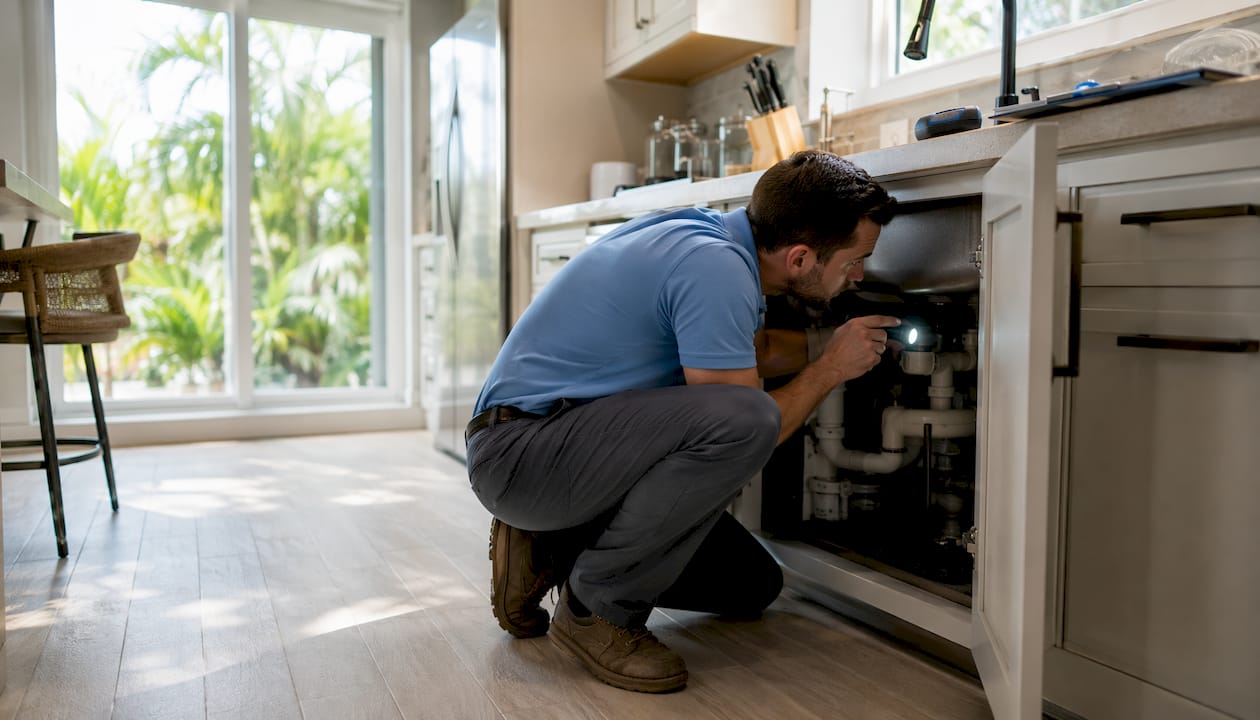
In-unit plumbing: Sinks, toilets, tubs, showers, dishwasher connections, and the in-unit water heater are all tested. The inspector checks water pressure, drain speed, and supply line condition.
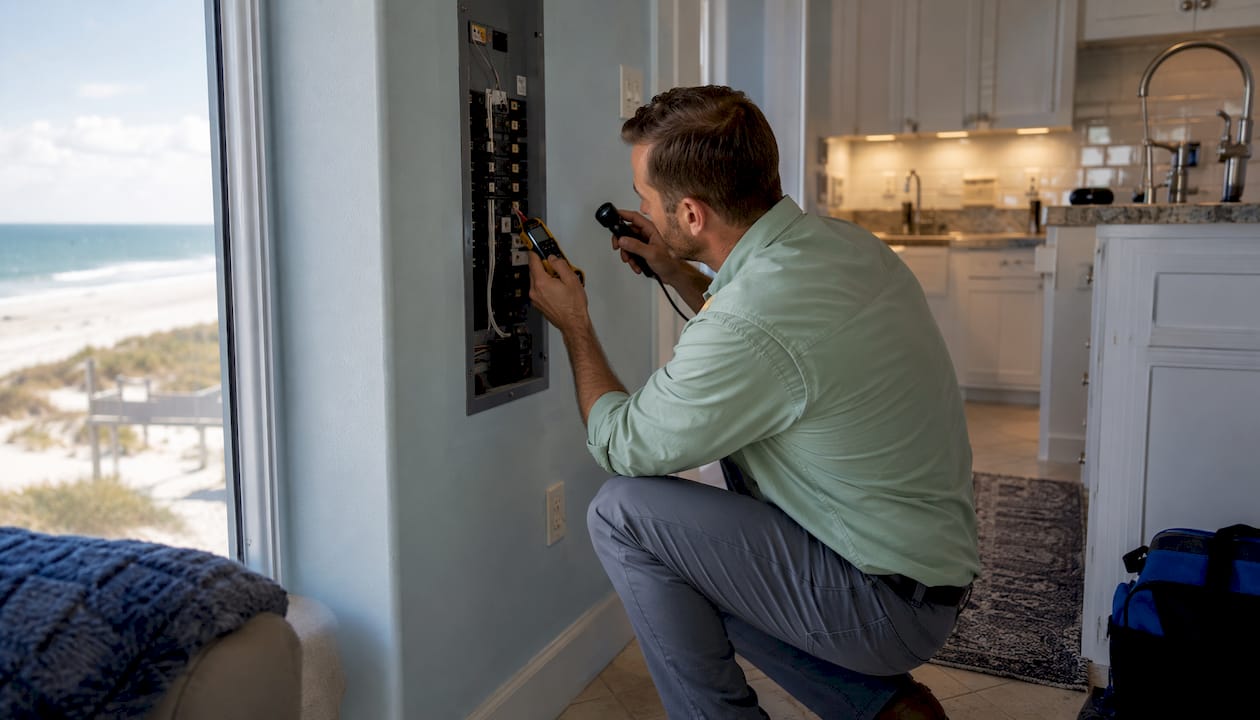
Electrical panel and wiring: The unit’s panel or subpanel, all outlets and switches, GFCI protection in wet areas, and visible wiring are evaluated.
HVAC equipment: Furnaces, air handlers, mini-splits, and packaged terminal units serving only your unit are cycled and assessed for age and condition.
Built-in appliances: Refrigerator, range, dishwasher, and microwave are tested for basic operation when included in the sale.
Ventilation: Bathroom exhaust fans and kitchen range hoods are confirmed to exhaust to the exterior, not into a shared wall or ceiling cavity.
What the inspector does not cover includes the roof, foundation, exterior walls, parking structure, hallways, elevators, and any shared mechanical rooms. These are HOA-owned systems, and their condition is documented in the reserve study, not your inspection report.
Florida milestone inspections and what the law requires
Florida law adds a layer of required building-level evaluation that goes well beyond a standard unit inspection. Milestone inspections are mandatory for condominium buildings that are 30 years old or older, and they focus on structural integrity rather than individual unit condition.
A milestone inspection evaluates:
Load-bearing walls and structural supports throughout the building
Foundation condition and any signs of deterioration
Fire safety systems, including suppression and alarm components
Major building components such as balcony slabs, parking structures, and exterior facades
The law requires a Phase 1 visual inspection by a licensed engineer or architect. If that phase identifies concerns, a Phase 2 inspection with physical testing is required. Buildings must complete their milestone inspection by a deadline tied to their age and location, and results must be reported to the local building official.
For buyers in Florida, this matters directly. Ask the seller or HOA whether the building has completed its milestone inspection and request a copy of the report. A building that has not yet complied, or one whose report flagged structural concerns, carries financial risk that your unit inspection alone will never surface. Florida also requires reserve studies for condominium associations, meaning you have a legal right to review how well-funded the building’s repair reserves actually are.
Condo inspection checklist: what inspectors look for by system
A thorough pre-purchase condo inspection follows a system-by-system approach. Here is what a qualified inspector evaluates in each area:
Plumbing
Faucet operation and water pressure at every fixture
Leak checks at toilet base flanges, under sinks, and at dishwasher connections
Supply line and drain condition from the wall into each fixture
Water heater age, base condition, and temperature-pressure relief valve
Electrical
Panel accessibility and correct breaker labeling
GFCI outlet presence and function in kitchens, bathrooms, laundry, and balcony areas
Outlet testing throughout the unit
Visible wiring condition and any double-tapped breakers
HVAC
Equipment age and overall condition
Full operational cycle test for both heating and cooling
Airflow from all supply registers
Air filter condition (a clogged filter often signals neglected maintenance)
Corrosion or water staining around fan coil units
Interior finishes
Ceiling stains, which often indicate leaks from units above
Wall soft spots adjacent to bathrooms
Floor condition in laundry areas and under kitchen sinks, where subfloor damage from past leaks is common
Cracks at window and door corners
Windows, doors, and balcony
Operation and locking function of every window and door
Balcony railing stability tested by firm lateral pressure
Sliding door lock engagement
Weatherstripping condition
Shared and common areas The inspector cannot enter mechanical rooms or inspect the roof, but you can observe. Water stains on your ceiling near an exterior wall, musty odors in hallways, or visible concrete spalling in the parking structure are all worth noting and raising with the HOA before you close.
How much does a condo inspection cost?
Condo inspection pricing typically runs $250 to $400 for a unit between 700 and 1,800 square feet, with most buyers paying around $325 for a two-bedroom unit. The narrower scope compared to a single-family home, no roof walk, no foundation crawl, no attic entry, is what drives the lower price.
Three tiers cover most situations:
Studio or one-bedroom under 800 sq ft: $250–$325
Two-bedroom between 1,000 and 1,500 sq ft: $300–$400
Three-bedroom or larger unit above 1,800 sq ft: $375–$550
Add-ons sit on top of the base fee. A separate washer-dryer inspection runs about $50. A private balcony or rooftop deck inspection adds $75–$150. A moisture-meter scan of suspect areas in bathrooms and kitchens also runs $75–$150 and is worth requesting in any building over 15 years old.
Building age and unit location affect price modestly. Top-floor units with attic access add $25–$75 to the scope. Ground-floor units with private garage or basement storage add a similar amount. Townhouse-style condos with their own roof and exterior walls price closer to small single-family homes at $400–$550 because more of the structure falls within the inspector’s scope.
One thing buyers sometimes overlook: condo inspection pricing reflects fewer inspection hours, but the financial risk from uninspected common elements can far exceed the cost of the inspection itself. A building with a 25-year-old roof and an underfunded reserve is a much bigger financial exposure than a leaky faucet inside your unit.
Always confirm scope and get a written pre-inspection agreement before booking. That document defines the unit boundary and prevents disputes about what should have been included.
How does a condo inspection differ from a home inspection?
The core difference between condo and home inspections comes down to ownership. A condo buyer owns the interior of the unit. A home buyer owns the entire structure plus the land. That ownership model determines what the inspector evaluates.
In a single-family home inspection, the inspector covers the roof, foundation, exterior cladding, attic, crawlspace, and all mechanical systems serving the structure. In a condo inspection, those elements belong to the HOA and are outside the inspector’s scope entirely.
A few other distinctions worth knowing:
Building type changes scope. A high-rise unit inspection is almost entirely interior. A townhouse-style condo with its own roof and exterior walls inspects more like a small house.
New construction condos still need inspections. Construction defects in new builds are common, and they need to be documented while the builder’s warranty is still active. Focus especially on plumbing connections and HVAC installation.
The HOA document review is part of the process. For a single-family home, the inspection report largely stands alone. For a condo, it must be paired with the reserve study and meeting minutes to give you the full financial picture.
If you are weighing what makes condo inspections different from a standard home inspection, the short answer is scope and ownership. The depth of the in-unit evaluation is the same quality; the breadth is narrower by design.
Understanding ownership responsibility and inspection scope
The legal unit boundary is defined by the condominium declaration, not by what you can see during a walkthrough. Three boundary patterns appear most often. Under a “wall-in” declaration, the unit boundary is the interior face of the perimeter drywall, meaning studs, framing, and exterior cladding are all common elements. A “mid-wall” declaration runs the boundary through the centerline of the perimeter wall. A “wall-out” declaration, which is rare, extends the boundary to the exterior cladding.

Limited common elements add another layer. A balcony, a designated parking spot, or a storage cage is part of the common area but reserved for your exclusive use. The association typically owns the structure; you have exclusive use and often shared maintenance responsibility. Who fixes the balcony railing or the underside of the slab is set by the declaration, not by common sense.
This is why reviewing HOA documents alongside your inspection report is not optional. The reserve study tells you whether the building has enough money set aside for major repairs. Meeting minutes from the last 12–24 months reveal pending litigation, known water intrusion problems, planned special assessments, and budget shortfalls. Recent financials show whether HOA fees are rising and whether owners are paying them.
Pro Tip: Bring your HOA documents to the final walkthrough and ask your inspector to connect any findings in the report to known building-wide issues, following this workflow valutazione immobile: guida pratica completa. If your ceiling shows a water stain near an exterior wall, and the meeting minutes mention ongoing facade repairs, you have real negotiating leverage before closing.
If water damage in your unit originates from a common element like a roof leak or a neighboring unit’s plumbing, your inspection report becomes the documentation you need to demand HOA repairs. That is one of the less obvious ways a thorough unit inspection pays for itself.
How to choose a qualified condo inspector
Certification is the starting point, not the finish line. Look for an inspector certified by InterNACHI or ASHI, both of which publish member directories and hold inspectors to written standards of practice. Certification through InterNACHI is recognized by the U.S. Department of Education, which means the training behind it meets a national standard of quality.
Beyond credentials, ask these three questions before booking:
How many condo inspections have you performed in the last year? Multi-unit residential experience is different from single-family experience. An inspector who mostly works on houses may not know the nuances of HOA boundary definitions or limited common elements.
Do you perform a moisture-meter scan in bathrooms and kitchens? This is a useful add-on for any building over 10–15 years old. Plumbing leaks at toilet flanges and dishwasher connections are among the most common condo inspection findings, and a moisture meter catches what eyes miss.
How is the unit boundary defined in your pre-inspection agreement? A qualified inspector will give you a written answer. If the answer is vague, that is a problem before the inspection even starts.
You should also confirm that the inspector carries adequate insurance. Errors and omissions coverage protects you if something is missed; general liability coverage protects you if something is damaged during the inspection. Ask for both coverage amounts in writing.
Attending the inspection matters. Plan to be present for at least the last hour. That walkthrough is where the inspector explains what is serious, what is cosmetic, and what connects to broader building issues. Reading a report without that context leaves gaps that are hard to fill after the fact. For a full list of questions to ask your inspector before you book, that resource covers the full range.
How to read your condo inspection report
A well-written inspection report organizes findings by severity, not by room. Look for a system that separates safety concerns from maintenance items from cosmetic issues. If the report does not make that distinction clearly, ask the inspector to walk you through it.
Pay attention to these categories:
Safety or major items require immediate attention or negotiation before closing. A failed GFCI outlet in a bathroom, an HVAC unit flagged for replacement, or active plumbing leaks fall here.
Defects and issues are real problems that need repair but may not be urgent. Bathroom exhaust fans venting into the ceiling cavity rather than to the exterior is a recurring code violation in older buildings, typically costing $200–$500 to correct.
Maintenance and minor items are things you can address yourself or with a handyman after closing. A stiff window latch or a worn door sweep belongs here.
One thing the report cannot tell you is what is happening in the building behind your four walls. A unit that inspects cleanly can still sit inside a building with a failing roof and $30,000 in reserves. That is why the reserve study and meeting minutes belong in the same review session as the inspection report. Neither document replaces the other.
For high-stakes purchases, such as luxury units, buildings with active warranty issues, or older buildings with known problems, some buyers commission a separate building condition assessment from a licensed engineer. This review may cost a few thousand dollars depending on scope, and it is worth considering when HOA documents show a pattern of major repairs or special assessments.
How a condo inspection shapes your buying decision
A condo inspection gives you three things at once: a clear picture of the unit’s current condition, documented leverage for price negotiation, and a baseline for your maintenance budget after closing.
Buyers who skip the inspection to move faster often discover deferred maintenance after closing, when the cost falls entirely on them. A plumbing leak at a toilet flange can be costly to repair. An HVAC air handler replacement is a significant expense. Those are negotiable before closing and out-of-pocket after it.
The inspection report also protects you in a less obvious way. If a defect in your unit traces back to a common element, the written report is your documentation when you approach the HOA for repairs. Without it, the conversation is your word against theirs.
For buyers in Gulf Coast Alabama, understanding what an inspection covers versus what the HOA owns is especially relevant in coastal condo buildings, where moisture intrusion, salt air corrosion, and aging HVAC systems are common findings. The inspection is not just a formality. It is the clearest look you will get at what you are actually buying before you sign.
A real estate transaction is also a good time to verify property records. Confirming permits and deed details through a property and permit search can surface unpermitted work inside the unit that the inspection flags but cannot fully explain.
Trinity Home Inspections is ready to inspect your condo
[

Alt text: Trinity Home Inspections inspector in khaki pants and blue shirt with white pocket logo inspecting a condo unit in Gulf Shores, Alabama
Trinity Home Inspections delivers InterNACHI-certified condo inspections across Gulf Coast Alabama, including Gulf Shores, Orange Beach, Daphne, Fairhope, Mobile, and the surrounding Baldwin and Mobile County areas. Every inspection includes same-day photo and video-rich reports, free thermal imaging to catch hidden moisture and electrical issues, and a color-coded report that separates safety concerns from minor maintenance items so you know exactly where to focus.
Matt Cameron and the Trinity team go beyond the minimum. Every accessible outlet, switch, window, and door gets tested, not just a representative sample. When mold testing or indoor air quality sampling is needed, those mold inspection services are available as add-ons without scheduling a separate company. Trinity carries $1M in errors and omissions coverage and a $2M general liability policy, so you are protected if anything goes sideways.
Ready to schedule your condo inspection? Call 251-210-7376 or visit TrinityInspectionsLLC.com to book.
Key Takeaways
A condo inspection covers only what you legally own inside the unit; the building’s financial health requires a separate review of HOA reserve studies and meeting minutes.
Point | Details |
Inspection scope is interior only | A standard condo inspection covers in-unit plumbing, electrical, HVAC, finishes, windows, and doors, not the roof or foundation. |
HOA documents are equally important | The reserve study and meeting minutes reveal building-wide financial risks the inspection report cannot surface. |
Typical cost is $250–$400, with most buyers paying around $325 for a two-bedroom unit; add-ons like moisture-meter scans add $75–$150. | |
Florida has mandatory milestone inspections | Buildings 30 years or older must undergo structural evaluations under Florida law, separate from your unit inspection. |
Trinity Home Inspections serves Gulf Coast Alabama | InterNACHI-certified inspections with same-day reports, free thermal imaging, and $2M general liability coverage. |
FAQ
What do inspectors check in a condo inspection?
A condo inspector evaluates everything inside the unit’s legal boundary: plumbing fixtures, the electrical panel and outlets, HVAC equipment, interior walls and finishes, windows, doors, and built-in appliances. Common elements like the roof, foundation, and shared mechanical rooms are outside the scope.
How much does a condo inspection cost in Florida?
Most condo inspections cost between $250 and $400 depending on unit size, complexity, and add-ons. The average price for a two-bedroom unit is around $325. Add-ons such as a balcony inspection ($75–$150) or moisture-meter scan ($75–$150) add extra cost.
What is the biggest red flag in a condo inspection?
Active plumbing leaks at toilet flanges or dishwasher connections, HVAC equipment older than 15 years, and bathroom exhaust fans venting into the ceiling cavity rather than to the exterior are the most common serious findings. Any of these warrants negotiation before closing.
How often do condos have to be inspected in Florida?
Florida law requires milestone inspections for condominium buildings that are 30 years old or older, with follow-up inspections required every 10 years after that. These are building-level structural evaluations, separate from the unit inspection a buyer commissions before purchase.
Do I really need a condo inspection if the building is new?
Yes. Construction defects in new builds are common and need to be documented while the builder’s warranty is still active. Plumbing connections, HVAC installation, and rough electrical work are the areas where speed-of-construction shortcuts most often appear.
Recommended

