Inspect First, Alabama Homeowners: When Cracked Shingles Need Repair

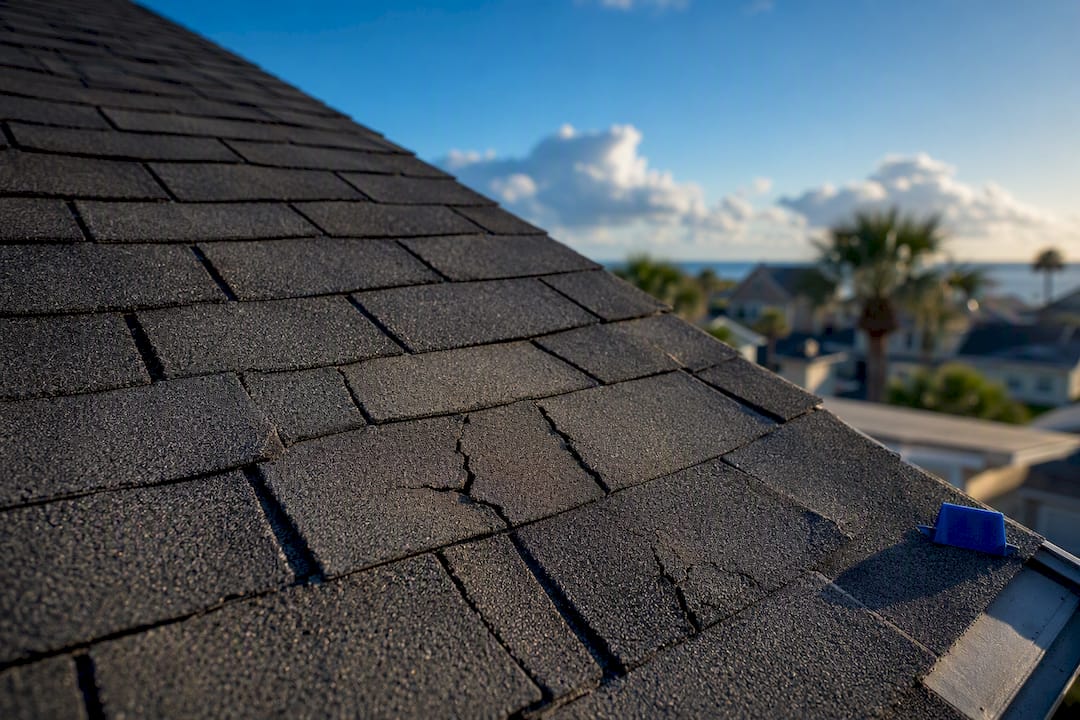
A few hairline cracks scattered across an older roof usually mean you have one to three months to schedule a repair, not a reason to panic. Full-thickness cracks that expose the underlayment or sit near flashing are a different story: those need attention within days. Widespread cracking on a roof past the 20 year mark almost always signals that replacement, not another round of patching, is the smarter move.
TL;DR:
Widespread cracks on a roof older than 20 years indicate that replacement is likely necessary, rather than patching individual spots.
Full-thickness cracks near flashing or that expose the underlayment should be repaired within days to prevent water intrusion and structural damage.
Impact or hail damage results in directional fractures and bruising, which are distinguishable from age-related cracking and influence insurance claims.
Regular visual inspections from the ground, combined with attic checks and professional assessment, are key to identifying the severity and cause of cracks.
Professional inspections with drone imagery and thermal imaging provide the most accurate evaluation, especially for roofs that cannot be safely accessed or show signs of underlying moisture.
What Causes Cracked or Damaged Shingles?
Cracking rarely comes from one single event. Most shingles fail through a combination of age, weather, and installation quality working against them over time.
Thermal cycling and UV exposure: Alabama summers push shingles through daily expansion and contraction, and ultraviolet light gradually makes the asphalt brittle. This shows up as uniform hairline cracks spread evenly across every slope, not just one section.
Hail and impact damage: A hailstorm leaves sharp, directional fractures and circular bruising, with granules knocked loose in a clear pattern. Technical reviews of hail damage note this pattern looks nothing like ordinary age wear, which matters when you file an insurance claim.
Wind and poor nailing: Lifted tabs, torn corners, and missing shingles often trace back to fasteners that were driven at the wrong angle or missed the nailing strip entirely.
Poor attic ventilation: Trapped heat bakes the underside of shingles, speeding up brittleness years before it should happen.
Material also plays a role. Standard three-tab shingles tend to crack sooner than architectural or laminated styles, which have extra layers that resist wind lift and flex better in heat.
Why Cracked Shingles Are a Bigger Risk Than They Look
A cracked shingle rarely stays a one-shingle problem. Water finds the gap, works underneath the neighboring tabs, and starts compromising the underlayment beneath it. That domino effect is why a small crack you noticed last spring can become a leak by fall.
Mold can begin colonizing damp wood within 24 to 48 hours of sustained moisture, according to EPA guidance on mold and moisture. Once water reaches exposed decking, that clock starts running immediately.
The damage you can’t see often costs more than the damage you can, so using quality materials like the Roof - Underlay Felt and Black Shingles with Nails Bundle can make a big difference in repair durability. Saturated attic insulation loses its effectiveness, wood sheathing softens and rots, and your energy bills creep up as the attic loses its ability to regulate temperature. There’s also a paperwork risk: insurers typically separate “wear and tear,” which they won’t pay for, from storm-related perils, which they usually will. Delaying a repair can blur that line, giving an adjuster room to argue the damage developed gradually rather than during a covered event.
How Do You Tell Surface Cracks From Full-Thickness Damage?
You don’t need to climb onto a steep roof to get useful information. Start with what you can see from the ground and the attic, and save the roof walk for someone trained to do it safely.
Scan from the ground with binoculars. Look for curling edges, bald patches where granules are missing, and shingles that look darker or shinier than the rest of the roof.
Check the attic for daylight or staining. Water stains on rafters or sheathing usually mean a breach has already happened somewhere above.
Gently lift a suspect edge (only if easily and safely reachable from a ladder). If it separates into layers or you can see the black underlayment through the crack, that’s full-thickness damage, not surface wear.
Compare the crack pattern. Uniform hairline cracks across every slope point to age-related fatigue, while concentrated, directional cracks with bruising suggest hail or impact.
Photograph everything with a timestamp. Wide shots for context, close-ups for detail, and a note of the date and any recent storm.
Pro Tip: If your roof pitch is steep or wet, don’t risk a ladder inspection at all. A licensed inspector with drone imagery can document the same details from the ground, safely, and often in the same visit.
For a full walkthrough of what to check room by room and roof section by roof section, Trinity Home Inspections’s roof inspection checklist covers the process in more detail.
Should You Repair or Replace the Shingles?
The right call usually comes down to four numbers: how old the roof is, how much of it is affected, whether leaks have happened before, and whether the deck underneath is still sound.
Repair makes sense when: the roof is relatively young and limited damage is present, with the deck underneath dry.
Replacement makes sense when: damage is widespread or the roof is older, or you observe pervasive granule loss across multiple slopes.
A red flag either way: recurring leaks in the same spot or soft, spongy decking. That points to structural rot, and no amount of shingle patching fixes rot underneath it.
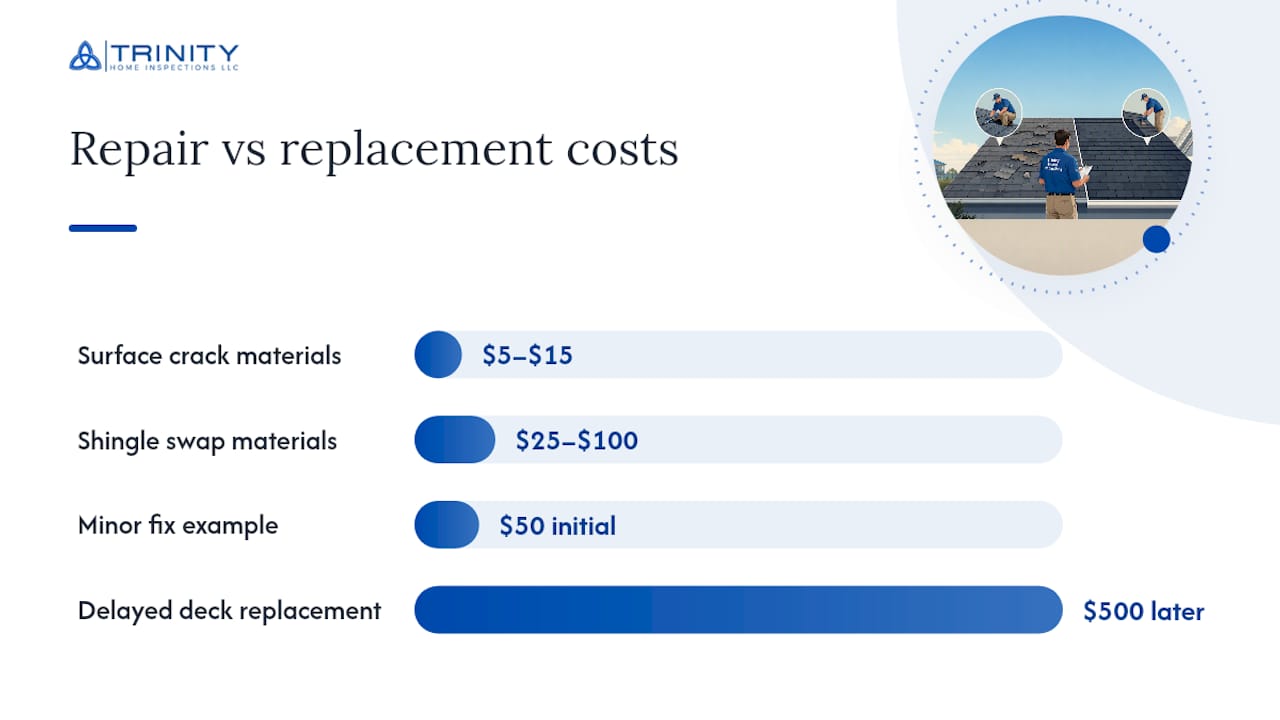
Industry guidance from GAF uses these same age and damage-percentage thresholds as the baseline most roofing professionals apply. On cost, a simple surface crack sealed with roofing cement might run you $5 to $15 in materials, while a proper shingle swap with matching materials lands closer to $25 to $100 per section, plus labor. The expensive mistake isn’t the repair itself. It’s waiting long enough that a $50 fix turns into a $500 deck replacement because moisture had months, not days, to work its way in.
If you’re weighing whether to sink money into a 22 year old roof at all, the Alabama seasonal roof maintenance checklist walks through the maintenance habits that extend a roof’s useful life before you reach that decision point.
What Should You Do Right Now?
Your next move depends entirely on what kind of damage you’re looking at, and safety comes before documentation every time.
Skip the roof if it’s steep, wet, or you’re not confident on a ladder. Call a professional instead of risking a fall.
Photograph what you can see safely, note the date, and jot down any recent storms or high winds.
Check the attic for active drips or fresh staining. If you find either, this moves from “schedule it” to “handle it now.”
Tarp only if water is actively entering the home, and call an emergency repair crew the same day.
Book a full inspection, aiming for within days if decking is exposed, or within one to three months for isolated hairline cracks.
Pro Tip: Never file an insurance claim based on your own photos alone if a storm was involved. A documented professional inspection report gives you far more leverage with an adjuster than a handful of phone pictures.
How a Trained Inspector Actually Evaluates Shingle Damage
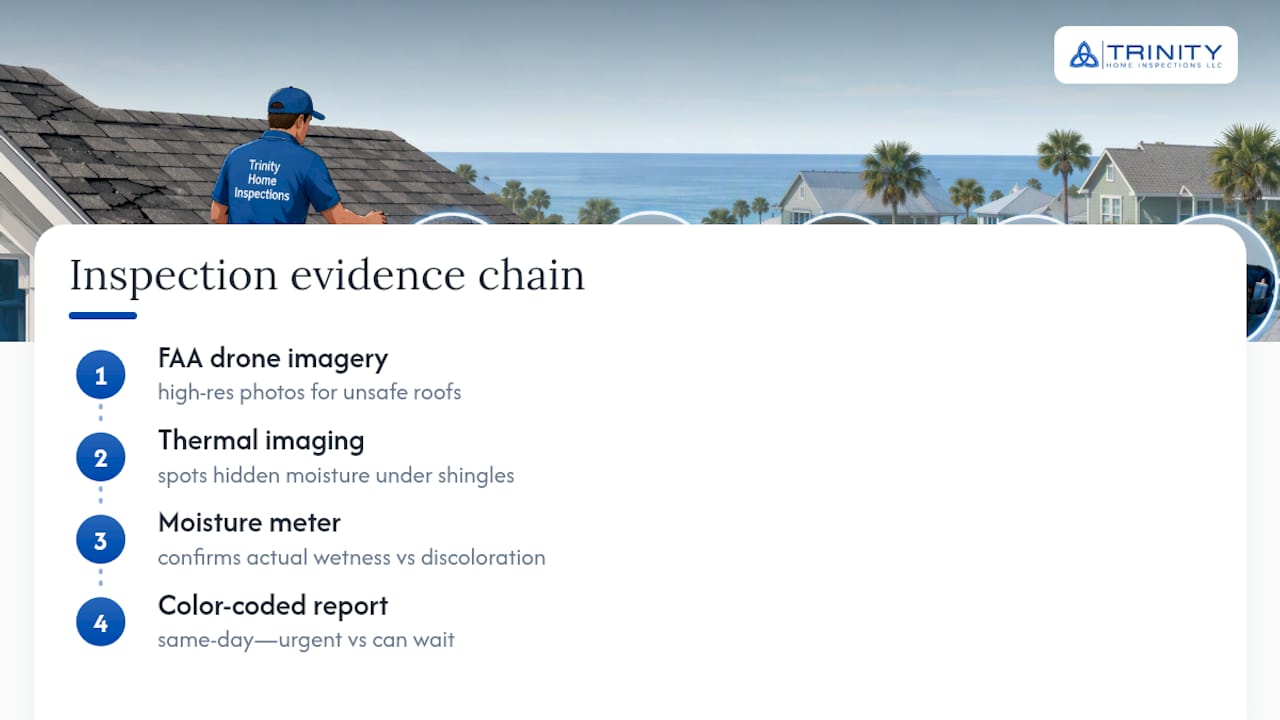
An InterNACHI-certified inspection goes past what’s visible from the driveway. Trinity Home Inspections pair FAA-certified drone imagery for roofs that aren’t safe to walk with thermal imaging that spots hidden moisture pockets under intact-looking shingles, plus moisture meters that confirm whether a suspect area is actually wet or just discolored.
That combination catches underlayment failures a visual-only look would miss entirely, and it gives you a same-day, color-coded report that separates genuine urgent items from things that can wait. For Gulf Coast homes dealing with salt air and wind exposure specifically, that documentation matters even more, which is why we cover it in more depth in our piece on roof inspections for coastal Alabama homes. A well-documented inspection also protects you from a common insurance headache: an adjuster labeling storm damage as ordinary wear and tear because nobody photographed the pattern correctly the first time.
The Truth About Shingle Damage Nobody Tells You
Most advice online treats every crack like a five-alarm fire, and that’s backwards. The research is clear that pattern and location matter more than the mere presence of a crack. A handful of uniform hairline cracks on a 12 year old roof is a maintenance item. A single full-thickness crack near a valley or chimney flashing on the same roof is not, because water there has a direct path to the deck.
Where conventional advice really falls short is the insurance angle. Homeowners photograph damage, then wait, then wonder why their claim gets denied months later. The pattern of the crack, documented promptly and correctly, is often the difference between a covered claim and an out-of-pocket repair. I’d rather see a homeowner call for a professional look too early than too late. A trained eye with a thermal camera can tell you in one visit whether you’re looking at a $75 fix or the start of a full re-roof, and that clarity is worth more than another week of guessing.
— Matt
Get a Roof Assessment Without Climbing a Ladder
Trinity Home Inspections gives you what a visual-only walkthrough can’t: drone imagery for roofs that aren’t safe to walk, thermal imaging to catch moisture hiding under intact shingles, and moisture meters to confirm what’s actually wet versus just stained, all included at no extra charge.
[

What’s included: a full roof and attic inspection, free thermal imaging, moisture checks at any suspect areas, drone roof photos and video when direct access isn’t safe, and a color-coded, same-day report that tells you plainly what’s urgent, what can wait, and what to budget for. If you’re preparing to sell, our pre-listing inspection service covers the roof alongside every other major system, so you walk into negotiations knowing exactly what a buyer’s inspector will find first.
Call 251-210-7376 or book online at Trinityinspectionsllc to get a clear, documented answer on what’s really going on up there.
Sources
FAQ
Can You Damage a Shingle Roof by Walking on It?
Yes. Foot traffic can crack brittle or aging shingles, dislodge granules, and loosen tabs, which is why professionals limit roof walks to conditions and pitches that are actually safe.
Will Insurance Pay for a Damaged Roof?
It depends on the cause. Storm and hail damage with a clear directional pattern is typically covered, while gradual age-related wear and tear usually is not.
What Do Damaged Roof Shingles Look Like?
Look for curling or cupped edges, bald spots where granules have washed away, cracked or missing tabs, and dark streaking where moisture has pooled repeatedly.
How Many Years Should You Replace a Shingle Roof?
Most asphalt shingle roofs reach the end of their useful life between 20 and 25 years, and roofs at or past that age with visible cracking are strong candidates for full replacement rather than another repair.
Why Are My Roof Shingles Hanging Too Far Over the Edge?
Overhanging shingles usually point to improper installation or a drip edge that wasn’t set correctly, and a professional inspection can confirm whether it’s cosmetic or a moisture risk at the fascia.
Recommended