
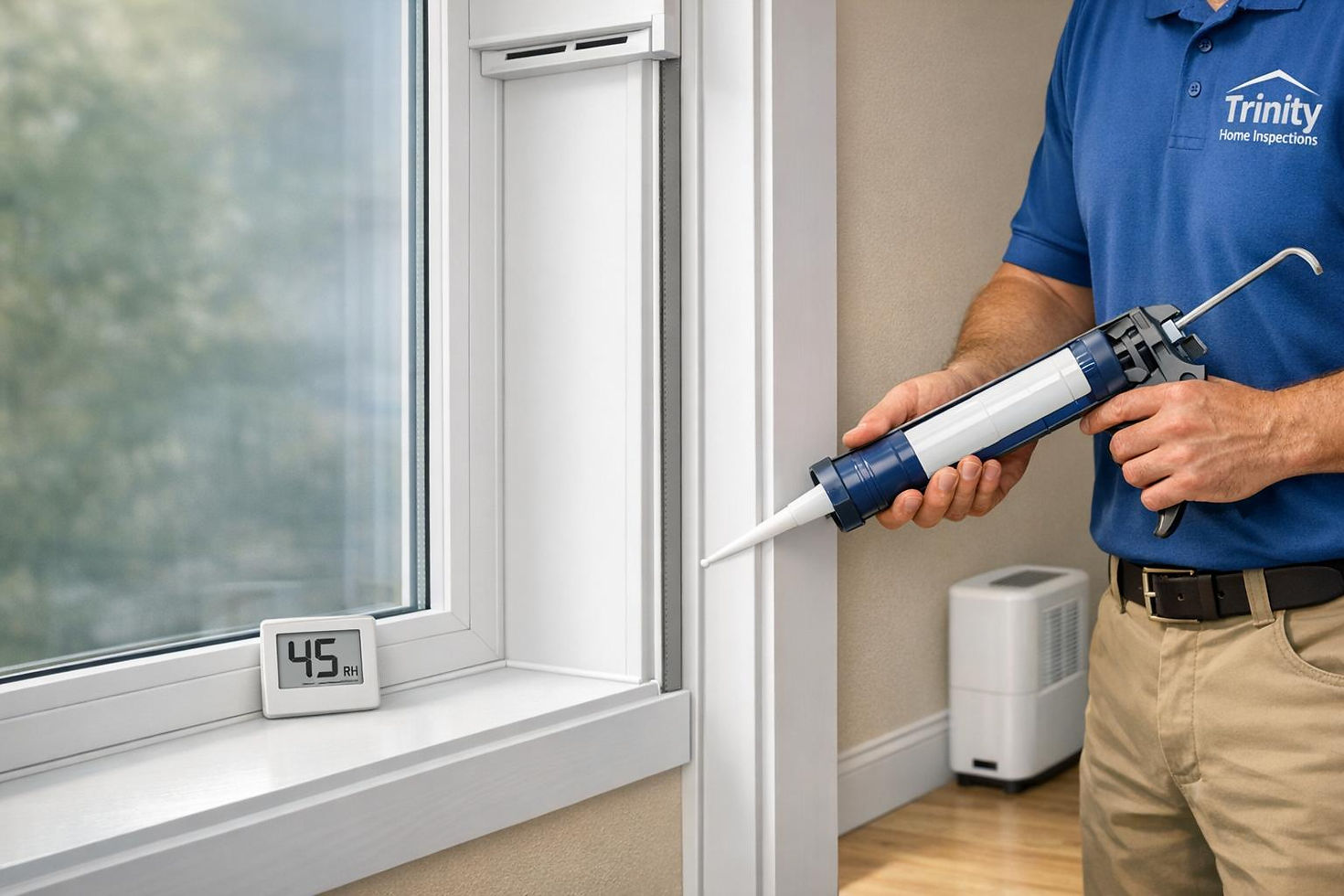
Preventing Mold Around Windows and Doors

If you’ve noticed black spots or a musty smell near windows and doors, mold might be the culprit. Mold thrives in humid environments, especially along the Alabama Gulf Coast, where high humidity and condensation create perfect conditions. Here’s how to stop it:
Control Humidity: Keep indoor levels between 30%-50% using a dehumidifier or your HVAC system.
Improve Ventilation: Use exhaust fans in kitchens and bathrooms, and ensure air circulates around windows and doors.
Seal Gaps: Replace old caulk and install weather stripping to block moisture.
Fix Leaks Promptly: Address water intrusion within 24–48 hours.
Regular Cleaning: Wipe condensation with a vinegar-water solution and vacuum with a HEPA filter.
Use Mold-Resistant Materials: Apply primers, paints, and sealants designed to resist mold growth.
Professional inspections can help identify hidden moisture and structural issues. By taking these steps, you can protect your home and health from mold damage.
Mold on Windows - Is It Harmful and How to Prevent It?
sbb-itb-3aaca89
Why Mold Grows Around Windows and Doors in Humid Climates
How Humidity and Condensation Create Mold
Windows and doors serve as gateways between the warm, sticky air outside and the cool, air-conditioned spaces inside. When that humid air hits a cold surface - like window glass or a metal door frame - it cools to the point where water vapor turns into liquid. This condensation creates the perfect breeding ground for mold spores to settle and spread.
In areas with high humidity, the risk of mold skyrockets. Experts recommend keeping indoor humidity levels between 30% and 50% to help prevent mold. Why? Mold species can start to take over when humidity stays around 70% for several days, especially when a surface’s water activity (the amount of available moisture) reaches 0.75. This typically happens when relative humidity exceeds 60–65% for extended periods.
Architectural Strategist Cosima Sterling points out:
"Door frames are prime targets because they combine porous materials with constant moisture sources".
Materials like wood trim, caulk, and paint provide a natural food source for mold. Even if there’s no visible water pooling, surfaces can stay damp - especially in corners where airflow is limited or in areas prone to steam, like kitchens, bathrooms, or laundry rooms.
These damp conditions don’t just invite mold - they can also lead to structural problems that make matters worse.
Common Structural Problems: Leaks and Poor Sealing
Condensation isn’t the only issue to blame. In humid climates, moisture can sneak in through weak points in a building’s structure, a process known as external water intrusion. Things like clogged gutters, cracked roof flashing, or damaged caulk can direct rainwater right to the tops of windows and doors. Over time, this moisture can soak into the frame, leaving behind tide-like stains or peeling paint.
External water intrusion often adds to the mold problem. Aging or shrinking caulk around door and window casings creates an open invitation for water to seep in. Once inside, water can hide behind the trim, soak into the wall cavity, or even wick upward from the base of the frame if proper rain deflectors or thresholds aren’t in place. For homes with brick or stone exteriors, rain can seep through the porous masonry, especially on walls exposed to strong winds.
Here’s a quick comparison of condensation and penetrating damp:
Feature | Condensation | Penetrating Damp |
Primary Cause | Indoor humidity contacting cool surfaces | Exterior water intruding through materials |
Appearance | Beads of water or fine black speckles | Tide-like stains, flaking paint, soft wood |
Common Locations | Glass inserts and cold corners | Frame outlines or floor-level areas |
Weather Impact | Worse during temperature shifts | Worsens after heavy rain |
If you notice soft spots in the frame or screws that no longer hold securely at the hinges, a simple surface cleaning won’t cut it. The wood may have absorbed enough moisture to weaken its structure, making it essential to call a professional to assess and repair the damage. Inspectors often use thermal imaging to detect these hidden moisture pockets before they cause permanent rot.
How to Prevent Mold Growth
Controlling Indoor Humidity Levels
To keep mold at bay, aim for indoor humidity levels between 35% and 50%, using a digital hygrometer to monitor conditions. Levels above 60% can create a breeding ground for mold, especially if they remain near or exceed 70% for several days.
Set your thermostat between 68°F and 72°F (or closer to 78°F in particularly humid climates) and use the "Auto" setting on your HVAC system. This ensures the system removes moisture from the air rather than just cooling it.
"Aim to keep readings in the 35 to 50 percent range and avoid letting them sit above 60 percent for long periods, because sustained high humidity is exactly the environment mold needs to bloom even when there are no visible leaks." – Cosima Sterling, Architectural Strategist, Framewell
Keep air vents unblocked to maintain proper airflow around windows and doors, and replace HVAC filters regularly to improve efficiency. Pair these steps with good ventilation to further reduce moisture buildup.
Improving Ventilation Around Windows and Doors
Ventilation plays a major role in preventing moisture accumulation. For instance, run bathroom exhaust fans during showers and for 20 minutes afterward to clear water vapor before it settles on nearby surfaces. In the kitchen, use the range hood while cooking and leave it running until all steam has dissipated.
When outdoor humidity is lower than indoors, briefly open windows to circulate fresh, drier air. However, avoid leaving windows open all day in humid weather, as this can draw in more moisture. Additionally, keep furniture and storage items at least 2 inches away from exterior walls and door frames to prevent stagnant air pockets.
Close bathroom and kitchen doors while in use to contain moisture, and open a window in those spaces afterward to let vapor escape directly outside. Avoid drying wet laundry near windows or doors, and make sure your clothes dryer vents directly outdoors.
Regular Cleaning and Maintenance
Regular cleaning is another essential step in mold prevention. For windows and door frames, promptly wipe away condensation using a 1:1 white vinegar and water solution. Vacuum the area with a HEPA filter to capture fine particles, and check that HVAC filters and condensate drains are clear. Baking soda mixed with water is another gentle cleaning option that also helps neutralize musty odors.
When cleaning visible mold, protect yourself with a respirator rated for fine particles, nitrile gloves, and goggles to avoid inhaling spores. After cleaning and drying wood frames, consider applying a mold-resistant primer or clear sealant. This creates a moisture barrier, making future cleanups easier.
Fixing Structural Issues to Prevent Mold
After improving humidity levels and ventilation, the next step is tackling structural weak spots that allow moisture to seep in. Addressing these issues helps block water intrusion and reduces the risk of mold.
Sealing Gaps and Installing Weather Stripping
Even with controlled humidity, gaps in your home’s exterior can let moisture sneak in and settle inside walls or frames. Signs like tide-like stains, flaking paint, or soft wood around windows and doors are red flags to look out for.
To fix this, apply high-quality exterior sealant to replace any failed caulking around casings and frames. For doors, consider adding or upgrading rain deflectors and thresholds to channel water away from the frame instead of letting it pool at the bottom edge.
Weather stripping is another essential step. It ensures a tight seal, preventing water from entering and reducing condensation by limiting warm air from hitting cooler surfaces on frames. Additionally, trimming back dense shrubs near windows and doors can help by allowing sunlight and airflow to dry these areas more quickly after rain.
Once gaps are sealed, move on to fixing leaks and improving drainage to fully safeguard against mold.
Repairing Leaks and Ensuring Proper Drainage
It’s important to differentiate between condensation - seen as water beads in corners - and penetrating leaks, which leave behind worsening stains, soft wood, or white powdery salts on masonry after storms. Penetrating leaks should be addressed within 24–48 hours to prevent mold from taking hold.
Start by cleaning gutters and downspouts regularly to stop water from overflowing onto window and door headers. Damaged roof flashing and cracked mortar above entry points also need repairs to keep water from channeling toward vulnerable areas. For brick or masonry surfaces, applying a breathable water-repellent treatment like silane or siloxane can help limit rain penetration while still allowing trapped moisture to escape.
Here’s a quick guide to identifying moisture issues and their solutions:
Moisture Source | Visual Indicators | Primary Repair Action |
Penetrating Rain | Stains worsening after storms, flaking paint, soft wood | Repair gutters, flashing, and seals; add rain deflectors |
Interior Plumbing Leak | Localized wet patch that persists in dry weather | Fix the leak and thoroughly dry the wall or frame |
High Indoor Humidity | Musty odor, light mold in corners, recurring haze | Improve dehumidification and ventilation |
Using Mold-Resistant Materials and Professional Inspections
Applying Mold-Resistant Paints and Sealants
Once you've tackled structural fixes and improved ventilation, you can take things a step further by using mold-resistant materials. These products are most effective when applied to completely dry surfaces - sealing over damp areas can actually lock in moisture and lead to rot.
Start with a mold-resistant primer that matches your surface type, then finish with a topcoat or clear sealant designed to protect materials like wood, metal, or drywall. Around exterior windows, doors, and joints, silicone sealants are a great choice to block water intrusion. For brick or stone surfaces, consider breathable water-repellent treatments like silane or siloxane. These treatments help reduce rain absorption while still allowing trapped moisture to escape. However, keep in mind that these solutions work best when combined with proper humidity control and a well-sealed exterior. While these measures provide a strong defense, regular professional inspections are still necessary to maintain long-term protection.
Scheduling Professional Inspections with Trinity Home Inspections
Even with the best preventative measures, moisture can sometimes hide in places you might not notice. That’s why scheduling regular professional inspections is so important. These inspections act as a safety net, catching potential problems before they turn into costly repairs.
Trinity Home Inspections uses advanced tools like thermal imaging to detect cold spots where condensation might form, as well as hidden pockets of trapped moisture. For homeowners along the Alabama Gulf Coast - including areas like Daphne, Fairhope, Gulf Shores, and Mobile - this is especially important since the region's humidity often exceeds the 60% level that fosters mold growth. Certified mold swab testing can further identify specific mold strains and determine whether remediation is necessary. Trinity Home Inspections provides same-day digital reports packed with photo and video evidence, along with clear, easy-to-understand recommendations so you can prioritize what needs immediate attention. Their InterNACHI-certified inspectors also offer follow-up support via phone, text, or in person, ensuring you have the guidance needed to handle any moisture or mold concerns effectively.
Conclusion
To keep mold at bay, focus on managing humidity, maintaining structural soundness, and cleaning regularly. Aim to keep relative humidity levels between 30% and 50% to stop mold spores from thriving. Regular HVAC maintenance is also key to ensuring your system reduces moisture instead of contributing to it. Frequent cleaning and inspections can help catch and prevent water-related issues before they escalate.
Seal any gaps, fix leaks within 24–48 hours, and consider applying mold-resistant coatings to dry surfaces. If you notice mold covering over 10 square feet, recurring after cleaning, or if door frames feel soft to the touch, it's time to call a professional.
For areas like the Alabama Gulf Coast, where high humidity is a constant challenge, professional inspections are especially important. Trinity Home Inspections uses advanced tools like thermal imaging to spot hidden moisture and cold spots that aren’t visible otherwise. Their certified mold swab testing identifies specific problems, and they provide same-day digital reports with clear, actionable steps. With their ongoing support, you can stay ahead of mold issues and ensure your windows and doors remain protected. A combination of regular upkeep and professional expertise is the best way to achieve long-term mold prevention.
FAQs
How can I tell if it’s condensation or a leak?
Condensation shows up as water droplets or fogging on surfaces when warm, moist air comes into contact with cooler surfaces. In contrast, a leak usually leads to ongoing water stains, damp spots, or visible dripping, often accompanied by evidence of water entering from outside. Recognizing these signs can help you pinpoint the problem.
What humidity level should my home stay at to prevent mold?
To keep mold at bay, aim to maintain indoor humidity levels between 40% and 60% relative humidity. Staying within this range makes it harder for mold spores to grow, which is particularly crucial if you live in a humid area. A hygrometer can help you track humidity levels, and you can make adjustments using ventilation, dehumidifiers, or air conditioning as needed.
When should I call a professional for mold around windows or doors?
If mold around your windows or doors keeps coming back, spreads over a large area, or doesn’t go away even after cleaning and addressing moisture issues, it’s time to call a professional. You should also seek expert help if:
The mold covers more than 10 square feet.
It stems from water damage or hidden moisture problems.
Moisture issues like persistent condensation are present.
There are health concerns, such as allergies or respiratory problems.
A professional can assess the situation thoroughly and ensure the problem is resolved safely and effectively.
