
Should Exterior Electrical Panels Be Sealed? Gulf Coast Guide

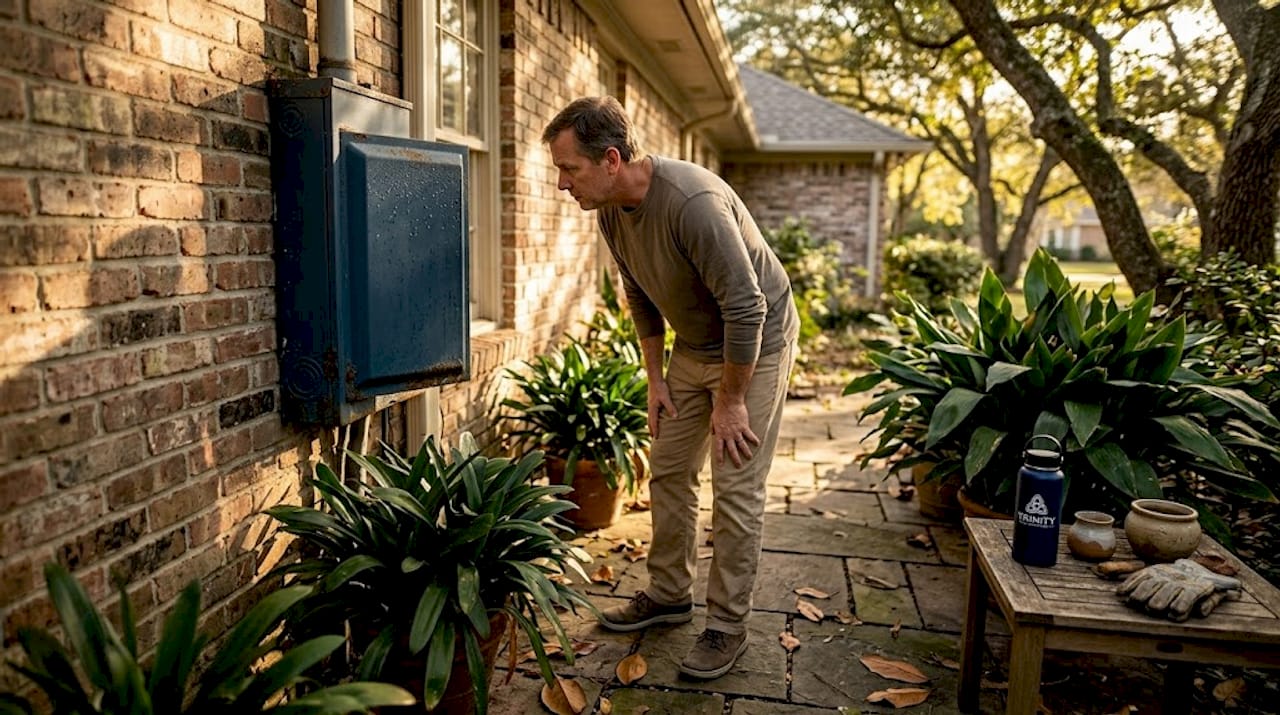
If you live anywhere along the Gulf Coast of Alabama, you have probably looked at your outdoor electrical panel after a rainstorm and wondered whether you should seal it up tight. The question of whether exterior electrical panels should be sealed is one of the most common and most misunderstood topics in home maintenance. The short answer is: partially, and only in the right places. Seal the wrong areas, and you can actually trap moisture inside, accelerate corrosion, and create a safety hazard. This guide breaks down exactly what needs sealing, what must stay open, and how to protect your panel in a coastal Alabama climate.
Key Takeaways
Point | Details |
Don’t seal drainage holes | NEMA 3R panels have weep holes by design; blocking them traps condensation and invites corrosion. |
Seal conduit entries correctly | NEC code requires sealing all conduit penetrations with sealants rated for electrical use, not generic foam. |
Use bubble covers on receptacles | Wet locations require while-in-use covers per NEC 406.9(B) to stay protected when cords are plugged in. |
Overtightening creates leaks | Crushing gaskets with excess screw torque warps the seal and opens gaps for water to enter. |
Local climate raises the stakes | Gulf Coast salt air and humidity demand more frequent inspection and proper product selection. |
Should exterior electrical panels be sealed completely?
This is where the confusion starts for most homeowners. The instinct to seal everything tight makes sense on the surface. You see a gap, you want water out, you reach for a tube of caulk or a can of expanding foam. But exterior panels are not designed to be airtight, and treating them that way creates more problems than it solves.
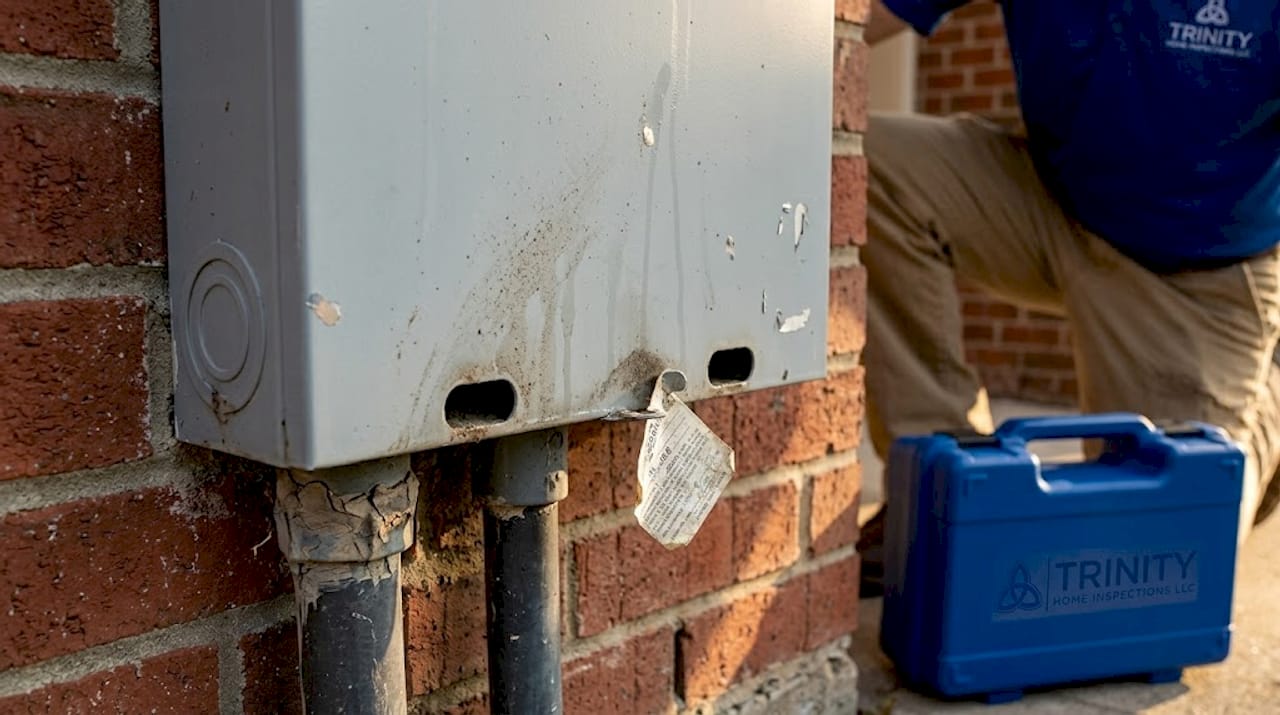
Most residential outdoor electrical panels carry a NEMA 3R rating, which protects against rain, sleet, and snow. Here is the part many homeowners miss: NEMA 3R enclosures are deliberately built with drainage provisions. Those small openings at the bottom of the panel are not manufacturing defects. They are weep holes, and their job is to let any condensation or incidental moisture that gets inside drain out rather than pool on your wiring and breakers.
When you seal those drainage holes, you eliminate the panel’s built-in moisture management system. Warm, humid Gulf Coast air still gets inside through the normal opening and closing of the panel door. When that air cools overnight, it condenses on metal surfaces. Without drainage, that moisture sits on your breakers, bus bars, and wiring connections. Over time, that creates corrosion, arcing, and tripped breakers that do not reset cleanly.
How NEMA ratings compare for coastal homes
Not all outdoor enclosures are rated the same. Here is a quick comparison to help you understand which protection level actually fits a Gulf Coast residential application:
NEMA Rating | Protection Level | Best Application |
NEMA 3 | Rain, sleet, windblown dust | Sheltered residential outdoor locations |
NEMA 3R | Rain, sleet, snow with drainage | Standard residential outdoor panel boxes |
NEMA 4 | Rain, splashing, hose-directed water | Industrial or exposed locations |
NEMA 4X | Above plus corrosion resistance | Chemical or salt-spray environments |
For most homes in Fairhope, Gulf Shores, or Orange Beach, a NEMA 3R enclosure is the right call for a standard residential outdoor panel. It gives you solid weather protection without the cost and complexity of higher-rated enclosures. Upgrading to NEMA 4X is rarely necessary for a typical home and adds maintenance burden without meaningful benefit in most residential settings.
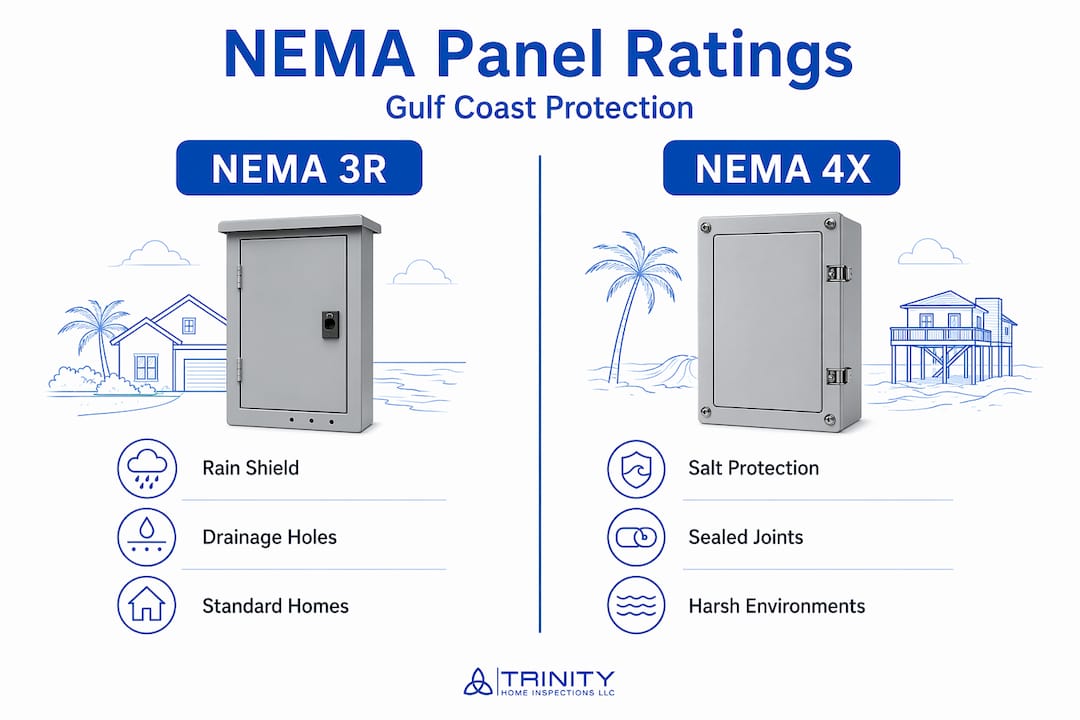
The key advantages of sealing panels correctly come down to sealing the right parts while leaving the drainage system intact. Exterior panel protection is not about making the box watertight. It is about directing water away from the panel and giving any water that does get in a clear path out.
Code requirements for sealing conduit entries
Once you understand what not to seal, you can focus on what absolutely must be sealed. The National Electrical Code is clear here, and this is one area where skipping the right sealant can get expensive fast.
Under NEC 225.27 and 300.5(G), all raceways and conduits entering a building or panel must be sealed using sealants that are specifically identified for use with conductor insulation. This is not just a technical preference. It is a code requirement with real consequences if ignored.
Here is why this matters in practice:
Conduit entries are the primary path for moisture migration. Underground conduits can act like straws, drawing groundwater vapor up and into your panel through capillary action. Sealing the entry stops this migration.
Unused knockouts must be filled. Any knockout opening that does not have a conduit running through it needs a listed closure plug. These small gaps are large enough to let insects, moisture, and even small lizards inside the panel enclosure.
The sealant must be listed for electrical use. This is where many DIY attempts fall short. Generic sealants like standard expanding foam or common silicone caulk are often not rated for contact with conductor insulation and can degrade the wiring over time.
Proper sealant choice matters even more on the Gulf Coast. Humidity and temperature swings between our summer heat and cooler winters mean sealants expand and contract repeatedly. A product not designed for this environment will crack and fail within a few years.
The practical takeaway: use duct seal compound or a sealant specifically listed for raceway penetrations. You will find it at electrical supply houses, and it is worth the extra trip compared to grabbing something off the hardware store shelf.
Pro Tip: When sealing a conduit entry, pack the sealant from the inside of the panel outward. This creates a seal that water pressure from outside pushes against rather than away from, giving you a longer-lasting result.
Protecting and maintaining outdoor receptacles and covers
Outdoor receptacles are a separate but related concern. If you have outlets mounted on your home’s exterior, on a covered porch, or near your pool or dock, the type of cover on those receptacles matters as much as the wiring behind them.
NEC 406.9(B) requires while-in-use bubble covers at all outdoor receptacles in wet locations. A bubble cover, sometimes called a while-in-use cover or an in-use cover, is the kind with a hinged hood that stays closed over the plug even when a cord is plugged in. The older style flat covers protect the receptacle only when nothing is plugged in, which is often not when protection is most needed.
Follow these steps to keep your outdoor receptacles properly protected through Gulf Coast conditions:
Check every outdoor receptacle cover on your property. If the cover is flat and cannot close over a plugged-in cord, it does not meet current code for wet locations. Replace it with a bubble cover.
Inspect gaskets at least once a year. The rubber gasket behind the cover plate dries out and cracks in our heat and UV exposure. A cracked gasket is an open path for water even when the cover looks fine from the outside.
Check for standing water at the base of wall-mounted boxes. Boxes mounted too low on exterior walls or on fence posts can collect water in the conduit below them. Adding a small drip loop to any cord or conduit exiting downward helps direct water away from the box.
Consider position when installing new receptacles. Elevation above grade, sheltering under eaves or awnings, and angling the box slightly downward all reduce the amount of water the enclosure sees over its lifetime.
Test GFCI protection twice a year. Every outdoor receptacle in a wet location should be GFCI protected. Press the test button, confirm the outlet goes dead, then press reset. If it does not respond correctly, call a licensed electrician.
Pro Tip: After replacing a gasket, apply a very thin film of dielectric grease around the gasket before closing the cover plate. It keeps the rubber from drying out and bonding to the surface, making your next inspection far easier.
Common mistakes Gulf Coast homeowners make
Living near the water is one of life’s genuine pleasures. But the salt air and humidity that come with Gulf Coast living put outdoor electrical equipment under stress that inland homeowners simply do not face at the same level. The mistakes below are ones inspectors see repeatedly in homes from Mobile Bay to Baldwin County.
Overtightening enclosure screws. This is probably the most common and least expected mistake. Gasket compression should be firm and even. When you overtighten even one screw, that corner of the gasket gets crushed while the others stay loose, creating a gap right where you thought you were being thorough. Tighten screws snugly and evenly, not with maximum force.
Using the wrong sealant on conduit entries. Expanding foam, regular silicone, and even fire caulk are not always rated for contact with conductor insulation. Using an unapproved product can cause insulation degradation that is invisible until a breaker trips or wiring fails.
Sealing weep holes. Gulf Coast homeowners doing their best to keep moisture out sometimes caulk the small openings at the bottom of their panel enclosures. This is the exact wrong move. Those openings are drainage provisions, and blocking them converts the panel interior into a moisture trap.
Ignoring condensation buildup inside panels. You open the panel and see small water droplets on the inside of the door or on breakers. This is a clear warning sign that moisture is entering faster than it can drain. It may mean the panel needs to be repositioned, better sheltered, or evaluated for a different enclosure type.
Delaying professional assessment when problems appear. If you see corrosion on breakers or terminals, smell burning near the panel, or notice breakers tripping more than usual, those are signals that need a licensed electrician’s eyes. Professional assessment is the right call when physical symptoms show up. Resealing the conduit entry will not fix corrosion that is already on your bus bar.
Pro Tip: Add a simple exterior panel check to your spring and fall home maintenance routine. Open the door, look for moisture, check that weep holes are clear, and verify the gasket is making full contact. Fifteen minutes twice a year can prevent a costly repair.
My honest take on sealing exterior panels
I have inspected hundreds of homes across Mobile, Baldwin, and surrounding counties, and I want to be straight with you about something I see regularly. Well-meaning homeowners cause real damage by over-sealing their exterior panels.
The intent is always good. Someone reads online that moisture is bad for electrical panels and takes it as a reason to seal every gap they can find. What they end up with is a panel full of trapped condensation, rust on the breakers, and a sealant product slowly degrading the wire insulation inside the conduit. I have opened panels where someone stuffed expanding foam into every available space and the whole interior was damp.
What actually works in this climate is simpler than most people expect. Get the right enclosure rating for your application (NEMA 3R is correct for most homes here). Seal conduit entries with proper electrical duct seal. Keep weep holes clear. Replace worn gaskets. Add bubble covers to all wet-location receptacles. That is genuinely most of what you need to do.
The thing I find homeowners overlook most is the gasket on the panel door itself. It gets brittle, it shrinks, and it stops sealing the edges of the door years before the panel itself has any other problem. A new gasket is a ten-dollar fix that people ignore for decades while spending far more worrying about other things.
If your panel shows signs of corrosion, burn marks, or unexplained tripping, stop and call a licensed electrician before touching anything. Those are symptoms of a deeper problem that proper sealing cannot fix and that opening the panel without training can make dangerous. The dangers of ignoring panel issues in this climate compound faster than anywhere else in the country because of what salt air and humidity do to metal and insulation over time.
— Matt
Get expert eyes on your exterior electrical system
[

At Trinity Home Inspections, we include a detailed electrical system review in every home inspection, using thermal imaging at no extra charge to help identify moisture infiltration, overheated components, and corrosion that is not visible to the naked eye. Our inspectors know what Gulf Coast conditions do to exterior panels, and we flag issues in plain language so you know exactly what needs attention now versus what to monitor over time.
If you are buying or selling a home in Baldwin or Mobile County, a pre-listing inspection is one of the smartest steps you can take before negotiations begin. Electrical issues, including improper sealing and moisture damage, consistently appear on buyer repair requests. Getting ahead of them puts you in a much stronger position. You can also use our permit and deed search tool to check whether any prior electrical work on the property was properly permitted.
Call us at 251-210-7376 or visit TrinityInspectionsLLC.com to schedule your inspection today.
FAQ
Should you completely seal an exterior electrical panel?
No. Exterior panels rated NEMA 3R are designed with drainage provisions that must stay open. Sealing them completely traps condensation inside and accelerates corrosion on breakers and wiring connections.
What sealant should you use on electrical conduit entries?
Use duct seal compound or a sealant specifically listed for electrical raceway use per NEC 300.5(G). Standard expanding foam and generic silicone are often not rated for contact with conductor insulation and can cause wiring damage over time.
Are exterior electrical panels waterproof?
Not fully. A NEMA 3R panel resists rain, sleet, and snow but is not designed to withstand direct water spray or submersion. It manages incidental moisture through drainage provisions rather than forming a completely watertight seal.
How often should outdoor electrical panels be inspected on the Gulf Coast?
At minimum, inspect your exterior panel twice a year, ideally in spring and fall. Gulf Coast salt air and humidity accelerate gasket degradation and corrosion faster than in other climates, making regular checks especially worthwhile here.
When should you call a licensed electrician instead of DIY sealing?
Call a licensed electrician if you see corrosion on breakers or bus bars, notice burning smells near the panel, or experience unexplained breaker trips. These symptoms indicate electrical problems that proper sealing cannot fix and that should not be handled without professional training.
Recommended

