
Should a Garage be Insulated? Comfort, Value & Energy Tips

TL;DR:
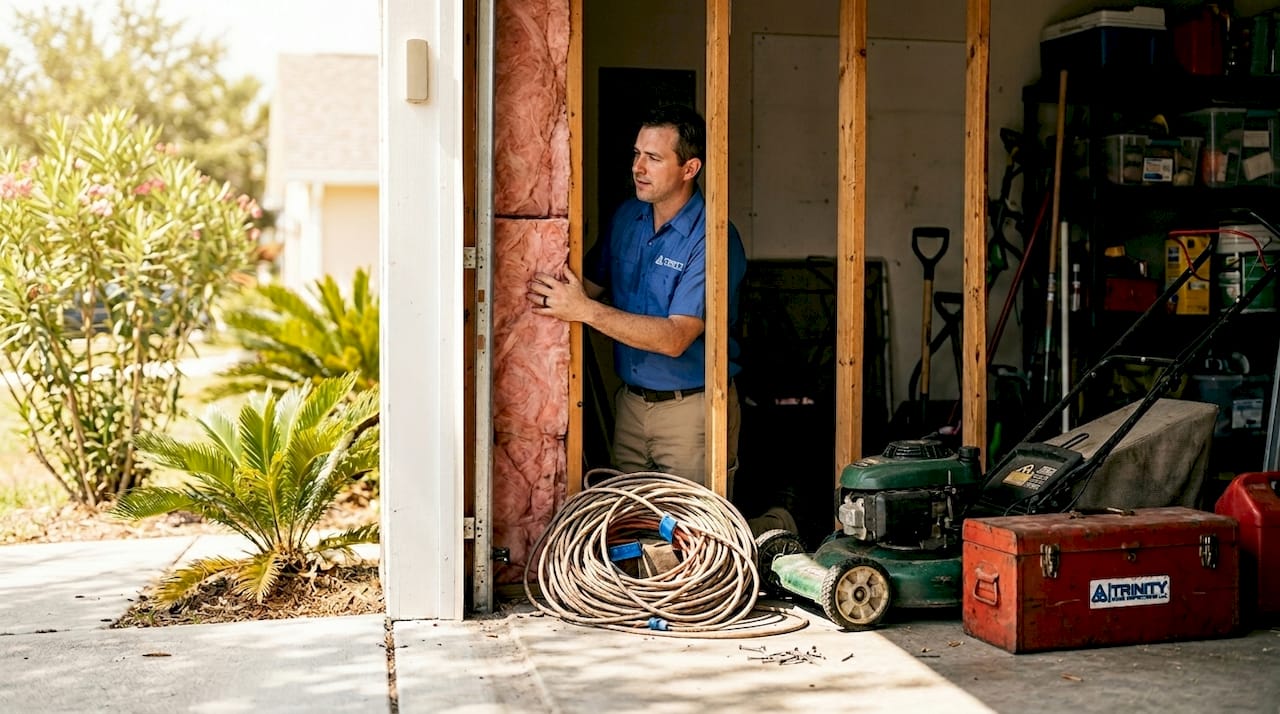
Insulating an attached garage improves comfort, energy savings, and resale value in Gulf Coast Alabama.
Proper vapor barrier placement and moisture management are crucial due to high humidity and heat.
Focus on insulating shared walls and ceiling rather than entire garage for cost-effective results.
Plenty of homeowners assume the answer to garage insulation is obvious, either always do it or skip it entirely. The truth is more nuanced, especially if you live on the Gulf Coast of Alabama. Our climate is hot, humid, and hurricane-prone, and those three factors change the math entirely compared to advice written for cold-weather states. The right insulation decision depends on whether your garage is attached or detached, how you use the space, and whether energy savings or resale value matters more to you right now. This guide walks you through exactly when garage insulation pays off in Baldwin, Mobile, Escambia, and surrounding counties, what materials hold up in our climate, and where to focus your dollars for the biggest return.
Key Takeaways
Point | Details |
Insulation priorities | Focus on insulating the wall and ceiling shared with your home for best comfort and efficiency gains. |
Moisture control matters | Choose insulation and vapor barrier strategies that account for Gulf Coast humidity to avoid hidden damage. |
Detached garages are optional | If your garage isn’t attached or conditioned, insulation is less critical unless you have specific use cases. |
Resale impact varies | An insulated garage can help home value, especially with attached garages, but isn’t always a major factor. |
When does garage insulation make sense in Gulf Coast homes?
Not every garage is created equal, and that matters more here than in most parts of the country. The single biggest factor is whether your garage is attached to your home or standing on its own. An attached garage shares at least one wall, and often a ceiling, with your living space. That shared boundary is where heat, humidity, and energy loss actually affect your comfort and your monthly bill.
A detached garage sits separate from the home. Without that shared wall, insulating it rarely changes your indoor comfort or energy costs in any measurable way. As insulation guidance notes, insulating an attached garage is usually recommended for comfort and efficiency, but detached, unconditioned garages are often more discretionary. That distinction alone can save you thousands of dollars if you were planning to insulate a freestanding storage building.
Gulf Coast Alabama adds another layer to this decision. Summer temperatures regularly push into the upper 90s, and humidity levels stay high for months on end. Your garage absorbs that heat and holds it. If your garage shares a wall with a bedroom or a kitchen, that trapped heat migrates into your living space and forces your HVAC system to work harder. Proper garage humidity control becomes just as important as the insulation itself.
Hurricane season also plays a role. Sealed, insulated garages can trap moisture after a storm event, so ventilation planning must go hand in hand with any insulation work you do.
Here is a quick comparison to help you decide where insulation investment makes the most sense:
Garage type | Conditioned? | Insulation priority | Expected benefit |
Attached | Yes | High | Comfort, energy savings, resale value |
Attached | No | Medium to high | Reduced heat transfer into home |
Detached | Yes | Medium | Comfort for workspace or hobby use |
Detached | No | Low | Minimal benefit to living space |
For attached garages, the benefits stack up quickly:
Lower energy bills because your HVAC does less work fighting heat coming through the shared wall
More comfortable living spaces adjacent to the garage, especially bedrooms or laundry rooms
Better resale positioning in a market where buyers are increasingly energy-conscious
Reduced moisture migration into the home when insulation is paired with proper air sealing
Quieter interior spaces since insulation also dampens sound from the garage
Pro Tip: Your highest-priority boundary is always the wall and ceiling that separates the garage from your living space. Start there before you spend a dollar on side walls or the garage door.
“Focus on the thermal boundary between the garage and the house first. That is where comfort and efficiency gains are most reliable in attached garage situations.” — Insulation best practices guidance
If you want local home inspections to assess your specific garage setup before you commit to a project, that is always a smart first move.
How garage insulation affects comfort, energy savings, and home value
Once you know which garages can benefit, the next question is what those benefits actually look like for your home and wallet.
Comfort is the most immediate reward. An uninsulated garage wall in Gulf Coast Alabama can reach surface temperatures that push hot air directly into adjacent rooms. If your bedroom shares a wall with the garage, you have likely felt this firsthand on a July afternoon. Insulation slows that heat transfer significantly, keeping your living space cooler without cranking the thermostat.
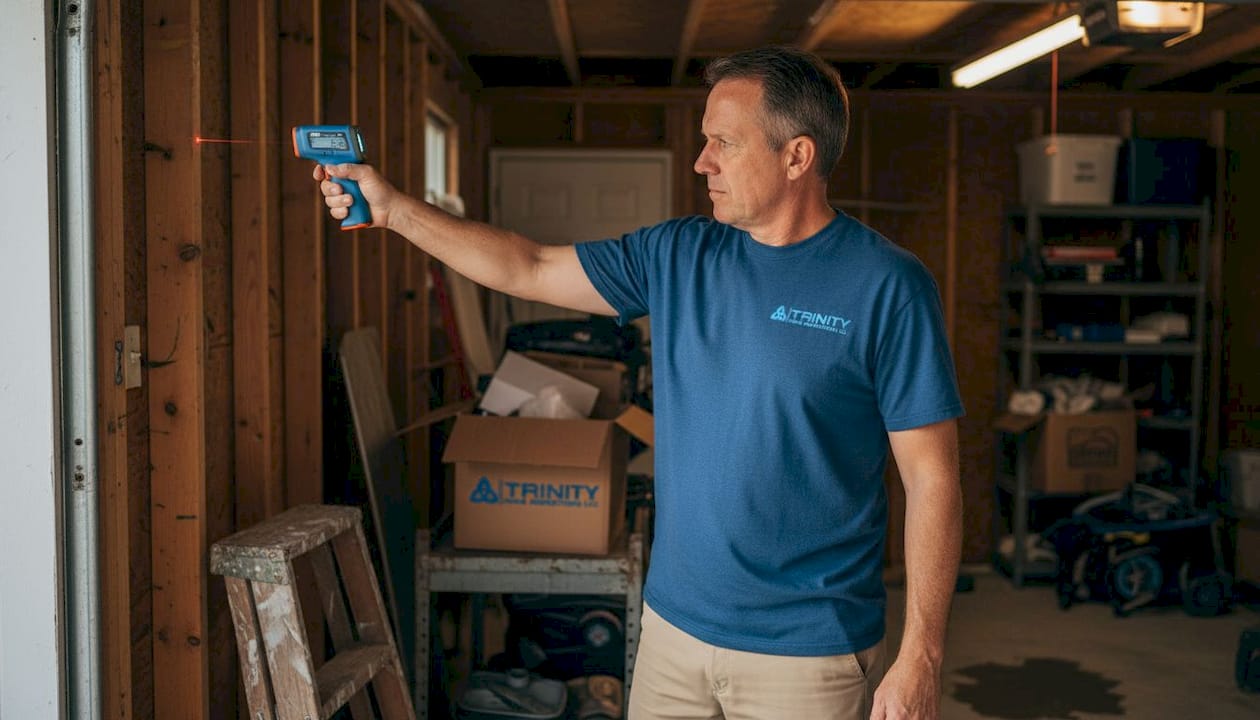
Energy savings follow comfort. When your HVAC does not have to fight radiant heat coming through a shared garage wall, it runs less often. That means lower monthly bills, especially during our long, brutal summers. The energy-saving HVAC tips you apply inside the home work better when the garage is not feeding heat into the system from the outside.
Resale value is the third pillar, and it is often underestimated. As noted in new construction research, insulated garages improve resale appeal and energy efficiency perceptions, though impact varies by market. In Gulf Coast Alabama, where buyers are increasingly aware of energy costs, a well-insulated attached garage signals that a home has been maintained with intention.
Here are the top three ways garage insulation delivers real return on investment:
Reduced HVAC load translates directly into lower utility costs month after month, building cumulative savings over time.
Extended HVAC equipment life because a system that cycles less frequently wears out more slowly, delaying costly replacements.
Stronger buyer perception at listing time, particularly for attached garages where insulation affects interior comfort in a way buyers can actually feel during a showing.
Let’s look at how different garage setups compare across these three outcome categories:
Garage setup | Comfort impact | Energy savings potential | Resale value boost |
Attached, insulated shared wall | High | High | Moderate to high |
Attached, no insulation | Low | Low | Minimal |
Detached, insulated | Workspace comfort only | Negligible for home | Low |
Detached, no insulation | No home impact | None | None |
Even partial insulation on the shared wall between the garage and home delivers measurable results. You do not need to insulate every surface to feel a difference. The thermal boundary between the two spaces is what matters most.
Pro Tip: If you are preparing to list your home, insulating just the shared garage wall before photos and showings can make adjacent rooms feel noticeably cooler during buyer walkthroughs, which is a real competitive advantage in summer.
What insulation methods and materials work best in the Gulf Coast climate?
Knowing why and when garage insulation helps, your next step is choosing the right material and installation approach for our humid Alabama climate.
Here is where Gulf Coast homeowners can get burned by generic advice. Most insulation guides are written for northern climates where the goal is keeping cold out. In Alabama, the challenge is heat and moisture coming from outside. That shift changes which materials perform well and, critically, how vapor barriers should be used.
A vapor barrier is a material that slows moisture movement through walls. In cold climates, it typically goes on the warm interior side of the wall. In hot, humid climates like ours, that rule gets complicated. As hot climate insulation guidance explains, moisture control matters in Gulf Coast conditions, foam products can help, but vapor barrier placement is nuanced and can cause serious problems if done wrong.
Here are the most common insulation options and how they perform locally:
Closed-cell spray foam: The strongest performer in humid climates. It acts as both insulation and an air and vapor barrier in one product. Higher cost, but excellent durability and moisture resistance.
Foam board (rigid insulation): A solid option for garage walls and doors. Lightweight, moisture-resistant, and DIY-friendly. Works well when properly taped and sealed at edges.
Fiberglass batt insulation: Lower cost and widely available, but it absorbs moisture over time if not paired with proper air sealing and vapor management. Less ideal for our climate without extra precautions.
Mineral wool batt: Better moisture resistance than fiberglass and some fire resistance. A good middle-ground option if spray foam is outside the budget.
Proper managing garage humidity practices must be part of any insulation plan. Without ventilation working alongside insulation, you risk trapping humid Gulf Coast air inside wall cavities where mold can establish quickly.
“In warm, humid climates, the biggest insulation mistake is installing vapor barriers on the wrong side of the wall assembly. This traps moisture inside the wall rather than allowing it to dry out, creating exactly the mold conditions you were trying to avoid.”
Pro Tip: Before choosing any insulation material, review your roof vent strategies as well. A well-ventilated roof system and a properly insulated garage work together to manage heat and moisture throughout the structure.
Always coordinate insulation work with a pro who has specific Gulf Coast experience. What works in Tennessee does not automatically work in Foley or Fairhope.
Should you insulate the whole garage, just the shared wall, or not at all?
Choosing materials is important, but deciding where to insulate makes or breaks cost-effectiveness. Here is how to prioritize so your money works as hard as possible.
Start with the shared wall and ceiling. If your garage shares a wall with a bedroom, kitchen, or living room, that surface is your number-one priority. The same applies to any ceiling above which there is a conditioned room. Best practice guidance confirms that the garage-to-house boundary and airtightness are where to focus first, rather than all four walls.
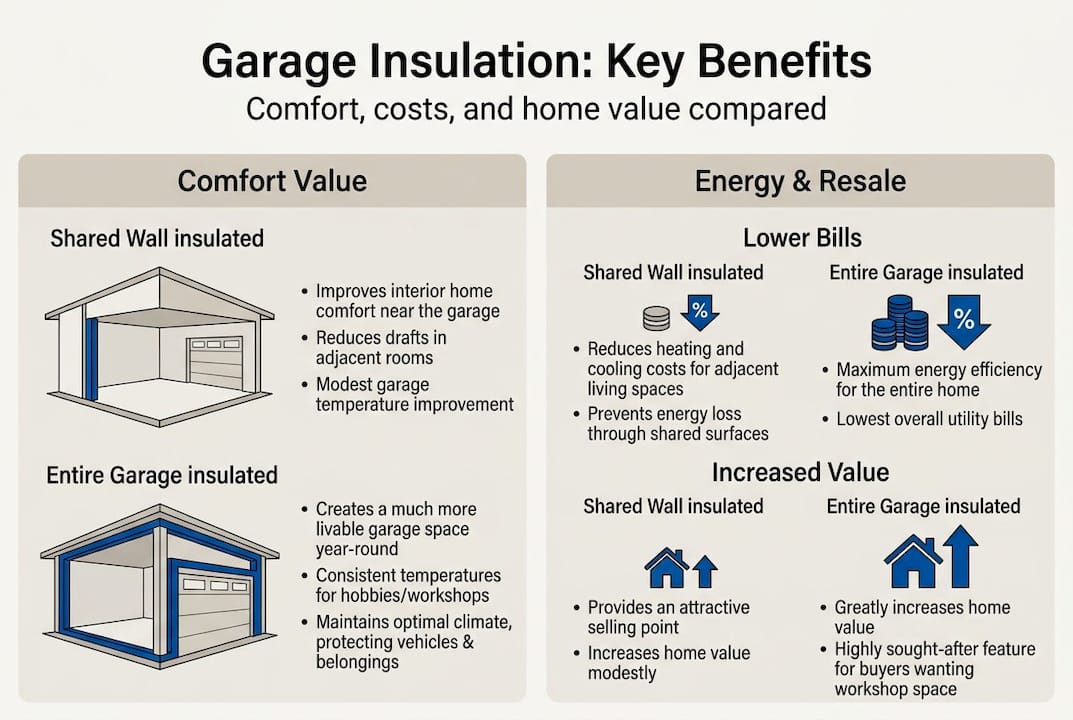
After the shared boundary, your garage door is actually the single largest source of heat gain in most garages. A standard uninsulated steel door has almost no thermal resistance. Upgrading to an insulated door or adding foam board panels to the existing door can make a noticeable difference for a relatively modest cost.
Here is a practical prioritization list for your insulation project:
Priority 1: Shared wall and ceiling between garage and living space, with thorough air sealing at all penetrations and gaps
Priority 2: Garage door, either upgrade to an insulated model or add rigid foam panels to the existing door
Priority 3: Side walls that face west or south and receive prolonged sun exposure in our Gulf Coast summers
Priority 4: Attic space above the garage if the garage ceiling is the floor of a conditioned room above
Lower priority: Side walls facing east or north in a detached, unconditioned storage garage
When is it reasonable to skip insulation entirely? If your garage is detached and used only for basic storage, with no conditioned space above or adjacent, skipping insulation is a perfectly sound financial decision. Spending money on a freestanding storage building will not meaningfully lower your energy bills or increase your resale value.
Pro Tip: Air sealing alone, filling gaps around pipes, wires, and the door frame with spray foam or caulk, can sometimes deliver as much comfort benefit as adding insulation, especially in older garages with visible daylight around the door frame. Check these questions for your home inspector to know what to ask when evaluating your specific situation.
Do not let anyone convince you that the right answer is always to insulate every surface. In Gulf Coast Alabama, that approach can create moisture problems that cost more to fix than the insulation cost in the first place.
Cost, DIY vs. pro, and local Gulf Coast resources
Once you know what to insulate, a lot comes down to budget and getting the job done right. Here is how to make smart decisions for your Gulf Coast property.
For DIY installation using foam board or fiberglass batt, material costs for a standard two-car garage shared wall typically run between $150 and $500 depending on wall area and R-value target. R-value measures how well insulation resists heat flow. Higher numbers mean better performance. For Gulf Coast garages, most experts recommend at least R-13 on shared walls, with R-19 or higher if budget allows.
Professional installation costs more but eliminates guesswork. Spray foam applied by a licensed contractor typically runs $1.50 to $3.50 per square foot, meaning a full garage project could range from $1,000 to $4,000 or more depending on scope. For the shared wall only, professional spray foam application is often the most cost-effective long-term choice because it handles both insulation and air sealing in a single step.
Savings from garage insulation depend on the garage’s thermal connection to the living space and your HVAC behavior. Detached, unconditioned garages remain lower priority regardless of cost. Keep that framing in mind when evaluating quotes.
Here are the steps to take if you are considering a garage insulation project:
Get a home inspection first. An inspector can identify existing moisture problems, insulation gaps, or air leakage issues that need to be addressed before new insulation goes in.
Prioritize air sealing. Seal gaps, cracks, and penetrations before adding any insulation material. Air sealing is inexpensive and often delivers the biggest comfort improvement per dollar.
Get at least two contractor quotes. Ask each contractor specifically about their experience with Gulf Coast humidity and vapor management.
Review the quotes for red flags. Watch for contractors who do not mention vapor barriers, air sealing, or ventilation. These are signs they may be applying a one-size-fits-all approach.
Schedule a follow-up inspection. After installation, an inspector with thermal imaging can verify that insulation was installed correctly and that no gaps or moisture problems were introduced.
Pro Tip: Trusted home inspectors with thermal imaging can spot insulation gaps that are completely invisible to the naked eye. Infrared cameras show cold and hot spots on walls that tell the full story of where your insulation is working and where it is not. You can also schedule a home inspection to get that process started before your insulation project begins.
A fresh perspective: Why every garage doesn’t need blanket insulation in Alabama
Conventional insulation advice, even from reputable sources, tends to default toward more insulation being better. That works in Minnesota. It does not always work in Mobile or Daphne.
Here is what we have seen in Gulf Coast homes: over-insulating a garage without solving ventilation first creates a sealed, humid box. Moisture that used to escape through natural air movement now gets trapped inside wall cavities. That is exactly the environment where mold grows fastest, and remediation costs can dwarf whatever you spent on insulation.
The homeowners who get the best results are the ones who focus on the shared wall and ceiling boundary first, pair insulation with proper air sealing, and make sure the garage still breathes correctly. That targeted approach consistently outperforms the full-perimeter insulation projects that ignore controlling garage humidity as part of the plan.
R-value matters, but in our climate, it is only part of the equation. Moisture management and ventilation are equally important variables. Cold-climate advice that treats R-value as the only metric will steer you wrong here. Regional expertise is not a bonus. In Gulf Coast Alabama, it is a requirement for making a sound insulation decision.
Connect with trusted Gulf Coast home inspection and insulation professionals
If you want expert eyes on your garage insulation needs before spending a dollar on materials or contractors, we can help you get there with confidence.

At Trinity Home Inspections, we serve homeowners, buyers, and sellers across Baldwin, Mobile, Escambia, Washington, Monroe, and surrounding counties. Our InterNACHI-certified inspections include free thermal imaging to identify insulation gaps, hidden moisture, and air leakage in garages and throughout the home. Whether you need pre-sale home inspections before listing, mold testing services if moisture is a concern, or a full property record search to understand what work has been permitted, we have you covered. Same-day reports, plain-English priorities, and a team that treats your home the way we would want ours treated. Reach out today and make your next decision with clarity.
Frequently asked questions
Is insulating a detached garage worth it in Alabama?
For most homeowners, detached garages are lower priority unless the space is actively used as a workshop, hobby room, or temperature-controlled storage. Focus on comfort needs, air sealing, and intended use before committing budget to full insulation.
What is the best insulation material for a humid Alabama garage?
Closed-cell spray foam and foam board are top choices because foam products in humid climates resist moisture while providing air and vapor control. Proper installation is critical to prevent moisture buildup inside the wall assembly.
Does garage insulation affect home resale value in Gulf Coast Alabama?
Yes, particularly for attached garages. Insulated garages improve resale appeal and energy efficiency perceptions, though exact dollar impact depends on local market conditions and how the garage connects to the living space.
Should you put a vapor barrier in a Gulf Coast garage?
Vapor barrier placement in warm and humid regions is tricky because improper installation can trap moisture inside walls rather than allowing them to dry. Always consult a local pro with Gulf Coast experience before adding any vapor barrier to your garage walls.
Recommended

