
Spot Symptoms of Poor Return Air for Better Comfort

Updated: Apr 16
TL;DR:
Insufficient return air causes pressure imbalance, reducing HVAC efficiency and indoor comfort.
Common symptoms include uneven temperatures, weak airflow, and increased dust and humidity.
Professional inspections with airflow testing help identify and fix hidden return air problems.
If you’ve written off stuffy rooms or hot spots as just part of living on Alabama’s Gulf Coast, you may be missing a bigger problem hiding inside your HVAC system. Inadequate return air is one of the most overlooked causes of comfort complaints, rising energy bills, and declining indoor air quality in Gulf Coast homes. It doesn’t announce itself loudly. Instead, it quietly strains your system, traps pollutants, and can even affect your home’s value when it comes time to sell. Understanding what to look for puts you in a much stronger position, whether you’re buying, selling, or simply trying to breathe easier in the home you already own.
Key Takeaways
Point | Details |
Spot warning signs | Uneven temperatures, dust, and stuffy air are clear symptoms of poor return air. |
Protect indoor air | Not enough return air can seriously reduce your home’s air quality and comfort. |
Safe, efficient fixes | DIY checks help, but some issues need professional inspection and repair. |
Boost home value | Addressing return air improves your property’s value and buyer confidence. |
Why return air matters for your HVAC system
Before you can spot the problem, you need to understand what return air actually does. In a forced-air HVAC system, your equipment works in a continuous loop. The supply side pushes conditioned air out through vents into your living spaces. The return side pulls that same air back to the unit to be filtered, conditioned again, and recirculated. Return air is the intake side of that loop, and it’s just as important as the supply side.
When return air is insufficient, your system loses its pressure balance. Think of it like trying to breathe through a straw while someone pinches it halfway. Your HVAC unit works harder, pulls air from unintended places like attics or crawl spaces, and struggles to maintain consistent temperatures throughout the home. This is why cold air return vent basics are worth understanding before you ever notice a problem.
Here’s what a properly functioning return air system actually does for you:
Maintains pressure balance so conditioned air reaches every room evenly
Filters recirculated air by pulling it back through the system filter before it returns to living spaces
Reduces humidity buildup by keeping air moving rather than stagnating in corners and closed rooms
Protects your HVAC equipment by ensuring the unit never has to work against negative pressure
Lowers energy costs by allowing the system to condition air efficiently rather than overworking
On Alabama’s Gulf Coast, these benefits are magnified. The region’s high humidity, long cooling seasons, and allergen-heavy outdoor air mean your HVAC system runs more hours per year than in most of the country. A system that’s already fighting inadequate return air is going to wear out faster, cost more to operate, and do a worse job of managing the moisture that leads to mold. As why indoor air quality matters explains, the air inside your home can be significantly more polluted than outdoor air when ventilation and circulation are compromised.
“Return air impacts HVAC system balance and overall comfort” in ways that affect not just temperature, but the health and safety of everyone inside the home.
Following simple HVAC maintenance steps regularly can help you catch early warning signs before they become expensive repairs.
Pro Tip: Walk through your home while the HVAC is running and hold a tissue near each return grille. If the tissue barely moves or gets pushed away instead of pulled toward the grille, you may have a return air restriction worth investigating.
Common symptoms of not enough return air
Now that you understand what return air does, let’s talk about what it looks like when it’s not working right. These symptoms are easy to dismiss as normal wear or old-house quirks, but they’re often pointing directly at a return air problem.
The most common signs include:
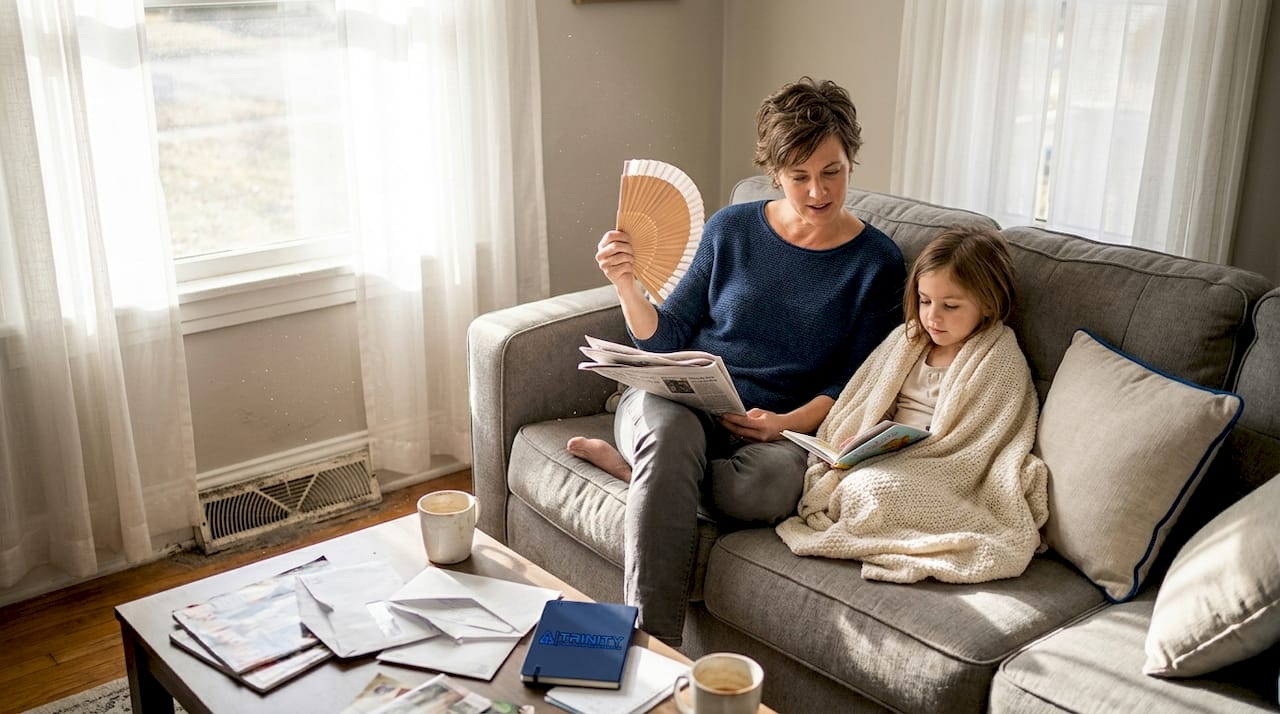
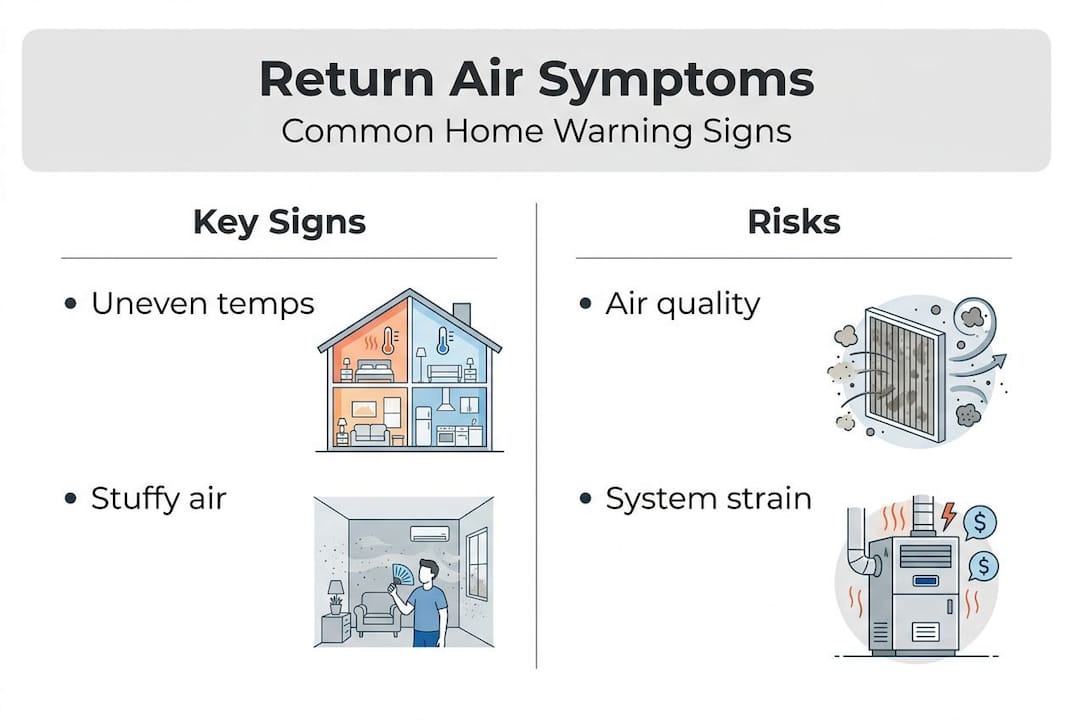
Uneven temperatures between rooms: One bedroom is always too hot, another always too cold. This is a classic sign that air isn’t circulating properly through the system.
Weak airflow at supply vents: If you hold your hand near a supply vent and barely feel any air movement, restricted return air is often the culprit.
Stuffy or stale-feeling air: When return air is blocked or undersized, air stagnates. Rooms feel heavy and uncomfortable even when the thermostat reads the right temperature.
Excess dust on surfaces: Poor return circulation means the filter isn’t catching particles efficiently, so dust settles throughout the home faster than it should.
Higher-than-expected utility bills: Your system runs longer to compensate for poor airflow, burning more energy without delivering better comfort.
Noisy HVAC operation: A system straining against negative pressure often whistles, rattles, or hums louder than normal.
As reduced return air can manifest as uneven temperatures and poor airflow, these signs deserve attention rather than assumption. Many homeowners mistake these symptoms for aging insulation, drafty windows, or simply an undersized unit, and spend money on the wrong fix.
Symptom | Why it happens | Risk if ignored |
Uneven room temperatures | Pressure imbalance limits airflow to distant rooms | Chronic discomfort, system overwork |
Weak vent airflow | Return restriction starves the system of intake air | Compressor strain, early equipment failure |
Stuffy or heavy air | Stagnant air isn’t recirculated or filtered | Pollutant and allergen buildup |
Excess dust accumulation | Filter bypassed as air finds alternate paths | Worsened allergies, dirty ductwork |
High energy bills | System runs longer cycles to meet thermostat demand | Significant cost increase over time |
Loud HVAC operation | Negative pressure causes vibration and airflow noise | Accelerated mechanical wear |
You can also check signs of poor attic or air return to see if related ventilation issues are compounding the problem. And if you want to go a step further, thermal imaging for airflow issues can reveal temperature inconsistencies inside walls and ceilings that point directly to return air deficiencies.
Pro Tip: Before assuming your HVAC unit is undersized, check whether your return grilles are blocked by furniture, curtains, or closed doors. A single blocked return in a central hallway can throw off airflow for the entire system.
Learning how to assess indoor air quality alongside these physical checks gives you a fuller picture of what’s happening inside your home. Don’t rely on the thermostat reading alone. Your comfort and your air quality depend on the whole system working together.
How poor return air affects indoor air quality and home health
Spotting the symptoms is one thing. Understanding what they’re actually doing to your home’s air and your family’s health is another. This is where the stakes get real, especially on the Gulf Coast.
When return air is restricted, your HVAC system can’t pull air back through the filter at the rate it was designed to. That means airborne particles, including dust mites, pollen, pet dander, mold spores, and volatile organic compounds (VOCs, which are gases released from paints, cleaning products, and building materials), stay suspended in your living spaces longer. They accumulate. They concentrate.
Here’s what that buildup can lead to:
Worsened allergy and asthma symptoms from elevated airborne allergens that aren’t being captured by the filter
Increased mold risk as stagnant, humid air creates ideal conditions for mold growth in walls, ceilings, and ductwork
Higher VOC concentrations indoors, which can cause headaches, eye irritation, and long-term respiratory concerns
Pest attraction since moisture-rich, stagnant air environments are more hospitable to insects and rodents
Odor retention because air isn’t being refreshed and recirculated through the system regularly
As understanding indoor air quality makes clear, poor indoor air quality from insufficient return air can impact both health and comfort in measurable ways. On the Gulf Coast, this risk is amplified. Coastal Alabama’s humidity levels are among the highest in the country during summer months. When your HVAC system can’t manage that moisture load because return air is compromised, you get prolonged humidity exposure inside the home.
“Indoor air can be two to five times more polluted than outdoor air” when ventilation and circulation systems aren’t functioning correctly, making return air problems a genuine health concern rather than just a comfort issue.
From a home value perspective, these problems don’t stay hidden forever. Mold staining, musty odors, and visible dust buildup are all inspection flags that can slow a sale or reduce your negotiating position. IAQ testing benefits for homes can document air quality conditions before they become a liability on a disclosure form.
The process of optimizing indoor air quality starts with understanding the source of the problem, and return air is one of the most overlooked sources. The difference between indoor vs outdoor air pollution is often determined by how well your home’s HVAC system circulates and filters the air it already has.
Diagnosing and fixing return air problems in Gulf Coast homes
Recognizing the problem is only the first step. Here’s how to move from suspicion to solution, starting with checks you can do yourself and escalating to professional help when needed.
Step-by-step diagnostic checklist:
Check all return grilles for blockages. Furniture, rugs, curtains, and even closed interior doors can restrict return airflow. Make sure every return grille has at least 6 to 12 inches of clearance on all sides.
Inspect and replace the air filter. A clogged filter is the single most common cause of restricted return airflow. If it’s gray and matted, it’s blocking air movement. Replace it and retest your airflow.
Count your return grilles. Most rooms that have a supply vent should also have a return nearby, or at minimum a clear path for air to travel back to a central return. If bedrooms only have supply vents with no returns and doors are kept closed, you have a pressure problem.
Run a simple airflow test. Hold a tissue or thin piece of paper near each return grille while the system runs. It should pull toward the grille. If it doesn’t move or blows outward, the return is restricted or undersized.
Visually inspect accessible ductwork. Look for disconnected joints, crushed flex duct, or sections that have pulled apart. Even one disconnected return duct can throw off the whole system.
Check for negative pressure signs. Doors that slam shut on their own when the HVAC runs, or gaps that whistle, indicate the system is pulling air from unintended places.
As DIY HVAC troubleshooting outlines, DIY steps and expert help can resolve return air problems in residential properties depending on the severity of the issue.
Situation | DIY appropriate? | Professional needed? |
Blocked grille or dirty filter | Yes | No |
Closed doors restricting airflow | Yes | No |
Disconnected or crushed flex duct | Possibly | Recommended |
Undersized return ductwork | No | Yes |
Adding new return grilles or duct runs | No | Yes |
Pressure testing the full system | No | Yes |
For Gulf Coast homes specifically, it’s also worth reviewing Alabama fresh air intake codes before making any modifications. Local code requirements for fresh air intake can affect how return air modifications need to be designed, and getting this wrong can create new problems while solving old ones.
Pro Tip: In coastal Alabama, many older homes were built before modern return air standards were established. If your home was built before the 1990s and has never had ductwork updated, there’s a strong chance the return system was undersized from the start. Don’t assume the original design was adequate just because it passed inspection at the time.
A home inspector’s perspective: What most guides miss about return air symptoms
Here’s something most online guides won’t tell you: return air problems are consistently underdiagnosed during standard real estate walk-throughs, and even during some home inspections. The reason is simple. You can’t see return air moving. You can’t point to a crack or a stain and say “there’s the problem.” It requires active testing, not just observation.
We’ve walked through homes where the sellers genuinely didn’t know they had a return air problem. They’d lived with the stuffy back bedroom for years. They assumed the HVAC was just aging. In reality, a single undersized return duct was forcing the system to pull unconditioned air from the attic, driving up humidity and energy costs every single month. Catching that during an inspection saved the buyer thousands in future repairs and gave them real negotiating leverage.
The other myth worth challenging is that return air issues only affect older homes. New construction on the Gulf Coast can have the same problems, especially when builders cut corners on ductwork design to hit a price point. We’ve seen brand-new homes with inefficient return air challenges that would have gone unnoticed without a thorough inspection.
If you’re listing a home or preparing to make an offer, don’t wait for a symptom to become a crisis. A proactive assessment of your HVAC’s return air system is one of the smartest investments you can make before any transaction on the Gulf Coast.
Get trusted help for healthier, more valuable Gulf Coast homes
Return air problems rarely fix themselves, and they tend to get more expensive the longer they go unaddressed. If you’ve noticed any of the symptoms described above, or if you’re preparing to buy or sell a home in Baldwin, Mobile, Escambia, or surrounding Gulf Coast Alabama counties, a professional inspection is your clearest path forward.
At Trinity Home Inspections, we go beyond a basic walk-through. We use thermal imaging, moisture meters, and airflow evaluation to identify return air issues that most inspections miss entirely. Our same-day reports give you clear, actionable findings with photos and video so you know exactly what you’re dealing with. Whether you need pre-listing home inspections to get ahead of buyer concerns or mold testing to assess what poor air circulation may have already caused, we’re ready to help you protect your investment and your family’s health.
Frequently asked questions
What are the most obvious signs of not enough return air in a home?
Look for uneven temperatures, weak airflow at vents, and stuffy or dusty air. As uneven temperatures and poor airflow are among the first signs of reduced return air, these symptoms are worth taking seriously rather than ignoring.
Can poor return air really affect my family’s health?
Yes, poor return air can worsen indoor air quality, triggering allergies and respiratory issues from trapped pollutants and moisture. Poor indoor air quality from insufficient return air is a documented health and comfort concern, not just an inconvenience.
How can I quickly check if my home has return air problems?
Check for blocked or undersized returns, dirty filters, and weak airflow when the system runs. These basic DIY checks usually reveal return air issues without any special tools.
Is fixing return air issues expensive?
Simple fixes like clearing blocked grilles or replacing a dirty filter cost very little, but adding ductwork or new return runs requires professional help and can run several hundred to several thousand dollars depending on the scope.
Will inspectors find return air problems during a home inspection?
A thorough inspection that includes airflow testing and indoor air quality evaluation will typically reveal return air issues, but not all inspectors test for this specifically. Make sure yours does.
Recommended

