
Cold Air Vent Returns in Older Homes: 20% Energy Waste Fix

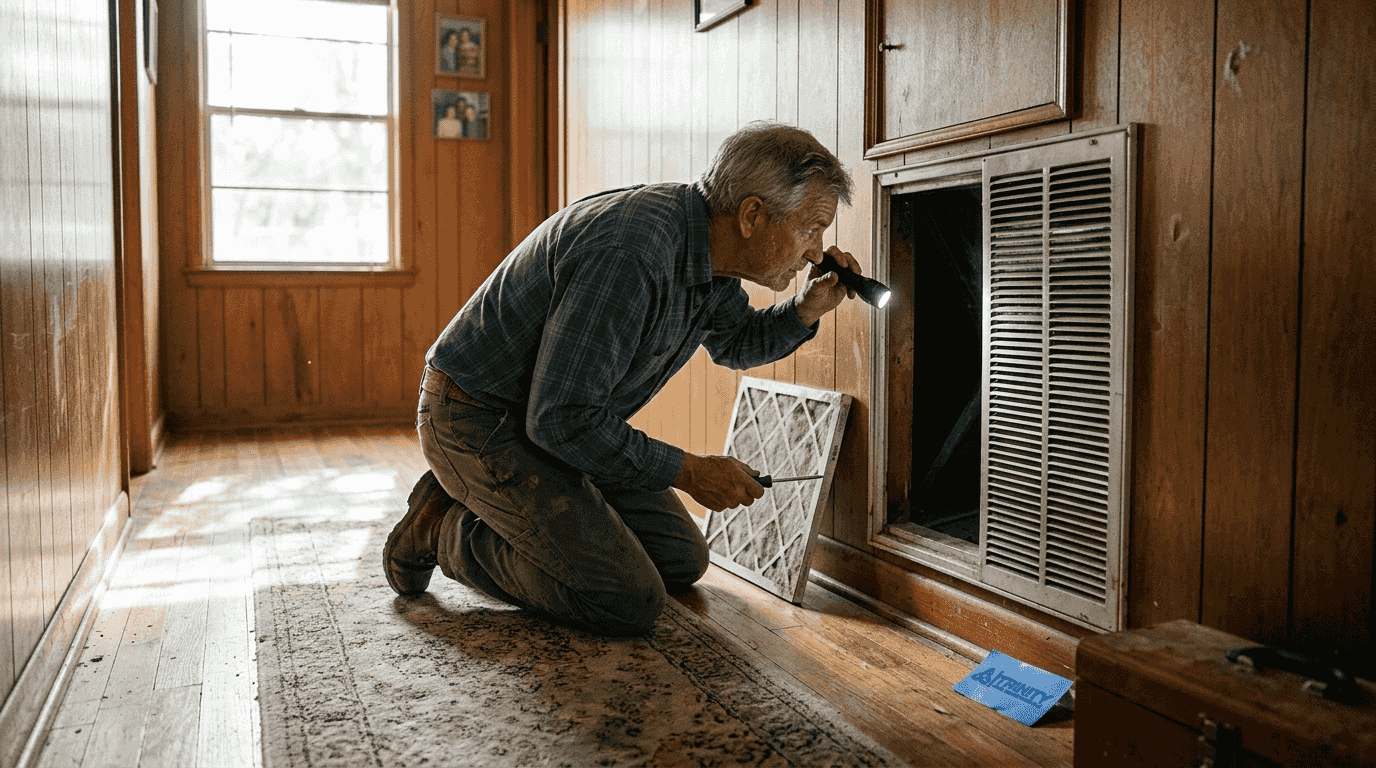
Most homeowners assume their HVAC system works fine if cool air blows from the vents. What they miss is the silent culprit behind high energy bills and sticky indoor air: inadequate cold air return vents. In Gulf Coast Alabama’s humid climate, older homes often have undersized or poorly sealed returns that pull moisture-laden attic air into living spaces, causing coil freezing, sweating vents, and 20-30% energy waste. Understanding how cold air return vents function and why proper sizing matters can transform your home’s comfort and slash cooling costs dramatically.
Key takeaways
Point | Details |
Properly sized returns prevent energy loss | Undersized returns cause 20-30% energy waste and reduce HVAC efficiency significantly |
Sealed returns avoid humid attic air infiltration | Gulf Coast humidity demands tight seals to prevent moisture problems and coil freezing |
Manual D duct design ensures correct sizing | Professional duct evaluation balances static pressure and airflow for optimal performance |
Upgrading returns saves 15-20% on energy bills | Adding or resizing returns improves efficiency and extends HVAC equipment lifespan |
High-MERV filters require careful sizing | Filters above MERV 11 increase static pressure and can freeze coils with undersized returns |
Understanding cold air returns and their role in older Gulf Coast homes
Cold air return vents serve as the intake side of your HVAC system, pulling air from living spaces back to the air handler for cooling or heating. Without adequate returns, your system cannot circulate air efficiently, leading to pressure imbalances, reduced performance, and premature equipment failure. Think of your HVAC like breathing: supply vents exhale conditioned air while return vents inhale room air for reconditioning.
Older homes across Baldwin, Mobile, and surrounding Gulf Coast counties often have only one or two central returns, typically located in hallways. This design was common when homes were smaller and building codes less stringent. Today’s expectations for comfort and efficiency demand better airflow distribution. When returns are too small or too few, rooms far from the central return become pressure-positive, forcing conditioned air out through cracks and gaps while humid outdoor air seeps in.
In Gulf Coast Alabama’s humid climate, poor returns lead to leaks pulling humid attic air, high humidity indoors, coil freezing, sweating vents, and reduced dehumidification. The combination of heat and moisture creates ideal conditions for mold growth and structural damage. Unsealed return ducts in attics act like vacuum hoses, sucking in 140-degree humid air that your AC struggles to cool and dehumidify.
Common problems caused by inadequate cold air return vents include:
Humid air infiltration from attics and crawlspaces raising indoor moisture levels
Evaporator coil freezing due to restricted airflow reducing cooling capacity
Vent sweating and condensation dripping onto floors and ceilings
Ineffective dehumidification leaving homes feeling clammy despite AC operation
Uneven temperatures between rooms with some areas staying warm
Excessive dust circulation from negative pressure pulling in particles
Sealed returns are non-negotiable in humid climates. Every gap or crack becomes a pathway for moisture-laden air to enter your duct system. Alabama Gulf Coast humidity control starts with properly designed and sealed return air pathways that prevent outdoor moisture from compromising indoor comfort.
Why proper sizing and design matter for return air vents
Air flow basics revolve around cubic feet per minute (CFM), the volume of air your HVAC system moves. A properly functioning system balances supply CFM with return CFM. When supply vents push out 400 CFM per ton of cooling capacity but returns can only handle 300 CFM, pressure builds inside the system. This imbalance forces the blower motor to work harder, increases static pressure, and reduces overall efficiency.
Recommended sizing rules provide clear benchmarks for adequate return capacity. Returns should handle the same or greater CFM than supply registers, typically requiring 20-30% larger area than total supply vent area. For proper air distribution, install one return per 500-600 square feet of living space. A 2,000-square-foot home needs at least three to four strategically placed returns, not just one central hallway grille.
Manual D represents the industry standard for residential duct system design, published by the Air Conditioning Contractors of America (ACCA). This technical standard addresses static pressure, friction loss, and airflow velocity to ensure balanced, efficient HVAC operation. Manual D duct design is required for proper retrofits, balancing static pressure and friction, and proves essential in humid climates like Florida and Alabama for effective humidity control.
Retrofitting older homes with Manual D principles involves calculating room-by-room heating and cooling loads, then designing duct pathways that deliver the right CFM to each space without excessive noise or pressure drop. For Gulf Coast homes, this process must account for moisture removal capacity alongside temperature control. Your AC doesn’t just cool air; it removes humidity by condensing moisture on the evaporator coil. Restricted airflow from undersized returns reduces this dehumidification effect.
Sizing factor | Recommended specification | Impact if inadequate |
Return CFM | Equal to or greater than supply CFM | Pressure imbalance, reduced efficiency |
Return area | 20-30% larger than total supply area | Increased static pressure, noise |
Returns per home | One per 500-600 sq ft | Uneven cooling, humidity issues |
Duct sealing | All joints sealed with mastic | Humid air infiltration, energy waste |
Pro Tip: Avoid installing high-MERV filters (above MERV 11) if your home has undersized returns. The increased resistance to airflow raises static pressure, causing the evaporator coil to freeze, the blower motor to strain, and annoying whistling noises at vents. Stick with MERV 8-11 filters for the best balance of air quality and system performance. Regular HVAC maintenance and filter changes prevent these issues while maintaining efficiency. Proper spring HVAC maintenance can save 15% on energy costs annually.
Common signs of return vent issues and their effects on home comfort and energy bills
Recognizing the symptoms of poorly functioning cold air returns helps you address problems before they escalate into expensive repairs. Evaporator coil freezing appears as ice buildup on refrigerant lines or the coil itself, often accompanied by reduced cooling and water dripping from the air handler. This happens when restricted airflow prevents enough warm air from passing over the coil, causing refrigerant temperatures to drop below freezing.
Vent sweating occurs when cold duct surfaces meet warm, humid air, creating condensation that drips onto ceilings, walls, and floors. You might notice water stains, peeling paint, or actual droplets forming on supply registers. This problem intensifies in Gulf Coast homes where outdoor humidity stays high for months. Humid indoor air that won’t dissipate indicates your AC cannot remove moisture effectively due to inadequate return airflow.
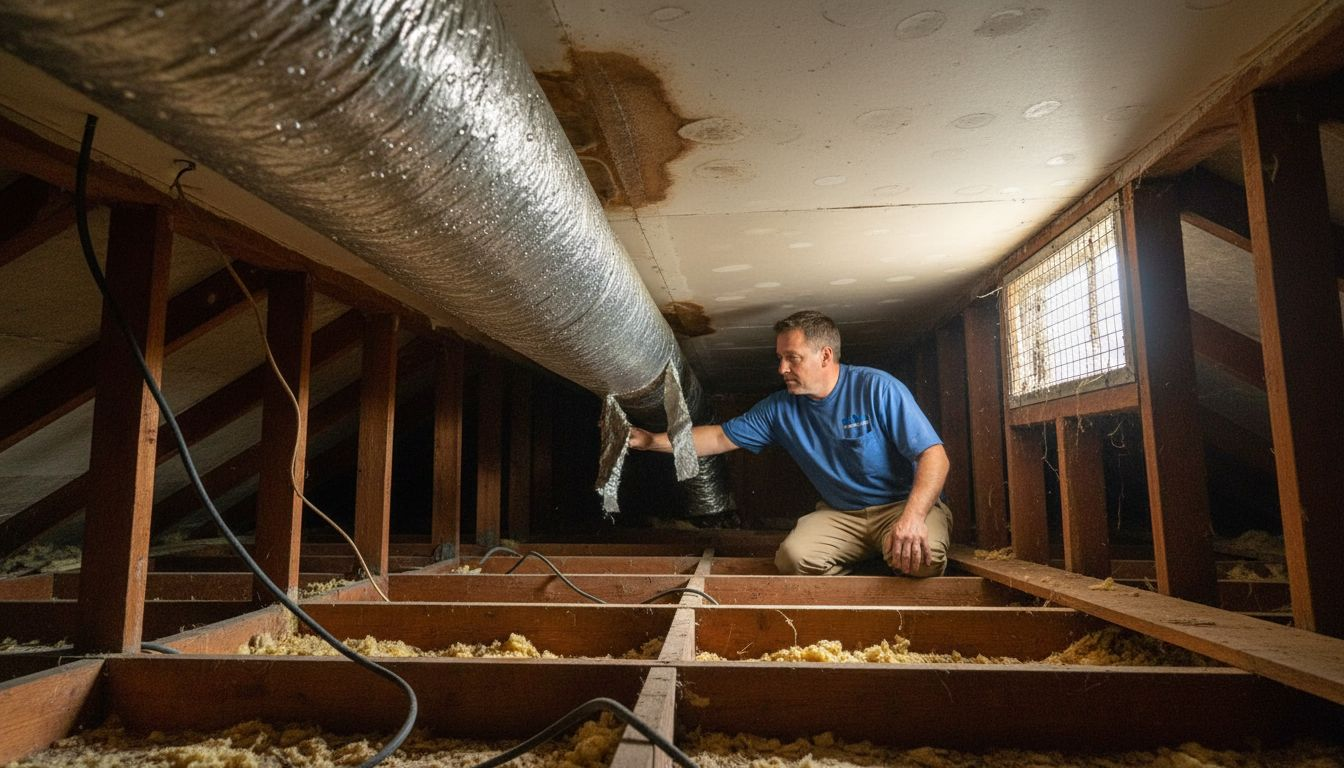
Increased noise from your HVAC system signals pressure problems. Whistling at vents, rumbling in ducts, or a laboring blower motor all point to restricted airflow. Uneven cooling leaves some rooms comfortable while others stay warm, a clear sign that air circulation patterns are disrupted. When doors become hard to close or pop open on their own, pressure imbalances from poor returns are likely culprits.
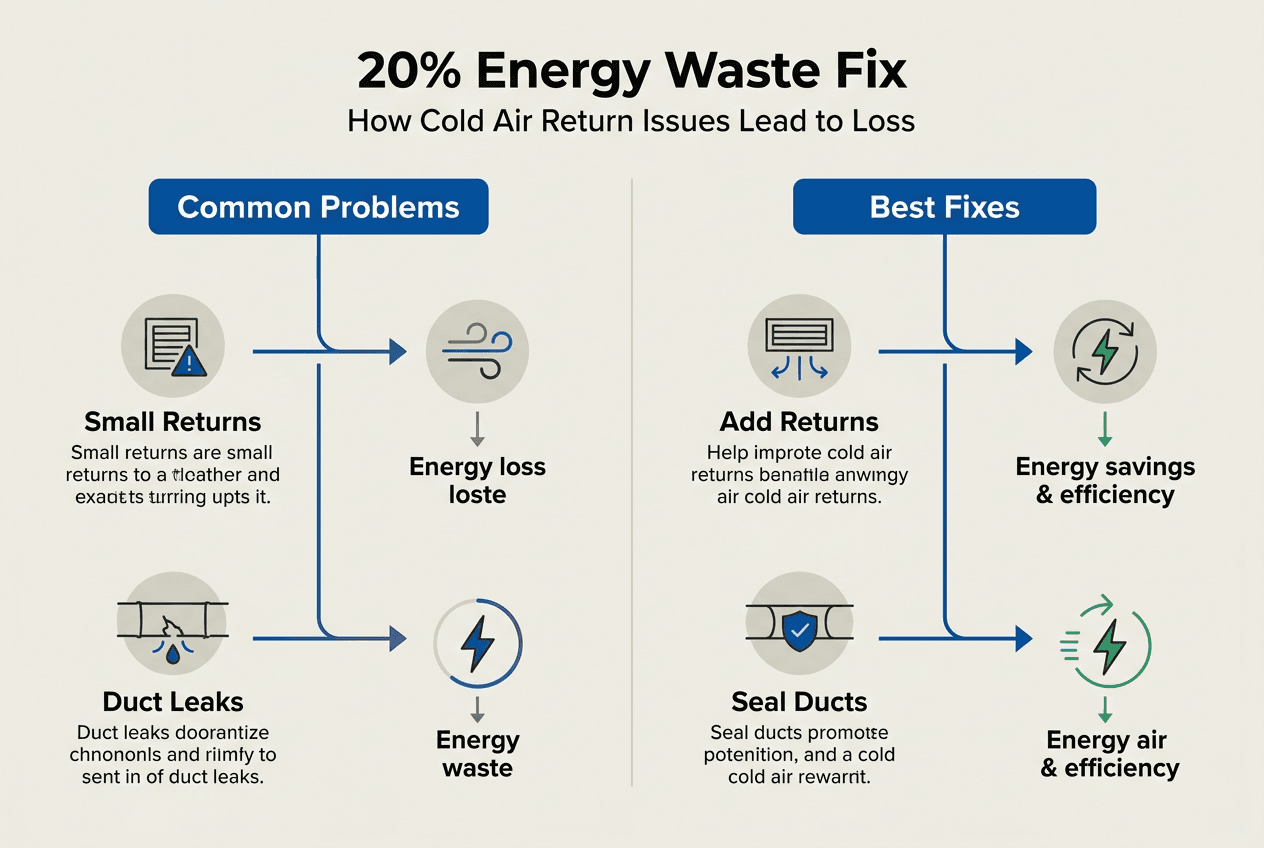
Undersized returns force your HVAC system into constant strain. The blower motor runs longer cycles trying to move enough air, consuming more electricity. The compressor works harder to achieve target temperatures, shortening its lifespan. Undersized returns cause 20-30% energy waste, while duct leaks add another 15-30% in lost efficiency. Combined, these factors can nearly double your cooling costs compared to a properly designed system.
Adding or resizing returns delivers measurable energy savings. Homeowners who upgrade from one central return to multiple room returns report 15-20% reductions in monthly energy bills. The investment typically pays for itself within three to five years through lower utility costs and extended equipment life. In older Gulf Coast homes where HVAC systems already work overtime against humidity, these improvements make an even bigger difference.
Warning signs your returns need attention:
Frost or ice visible on refrigerant lines or air handler components
Condensation dripping from ceiling vents or duct registers
Sticky, humid feeling indoors even when AC runs continuously
Whistling, rumbling, or other unusual noises from ductwork
Temperature differences exceeding 5 degrees between rooms
Monthly energy bills climbing without usage changes
Doors that won’t stay closed or require force to open
Key Statistic: Undersized returns can lead to 20-30% energy waste, duct leaks waste another 15-30%, and adding properly sized returns saves 15-20% on cooling costs.
Thermal imaging reveals hidden duct leaks and insulation gaps that contribute to return vent problems. Professional inspections identify these issues before they cause major damage. Understanding indoor air quality issues helps you recognize when poor returns are compromising your home’s air safety alongside comfort.
Practical steps for homeowners to improve cold air return performance in older Gulf Coast homes
Improving cold air return performance starts with a thorough inspection of your existing system. Walk through your home and count the return vents, noting their locations and sizes. Check for visible gaps around grilles where air might leak. Remove a return grille and inspect the duct connection for proper sealing with mastic or metal tape, not cloth duct tape which deteriorates quickly. Look for dust streaks or discoloration indicating air leakage.
Consult with HVAC professionals who understand Manual D duct design principles for retrofit evaluations. A qualified contractor will measure your home’s square footage, count rooms, assess existing ductwork, and calculate required CFM for proper air circulation. They should provide a detailed proposal showing where additional returns are needed, recommended sizes, and expected efficiency improvements. Be wary of contractors who suggest solutions without performing load calculations.
Sealing returns and ducts tightly prevents the most damaging problem in humid climates: attic air infiltration. Use mastic sealant or metal-backed tape on all duct joints, connections, and seams. Pay special attention to return plenums and the connection between return ducts and the air handler. Even small gaps act as vacuum leaks, pulling in humid attic air that your AC must then cool and dehumidify at great energy expense.
Consider adding returns in large rooms or areas poorly served by existing returns. A master bedroom 400 square feet or larger benefits from its own return vent. Two-story homes need returns on both levels to prevent pressure imbalances. Rooms with doors that stay closed most of the time, like bedrooms and home offices, should have dedicated returns or transfer grilles to maintain air circulation when doors are shut.
Use appropriate air filters that balance filtration efficiency with airflow requirements. MERV 8-11 filters remove most household allergens, dust, and pollen without creating excessive static pressure. Higher MERV ratings sound appealing but require larger return ducts and more powerful blower motors to overcome the increased resistance. If you need superior filtration for health reasons, upgrade your return duct sizing first.
Pair improved returns with whole-home dehumidifiers for optimal humidity control in Gulf Coast climates. Even perfectly sized returns cannot overcome the moisture load during summer months when outdoor humidity exceeds 80%. A dedicated dehumidifier works alongside your AC to maintain indoor humidity between 40-50%, preventing mold growth, wood rot, and that clammy feeling. Prioritize sealed returns to prevent humid infiltration and pair with dehumidifiers for maximum efficiency.
Pro Tip: Schedule routine HVAC maintenance every spring before cooling season begins. A professional technician will check refrigerant levels, clean coils, test airflow, and verify return vent operation. This preventive care extends equipment life by years and keeps energy bills low. Regular maintenance catches small problems before they become expensive failures.
Proper crawlspace ventilation and attic ventilation work together with sealed return ducts to prevent moisture infiltration. When these building envelope components function correctly, your HVAC system operates at peak efficiency without fighting against humid air leaks.
Trusted inspection and air quality services in Gulf Coast Alabama
Understanding your home’s HVAC performance requires professional evaluation, especially in older properties where original duct systems may not meet current efficiency standards. At Trinity Home Inspections, we combine InterNACHI certification with advanced diagnostic tools to assess cold air return adequacy, duct sealing quality, and overall system performance. Our same-day reports include thermal imaging that reveals hidden air leaks and moisture infiltration pathways affecting your comfort and energy bills.
Before buying an older Gulf Coast home, verify HVAC compliance and permit history through our real estate permit and deed search services. This research uncovers whether previous owners made unpermitted HVAC modifications that could affect system performance or resale value. Our indoor air quality testing measures humidity levels, identifies mold spores, and assesses ventilation effectiveness to ensure your home’s air supports health and comfort.

Sellers benefit from pre-sale inspections that identify HVAC issues before listing. Addressing return vent problems proactively prevents buyer concerns and supports full asking price. We serve Baldwin, Mobile, Washington, Monroe, Clarke, and Escambia counties with faith-based integrity and technical excellence that gives you clarity for smart decisions about your most valuable asset.
Frequently asked questions
What causes cold air returns to be ineffective in older homes?
Undersized returns, poorly sealed duct connections, and infiltration of humid attic air are the primary causes of ineffective cold air returns in older Gulf Coast homes. Many homes built before 2000 have only one or two central returns serving the entire house, far below the recommended one return per 500-600 square feet. Aging duct systems often fail to meet current Manual D design standards for static pressure and airflow balance, leading to efficiency losses and comfort problems.
How can I tell if my cold air returns are too small or leaking?
Look for symptoms like evaporator coil freezing, vent sweating with visible condensation, uneven cooling between rooms, and unusually high energy bills that climb without usage changes. Visible gaps around return grilles, dust streaks on walls near returns, and whistling noises from ducts all indicate leakage. Professional thermal imaging inspections detect hidden leaks effectively by revealing temperature differences that indicate air escaping or infiltrating duct systems.
What are the best practices for maintaining cold air returns in humid Gulf Coast climates?
Ensure returns are properly sized according to Manual D standards and sealed with mastic to prevent humid air infiltration from attics and crawlspaces. Use MERV 8-11 filters that balance air quality with adequate airflow, avoiding high-MERV options that increase static pressure in undersized systems. Schedule professional HVAC maintenance annually, checking duct seals, cleaning coils, and verifying proper airflow. Consider installing whole-home dehumidifiers to control moisture levels that AC systems alone cannot manage during peak humidity months.
Can adding more return vents really reduce my energy bills?
Yes, adding properly sized and located return vents can reduce energy consumption by 15-20% in homes with inadequate returns. The improvement comes from balanced airflow that allows your HVAC system to operate at designed efficiency rather than fighting pressure imbalances. Lower static pressure reduces strain on the blower motor and compressor, extending equipment life while cutting monthly utility costs. The investment typically pays for itself within three to five years through combined energy savings and avoided repair costs.
Recommended