
Wind Mitigation Report: Why Gulf Coast Buyers Need It

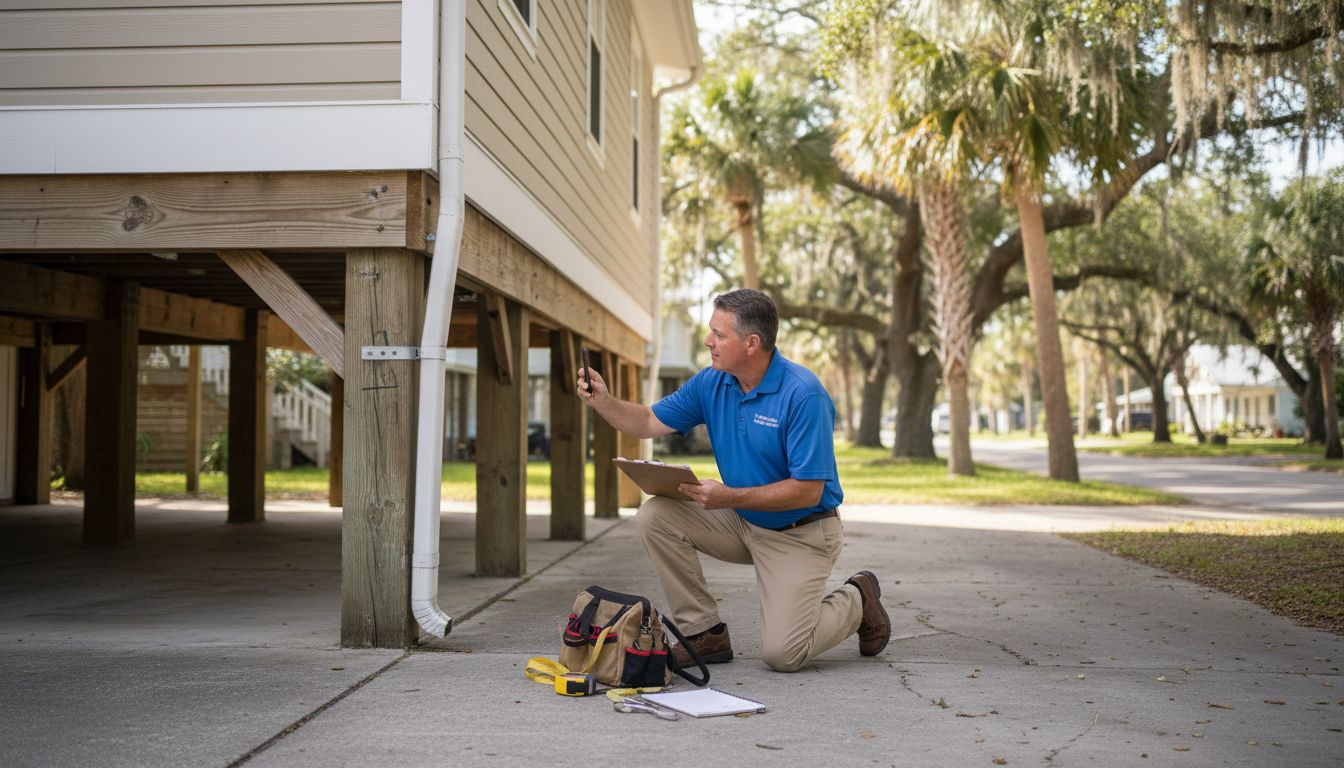
Buying a home along Alabama’s Gulf Coast means weighing the risks that come with hurricanes and strong storms. For homebuyers in Baldwin and Mobile Counties, understanding a wind mitigation report can mean real savings and peace of mind. These reports break down your future home’s construction features, highlighting how well it stands up to severe weather and revealing opportunities for insurance discounts that matter in Gulf Coast markets.
Table of Contents
Key Takeaways
Point | Details |
Importance of Wind Mitigation Reports | These reports assess a home’s resistance to wind damage, crucial for homeowners in hurricane-prone areas like Alabama’s Gulf Coast. |
Impact on Insurance Premiums | Homes with verified wind-resistant features may receive discounts up to 45% on insurance premiums. |
Key Inspection Elements | Essential features evaluated include roof shape, roof-to-wall connections, and opening protections to determine structural resilience. |
Qualified Inspectors Are Essential | Homeowners should ensure inspectors are qualified, certified, and experienced in local building codes and wind resistance techniques. |
What Is a Wind Mitigation Report?
A wind mitigation report is a specialized home inspection document critical for homeowners in hurricane-prone regions like Alabama’s Gulf Coast. Designed to assess wind damage resistance, this comprehensive evaluation examines specific construction features that determine how well a home might withstand powerful storms.
The report focuses on key structural elements that impact a home’s ability to resist wind damage, including:
Roof shape and construction
Roof-to-wall connection strength
Opening protections like hurricane shutters
Roof deck attachment methods
Quality of roof coverings
Wind mitigation inspections help homeowners understand their property’s structural resilience against severe weather events. Insurance companies use these reports to evaluate potential risk and often provide premium discounts for homes with strong wind-resistant characteristics. For Gulf Coast residents, this means not just understanding potential vulnerabilities but potentially saving money on homeowners insurance.
Pro tip: Request your wind mitigation report during your home inspection to maximize potential insurance savings and understand your home’s structural preparedness.
Key Elements and Inspection Process
A comprehensive wind mitigation inspection involves meticulously examining several critical structural components that determine a home’s ability to withstand powerful wind events. Wind mitigation inspectors follow detailed protocols to assess and document these key features systematically.
The primary elements evaluated during a wind mitigation inspection include:
Roof Covering: Type and installation quality
Roof Deck Attachment: Examination of how roof decking connects to the underlying structure
Roof-to-Wall Connections: Assessing the strength of connections between roof trusses and wall frames
Roof Shape: Analyzing geometric characteristics that impact wind resistance
Secondary Water Resistance: Checking additional protective layers
Opening Protections: Evaluating windows, doors, and shutters for wind impact resistance
Detailed wind mitigation inspections document each feature through standardized forms and comprehensive photographic evidence. Inspectors use specialized knowledge to identify construction techniques that can potentially reduce wind damage risk. This thorough assessment provides homeowners with critical insights into their property’s structural resilience and can lead to significant insurance premium reductions.
The inspection typically takes 30-60 minutes and requires a trained professional who understands local building codes and wind resistance principles. Inspectors will carefully examine both exterior and interior structural connections, looking for specific construction details that demonstrate enhanced wind protection.
Pro tip: Request digital copies of all inspection photographs and documentation to maintain a comprehensive record of your home’s wind mitigation features.
How Reports Affect Home Insurance Costs
Wind mitigation reports play a crucial role in determining home insurance premiums for Gulf Coast residents. Insurance companies assess wind damage risk by carefully examining the construction features documented in these comprehensive reports, which can lead to substantial financial benefits for homeowners.
The potential insurance savings from a positive wind mitigation report can be significant:
Homes with verified wind-resistant features may qualify for premium discounts up to 45%
Documented roof-to-wall connection strength can reduce insurance rates
Impact-resistant windows and doors can trigger additional insurance credits
Homes with secondary water resistance layers may receive further discounts
Wind-resistant construction standards offer meaningful insurance savings that can offset initial construction or retrofitting costs. In Alabama, insurance providers are required to offer discounts for homes that demonstrate enhanced wind protection, making wind mitigation reports a valuable tool for homeowners looking to reduce their annual insurance expenses.

The financial impact extends beyond immediate premium reductions. Homes with documented wind mitigation features typically have higher resale values and are more attractive to potential buyers who understand the long-term protection and cost savings these features provide. Insurance companies view these homes as lower-risk investments, translating directly into more favorable insurance terms.
Below is a summary table contrasting common wind mitigation features and the benefits they provide:
Wind Mitigation Feature | Typical Benefit | Example Insurance Impact |
Impact-resistant windows | Increases wind protection | Additional premium credit |
Roof deck attachment upgrades | Minimizes roof uplift | Lower base rate |
Secondary water resistance | Reduces water intrusion | Discount per year |
Reinforced roof-to-wall connections | Strengthens structure | Higher eligibility for savings |
Pro tip: Ask your insurance agent to provide a detailed breakdown of potential discounts available through your wind mitigation report to maximize your savings.
Alabama Requirements and Regional Differences
Alabama has established specific wind mitigation requirements that distinguish the state’s approach to home insurance and structural resilience. State insurance regulators actively monitor wind risk to ensure comprehensive protection for homeowners in hurricane-prone regions like the Gulf Coast.
Key requirements for wind mitigation in Alabama include:
Compliance with International Residential Code (IRC) 2006 or later
Certification by licensed professional inspectors
Building Code Effectiveness Grading (BCEG) standards
Institute for Business and Home Safety (IBHS) Fortified Construction standards
The Alabama Insurance Underwriting Association (AIUA) provides specific wind mitigation discounts that reward homeowners for implementing robust wind-resistant construction techniques. These regulations reflect the unique challenges posed by Alabama’s coastal geography, where hurricanes and severe storms are frequent threats to residential structures.
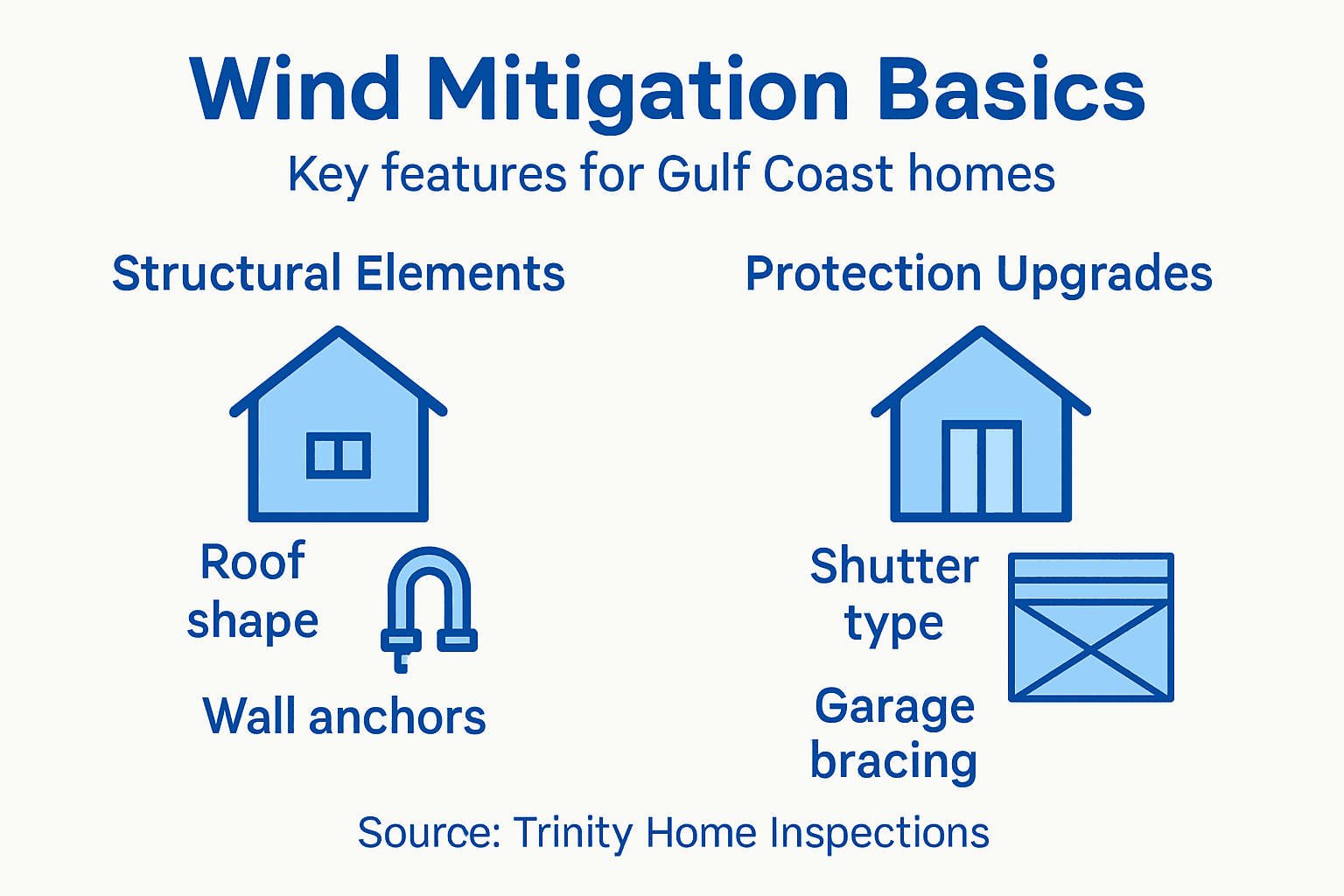
Regional differences become particularly evident when comparing coastal counties like Mobile and Baldwin to inland areas. Coastal regions typically have more stringent requirements and offer more substantial insurance discounts for wind-resistant features. Homeowners in these areas benefit from specialized inspection protocols that take into account the higher wind exposure and increased potential for storm damage.
Here is a comparison of wind mitigation requirements for Alabama’s coastal and inland regions:
Area Type | Building Code Standard | Insurance Discount Potential |
Coastal counties (e.g., Mobile) | Enhanced, stricter codes | Larger premium discounts |
Inland areas | Standard state codes | Smaller premium discounts |
Pro tip: Consult with a local insurance agent who specializes in coastal Alabama properties to understand the specific wind mitigation requirements for your specific county and home type.
Choosing a Qualified Inspector for Accuracy
Selecting a qualified wind mitigation inspector requires careful consideration of their professional credentials and specialized training. Wind mitigation inspectors need specific certification to accurately assess a home’s structural resilience against severe weather events.
Key qualifications for a reliable wind mitigation inspector include:
InterNACHI certification in wind mitigation inspections
Comprehensive understanding of local building codes
Experience with Gulf Coast construction standards
Ability to document wind-resistant features accurately
Familiarity with insurance reporting requirements
Professional-grade documentation and photographic evidence
Proper training ensures accurate wind mitigation reporting by providing inspectors with detailed knowledge of structural assessment techniques. Homeowners should verify an inspector’s credentials, ask about their specific training in wind mitigation, and request examples of previous inspection reports to ensure comprehensive and reliable documentation.
For Gulf Coast residents, finding an inspector who understands the unique challenges of coastal construction is crucial. Look for professionals with specific experience in Alabama’s coastal counties, who can identify subtle wind-resistant features that might be overlooked by less specialized inspectors.
Pro tip: Request to see an inspector’s wind mitigation certification and ask about their specific training in coastal construction techniques before scheduling your inspection.
Protect Your Gulf Coast Home with Expert Wind Mitigation Inspections
Understanding your home’s wind resistance is critical when living in hurricane-prone areas like the Alabama Gulf Coast. The article highlights the importance of a professional wind mitigation report to identify key structural features such as roof-to-wall connections and impact-resistant openings. These insights are vital not only for safeguarding your property but also for unlocking significant homeowners insurance savings. At Trinity Home Inspections, we specialize in detailed, InterNACHI-certified wind mitigation inspections tailored for Baldwin, Mobile, and surrounding counties. Our comprehensive reports, enhanced with free thermal imaging and drone roof assessments, ensure you have the clear, trustworthy information you need to protect your investment.
We know the stakes are high when it comes to storm readiness. That is why we bring unmatched local expertise, advanced tools, and a commitment to thorough documentation that insurance companies respect. Don’t wait until the next storm threatens your home. Schedule your inspection now to uncover potential insurance discounts and reinforce your home’s resilience.
Discover how we can help you make confident decisions today at Trinity Home Inspections. Learn more about our professional certification and training and explore our range of comprehensive home inspection services.
Protect your home and maximize insurance savings by booking your wind mitigation inspection with Trinity today.
Take the first step toward a safer home and smarter insurance costs. Contact Trinity Home Inspections now to schedule your Gulf Coast wind mitigation assessment.
Frequently Asked Questions
What is a wind mitigation report?
A wind mitigation report is a specialized home inspection document that assesses a home’s ability to withstand wind damage, particularly in hurricane-prone areas. It evaluates key structural features like roof shape, roof-to-wall connections, and opening protections.
Why do I need a wind mitigation report for my home?
A wind mitigation report is essential for understanding your home’s structural resilience against severe weather events. It can help reduce home insurance premiums by demonstrating wind-resistant features to insurance companies.
How does a wind mitigation inspection process work?
During a wind mitigation inspection, a trained professional examines various structural elements such as roof coverings and attachment methods. The inspection typically lasts 30-60 minutes and includes detailed documentation and photographs of the home’s wind-resistant features.
What are the potential savings from a wind mitigation report?
Homeowners can potentially save on insurance premiums, with discounts up to 45% for homes with verified wind-resistant construction. Additionally, homes documented to have strong wind mitigation features often have higher resale values.
Recommended


