
Cloth Wiring in Older Alabama Homes: What Buyers Should Know

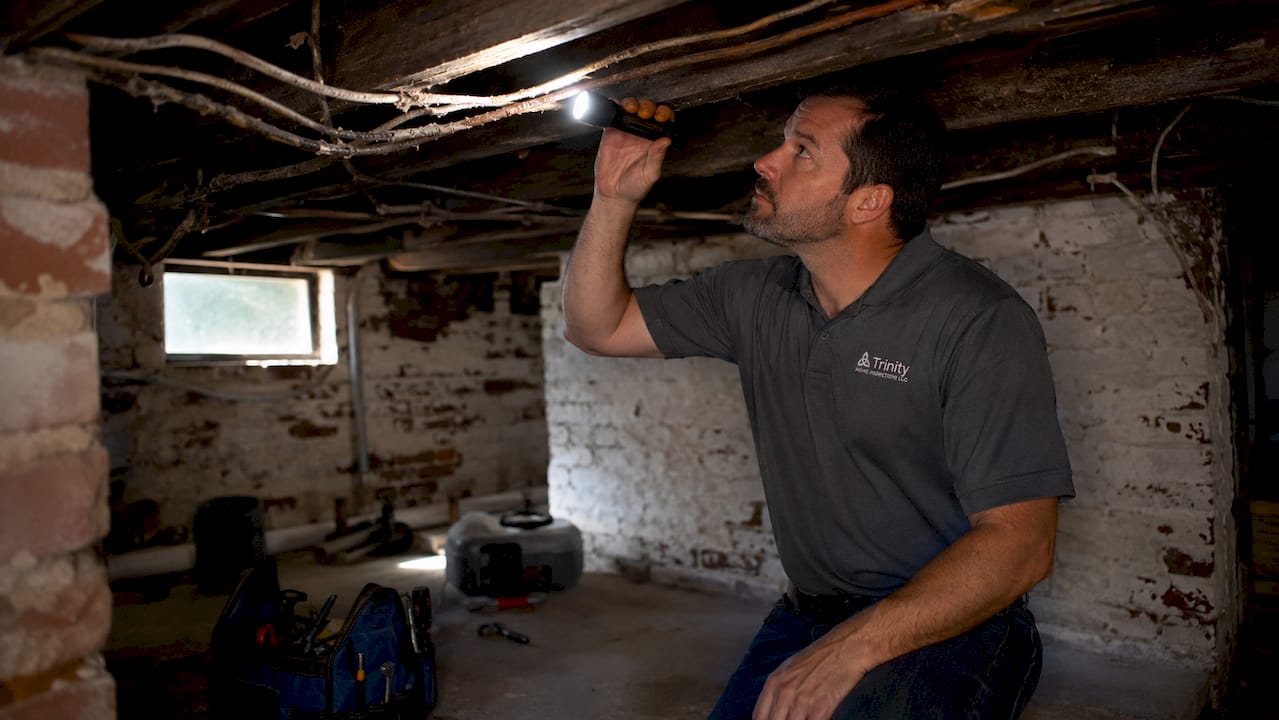
Cloth wiring is defined as fabric-covered electrical conductors installed in homes built primarily before 1960, and it presents a genuine safety concern for buyers considering older Alabama properties. The industry term is “cloth-insulated wiring,” though inspectors and electricians also call it “fabric-insulated wiring.” Cloth-insulated wiring is considered outdated and hazardous due to the breakdown of its rubberized insulation over decades of use. Alabama’s Gulf Coast climate adds another layer of risk. High humidity accelerates the deterioration that time alone would eventually cause. If you are buying a home built before 1960 in Mobile, Baldwin, or surrounding counties, cloth wiring in older Alabama homes is something you need to understand before you close.
What are the primary risks of cloth wiring in Alabama homes?
The core danger is insulation failure. Fabric insulation becomes brittle over time, cracking and flaking away from the copper conductor underneath. Once bare wire is exposed inside a wall cavity, the risk of electrical arcing and fire rises significantly.
Arcing happens when electricity jumps across a gap between conductors or between a conductor and a nearby material. It generates intense heat in a fraction of a second. In a wall filled with wood framing and insulation, that heat can ignite a fire before any smoke detector triggers. This is why safety professionals treat cloth wiring as a hidden fire hazard rather than a minor inconvenience.
Gulf Coast Alabama humidity worsens wiring wear in ways that buyers from drier climates rarely anticipate. Moisture works into wall cavities, softens aging insulation, and speeds up corrosion at connection points. A home in Daphne or Foley that has never been rewired may have wiring in far worse condition than a similar home in a drier region, even if both were built in the same decade.
Common warning signs of cloth wiring failure include:
Flickering or dimming lights that are not tied to a specific appliance
Outlet covers or switch plates that feel warm to the touch
A buzzing or crackling sound near outlets or the electrical panel
Breakers that trip repeatedly without an obvious cause
A faint burning smell with no visible source
These symptoms indicate arcing, loose connections, or overheating that require prompt evaluation by a licensed electrician. Do not treat them as quirks of an older home.
Pro Tip: If you notice warm outlets during a showing, ask the listing agent when the electrical system was last evaluated. A warm outlet in a cloth-wired home is a red flag, not a minor defect.
Overloaded circuits are a related problem. Homes built before 1960 were designed for far fewer electrical devices than a modern household runs. When today’s appliances draw more current than the original wiring was rated to carry, the conductors heat up. In cloth-insulated wiring, that heat accelerates insulation breakdown even faster.
How does cloth wiring affect home inspections, insurance, and resale in Alabama?
A qualified home inspection will flag cloth wiring as a safety concern that requires follow-up by a licensed electrician. The inspector’s job is to identify the condition, not to rewire the home. What you receive is a clear picture of what exists and what needs professional evaluation next.
Insurance companies frequently refuse coverage or charge higher premiums for homes with cloth wiring. That is not a minor administrative detail. If you cannot secure homeowner’s insurance at a reasonable rate, your lender may not fund the loan. Buyers have lost deals at the last minute because an insurer declined coverage after the appraisal. Knowing the wiring condition before you make an offer protects you from that outcome.
Resale is also affected. A buyer who discovers cloth wiring during their own inspection will either walk away or negotiate a price reduction. Sellers who address the issue before listing, or who price the home to reflect it honestly, tend to have smoother transactions. Disclosure matters in Alabama, and undisclosed electrical deficiencies can create legal exposure after closing.
Steps that affect insurance and resale outcomes:
Obtain a full electrical evaluation from a licensed Alabama electrician before making an offer.
Request documentation of any prior electrical work, including permits pulled and inspections passed.
Verify that permits were actually closed out, not just applied for, by searching county records.
Ask the seller for any insurance correspondence related to the electrical system.
Factor rewiring costs into your offer price or negotiate a seller credit at closing.
Proper permits and documentation protect buyers from future liability and make the home easier to insure and resell. Unpermitted electrical work is a red flag on its own, separate from the wiring type.
The table below summarizes how cloth wiring affects three key areas of a home purchase:
Area | Impact | What to Do |
Home inspection | Flagged as safety concern requiring electrician evaluation | Schedule licensed electrician follow-up before closing |
Homeowner’s insurance | Coverage may be denied or premiums elevated | Confirm insurability before finalizing the purchase |
Resale value | Buyers discount or avoid cloth-wired homes | Price accordingly or rewire before listing |
You can also check whether prior electrical work was permitted by using a permit and deed search for Baldwin, Mobile, and Escambia counties. That one step can save you from inheriting someone else’s unpermitted work.
What steps should buyers take when considering homes with cloth wiring?
Start with a professional home inspection from an InterNACHI-certified inspector who documents electrical conditions with photos and thermal imaging. That report becomes your baseline. From there, you need a licensed electrician, not a handyman, to evaluate the full scope of the wiring system.
A practical buyer checklist for cloth-wired homes:
Confirm the inspector uses thermal imaging to detect overheated circuits behind walls.
Hire a licensed Alabama electrician for a dedicated electrical evaluation after the home inspection.
Ask the electrician to specify whether a partial rewire or a full house rewire is needed.
Request itemized quotes from at least two licensed electricians so you can compare scope and cost.
Verify that each electrician will pull the required permits and schedule inspections.
Ask specifically whether any wiring insulation contains asbestos, which requires specialized removal.
Use the electrician’s written estimate as a negotiating tool with the seller.
The asbestos question is one most buyers skip. Some early cloth wiring used asbestos in its insulation materials, and removal of asbestos-laden wiring must be handled by specialized contractors to prevent toxic exposure. A licensed electrician familiar with pre-1960 construction will know to test for this before any work begins.
Partial rewires address the highest-risk areas first, such as the kitchen, bathrooms, and the panel connections. A full house rewire replaces every circuit. The right choice depends on the home’s age, the extent of deterioration, and your budget. An electrician’s written scope of work gives you the facts you need to negotiate.
Pro Tip: Get the electrician’s estimate in writing before you finalize your offer. A documented rewiring cost gives you a concrete number to present during price negotiations, and sellers are far more likely to respond to a specific figure than a vague concern.
Negotiating a sale contingency based on the electrical evaluation is standard practice. You can request a seller credit, a price reduction, or a requirement that the seller complete specific repairs before closing. Your real estate agent can structure the contingency language, but the electrician’s report is what makes it credible.
For a broader look at Alabama home safety checks, including electrical conditions, structural items, and moisture concerns, a thorough pre-offer inspection covers all of it in one visit.
What modern electrical upgrades improve safety in older Alabama homes?
Modern thermoplastic wire insulation, sold under designations like THHN and THWN, replaces cloth wiring with materials rated to withstand heat, moisture, and decades of use. Thermoplastic insulation does not crack or flake. It holds up in the humid conditions that define Gulf Coast Alabama summers.
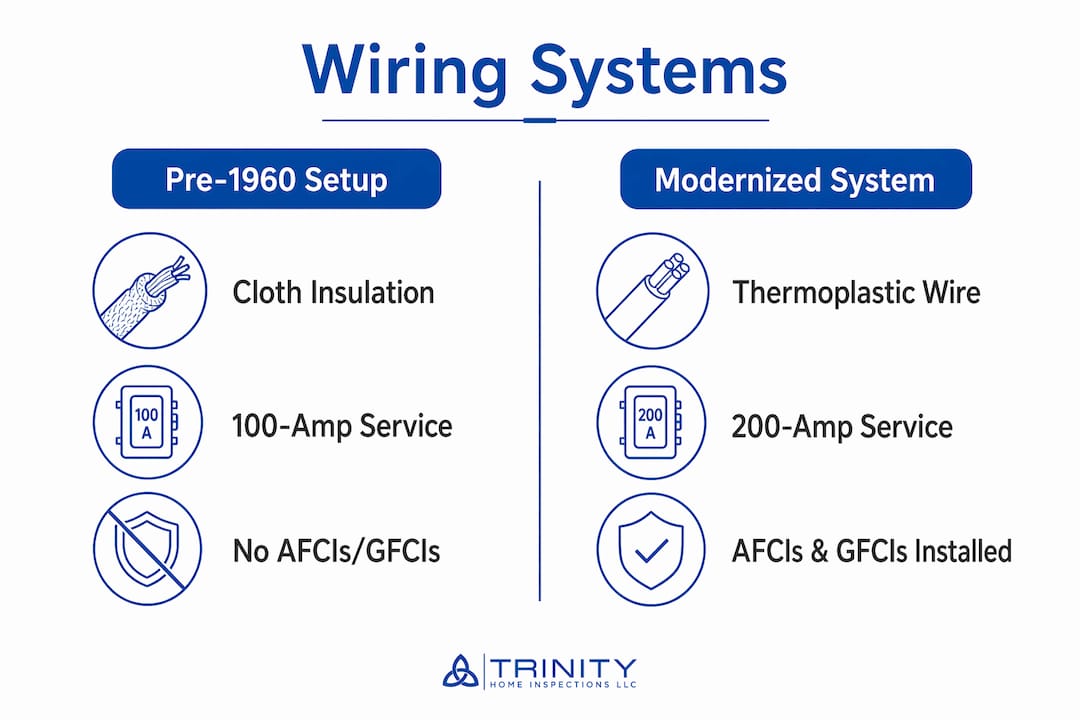
Arc-Fault Circuit Interrupters (AFCIs) are the most critical safety upgrade for older homes because they detect dangerous arcing that standard breakers cannot sense. A conventional breaker trips when current exceeds its rating. An AFCI trips when it detects the electrical signature of arcing, which can occur at current levels well below a standard breaker’s threshold. Ground Fault Circuit Interrupters (GFCIs) protect against shock in wet areas like kitchens, bathrooms, and garages.
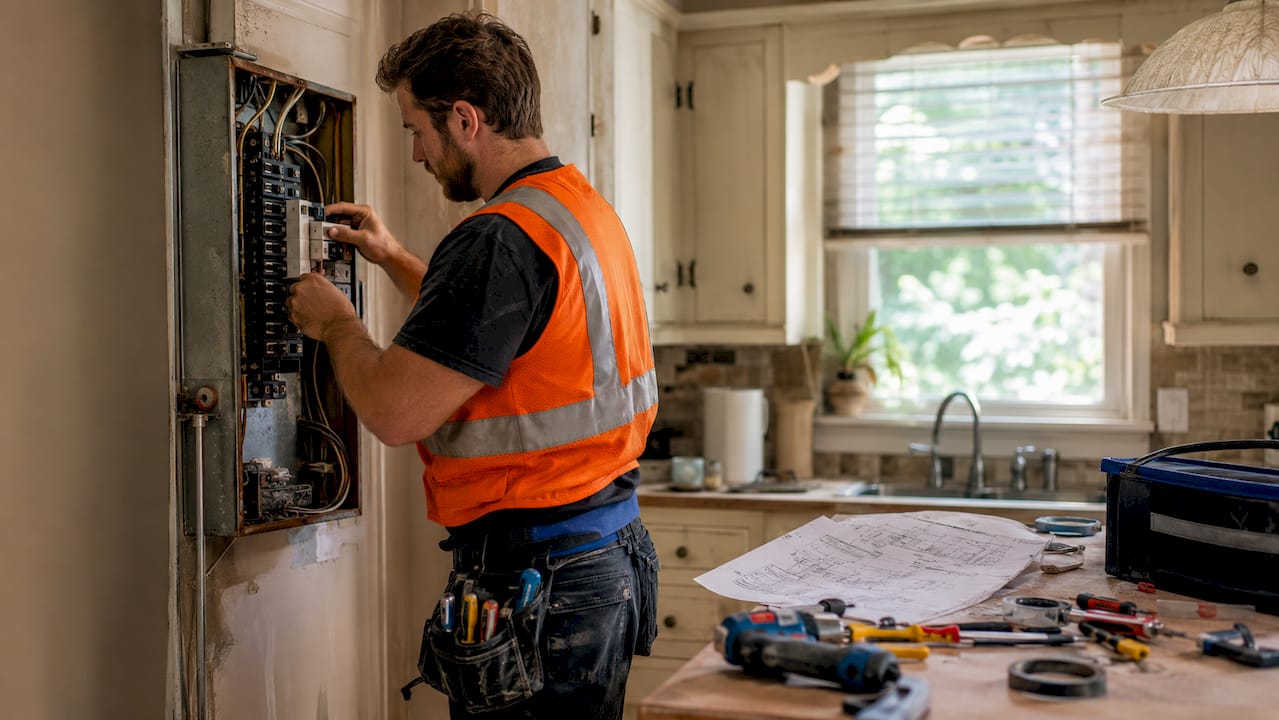
Upgrading from 100-amp to 200-amp service and installing AFCIs and GFCIs are the recommended safety improvements for older homes with cloth wiring. A 100-amp panel was adequate for a 1950s household. It is not adequate for a home with central air conditioning, electric appliances, and multiple device chargers running simultaneously. The upgrade also satisfies most insurance company requirements.
The table below compares the original electrical setup in a pre-1960 home against a modernized system:
Feature | Pre-1960 Setup | Modernized System |
Wire insulation | Cloth or fabric-wrapped rubber | Thermoplastic (THHN/THWN) |
Circuit protection | Standard fuses or breakers | AFCIs and GFCIs |
Service amperage | 60–100 amps | 200 amps |
Insurance eligibility | Often denied or restricted | Generally accepted |
Fire and shock risk | Elevated | Significantly reduced |
Professional rewiring also pays off at resale. A home with a documented, permitted rewire and a modern panel is easier to insure, easier to sell, and commands a stronger price than a comparable home with original cloth wiring. The upfront cost of rewiring is real, but so is the return.
For buyers evaluating older panels alongside cloth wiring, outdated breaker panels are a separate but related concern worth understanding before you commit to a purchase.
Key Takeaways
Cloth wiring in older Alabama homes is a manageable risk when buyers understand the inspection process, insurance implications, and upgrade options before making an offer.
Point | Details |
Cloth wiring deteriorates | Fabric insulation becomes brittle over time, raising fire risk in homes built before 1960. |
Alabama humidity accelerates damage | Gulf Coast moisture speeds up insulation breakdown, making local climate a key factor in any evaluation. |
Insurance is a real obstacle | Some insurers deny coverage or raise premiums for cloth-wired homes, which can affect loan approval. |
AFCIs are the top safety upgrade | Arc-Fault Circuit Interrupters detect dangerous arcing that standard breakers miss, making them the priority addition. |
Permits protect buyers | Documented, permitted electrical work reduces liability and makes the home easier to insure and resell. |
What I have seen inspecting cloth-wired homes across the Gulf Coast
I have walked through a lot of older homes in Mobile and Baldwin counties, and cloth wiring is one of those issues that catches buyers off guard more than almost anything else. The house looks fine from the outside. The price is attractive. Then we open the panel or look at the wiring in the attic, and the picture changes.
The mistake I see buyers make most often is treating cloth wiring as a binary problem. Either they panic and walk away from a home that could be a solid investment with the right electrical work, or they dismiss it entirely because the lights are on and nothing has tripped. Neither reaction serves them well. The real question is always: what is the actual condition of this specific system, and what will it cost to bring it up to a safe standard?
Humidity is the factor that separates Alabama from most of the country on this issue. I have seen cloth wiring in attics along the coast that has deteriorated far faster than comparable wiring in homes further inland. The combination of heat, moisture, and age is hard on insulation that was never designed to last this long. That is why I always recommend thermal imaging during an inspection of any pre-1960 home. You can see overheated circuits behind walls without opening them up.
The other thing buyers consistently underestimate is the permit history. Unpermitted electrical work is common in older homes, and it creates real problems at resale and with insurers. A quick permit search before you make an offer tells you whether the prior owners did things right. If the records show electrical work with no corresponding permit, that is a conversation to have before you are under contract.
My honest advice: get the inspection, get the electrician’s evaluation, and get the numbers in writing. Then negotiate from a position of knowledge. Cloth wiring does not have to be a deal-breaker. It just has to be priced correctly.
— Matt
Trinity Home Inspections is ready to help you evaluate older Alabama homes
Buying an older home in Mobile, Baldwin, or the surrounding Gulf Coast counties means knowing what is inside the walls before you sign. Trinity Home Inspections provides InterNACHI-certified inspections that include free thermal imaging to help identify overheated circuits, moisture intrusion, and insulation gaps that standard visual inspections miss.
[

Every report is delivered the same day of the inspection, color-coded by priority, and written in plain English so you know exactly what needs attention and what can wait. You can also use the permit and deed search service to verify whether prior electrical work in Baldwin, Mobile, or Escambia County was properly permitted before you make an offer. Call 251-210-7376 or visit TrinityInspectionsLLC.com to schedule your inspection today.
FAQ
What is cloth wiring and when was it used?
Cloth wiring is fabric-covered electrical wiring installed in homes built primarily before 1960. The insulation consists of rubberized material wrapped in a woven fabric jacket, which degrades over time and becomes a fire hazard.
Is cloth wiring an automatic deal-breaker when buying a home?
Cloth wiring is not automatically a deal-breaker, but it requires a full evaluation by a licensed electrician to determine the extent of deterioration and the cost of rewiring. Buyers should factor that cost into their offer or negotiate a seller credit.
Can you get homeowner’s insurance with cloth wiring in Alabama?
Some insurers refuse coverage or charge higher premiums for homes with cloth wiring due to elevated fire risk. Confirming insurability before closing is a necessary step for any buyer considering a cloth-wired home.
What is the most important electrical upgrade for a cloth-wired home?
AFCIs are the most critical upgrade because they detect arcing that standard breakers cannot sense. Pairing AFCIs with GFCIs and a 200-amp panel upgrade addresses the primary fire and shock risks in older homes.
Does Alabama humidity make cloth wiring more dangerous?
Yes. Gulf Coast humidity accelerates electrical wiring degradation, making timely inspection and maintenance especially important in Alabama’s coastal counties. Homes in Mobile, Daphne, Foley, and similar areas face faster insulation breakdown than homes in drier climates.
Recommended