
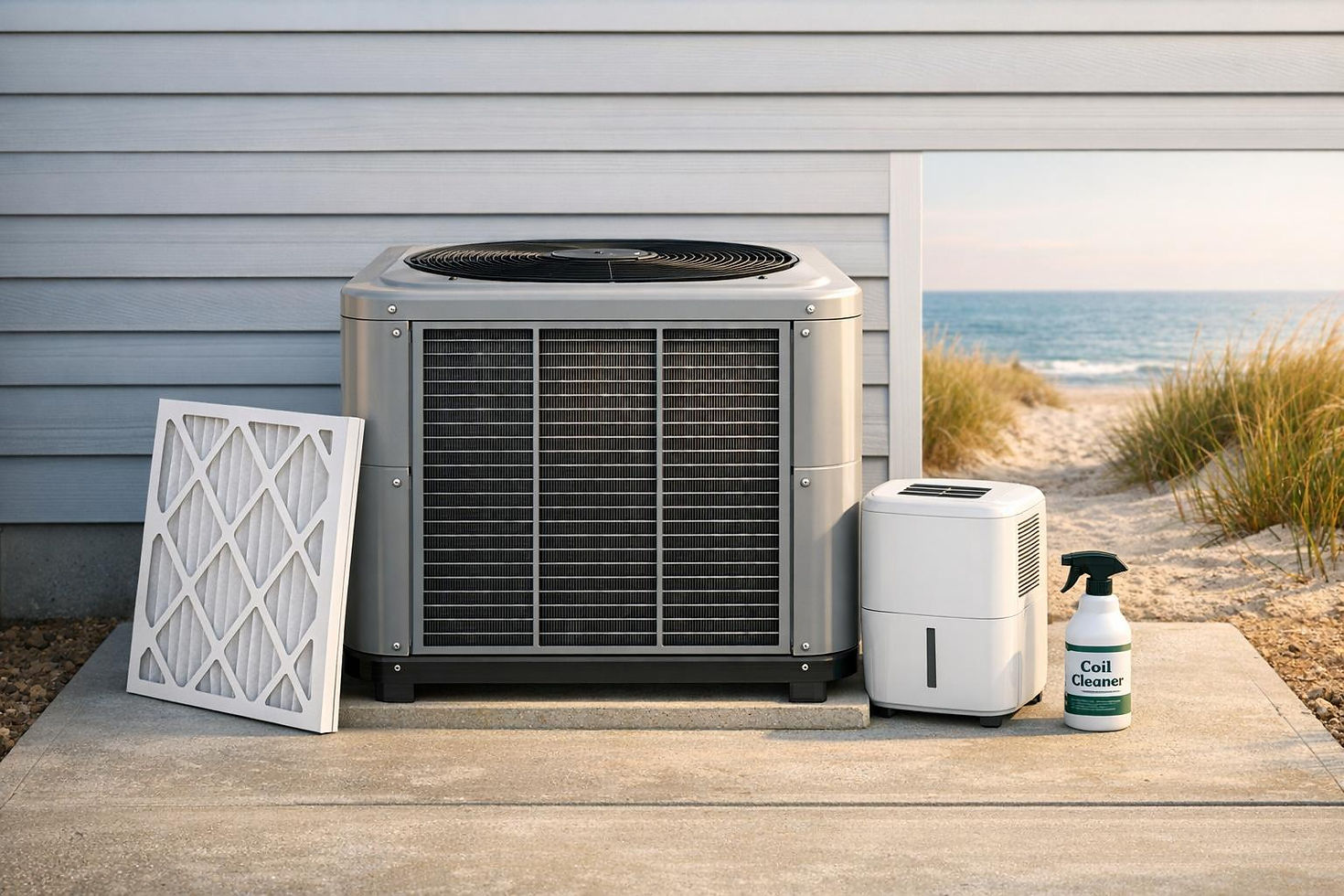
Coastal HVAC Maintenance Tips

Updated: 27 minutes ago
Living near the coast can be tough on your HVAC system. Salt air, high humidity, and sand can cause corrosion, mold growth, and higher energy bills. Without proper care, your system’s lifespan can drop significantly, leading to costly repairs or replacements.
Here’s what you need to know to protect your HVAC system:
Salt air causes corrosion on condenser coils, fan blades, and electrical connections, leading to refrigerant leaks and system failures.
High humidity strains the system, increasing wear on compressors and motors while promoting mold in ducts and coils.
Sand and debris clog filters and coils, reducing efficiency and airflow.
Regular maintenance is key: Clean outdoor units, replace air filters frequently, and schedule professional HVAC inspections twice a year.
Upgrades like dehumidifiers and corrosion-resistant equipment can help your system last 15–20 years, despite the harsh coastal conditions.
Pro Tip: Keep indoor humidity below 60% and rinse outdoor units regularly to wash away salt buildup. Professional maintenance can reduce breakdown risks by 30% and extend the system’s lifespan by up to 20%.
HVAC Coastal Coat. Protect Your Air Conditioner or Heat Pump from the Ocean.
sbb-itb-3aaca89
How Coastal Climates Affect HVAC Systems
Living along the Gulf Coast comes with its perks - beautiful views and ocean breezes - but it’s not all sunshine when it comes to your HVAC system. The coastal environment can be brutal on these systems, and knowing the risks can save you from unexpected expenses.
Salt Air Corrosion
Salt from the ocean air doesn’t just settle on your car; it also clings to your outdoor HVAC unit. Over time, this salty residue eats away at exposed metal surfaces, especially the condenser coils. These coils are constantly exposed, making them prime targets for rust and corrosion. As the salt builds up, it can create tiny pits that lead to refrigerant leaks and eventual system failure.
But it’s not just the coils at risk. Electrical connections can oxidize due to salt exposure, which makes it harder for the system to start and run efficiently. In some cases, this can lead to short circuits, knocking out the entire unit. Other components, like fan blades, compressors, and even the unit’s cabinet, can also fall victim to corrosion, destabilizing the system over time.
"The salty air near the coast is one of the most corrosive natural elements for metal components." - PowerVacAmerica
And salt isn’t the only challenge - constant moisture adds another layer of wear and tear.
Moisture Damage
High humidity is a fact of life in coastal areas, and your HVAC system feels the pressure. To keep your indoor air comfortable, the system has to run longer cycles to remove excess moisture. This extra workload puts stress on critical components like the compressor and fan motor, potentially shortening their lifespan.
Moisture also creates a breeding ground for mold, especially on coils and inside ducts. Mold buildup restricts airflow, reduces efficiency, and can even degrade the air quality in your home. On top of that, algae can clog condensate lines, leading to water damage inside your home.
Higher Energy Consumption
When your HVAC system is battling both humidity and corrosion, it’s no surprise that energy bills can climb. In coastal climates, the constant effort to maintain comfortable indoor conditions means your air conditioner might run almost non-stop. This inefficiency drives up energy use and costs.
For example, raising your thermostat just one degree above 72°F can save you about 3% on cooling expenses. But in coastal environments, the toll of corrosion and debris buildup can quickly erase those savings. Staying ahead of these issues with proper maintenance is essential to keeping energy costs manageable and your system running smoothly.
Coastal HVAC Maintenance Tips
Protecting your HVAC system in a coastal environment comes with its own set of challenges. Here are some practical tips to help you keep your system running smoothly.
Schedule Professional Maintenance
Plan for professional maintenance twice a year - once in the spring before cooling season and again in the fall before heating season. During these visits, a technician will clean the coils, check refrigerant levels, inspect electrical connections for salt corrosion, and address minor issues before they escalate. These tune-ups typically cost between $75 and $200 per visit. Regular maintenance can help you avoid up to 90% of common repairs and lower the chances of emergency breakdowns by 30%.
"The cheapest repair is the one you never need." - Coastal Carolina Comfort
Many HVAC companies offer annual maintenance plans, which often include both seasonal visits, priority scheduling, and discounts on repairs. If you’re in areas like Daphne, Fairhope, or Gulf Shores, Trinity Home Inspections provides annual maintenance services to help you stay ahead of potential issues.
Replace Air Filters More Often
In coastal regions, the typical three-month schedule for air filter replacement may not be enough. During humid months or high-pollen seasons (March through May), check your filter every 30 days. If it looks dark or clogged, replace it immediately. A clean filter can lower your energy use by as much as 15%.
Opt for pleated filters with a MERV rating of 8–11, as they’re better at capturing allergens and salt without restricting airflow. Mark the installation date on the filter, and always turn off the thermostat and breaker before replacing it.
Clean Outdoor Units
Rinse your outdoor condenser unit with a garden hose using low pressure every few weeks. This helps wash away corrosive salt deposits that can lead to damage or refrigerant leaks. Avoid using a pressure washer, as the high pressure can bend the unit’s metal fins and cause further harm.
Keep at least a 2-foot clearance around the condenser by trimming back vegetation and removing debris. For added protection, you can hire a professional to apply a corrosion-resistant coating to the outdoor components. Regular cleaning of the condenser can extend its lifespan by up to 20%.
Check and Clear Condensate Drain Lines
Your condensate drain line works extra hard in humid coastal environments, making it more prone to clogs from algae or mold. Once a month during the summer, pour 1 cup of white vinegar or 1/2 cup of bleach down the drain line to prevent blockages. If you notice water pooling around your indoor unit or the system shutting off unexpectedly, it could indicate a clogged drain line. Clearing it promptly can save you from water damage and expensive repairs.
Seal Ductwork and Fix Air Leaks
Leaky ductwork allows humid, salty air to infiltrate your HVAC system, causing it to work harder and exposing internal components to corrosion. Inspect accessible ducts for gaps, holes, or disconnected sections. Seal these areas with mastic sealant or metal-backed tape - avoid using standard duct tape, as it degrades quickly.
Additionally, weatherstripping around doors and windows can help limit the amount of humid air entering your home. If it’s been a while since your ducts were inspected, consider a professional evaluation to remove built-up sand and salt, which can help maintain your system's efficiency.
HVAC Upgrades for Coastal Areas
If you're dealing with constant HVAC repairs due to the challenges of coastal environments, it might be time to consider specific upgrades. Paired with regular maintenance, these improvements can make your system more durable in the face of salty air and high humidity. While the upfront cost might be higher, the long-term savings on repairs and the extended lifespan of your system make it a worthwhile investment.
Add Dehumidification Equipment
Coastal humidity can push your HVAC system to its limits, increasing wear and tear. Installing a whole-home dehumidifier is a smart way to reduce this strain. Instead of your HVAC system overworking to manage both cooling and dehumidifying, this upgrade allows it to focus solely on temperature control. Plus, it helps prevent musty odors and mold, which thrive when indoor humidity climbs above 60%.
To keep tabs on your home's humidity, use a hygrometer and aim to maintain levels below 60%. This simple addition not only protects your HVAC system but also improves indoor air quality by cutting down on allergens and irritants that thrive in damp conditions.
Upgrade to Corrosion-Resistant Equipment
Coastal air, rich with salt, can wreak havoc on standard HVAC systems. Components like copper coils, aluminum fins, and electrical connections are particularly vulnerable to corrosion. Coastal-grade equipment, however, is built to withstand these harsh conditions, using specialized coatings and materials that resist salt damage. While replacing a system can range from $5,000 to $10,000, corrosion-resistant models are designed to last 15–20 years without the premature failures common in standard systems.
Protecting Your HVAC System in Coastal Environments
Living along the Gulf Coast brings unique challenges for your HVAC system. Salt-laden air and high humidity can take a toll, but combining simple at-home care with professional maintenance can help reduce these effects. For starters, make sure there’s at least a 2-foot clearance around your outdoor unit. This allows proper airflow and prevents unnecessary strain on the compressor. Another quick tip? Rinse the outdoor components regularly to wash away corrosive salt buildup. These small steps go a long way in keeping your system running smoothly.
Of course, some tasks are best left to the pros. Professional inspections are crucial for spotting hidden issues that you might miss. For example, technicians - like those at Trinity Home Inspections - use thermal imaging to detect problems such as trapped moisture or overheating before they escalate. They’ll also check refrigerant pressure, test electrical connections, and address common coastal wear-and-tear issues. It’s smart to schedule these inspections in early spring, ensuring your system is ready for the heavy cooling demands of summer. Regular professional evaluations, paired with your DIY efforts, help keep your system in peak condition.
With proper care, your HVAC system in a coastal home can last 15 to 20 years. That’s a big deal when you consider the $5,000 to $10,000 price tag for replacing a system prematurely. To further protect your system, aim to keep indoor humidity levels below 60%. Using a hygrometer can help you monitor this, reducing mold risks and mechanical strain on your equipment.
Lastly, don’t underestimate the importance of keeping detailed maintenance records. Many manufacturers require proof of regular service to honor warranties, and having a well-documented history can even boost your home’s resale value. Whether you’re tackling small tasks yourself or scheduling annual professional checkups, consistent care ensures your HVAC system can withstand the demands of a coastal environment.
FAQs
How can I tell if salt corrosion is damaging my HVAC unit?
Signs that your HVAC unit may be experiencing salt corrosion include rust or discoloration on outdoor parts, reduced cooling performance, and frequent breakdowns or repairs. You might also notice unusual noises, excessive vibration, or even higher energy bills. These problems are especially common in coastal areas where salt in the air can accelerate corrosion. Addressing these issues quickly is crucial to avoid further damage and to keep your system running efficiently.
What are the signs my home’s humidity is too high for my HVAC system?
If your home's humidity levels are more than your HVAC system can handle, you might notice some unwelcome side effects. These can include excess moisture buildup, mold growth, corrosion on metal parts, and even a drop in your system's efficiency. On top of that, high humidity forces your HVAC unit to work harder than it should, which can lead to more wear and tear and a higher chance of breakdowns. Tackling these problems early is key to keeping your system running smoothly and lasting longer.
When should I add a whole-home dehumidifier instead of relying on my AC?
When indoor humidity levels remain consistently high, it might be time to think about installing a whole-home dehumidifier. Excess moisture in the air can strain your air conditioner, making it work harder than necessary. This not only increases wear and tear on the system but also creates an environment where mold can thrive - especially in coastal regions where humidity tends to be naturally higher. A whole-home dehumidifier helps maintain ideal humidity levels, offering protection for both your home and your HVAC system.
