Crawlspace Moisture in Baldwin County Homes: Warning Signs Buyers Should Know

Crawlspace moisture is defined as the accumulation of water vapor, liquid water, or condensation beneath a home’s living space, and it is one of the most costly and commonly overlooked problems buyers face in Baldwin County. The warm, humid Gulf Coast climate creates near-perfect conditions for crawlspace issues in Baldwin County to develop fast and quietly. Visible signs like standing water, mold growth, wood rot, pest infestations, and damaged vapor barriers are definitive red flags of crawlspace moisture that every buyer should recognize before closing. Catching these problems early, using both visual checks and tools like infrared thermal imaging and moisture meters, can save you from repairs that run well into the tens of thousands of dollars.
1. What are the most visible warning signs of crawlspace moisture?
Standing water or a constantly wet dirt floor is the most direct sign of a serious moisture problem. Water that pools after rain and never fully dries signals that drainage around the home is failing and the crawlspace has no reliable way to shed water. You may not see it during a dry week, so ask sellers directly about water history and check for water stains on the foundation walls.
Mold and fungal growth on wood beams, floor joists, or the underside of subfloor sheathing is the second most visible indicator. Mold thrives when humidity exceeds 70%, which is a common condition in damp Baldwin County crawlspaces. Mold often appears as black, green, or white fuzzy patches and carries a musty odor that can drift into the living area above.
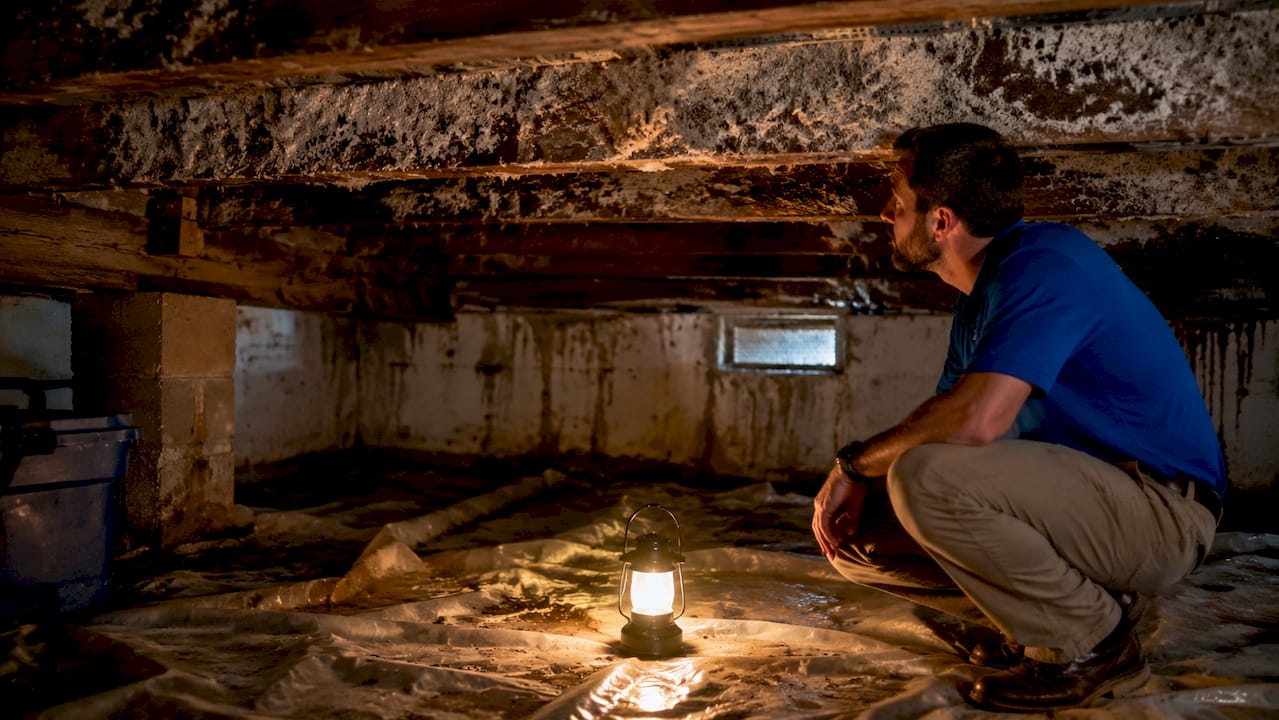
Wood rot is the physical result of sustained moisture contact with structural lumber. Look for soft, discolored, or crumbling wood on floor joists and support beams. Press a screwdriver gently against exposed wood. If it sinks in easily, the wood has lost structural integrity and needs professional evaluation.
Pest activity is another reliable moisture indicator. Termites, carpenter ants, and rodents are all attracted to damp wood. Mud tubes along foundation walls, sawdust-like frass near joists, or rodent droppings in the crawlspace all point to a moisture-friendly environment that has already attracted unwanted guests.
A damaged or missing vapor barrier is a direct pathway for ground moisture to enter the crawlspace. A properly installed vapor barrier is critical for moisture control in Baldwin County crawlspaces. Look for torn, bunched, or absent plastic sheeting on the crawlspace floor during any walk-through or inspection.
Standing water or wet soil: Check after rain events and look for watermarks on foundation walls.
Mold or fungal growth: Look for discoloration and fuzzy patches on wood surfaces and smell for musty odors.
Wood rot: Test joists and beams with a screwdriver. Soft wood means rot has set in.
Pest evidence: Mud tubes, frass, or droppings signal moisture-driven infestations.
Damaged vapor barrier: Torn or missing plastic sheeting on the crawlspace floor allows ground moisture to rise freely.
Pro Tip: Photograph every sign you find during a walk-through and bring those images to your inspector. Dated photos give your inspector a starting point and give you documentation for any repair negotiations with the seller.
2. How specialized moisture detection uncovers hidden crawlspace problems
Standard visual home inspections are often limited to what the inspector can see with the naked eye. Hidden moisture behind subfloor sheathing, inside wall cavities near the crawlspace, or beneath concrete piers can go completely undetected without the right tools. That gap is where buyers get surprised after closing.
Infrared thermal imaging detects temperature differences caused by moisture evaporation. Wet materials cool faster than dry materials, so an infrared camera reveals cold spots that indicate hidden water damage. These cold spots can appear behind drywall, under flooring, or along rim joists where condensation collects. Thermal cameras reveal hidden leaks rapidly and without any destructive testing.
Moisture meters confirm and map the wet areas that thermal imaging flags. An inspector presses the meter’s probes against wood or drywall and gets an immediate moisture content reading. Readings above 19% in wood indicate conditions favorable for rot and mold. Together, thermal imaging and moisture meters provide a thorough, non-destructive evaluation of crawlspace moisture conditions.
Specialized moisture inspections using infrared thermal imaging typically cost $200–$500 and are most effective during the due diligence period before a purchase agreement is finalized. That timing matters. You want findings in hand before you are legally committed to the purchase so you can negotiate repairs, request a price reduction, or walk away with your earnest money intact.
Thermal imaging: Identifies cold spots caused by moisture evaporation behind surfaces invisible to the eye.
Moisture meters: Confirms wet areas with exact readings, mapping the scope of the problem.
Due diligence timing: Schedule specialized inspections before the purchase agreement is finalized.
Cost range: Expect $200–$500 for a specialized moisture inspection with thermal imaging.
Non-destructive method: No walls or floors need to be opened to get reliable results.
Trinity Home Inspections includes thermal imaging at no extra charge with every inspection, which is not standard practice across the industry.
3. Exterior and environmental factors in Baldwin County that drive crawlspace moisture
Baldwin County’s coastal climate is the root cause behind many of the moisture problems buyers encounter. High relative humidity, frequent rain events, and warm temperatures year-round create a baseline moisture load that homes in drier climates simply do not face. A crawlspace that performs adequately in Tennessee can fail completely in Fairhope or Foley.
Soil grading is one of the most overlooked exterior contributors. Proper grading requires at least 6 inches of slope over 10 feet away from the house. When the ground slopes toward the foundation instead of away from it, every rain event pushes water directly against the foundation wall and into the crawlspace. Walk the perimeter of any home you are seriously considering and look for soil that pitches toward the house.
Gutters and downspouts are the first line of defense against water intrusion. Neglecting gutter maintenance can lead to foundation damage costing $5,000 to $30,000, while proper maintenance costs only $500 to $1,500. Clogged gutters overflow and dump water directly at the foundation. Downspouts that terminate less than 4 feet from the house send water right back toward the crawlspace. Check that downspout extensions are in place and directing water well away from the structure.
Vegetation placed too close to the foundation also contributes to moisture buildup. Shrubs and ground cover trap humidity against the foundation wall and keep soil damp between rain events. Irrigation systems pointed toward the house compound the problem. Look for overgrown landscaping tight against the foundation and ask whether irrigation heads are aimed at the home.
Exterior Factor | What to Look For | Risk Level |
Soil grading toward foundation | Ground slopes toward house | High |
Clogged or missing gutters | Overflow stains, sagging gutters | High |
Short downspout extensions | Discharge within 4 feet of foundation | Medium |
Dense vegetation at foundation | Shrubs or ground cover against walls | Medium |
Irrigation aimed at house | Wet soil at foundation after watering | Medium |
For a deeper look at how coastal conditions affect crawlspaces specifically, the Gulf Coast crawlspace risks guide covers local solutions in detail.
4. How crawlspace moisture affects home safety, health, and value
Structural damage is the most serious consequence of unchecked crawlspace moisture. Wood rot weakens floor joists and support beams over time, causing floors to sag and bounce underfoot. In severe cases, the structural damage extends to the foundation itself, requiring repairs that can reach tens of thousands of dollars. Sagging floors are a visible symptom you can feel during a walk-through.
Health risks follow closely behind structural concerns. Mold spores from crawlspace growth travel through floor gaps and HVAC systems into the living space above, causing respiratory irritation, allergy flare-ups, and persistent musty odors. Families with children, elderly members, or anyone with asthma face elevated risk. A musty smell that you notice the moment you walk into a home is a direct signal to investigate the crawlspace.
Property value takes a measurable hit when moisture damage is present. Wood rot and foundation issues from moisture compromise home value significantly and reduce your negotiating position if you are buying as an investment. Lenders may also flag severe moisture damage during the appraisal process, which can delay or derail financing.
Pro Tip: If your inspector finds moisture damage, get a written repair estimate from a licensed contractor before closing. That number gives you a concrete figure to use when negotiating a price reduction or seller-paid repairs. A verbal estimate carries no weight at the negotiating table.
Impact Area | Warning Sign | Potential Cost |
Structural integrity | Sagging floors, soft joists | $5,000–$30,000+ |
Indoor air quality | Musty odors, visible mold | $1,500–$10,000 remediation |
Foundation stability | Cracks, water intrusion at walls | $5,000–$30,000 |
Property value | Lender flags, reduced appraisal | Varies by severity |
Health | Respiratory symptoms, allergy flares | Ongoing medical costs |
5. What buyers should do during a walk-through to check for moisture
Your walk-through is your first opportunity to spot moisture warning signs before any formal inspection takes place. Use it deliberately. Do not just look at finishes and layout. Spend time in the crawlspace access area, the basement if present, and the lowest level of the home.
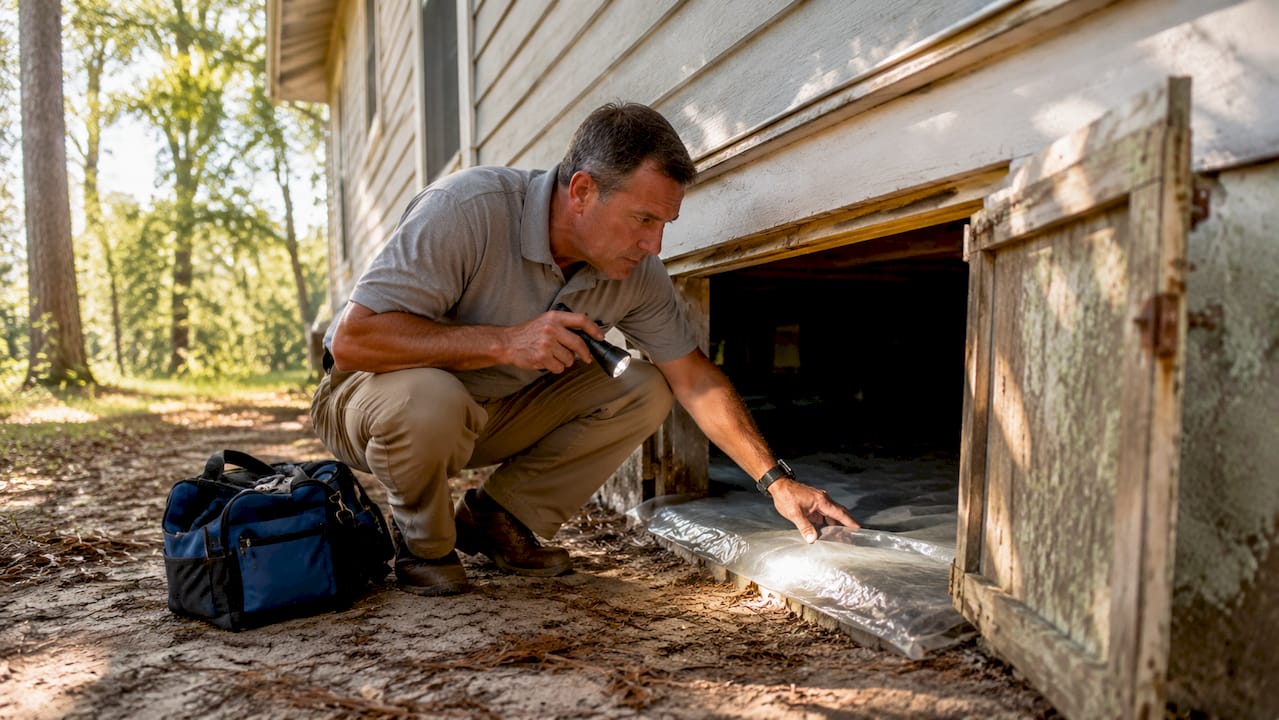
Start by opening the crawlspace access hatch and shining a flashlight inside. You do not need to enter the space. Look for standing water, visible mold, damaged vapor barrier material, and any signs of pest activity. Take photos of everything you see, even if it looks minor. A small patch of mold today can indicate a much larger problem behind the vapor barrier.
Walk every room on the ground floor and pay attention to how the floors feel underfoot. Soft spots, bouncing, or squeaking in areas away from known traffic patterns can indicate rot in the joists below. Check baseboards and lower wall sections for discoloration, bubbling paint, or warping, all of which suggest moisture has been wicking up from below.
Smell matters too. A persistent musty or earthy odor inside the home, especially in rooms over the crawlspace, is a reliable indicator of active mold growth below. Sellers sometimes use air fresheners to mask odors before showings. If the scent seems unusually strong or artificially sweet, that is worth noting.
Ask the seller or listing agent directly whether the home has had any history of crawlspace water intrusion, mold treatment, or vapor barrier replacement. Their answers, or their reluctance to answer, tell you a great deal. Follow up any concerning findings with a professional inspection that includes moisture meters and thermal imaging.
6. Why vapor barrier condition is a make-or-break detail in Baldwin County
The vapor barrier is the single most important moisture control component in a Baldwin County crawlspace. It sits on the crawlspace floor and blocks ground moisture from evaporating upward into the structure. Without it, or with a compromised one, soil moisture rises continuously into the wood framing above.
A damaged or missing vapor barrier allows soil moisture to rise into the home, increasing humidity and creating conditions where mold growth accelerates. In Baldwin County’s climate, a crawlspace without a functioning vapor barrier will develop moisture problems regardless of how well the rest of the home is maintained. The barrier needs to cover the entire crawlspace floor with sealed seams and extend up the foundation walls.
Signs of vapor barrier failure include visible tears, areas where the plastic has bunched or pulled away from the walls, and sections covered by standing water or debris. A barrier that has been patched multiple times with tape is also a concern. Tape repairs rarely hold long-term in a humid environment, and each gap is a moisture entry point.
Replacing a vapor barrier in a typical Baldwin County crawlspace costs several thousand dollars depending on the size of the space and the condition of the existing material. That cost is entirely reasonable to request as a seller concession if the barrier is in poor condition. A complete moisture control guide covers remediation options in detail for buyers who want to understand what a full fix involves.
Key Takeaways
Crawlspace moisture in Baldwin County homes causes structural damage, health risks, and reduced property value, and buyers who identify warning signs early hold the strongest negotiating position.
Point | Details |
Visible signs come first | Standing water, mold, wood rot, pests, and damaged vapor barriers are the primary red flags to check. |
Thermal imaging finds what eyes miss | Infrared cameras and moisture meters reveal hidden water damage that visual inspections cannot detect. |
Local climate raises the baseline risk | Baldwin County’s humidity and rainfall make vapor barrier condition and soil grading critical factors for every buyer. |
Health and structure are both at stake | Mold spores affect indoor air quality while wood rot compromises floor joists and support beams over time. |
Inspection timing protects your money | Schedule specialized moisture inspections during due diligence, before the purchase agreement is finalized. |
What I have learned inspecting crawlspaces across Baldwin County
Crawlspace moisture is the issue I see buyers underestimate most consistently. They walk through a beautiful home in Daphne or Fairhope, fall in love with the kitchen and the yard, and never think to ask about what is happening three feet below the floor they are standing on. By the time they call me, they have sometimes already closed.
The warning signs are almost always there before closing. The musty smell in the back bedroom. The floor that gives slightly near the hallway. The overgrown shrubs pressed tight against the foundation. Buyers who know what to look for catch these signals early. Buyers who do not know what to look for walk past them every time.
What I tell every buyer I work with is this: the crawlspace inspection is not optional in Baldwin County. This is not a climate where you can skip it and hope for the best. The combination of coastal humidity, sandy soil, and older construction in many neighborhoods means moisture problems are not rare. They are common. The question is whether you find them before or after you own the home.
The cost of a thorough inspection, including thermal imaging and moisture meter testing, is a fraction of what remediation costs once the damage is done. I have seen buyers negotiate thousands of dollars off a purchase price based on what we found in the crawlspace. I have also seen buyers walk away from deals that looked great on paper once the crawlspace told a different story.
Prioritize the crawlspace. Ask your inspector specifically about moisture, vapor barrier condition, and any signs of wood rot or mold. If your inspector does not use thermal imaging and a moisture meter as standard tools, find one who does. You deserve a complete picture before you commit.
— Matt
Trinity Home Inspections is ready to protect your Baldwin County purchase
Buying a home in Baldwin County without a professional crawlspace moisture assessment is a financial risk you do not need to take. Trinity Home Inspections provides InterNACHI-certified inspections across Daphne, Fairhope, Spanish Fort, Foley, Gulf Shores, Orange Beach, and the surrounding Gulf Coast area, with free thermal imaging included in every inspection.
[

For buyers concerned about mold, Trinity offers dedicated mold testing and inspection services with certified lab reports and chain of custody documentation. Sellers preparing to list can also request a pre-listing home inspection to identify and address moisture issues before buyers find them. Same-day reports, plain-English findings, and a team that answers your questions after the inspection. Call 251-210-7376 or visit TrinityInspectionsLLC.com to schedule.
FAQ
What are the first signs of crawlspace moisture in a Baldwin County home?
Standing water, mold growth on wood surfaces, a persistent musty odor, and a damaged or missing vapor barrier are the most immediate signs. Soft or bouncy floors on the ground level also indicate moisture-related wood rot in the joists below.
How much does a specialized crawlspace moisture inspection cost?
Specialized moisture inspections using infrared thermal imaging typically cost $200–$500. Trinity Home Inspections includes thermal imaging at no additional charge as part of its standard home inspection service.
Can crawlspace moisture affect indoor air quality?
Yes. Mold spores from crawlspace growth travel through floor gaps and HVAC systems into the living space above. Mold thrives when humidity exceeds 70%, a condition common in damp Baldwin County crawlspaces, and can cause respiratory irritation and allergy symptoms.
When should I schedule a crawlspace moisture inspection?
Schedule the inspection during the due diligence period, before your purchase agreement is finalized. That timing gives you findings you can act on, whether that means negotiating repairs, requesting a price reduction, or choosing not to proceed.
Does a damaged vapor barrier always mean major repairs?
Not always, but it does mean the crawlspace is actively taking on ground moisture. Replacing a vapor barrier is a defined, manageable repair. The concern is what may have already been damaged by the time the barrier failed. A professional inspection determines the full scope.
Recommended