
Mold Found During Home Inspection: What Buyers and Sellers Do Next

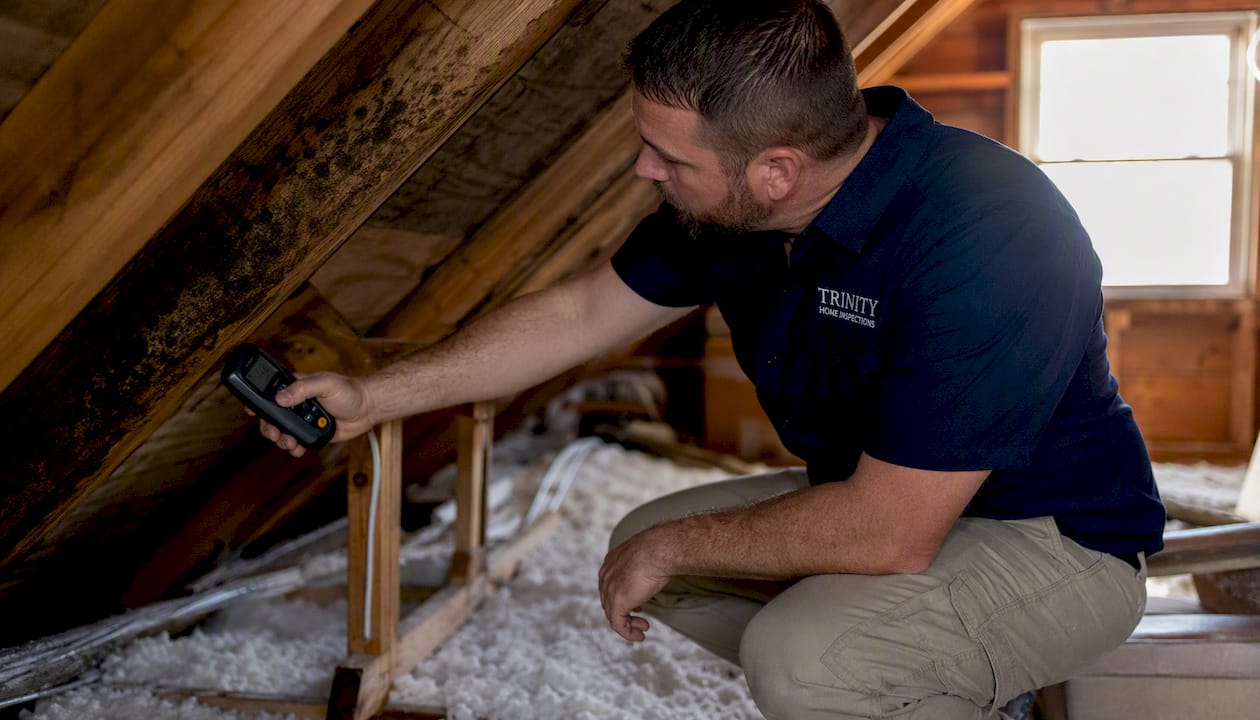
If mold is flagged during a home inspection, treat it as a moisture problem that needs assessment, scope, and verification — not an automatic reason to walk away. The finding signals that water got in somewhere, and the real question is where, how long, and how much. Most mold discoveries during inspections are manageable when you respond with the right steps inside your contingency window.
Here is what to do first:
Confirm exactly what the inspector observed. “Suspected microbial growth” is not a lab diagnosis. Read the report language carefully before reacting.
Request a targeted mold or moisture assessment if the inspector noted visible growth, musty odors, or elevated moisture readings. This is a separate service from the standard inspection.
Preserve your inspection contingency and timeline. Do not let the clock run out while waiting for answers. Get the assessment scheduled immediately.
Do not accept a vague seller credit. Ask for a written scope of work or a remediation plan tied to a specific cost estimate before agreeing to any credit or repair allowance.
The EPA notes that when visible mold is present, sampling is usually unnecessary. InterNACHI and IAC2 both clarify that mold testing is a separate discipline from a standard home inspection. Trinity Home Inspections offers mold swab testing and indoor air quality sampling with chain-of-custody lab reports as add-on services when the situation calls for it.
Key Takeaways
When mold is found during a home inspection, the outcome depends on how quickly and thoroughly both sides respond with documentation, a defined scope, and verified remediation.
Point | Details |
Mold is a moisture signal | A mold finding points to a water source problem — assess and fix the source before anything else. |
Standard inspections are visual only | Home inspectors do not perform air or surface sampling; request a certified mold assessor separately if needed. |
No federal spore-count limit exists | Because there is no regulatory threshold, sampling results must be interpreted by a qualified professional, not compared to a standard. |
Scope plus clearance beats a vague credit | Always tie any seller credit or repair to a written scope of work and independent clearance testing before closing. |
EPA threshold for DIY is less than 10 sq ft | Larger areas, HVAC involvement, or contaminated water require a licensed remediator, not a DIY cleanup. |
Trinity Home Inspections | Provides thermal imaging, moisture readings, and optional mold sampling with chain-of-custody lab reports for Gulf Coast Alabama buyers and sellers. |
This article is general information, not a substitute for advice from a qualified doctor. Consult a qualified healthcare professional about your own circumstances before acting on anything here.
1. What a Standard Home Inspection Actually Covers — and Why Mold Sampling Usually Isn’t Part of It
A standard residential home inspection is a visual, non-invasive examination. Per InterNACHI’s guidance, inspectors assess the visible and accessible components of a home: roof, foundation, structural elements, electrical, plumbing, HVAC, and signs of moisture intrusion. They are not required to collect air or surface samples, open wall cavities, or perform laboratory analysis.
That scope limit is not a shortcut. It reflects a deliberate standard. IAC2 Mold Inspection Standards of Practice state explicitly that a mold inspection is not a home inspection, and that sampling should only be performed when necessary and by qualified professionals. The two services answer different questions: a home inspection tells you what is visible and accessible; a mold inspection tells you what type of growth is present and how far it may extend.
There are also no federal spore-count thresholds. Because no regulatory standard defines an “acceptable” indoor mold level, sampling cannot be used to check compliance with any federal limit. That is a key reason routine sampling is not built into every inspection.
When should you request a supplemental mold assessment? Ask for one when the report notes visible growth, musty odors, water staining, or elevated moisture readings — or when you or an occupant has unexplained respiratory symptoms. A certified mold assessor can scope the problem and recommend targeted testing if needed.
Pro Tip: During the contingency period, ask your inspector for thermal imaging images and moisture meter readings in writing. These two data points often tell you more about the moisture source than a lab result alone, and they give you documented leverage in negotiations.
2. How Inspectors Spot and Document Mold During a Home Inspection
Visible mold, musty odors, water stains, condensation on surfaces, and active or past leaks are what inspectors document. Those are the primary indicators — and they are enough to flag a problem worth investigating further.
Beyond the naked eye, trained inspectors use specific tools to trace moisture sources:
Moisture meters measure the moisture content of building materials. A reading above the normal range in drywall or wood framing points to a moisture source, even when no mold is visible yet.
Thermal imaging detects temperature differentials that often indicate hidden moisture behind walls or under flooring. InterNACHI notes that moisture meters and thermal imaging together are more actionable for remediation planning than lab tests alone.
Borescopes allow inspectors to look inside wall cavities through a small access point without opening the wall.
Photos and written notes document the location, extent, and context of every finding in the report.
Visible Indicator | What It Suggests | Recommended Follow-Up |
Dark staining or fuzzy growth on surfaces | Active or past mold growth | Targeted mold assessment; surface swab if species matters |
Musty odor without visible growth | Hidden mold behind surfaces | Air sampling or thermal imaging scan |
Water stains or discoloration | Past or ongoing moisture intrusion | Moisture meter readings; identify and fix source |
Elevated moisture meter reading | Active moisture in building material | Thermal imaging; plumbing or roof inspection |
The EPA’s mold guide confirms that hidden mold can exist behind drywall, under carpets, and in ductwork — areas a standard visual inspection cannot fully access. That is why the inspector’s report language matters so much.
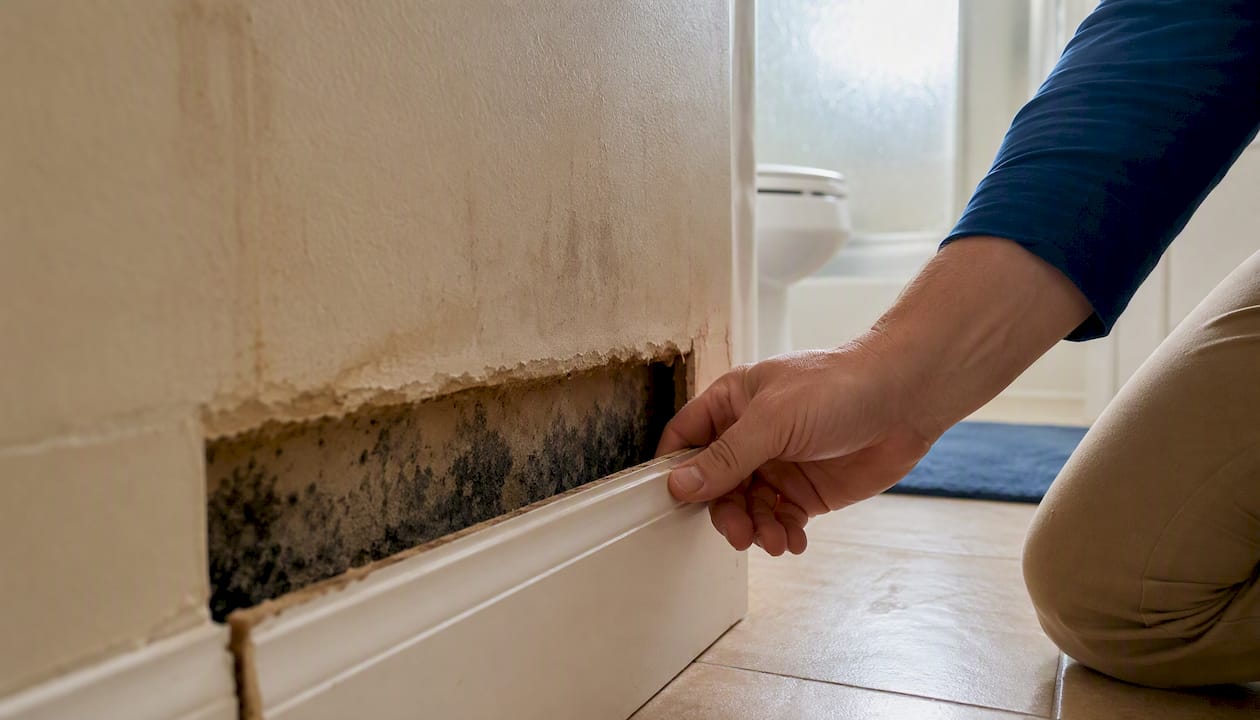
Pro Tip: When you see “suspected microbial growth” in a report, use that exact phrase in your repair request. Ask the seller for a “scope of work addressing the moisture source and any confirmed microbial growth” — not just “clean the mold.” The moisture source fix is what prevents recurrence.
3. Practical Next Steps and Negotiation Options for Buyers and Sellers
Your options after mold appears in a home inspection report are not limited to “fix it” or “walk away.” Buyers and sellers both have several paths, and the right one depends on the severity, the timeline, and how well each side documents the situation.
For buyers, work through this sequence:
Read the inspection report carefully and note the exact location, extent, and inspector’s language.
Hire a certified mold assessor for a targeted assessment. This produces a written scope and, if needed, lab results.
Get at least one written cost estimate from a licensed remediator tied to that scope.
Choose your negotiation path: remediation before closing with independent clearance testing, a seller credit defined by the written scope, an escrow holdback for post-close work, or contract cancellation if the contingency allows.
If remediation happens before closing, require independent clearance testing — performed by someone other than the remediator — before you release the contingency.
For sellers, speed and documentation are your best tools:
Order a targeted assessment immediately after the inspection report is delivered.
Correct the moisture source first. Remediation without fixing the source is temporary.
Obtain a written scope of work, completion documentation, and clearance testing results to present to the buyer.
MoldRx notes that sellers who remediate and provide clearance documentation are in a stronger negotiating position and typically face fewer delays at closing. Sellers who provide only a vague credit without documentation tend to face more pushback and longer negotiations.
Pro Tip: Insist on scope plus clearance, not just a dollar credit. A credit without a defined scope leaves you, the buyer, responsible for managing an unknown remediation after closing. That is a risk that rarely ends in your favor.
4. When to Order Mold Testing and What the Results Actually Tell You
Testing is useful in specific situations, not every one. When you can see mold, the EPA is direct: sampling is usually unnecessary because there are no federal spore-count limits to check against. The priority is finding and fixing the moisture source.
Order testing when:
There is a musty odor but no visible growth, suggesting hidden contamination.
An occupant has unexplained respiratory symptoms or health concerns.
A lender or insurer requires documentation before funding.
The situation may involve litigation and you need a documented baseline.
You want to confirm clearance after remediation is complete.
Common test types and what they tell you:
Air sampling captures airborne spore counts indoors and compares them to an outdoor baseline. Useful for detecting hidden contamination or confirming clearance.
Surface swabs and tape lifts identify the species present on a specific surface. Helpful when the type of mold matters for health or remediation decisions.
Bulk samples involve removing a piece of material (drywall, insulation) for lab analysis. Used when surface sampling is inconclusive.
Moisture mapping uses meters and thermal imaging to trace the moisture source. Often more useful for planning remediation than any lab result.
Results must be interpreted by a qualified assessor. There is no universal “safe” spore count. When lab analysis is needed, EPA guidance points to reference methods from AIHA (American Industrial Hygiene Association) or ACGIH (American Conference of Governmental Industrial Hygienists) for proper analysis protocols. Chain of custody documentation from an accredited lab is what gives results credibility in negotiations or legal contexts.
For a full breakdown of mold testing costs and what to expect, Trinity Home Inspections covers the process in detail. Professional mold testing in the U.S. typically ranges from a few hundred dollars for basic swab testing to higher costs for full air sampling with lab analysis, depending on the number of samples and the lab used.
5. What Proper Mold Remediation Looks Like — and How You Verify It’s Done
Remediation is not just cleaning visible mold off a surface. It must remove contaminated materials when necessary, fix the moisture source, and include verification. Without those three elements, the problem returns.
Typical remediation workflow:
Pre-assessment and scope — a certified assessor documents the extent of contamination and writes a scope of work.
Containment — plastic sheeting and negative air pressure prevent spores from spreading to unaffected areas during work.
Removal — contaminated porous materials (drywall, insulation, wood framing) are removed and bagged for disposal.
HEPA filtration — air scrubbers with HEPA filters run during and after removal.
Cleaning — remaining surfaces are cleaned with appropriate antimicrobial agents.
Moisture source repair — the leak, condensation issue, or ventilation failure that caused the mold is corrected.
Post-remediation verification — an independent assessor performs clearance testing to confirm spore levels have returned to acceptable ranges.
Cost tiers (U.S. general ranges):
Small patch (less than 10 sq ft): Often DIY-appropriate per EPA guidance; low material cost.
Mid-size (10–100 sq ft): Licensed remediator typical; costs vary based on location, access, and materials involved.
Major (more than 100 sq ft or HVAC involvement): Full containment protocol, higher cost, and often requires industrial hygienist oversight.
Verification checklist — what buyers should demand before closing:
Pre-remediation assessment report with photos
Post-remediation clearance testing report with lab results
Chain-of-custody documentation from an accredited lab
Moisture readings confirming the source is resolved
Signed scope of work from the remediator
Pro Tip: Clearance testing must be performed by a party independent of the remediator. A contractor who tests their own work has an obvious conflict of interest. Require an independent assessor in writing before remediation begins.
MoldRx and experienced practitioners consistently recommend tying the remediation scope and clearance testing to the inspection contingency addendum. That way, the documentation becomes part of the transaction record and cannot be disputed after closing.
6. How Mold Affects Appraisals, Insurance, and Seller Disclosure Obligations
Mold can touch three separate parts of a real estate transaction: the appraisal, the insurance underwriting, and the seller’s legal disclosure obligations. Knowing which applies to your situation helps you anticipate delays and prepare the right documentation.
Appraisal impact:
Small, surface-level mold that has been properly remediated with documentation typically has little lasting effect on appraised value.
Extensive mold affecting structural components, HVAC systems, or large areas of the home can reduce market value and may cause a lender to condition the loan on remediation before funding.
FHA and VA loans, in particular, often require visible mold to be remediated before the appraisal can support a clear-to-close.
Insurance considerations:
Standard homeowners policies frequently exclude long-term moisture damage, treating it as a maintenance issue rather than a sudden loss.
If the mold resulted from a covered event (a burst pipe, storm damage), the claim may be covered — but document the cause carefully. The distinction between “flood” and “plumbing failure” matters for coverage.
Check with your insurer before closing on a home with a known mold history. Some carriers will require clearance documentation or exclude mold-related claims on the policy.
Seller disclosure:
Most U.S. states require sellers to disclose known material defects, and mold qualifies in virtually every jurisdiction. California’s Transfer Disclosure Statement is one well-known example, but similar obligations exist across the country.
Sellers who remediated past mold should keep all clearance documentation and disclose both the prior issue and the remediation. Hiding a known problem creates significant legal liability after closing.
Pro Tip: If you are a buyer, notify your lender and insurer as soon as mold is flagged in the inspection report. Ask directly whether they require clearance documentation before funding. Getting that answer early prevents a last-minute closing delay.
For buyers concerned about a property’s history, Trinity Home Inspections’ property and permit search service can help surface prior permits related to water intrusion or structural repairs.
7. How Trinity Home Inspections Handles Mold Findings
When Trinity Home Inspections documents a mold-related finding, the report goes beyond a single photo and a note. The workflow is designed to give buyers and sellers the documentation they need to negotiate, remediate, and verify — all from one provider.
What’s included in Trinity’s mold-related services:
Same-day photo and video report documenting visible growth, water staining, and moisture indicators with exact location references
Free thermal imaging (included with every inspection) to identify hidden moisture behind walls, under floors, and in ceilings
Moisture meter readings at suspected areas, with data recorded in the report
Optional mold swab testing and indoor air quality sampling with chain-of-custody lab reports from an accredited laboratory
Contractor referrals to trusted local remediators for quotes and scope development
Post-inspection support by phone or text to walk you through findings and next steps
Trinity’s mold inspection and testing services are available as add-ons to any standard inspection, so you do not need to schedule a separate company. For sellers who want to get ahead of potential findings, a pre-listing inspection gives you the same documentation before a buyer’s inspector ever walks through the door.
Alt text example for inspection images: “Inspector documenting attic mold in Mobile, AL during a Trinity Home Inspections assessment.”
Pro Tip: Ask for thermal imaging images and moisture meter data to be included in your report addendum. Those two data points are often the most persuasive documents in a mold-related negotiation because they show the moisture source, not just the symptom.
8. When DIY Cleanup Is Appropriate and When to Call a Professional
EPA guidance gives homeowners a clear starting point: small moldy areas of roughly less than 10 square feet can often be handled without a professional, provided the moisture source is fixed first and basic safety precautions are followed. Anything larger, or involving contaminated water or HVAC systems, warrants a licensed remediator.
Situations that require a professional, not a DIY approach:
The affected area is larger than 10 square feet
The mold involves HVAC ductwork (spores can spread through the entire system)
The moisture source was sewage or contaminated floodwater
Occupants have asthma, allergies, or compromised immune systems
You suspect hidden mold behind walls or under flooring
If you proceed with DIY cleanup:
Fix the moisture source completely before touching the mold
Photograph the area before, during, and after cleanup
Keep all receipts for materials
Document the moisture fix (plumber invoice, repair photos)
If a buyer or lender later asks for proof, your documentation is your answer
For a step-by-step Alabama-specific guide, Trinity’s resource on safely removing mold inside walls covers the process and documentation requirements in detail.
Pro Tip: Always wear an N95 respirator, nitrile gloves, and safety goggles when disturbing moldy materials — even for small patches. If you remove a section of drywall and find contamination extending further than expected, stop and call a professional. Disturbing hidden mold without containment can spread spores throughout the home.

An Inspector’s Honest Take on Mold Findings
As an InterNACHI-certified inspector, I treat visible mold as a red flag that points to a moisture problem — not as an automatic deal-killer. The mold itself is often the least complicated part of the situation. What matters is finding where the water came from, how long it has been there, and whether the source has been corrected.
The most common mistake I see buyers make is panicking at the word “mold” and either walking away from a sound home or accepting a vague credit that leaves them managing an unknown problem after closing. The most common seller mistake is offering a quick patch without documentation, which creates more distrust than the original finding. Speed matters inside the contingency window, but speed without a written scope and clearance testing is just pressure. Get the assessment, get the scope, fix the source, and verify the result. That sequence protects both sides.
Trinity Home Inspections exists to give you that clarity before you make one of the biggest financial decisions of your life.
Ready to Get Clear Answers Before You Close?
Trinity Home Inspections gives buyers and sellers on the Gulf Coast of Alabama the documentation they need when mold shows up in an inspection report. Every inspection includes free thermal imaging and moisture meter readings. When the situation calls for more, add mold swab testing or indoor air quality sampling with chain-of-custody lab reports — all from one provider, with a same-day report delivered the day of your inspection.
[

Alt text: “Trinity Home Inspections inspector in khaki pants and blue shirt with white pocket logo documenting mold findings during a home inspection in Gulf Shores, AL.”
Sellers: a pre-listing inspection with Trinity gives you clearance documentation before a buyer’s inspector finds something first. Buyers: Trinity’s mold inspection and testing services give you the lab-backed evidence you need to negotiate with confidence.
Call or text 251-210-7376 or visit TrinityInspectionsLLC.com to schedule your inspection today.
Sources
FAQ
Does mold found during a home inspection kill the deal?
Not automatically. Most mold findings are manageable when both parties respond with a written scope, proper remediation, and independent clearance testing. The deal typically moves forward when the moisture source is fixed and documentation is provided.
Does mold affect a home appraisal?
Small, properly remediated mold with documentation usually has little lasting effect on appraised value. Extensive mold affecting structural components or HVAC systems can reduce value and may cause lenders — particularly FHA and VA — to require remediation before funding.
Who pays for mold remediation after a home inspection?
Payment is negotiated between buyer and seller. Common arrangements include the seller remediating before closing, a seller credit tied to a written scope, or an escrow holdback for post-close work. Buyers should never accept a credit without a defined scope and clearance requirement attached.
Is mold testing required during a home inspection?
No. Standard home inspections are visual and non-invasive and do not include mold sampling. Per InterNACHI and IAC2, mold testing is a separate service ordered when specific conditions warrant it, such as hidden suspicion, occupant health concerns, or lender requirements.
What documentation should a buyer require after mold remediation?
Buyers should request a pre-remediation assessment report, a post-remediation clearance report with chain-of-custody lab results, moisture readings confirming the source is resolved, photos from before and after, and a signed scope of work from the remediator.
Recommended

