
First Time Home Buying for Dummies: Simple 7-Step Guide
- Matt Cameron
- 11 minutes ago
- 11 min read


Your first move is simple: check your credit, add up your income and debts, and call a HUD-approved housing counselor before you look at a single listing. That one phone call sets the pace for everything else, and it costs you nothing.
Here’s what you can knock out this week:
Pull your credit report and scan it for errors
Add up your monthly income against your current debts
Call a HUD-approved counselor to talk through your numbers
A HUD-approved housing counselor will walk you through a full budget review, explain your loan options in plain language, and help you build a step-by-step action plan. HUD reports that counseling helps more than one million households a year, and over half of the people counseled buy a home within twelve months. That’s not a small edge for a free service.
Pro Tip: Call the HUD counselor hotline at 800-569-4287 before you talk to a single lender. You’ll walk into that first mortgage conversation already speaking the language.
Once you’re under contract, a home inspection is your next checkpoint. Trinity Home Inspections serves buyers across the Gulf Coast with same-day reports, and you can reach us anytime at 251-210-7376 or Trinityinspectionsllc.
Key Takeaways
Successful first-time home buying comes down to checking your finances early, comparing multiple Loan Estimates, and attending your home inspection in person.
Point | Details |
Start with a counselor | Call a HUD-approved housing counselor at 800-569-4287 before shopping for homes or lenders. |
Compare at least three Loan Estimates | Focus on total loan costs, not just the advertised interest rate. |
Budget beyond the mortgage | Include property taxes, insurance, HOA dues, and maintenance in your monthly number. |
Avoid financial changes mid-application | Skip new credit, large purchases, and co-signing until after closing. |
Attend your inspection | Trinity Home Inspections provides same-day, InterNACHI-certified reports with free thermal imaging across the Gulf Coast. |
This article is general information, not a substitute for advice from a qualified financial advisor. Consult a qualified financial professional about your own circumstances before acting on anything here.
First Time Home Buying for Dummies: The 7 Stages Explained
Buying your first home isn’t one big leap. It’s seven smaller, manageable steps, each with its own timeline and its own way to save you money or headaches. Here’s the whole path laid out plainly.
1. Financial check and housing counseling (1 to 2 weeks)
Start by pulling your credit report from all three bureaus and listing every recurring debt: car payments, student loans, credit cards. Then schedule time with a HUD-approved housing counselor, who can review your numbers for free and flag issues before a lender ever sees your file.
Action items:
Request your free credit reports
List monthly debts and income sources
Book a session with a housing counselor
A common beginner mistake here is assuming a good credit score alone means you’re ready. Lenders look at your full debt picture, not just your score.
2. Get pre-approved for a mortgage (3 to 10 days)
Pre-approval tells sellers you’re a serious buyer and tells you your real price range. The CFPB’s Your Home Loan Toolkit recommends collecting at least three written Loan Estimates from different lenders before you commit to one.
Action items:
Gather pay stubs, tax returns, and bank statements
Apply with at least three lenders
Compare the Loan Estimates side by side, not just the interest rate
Pro Tip: Look past the interest rate on your Loan Estimates. Compare the total loan costs on page three, since a lower rate can hide higher fees that erase your savings.
3. Shop for homes and choose your agent (2 to 8 weeks)
This is the fun part, but it’s also where discipline pays off. Interview at least two real estate agents before picking one, and ask how many first-time buyers they’ve worked with recently.
Action items:
Ask agents about their experience with first-time buyer programs
Tour homes within your pre-approved range, not above it
Keep a simple spreadsheet comparing price, condition, and location
A good agent should explain the offer process clearly and never pressure you toward a home outside your budget.
4. Make an offer (1 to 3 days)
Your agent will help you draft an offer based on comparable sales nearby. In competitive markets, buyers sometimes waive contingencies to win, but as a first-timer, keep your inspection contingency in place.
Negotiation tip: Ask your agent for a list of homes that recently sold within a mile of your target property. That data gives you leverage when the seller’s asking price feels inflated.
5. Schedule the inspection and appraisal (1 to 2 weeks)
Once your offer is accepted, book your home inspection right away. Look for an InterNACHI certified inspector, since that credential reflects standardized training and testing. The lender will separately order an appraisal to confirm the home’s value supports the loan amount.
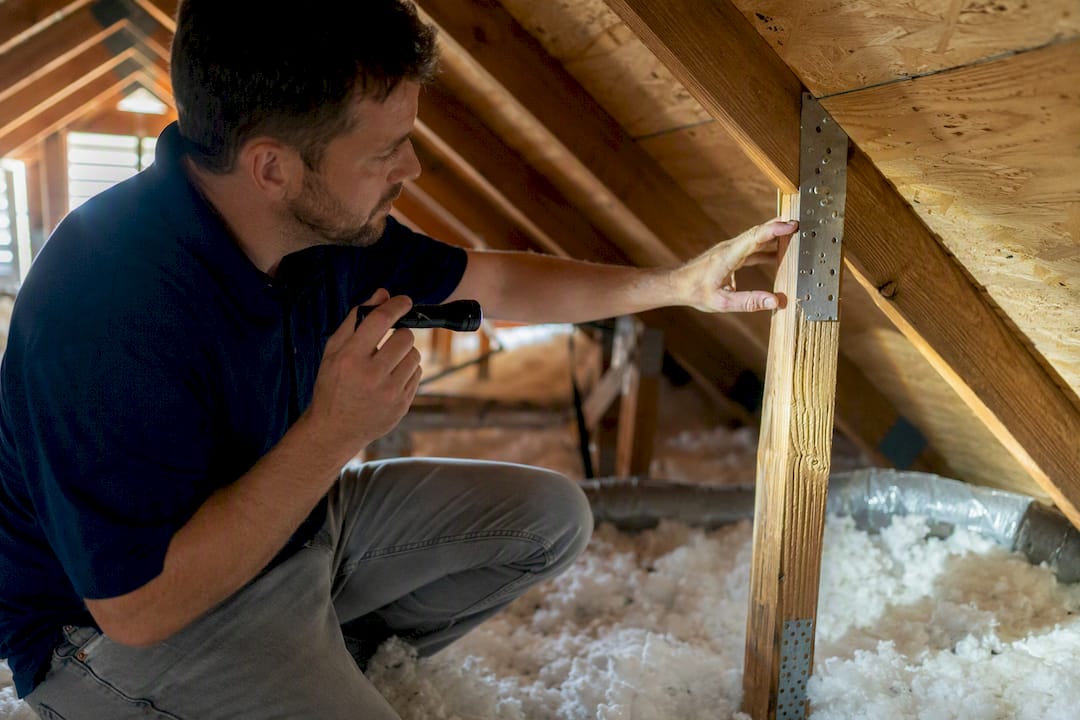
Common cost to expect: Home inspections typically run a few hundred dollars, and the appraisal fee is usually billed separately as part of your closing costs.
6. Finalize your mortgage and insurance (2 to 4 weeks)
Your lender finalizes underwriting during this stretch. This is also when you shop for homeowners insurance, which the CFPB notes is typically required before closing.
Action items:
Respond fast to any lender document requests
Get at least two homeowners insurance quotes
Avoid opening new credit accounts during this window
7. Closing and move-in (1 day, plus ongoing budgeting)
At closing, you’ll review your Closing Disclosure against your original Loan Estimate to check for surprises. Bring a certified check or arrange a wire transfer for your closing costs, and do a final walkthrough beforehand to confirm the home is in the agreed condition.
Action items:
Compare your Closing Disclosure line by line against your Loan Estimate
Complete a final walkthrough within 24 hours of closing
Set aside a maintenance budget for your first year as a homeowner
How Do You Figure Out What You Can Actually Afford?
Affordability isn’t just your mortgage payment. It’s principal, interest, property taxes, homeowners insurance, and often HOA dues, all bundled into one monthly number.
Here are two quick examples using round figures. A modest budget on a $200,000 home with a 6% rate and 10% down might land around $1,450 a month once you add taxes and insurance. A stretch budget on a $320,000 home with the same rate and down payment could push closer to $2,300 a month. That $850 gap is the difference between breathing room and a tight month every month.
Your debt-to-income ratio (DTI) matters just as much as the sticker price. HUD-approved counselors generally encourage keeping total housing costs, plus other debts, within a manageable share of your gross monthly income, and lenders use similar thresholds when deciding how much they’ll lend you.
Documents to gather before you shop:
Two years of tax returns
Recent pay stubs (last 30 days)
Bank statements (last two to three months)
A written list of monthly debts
A recent credit report
Checklist for your first lender meeting:
Bring every document above in one folder
Ask for a written Loan Estimate at the end of the meeting, not just verbal numbers
Request the same for at least two other lenders before deciding
Mortgages and First-Time Buyer Programs: What to Know and Where to Look
Shop your mortgage early and gather multiple Loan Estimates. That’s genuinely where the savings show up, more than any other single decision in the process.
Loan types vary in who they fit best:
Fixed-rate conventional loans suit buyers who want predictable payments for the life of the loan
Adjustable-rate mortgages (ARMs) fit buyers planning to sell or refinance within a few years
FHA loans work well for buyers with lower credit scores or smaller down payments
VA loans serve eligible veterans and service members, often with no down payment required
USDA loans fit buyers purchasing in eligible rural areas with limited down payment funds
Down payment assistance programs vary by state, and it pays to check your own state’s housing finance agency. The Oklahoma Housing Finance Agency, for example, offers programs like GOLD and DREAM with their own income and county eligibility rules. Your state almost certainly runs something comparable.
When you’re comparing offers, request at least three written Loan Estimates and focus on the total loan cost, not just the rate on page one. Ask each lender directly about origination fees, required third-party services, and whether the loan carries any prepayment penalty or balloon payment. Those features can turn an attractive rate into a costly mistake down the road.
What Should You Expect During the Home Inspection?
Attend your home inspection in person. It’s your best chance to understand the actual condition of the house you’re about to buy, not just what the listing photos showed you.
A thorough inspection covers the roof, foundation and structure, HVAC system, plumbing, electrical panels, and signs of moisture or mold. A “major defect” is something that affects safety or function, like an outdated electrical panel or active roof leak. A “maintenance item” is something normal, like a furnace filter that needs changing.
What’s included with a Trinity Home Inspections visit:
Same-day, photo and video-rich digital report
Color-coded findings sorted into DIY/Minor, Issues/Defects, and Safety/Major
Free thermal imaging to spot hidden moisture or insulation gaps
Post-inspection walkthrough or phone call to explain findings in plain English
Our inspectors hold InterNACHI certification, which means Standards of Practice exams, ongoing annual education, and a national testing standard behind every report.
Use your report strategically. Minor items become your post-purchase to-do list. Major safety issues become negotiation points, whether that means asking for a repair, a credit, or a price adjustment. Our guide on how inspection findings impact negotiations breaks down which approach fits which situation.
Pro Tip: Bring a notepad and ask your inspector to explain anything they flag as you walk the home together. A good inspector welcomes questions and treats your presence as part of the job, not an interruption.
Common Pitfalls First-Time Buyers Fall Into
Avoid major financial changes before and during your mortgage application. Lenders re-check your credit close to closing, and a single misstep can delay or derail your loan.
Opening new credit cards or loans: Wait until after closing to finance furniture or a new car.
Making large purchases: Even a big appliance purchase can shift your DTI enough to matter.
Co-signing for someone else: That debt counts against you even if you’re not the one paying it.
Skipping the inspection: Waiving it to compete on price can cost far more later in repairs.
Not comparing Loan Estimates: Accepting the first offer often means overpaying in fees.
Skimming the Closing Disclosure: Compare it line by line against your original Loan Estimate before signing anything.
Check your credit report early, and lean on a HUD-approved counselor before problems become expensive surprises.
Next Steps and Key Resources to Keep Handy
Call a HUD-approved counselor at 800-569-4287, pull your credit reports, gather your income documents, and reach out to two or three lenders for Loan Estimates.
HUD’s homebuying page: overview of the full process and counselor directory
CFPB’s home loan toolkit: step-by-step mortgage shopping checklist
HUD’s Mortgage 101 brochure: plain-language breakdown of mortgage stages
Under contract already? Schedule your inspection consult through our first-time homebuyer inspection guide.
How Does an Escrow Account Actually Work?
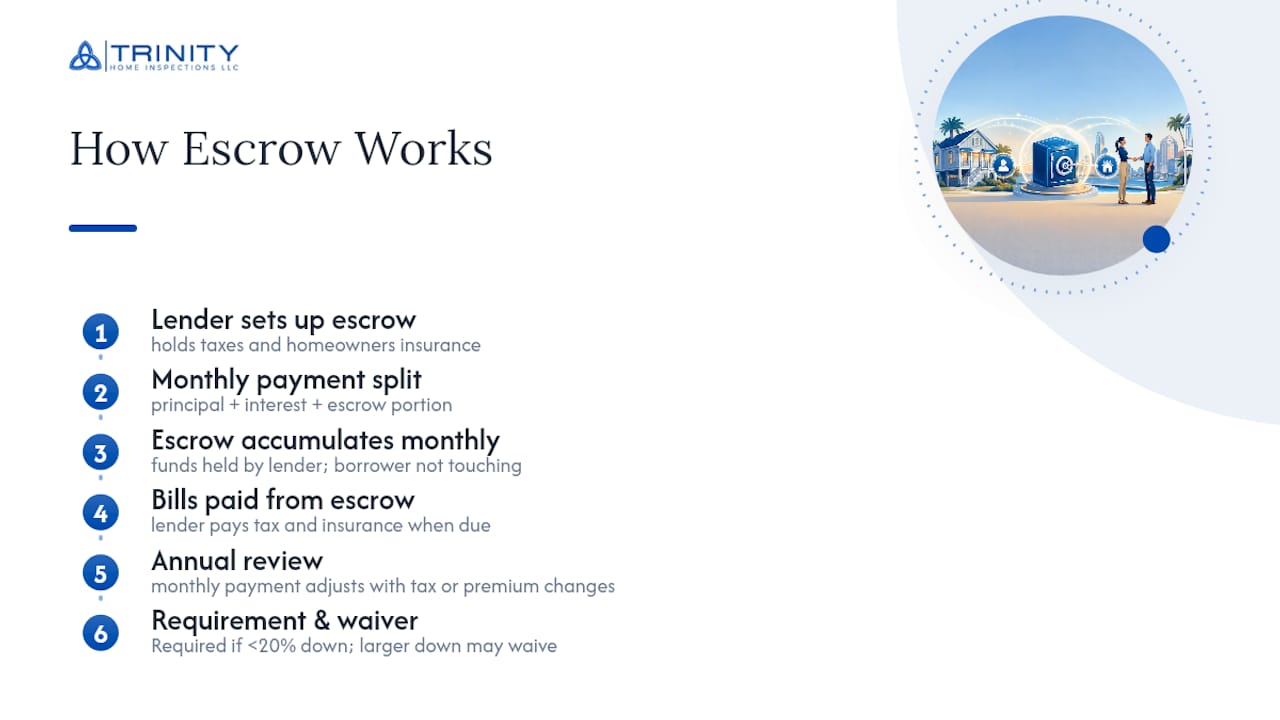
An escrow account is a holding account your lender sets up to collect and pay your property taxes and homeowners insurance on your behalf. Instead of you saving separately for a once-a-year tax bill, your lender divides that annual cost into twelve pieces and adds it to your monthly mortgage payment.
Each month, part of your payment goes toward principal and interest, and the rest goes into escrow. When your property tax bill or insurance premium comes due, your lender pays it directly from that account. You never touch the money yourself, which removes the risk of missing a payment or forgetting a due date entirely.
Your lender reviews your escrow account annually and adjusts your monthly payment if your taxes or insurance premium changes. If your county reassesses your home’s value and your tax bill jumps, expect your monthly payment to rise the following year to cover the difference. The reverse can happen too. If your insurance premium drops, your monthly payment can decrease slightly.
Most conventional loans with less than 20% down, along with FHA and USDA loans, require an escrow account. Buyers with larger down payments sometimes have the option to waive escrow and pay taxes and insurance directly, though that requires more personal discipline to avoid a missed payment.
What Are Your Responsibilities as a New Homeowner?
Owning a home shifts a lot of quiet responsibilities onto your shoulders that renting never required. Property taxes, homeowners insurance, and ongoing maintenance now fall on you, and budgeting for all three keeps small issues from becoming expensive emergencies.
Property taxes are billed annually or semiannually by your county, and if your loan doesn’t include an escrow account, you’re responsible for paying that bill on time yourself. Homeowners insurance protects your investment against fire, storm damage, and other covered events, and most lenders require proof of coverage before closing and every year after.
Maintenance is the responsibility that catches first-time buyers most off guard. HVAC filters need changing every one to three months. Gutters need clearing before storm season. Water heaters, roofs, and appliances all have a lifespan, and setting aside a small monthly maintenance fund now saves you from scrambling when something fails.
A simple rule many homeowners use: set aside 1% of your home’s value each year toward maintenance and repairs. On a $250,000 home, that’s roughly $2,500 a year, or about $210 a month, tucked away for the unexpected water heater replacement or roof repair that eventually comes for every homeowner.
A Local Inspector’s Take on Getting Started
If you take one thing from this guide, let it be this: talk to a HUD-approved counselor before you fall in love with a listing. Buyers who understand their numbers first make calmer, smarter decisions later.
At Trinity Home Inspections, we see this play out on inspection day constantly. Buyers who did their homework upfront ask sharper questions and negotiate with confidence, backed by InterNACHI training and same-day reports that give them real clarity.
Got questions about what to expect at your inspection? Give us a call. We’re happy to walk you through it before you’re even under contract.
Need a Reliable Home Inspection When You’re Ready?
Once you’re under contract, Trinity Home Inspections gives Gulf Coast buyers the clearest possible picture of a home’s condition, delivered the same day so you’re never stuck waiting to make your next move.
[

What’s included with every inspection:
Same-day digital report with high-quality photos and video
Color-coded findings sorted into DIY, Issues/Defects, and Safety/Major categories
Free thermal imaging to catch hidden moisture or insulation problems
Plain-English priority list so you know what’s urgent and what can wait
We serve Baldwin, Mobile, Washington, Monroe, Clarke, Escambia, and the surrounding Gulf Coast Alabama area, from new construction to historic homes. If you’re weighing a pre-listing inspection before you sell your current place, our pre-listing inspection service gives you the same clarity sellers need. And if moisture or air quality concerns come up during your search, our mold testing services can settle the question with lab-backed results.
Call us at 251-210-7376 or visit Trinityinspectionsllc to schedule your inspection once you’re under contract.
Sources
FAQ
What Is the First Step to Buying a House for the First Time?
Assess your finances first: check your credit, add up your income and debts, then call a HUD-approved housing counselor for a free review before you start shopping or applying for a mortgage.
Does Oklahoma Have Grants for First-Time Home Buyers?
Oklahoma doesn’t offer a direct grant, but the Oklahoma Housing Finance Agency runs down payment assistance programs like GOLD and DREAM with their own income and eligibility rules. Most states offer a comparable program worth checking.
How Many Loan Estimates Should I Get Before Choosing a Lender?
The CFPB recommends collecting at least three written Loan Estimates from different lenders so you can compare total loan costs, not just interest rates.
Should I Attend My Own Home Inspection?
Yes. Walking through the home with your inspector helps you understand real issues firsthand, and companies like Trinity Home Inspections encourage buyers to attend and ask questions throughout.
What’s the Difference Between a Major Defect and a Maintenance Item on an Inspection Report?
A major defect affects safety or function, like a failing roof or outdated electrical panel, while a maintenance item is routine upkeep, like replacing an HVAC filter or caulking a window.
Recommended

