
Flexible Style Plumbing P-Trap Options for Homeowners

Updated: Sep 28
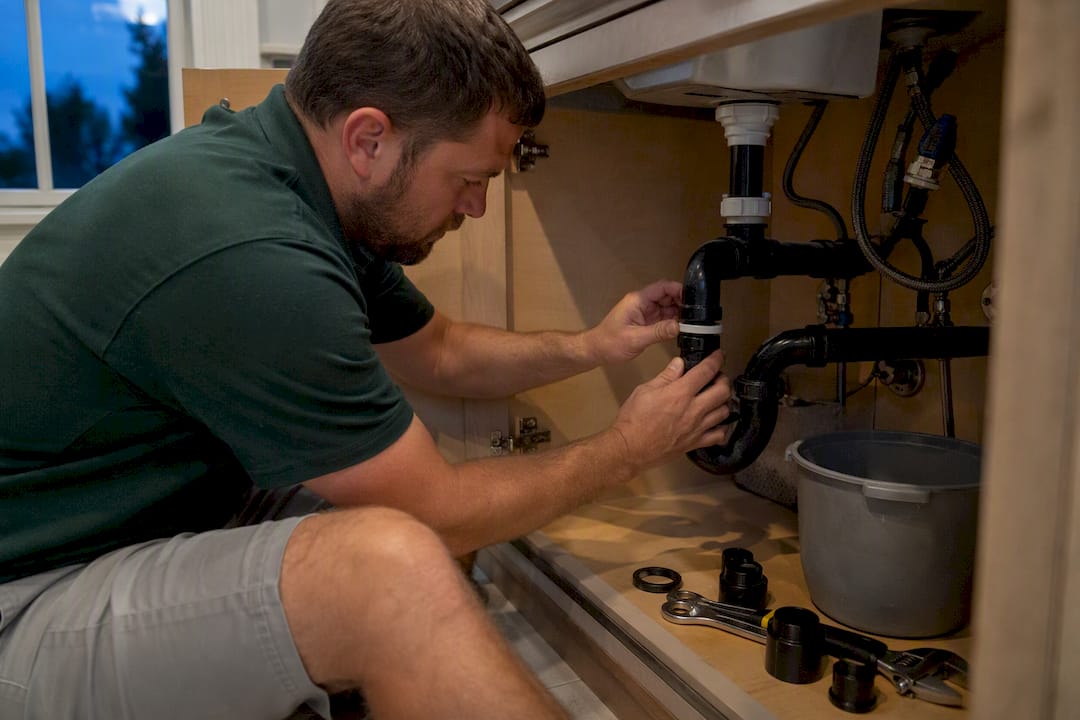
A flexible style plumbing P-trap is the right call for a temporary fix, a cramped RV or mobile home install, or a bathroom sink offset that a rigid trap simply can’t reach. It’s the wrong call for a permanent kitchen installation or anything you plan to close up behind cabinetry and forget about. The IRC 2024 code requires a trap seal depth between 2 and 4 inches and generally does not recognize corrugated flexible tubing as an approved trap for new construction. Corrugated interiors also snag hair, grease, and soap scum, which means more clogs and more odor complaints over time, according to plumbing code explainers.
Here’s when flexible traps make sense, and when they don’t:
Good fit: tight under-sink offsets, RV or mobile home plumbing, short-term rental turnovers, and quick fixes before a professional visit
Poor fit: kitchen sinks with heavy grease flow, any permitted remodel, or a sink you’re prepping for resale
Red flag: an accordion-style trap installed behind drywall or cabinetry where nobody will ever check it again
Key Takeaways
Flexible-style P-traps work well for temporary fixes and tight offsets, but rigid smooth-bore traps remain the better long-term choice for kitchens and permanent installations.
Point | Details |
Match the use case | Choose flexible traps for bathroom offsets or temporary fixes, not permanent kitchen installs. |
Check code requirements | IRC 2024 requires a 2 to 4 inch trap seal and generally excludes corrugated tubing as approved. |
Expect shorter lifespan | Flexible traps often need replacement within 1 to 5 years versus 20 to 50 years for rigid traps. |
Clean on a schedule | Rinse corrugated traps every 3 to 6 months for bathrooms, monthly for kitchens, to prevent clogs. |
Get a professional check | Trinity Home Inspections documents trap condition and plumbing concerns during every home inspection. |
Comparing the Leading Flexible Plumbing P-Trap Products
Retail shelves carry a handful of flexible P-trap kits that show up again and again in plumbing aisles and online listings. They differ mostly in material, adjustable length, and how they connect to your tailpiece and drain arm.
Product | Best For | Size Compatibility | Material | Connection Type | Tool-Free? |
PF WaterWorks FlexTRAP | Bathroom sink offsets, tight under-sink spaces | 1-1/4" and 1-1/2" | Reinforced flexible plastic | Slip-joint with multiple adapters | Mostly, minor tightening needed |
VIVIDA Flexible P-Trap | Quick DIY repairs, retrofits | 1-1/4" and 1-1/2" | Corrugated flexible plastic | Universal push-fit | Yes |
Plumb Pak Flex 'N Fix | Temporary installs, very tight offsets | 1-1/2" | Corrugated flexible plastic | Slip-joint and threaded | Mostly |
Dearborn / Keeney flexible P-trap | Bathroom sinks with minor offset issues | 1-1/2" | Rigid plastic body with flexible joint | Slip-joint | No, wrench required |
SIMPLE DRAIN Rubber Threaded P-Trap kit | Tool-free bathroom sink repairs | 1-1/4" | Antimicrobial rubber | Threaded | Yes |
Basic corrugated kits typically run $8 to $20, while heavier-duty adjustable models with multiple adapters land closer to $20 to $35. That price gap usually buys you a smoother interior bore and a sturdier connection, not just a longer warranty.
A few things worth knowing before you buy:
The Dearborn/Keeney model keeps a mostly rigid body and only flexes at the joint, which limits clog risk compared to fully corrugated designs.
The SIMPLE DRAIN kit markets antimicrobial rubber, which helps with odor but doesn’t change the underlying code question.
Fully corrugated traps like VIVIDA and Plumb Pak trade code compliance for install speed. Fine for a stopgap, less fine for a permanent fix.
Adjustable and flexible traps commonly need replacement within 1 to 5 years under regular use, while rigid traps with smooth-bore PVC or metal construction often last 20 to 50 years. That’s the real cost tradeoff behind the sticker price.
How Do You Choose the Right Flexible P-Trap?
Start with your fixture. A bathroom sink with a minor offset is a very different job than a kitchen sink handling grease and food scraps every day.
Run through this checklist before you buy:
Fixture type: bathroom sinks tolerate flexible traps far better than kitchens
Offset distance: measure the gap in inches between your drain outlet and the trap arm
Diameter: confirm 1-1/4" (most bathroom sinks) or 1-1/2" (most kitchen sinks and some bathrooms)
Material: smooth-bore flexible designs resist clogs better than deeply corrugated ones
Approvals: look for manufacturer instructions and any listed approval, not just “universal fit” marketing
Watch for these red flags: paper-thin plastic walls you can flex with light finger pressure, no printed warranty or model number, and accordion interiors so deep you can’t see through them with a flashlight. If your offset is more than a few inches, or you’re working on a kitchen sink, stop and consider a rigid offset tailpiece or adjustable slip-joint fitting instead. Those preserve smooth flow while still solving alignment problems, as technical plumbing guides point out.
How Do You Install a Flexible Style Plumbing P-Trap?
This method works for both tool-free push-fit kits and standard slip-joint models. Gather a bucket, adjustable pliers (for slip-joint versions), plumber’s tape, and a flashlight before you start.
Place a bucket under the existing trap and loosen the slip nuts to remove the old assembly.
Confirm both tailpiece and drain arm diameters match your new trap. Mixing 1-1/4" and 1-1/2" ends without the right adapter is the most common beginner mistake.
Dry-fit the flexible trap first, checking that it reaches the drain arm without excessive stretching or sharp kinks.
Hand-tighten slip nuts or threaded connectors, then snug with pliers a quarter turn past finger-tight. Overtightening cracks plastic threads.
Wrap threaded connections with plumber’s tape if the kit calls for it.
Adjust the trap’s curve so it holds a steady, gentle bend rather than a tight fold. Sharp folds restrict flow and encourage clogs.
Run water for two full minutes, checking every joint for drips, then fill the sink and drain it fast to test under real pressure.
If you see leaks, the slip nut is usually under tightened or the washer is misaligned. Reseat it and try again before reaching for more torque. Sagging in the middle of the trap usually means it’s stretched past its rated length. That flattens the water seal and lets sewer gas creep back through, so you want to shorten it or step up to a rigid offset fitting. A gurgling or siphoning sound after drainage often signals a trap seal that’s too shallow. Recheck that curve. Recurring clogs point to a corrugated interior catching hair and grease. Consider switching to a smooth-bore flexible model or a rigid trap. (Photo alt text example: “Flexible P-trap installation under bathroom sink, Baldwin County Alabama home.”)
Are Flexible P-Traps Allowed Under Plumbing Code?
Most jurisdictions following the IPC restrict flexible drain connectors from serving as an approved trap on permanent installations, while some UPC-based localities allow a listed flexible trap only when installed exactly to manufacturer instructions. The IRC’s 2024 plumbing chapter sets a required trap seal depth of 2 to 4 inches and doesn’t recognize corrugated tubing as meeting that standard.
Beyond legality, there’s a sanitation angle: corrugated interiors trap biofilm and organic buildup that a smooth-bore trap sheds naturally. If you’re planning a permitted remodel or a sale, that’s exactly the kind of detail an inspector or code official will flag. Call your local building department or a licensed plumber before installing one as a permanent fixture, especially in a kitchen.
Where Can You Buy a Flexible P-Trap, and What Should You Expect to Pay?
You’ll find flexible P-traps at Home Depot, Lowe’s, Ace Hardware, and most plumbing supply stores, along with online retailers like Amazon. Basic corrugated kits, including options like the SIMPLE DRAIN rubber threaded kit, typically cost $8 to $20. Sturdier adjustable models with reinforced walls or extra adapters run $20 to $35.
Before checking out, verify three things: the diameter matches your existing tailpiece, the box lists which adapters are included, and there’s a stated warranty period. A missing warranty is often a sign of a bargain-bin product built for a single use, not years of service.
What Does a Home Inspector Check Under Your Sink?
Inspectors generally prefer smooth-bore, listed traps over corrugated flexible ones, and it’s the first thing we look at when we open a vanity or kitchen cabinet door. During a Trinity Home Inspections visit, we check the trap’s shape and seal depth, whether components are manufacturer-listed, and whether there’s visible biofilm buildup or sagging in a flexible section.
A sagging corrugated trap is one of the most common minor defects we log on inspection reports across Baldwin and Mobile County homes. It’s rarely a safety emergency, but it does affect how a report reads to a buyer.
Pro Tip: If you installed a flexible trap as a temporary fix, take a dated photo of it and keep a note of when you plan to replace it. That documentation helps at resale and shows good faith to a buyer’s inspector rather than looking like a hidden shortcut.
Materials and Durability: Plastic, Rubber, Corrugated, and Stainless
Flexible traps come in a few core materials, and the difference matters more than most buyers expect. Standard corrugated plastic, the kind used in VIVIDA and Plumb Pak kits, flexes easily but has the roughest interior surface of the bunch. That roughness is exactly what snags hair and soap scum.
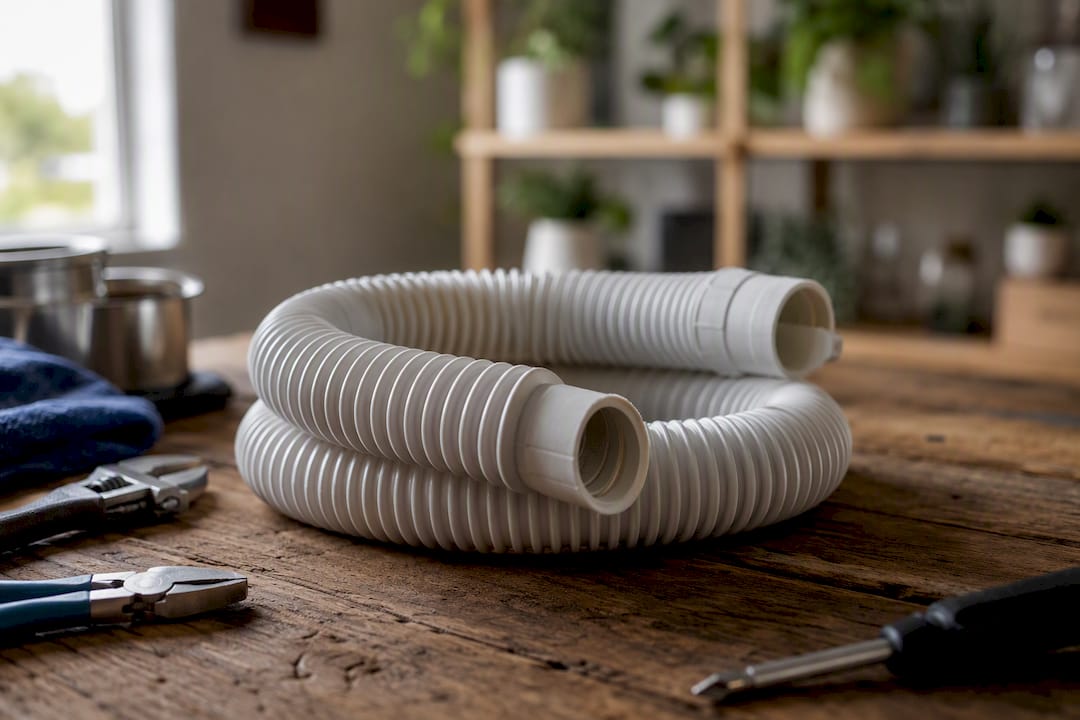
Rubber threaded designs, like the SIMPLE DRAIN kit, offer a smoother interior and some antimicrobial protection, though rubber can degrade faster under exposure to harsh drain cleaners. Reinforced flexible plastic, used in the PF WaterWorks FlexTRAP, splits the difference: a firmer wall structure than basic corrugated tubing with less sag over time.
Stainless steel flexible traps exist but are far less common in retail plumbing aisles, mostly showing up in commercial or marine applications where corrosion resistance matters more than cost. For a typical home bathroom or kitchen, you’re choosing between plastic, rubber, and corrugated designs, not stainless.
The practical takeaway: smoother interior walls beat deep corrugation every time, regardless of the base material. If a product description doesn’t mention interior smoothness or “self-scouring” design, assume it’s a standard corrugated build and budget for more frequent cleaning.
Does a Flexible P-Trap Affect Water Flow and Clog Risk?
Yes, and this is the tradeoff that catches most homeowners off guard. A rigid PVC trap has a smooth, consistent bore that lets water and waste move through in a steady, self-cleaning flow. A corrugated flexible trap introduces ridges along the entire interior wall, and each ridge is a place for hair, grease, and soap scum to catch.
Over time, that buildup narrows the effective diameter of the trap, slowing drainage even before you notice a full clog. It’s a gradual process, not a sudden failure, which is part of why so many homeowners don’t connect a slow-draining sink to the trap itself until it’s fully blocked.
Bathroom sinks tend to fare better than kitchens here because they’re not dealing with grease and food particles. If you’ve installed a flexible trap on a kitchen sink, expect to clean it out more often than you would a comparable rigid trap, and expect that maintenance interval to shrink over the product’s lifespan as ridges accumulate residue that’s harder to fully flush.
How Do You Clean and Maintain a Flexible P-Trap?
Flexible traps need more frequent attention than rigid ones, and skipping maintenance is how a minor inconvenience turns into a full clog. Plan to remove and rinse a corrugated flexible trap every three to six months if it’s on a bathroom sink, and monthly if it’s handling kitchen drainage.
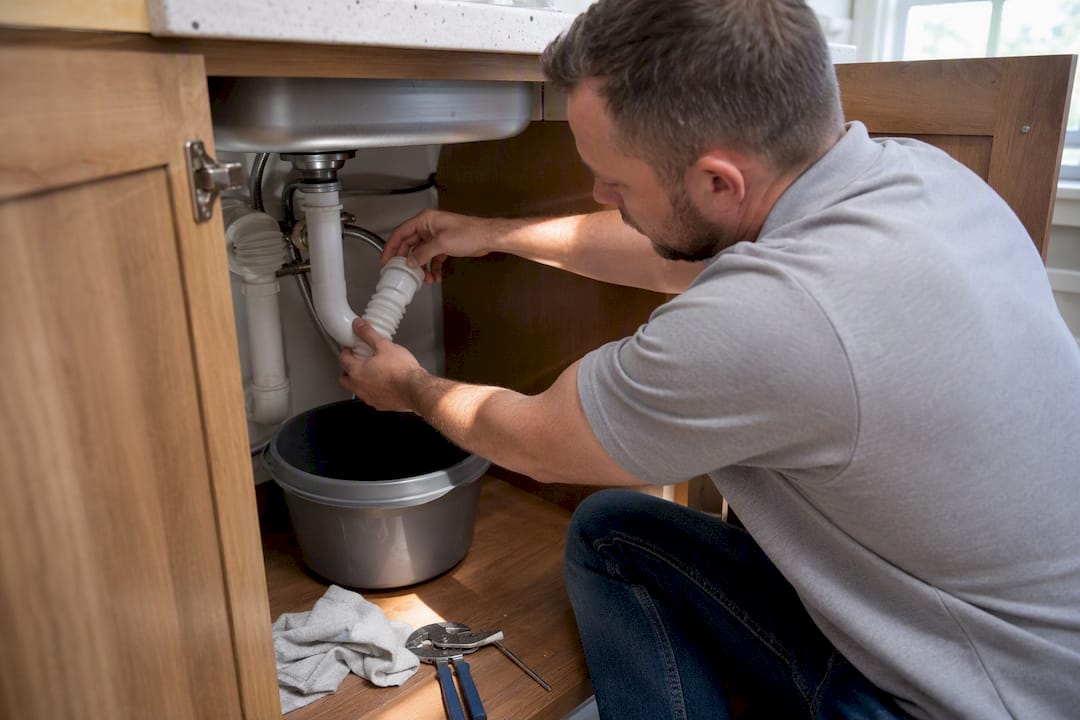
To clean it, place a bucket underneath, loosen the slip nuts, and pull the trap free. Flush it with hot water and a bottle brush if the corrugation is deep enough to reach, or soak it in a mix of hot water and dish soap for stubborn buildup. Avoid pouring caulk-thick drain cleaners directly into a flexible trap left in place. Chemical cleaners can degrade rubber gaskets and weaken plastic corrugation faster than they would a rigid PVC trap.
Check the trap’s curve every time you clean it. A flexible trap that’s stretched too far loses its water seal shape over months of gravity and vibration, which is the sagging problem inspectors flag most often. Reshape it to hold a smooth, consistent bend rather than a flattened or overstretched one. If you notice recurring odors even after cleaning, that’s usually a sign the trap has stretched past its functional seal depth and needs replacement rather than another cleaning cycle. For general drain maintenance beyond the trap itself, these unclogging methods cover the rest of your sink’s drain line.
What Warranty Coverage Comes With Flexible P-Traps?
Warranty terms vary widely across flexible trap brands, and it’s worth checking before you buy rather than after something fails. Most basic corrugated kits carry limited warranties in the range of one to two years, covering manufacturing defects but not wear from normal use or chemical damage from drain cleaners.
Products with more reinforced construction and multiple adapter options, like the PF WaterWorks FlexTRAP, tend to advertise longer support windows and more detailed installation documentation, though exact terms are listed on each manufacturer’s own packaging and website rather than through a universal standard. Retail kits sold as store brands sometimes carry retailer-backed return policies instead of a manufacturer warranty, which is worth asking about at checkout.
Before you install anything, save your receipt and photograph the model number and lot code printed on the packaging. If a joint fails within the warranty period, having that information ready speeds up any replacement claim significantly. Manufacturer support for flexible traps is generally limited to phone or email troubleshooting rather than in-home service, so don’t expect a technician visit if something goes wrong. That’s one more reason a straightforward, well-documented DIY installation matters more with flexible traps than it does with rigid ones that rarely need warranty service at all.
Will a Flexible P-Trap Fit Your Sink and Drain Setup?
Compatibility depends on more than just matching pipe diameter. Standard bathroom sinks almost always use 1-1/4" drain openings, while kitchen sinks and some larger bathroom vanities use 1-1/2". Double-bowl kitchen sinks add another wrinkle, since they typically need a continuous waste fitting or a dual-outlet trap arm that most basic flexible kits aren’t designed to handle.
Vessel sinks and wall-mounted bathroom sinks, both increasingly common in remodeled small baths, often create unusual offset angles between the drain and the wall stub-out. That’s actually one of the better legitimate use cases for a flexible trap, since a rigid offset fitting can be harder to source for an unusual angle. If you’re renovating a tight bathroom layout, design guidance for small-bath vessel sinks is worth a look before you finalize your drain plan.
Mobile home and RV plumbing frequently uses non-standard drain configurations, which is part of why flexible traps show up so often in those settings. Pedestal sinks can be trickier because the trap sits exposed rather than hidden in a cabinet, so appearance and secure mounting matter more than they would under a vanity. Always dry-fit before committing to any flexible trap purchase, regardless of your sink type, since printed diameter specs don’t always account for slight manufacturing variation between brands.
An Inspector’s Take on Flexible Traps
My honest stance: convenience is real, but so is the cost of ignoring code intent. I’ll note a flexible trap on a report without alarm if it’s a bathroom sink and installed cleanly, but I always recommend budgeting for a rigid replacement before you list a home for sale.
How Trinity Home Inspections Helps With Plumbing Concerns
Wondering whether that flexible trap under your sink will raise a flag at resale, or whether a slow drain points to something bigger? Trinity Home Inspections checks every accessible plumbing component during a standard visit, not just the obvious stuff.
[

When we inspect drain assemblies, that includes trap type and condition, visible leaks or corrosion, water flow testing at every accessible fixture, and photo documentation of anything worth your attention, all delivered same-day with no extra charge for thermal imaging. If you’re preparing to sell, our pre-listing inspection catches plumbing issues like flexible traps and slow drains before a buyer’s inspector finds them first, giving you time to fix or disclose on your own terms. Call us at 251-210-7376 or head to Trinityinspectionsllc to schedule your inspection across Baldwin, Mobile, and the surrounding Gulf Coast counties.
Sources
Are Flexible P Traps Good for Plumbing? The Truth About Code
Dearborn 1-1/2-in Plastic P-trap
FAQ
Are Flexible P-Traps Allowed by Code?
It depends on your jurisdiction. Most IPC-based codes don’t recognize corrugated flexible tubing as an approved trap, while some UPC areas allow a listed flexible trap installed exactly per manufacturer instructions, so check with your local building department.
Are Flexible P-Traps Any Good?
They’re a solid short-term or specialty solution for tight offsets and RV plumbing, but corrugated interiors clog more easily and typically last only 1 to 5 years compared to decades for a rigid trap.
What Is a Flexible P-Trap?
A flexible P-trap is a bendable drain fitting, usually plastic, rubber, or corrugated tubing, that maintains a water seal while adjusting to fit misaligned drain and tailpiece connections without cutting rigid pipe.
Where Can You Buy a Flexible P-Trap?
Home Depot, Lowe’s, Ace Hardware, and most plumbing supply stores stock flexible P-traps, typically priced between $8 and $35 depending on material and construction quality.
Should You Call a Professional Instead of Installing a Flexible P-Trap?
If your offset exceeds a few inches, you’re working on a kitchen sink, or you’re preparing for a permitted remodel, a licensed plumber or a Trinity Home Inspections consultation can confirm whether a rigid offset fitting is the safer long-term choice.
Recommended