
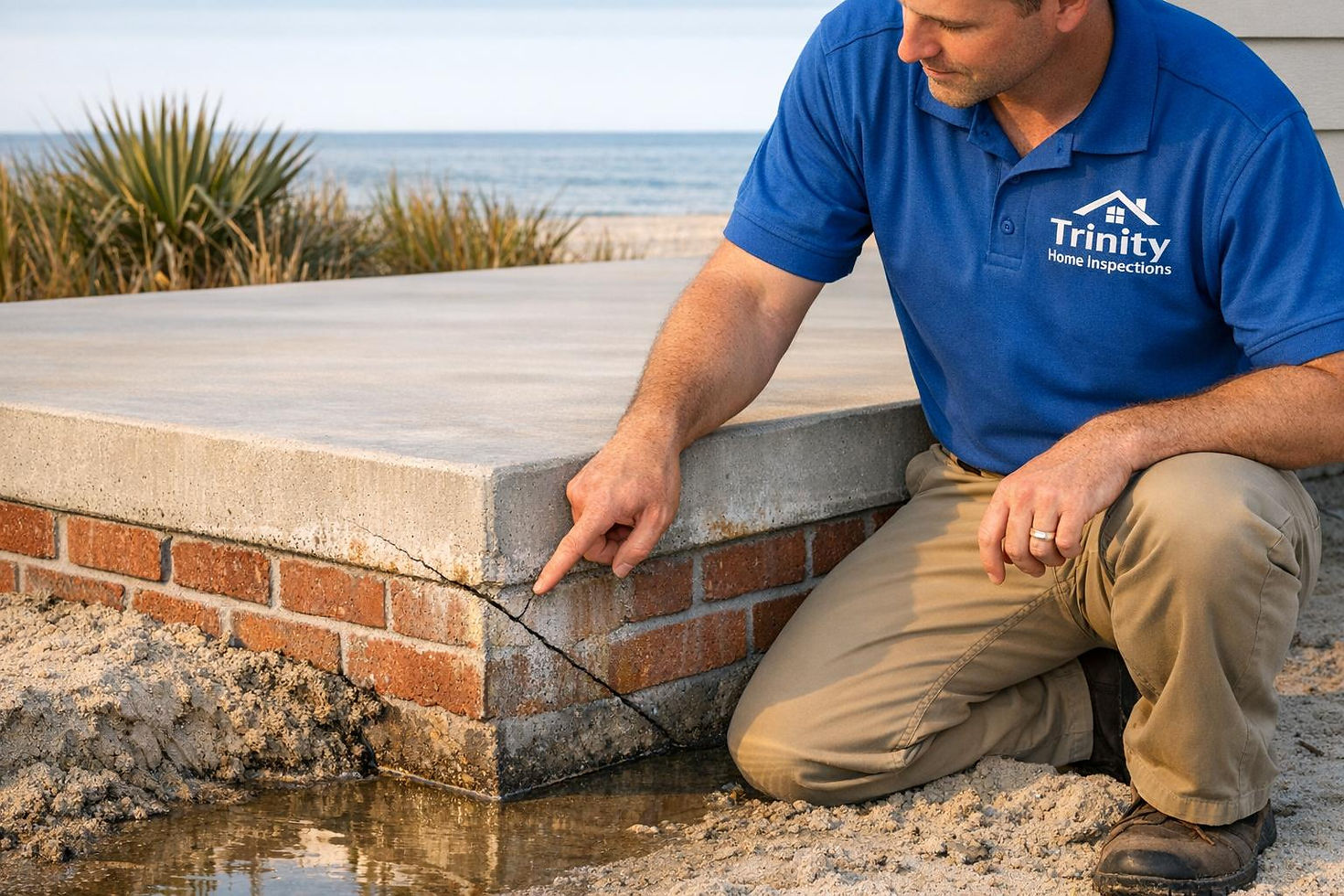
5 Common Foundation Issues in Coastal Alabama

In Coastal Alabama, the unique combination of heavy rainfall, sandy soils, high humidity, salt air, and frequent storms creates challenging conditions for home foundations. These factors often lead to costly structural problems if not addressed early. Here’s a quick look at the most common foundation issues in the region:
Soil Erosion: Sandy soils easily wash away during heavy rains, causing uneven settlement and cracks.
Differential Settlement: Soft, moisture-sensitive soils expand and contract unevenly, leading to structural strain.
Flooding & Hydrostatic Pressure: High water tables and heavy rain create pressure on foundations, causing cracks and moisture intrusion.
Salt Air Corrosion: Salt-laden air accelerates rust and concrete damage, especially near the Gulf.
Cracking & Movement: Moisture changes and aging plumbing weaken slabs and crawlspace piers, leading to visible cracks and instability.
Early detection is key to preventing expensive repairs. Look out for warning signs like cracks, uneven floors, sticking doors, or damp crawlspaces. Regular inspections, proper drainage, and moisture control can help protect your home. Professional services, like those offered by Trinity Home Inspections, provide tools like thermal imaging to spot hidden problems before they worsen.
1. Soil Erosion and Undermining Around Foundations
The sandy soil in Coastal Alabama is particularly prone to water infiltration. During heavy rains, loose soil around foundations can be quickly washed away, creating gaps that lead to uneven settlement. The rapid development seen in Baldwin County has disrupted natural drainage patterns and increased runoff, further contributing to this issue. These conditions make the area especially vulnerable to erosion during seasonal storms.
Storms and hurricanes amplify the problem, as the region's high water table often leaves the soil saturated even before a storm begins. This saturation limits the ground's ability to absorb additional water, making erosion more severe during extreme weather events. These factors highlight the importance of addressing soil stability without delay.
"Coastal Alabama's unique weather conditions, including high humidity and frequent storms, significantly contribute to soil erosion around foundations." - Matt Cameron, Certified Home Inspector, Trinity Home Inspections
Common warning signs of soil erosion include exposed tree roots near the foundation, soil pulling away from the base of the home, water pooling after rain, and uneven or sagging floors. Cracks that grow wider over time can also indicate ongoing soil movement beneath the structure.
Taking early action to address these signs is essential for maintaining the integrity of foundations in coastal areas. Simple steps like keeping gutters clear and directing downspouts away from the home can help. Planting native grasses or shrubs with deep roots around the foundation can also improve soil stability. For a more comprehensive evaluation, a professional inspection is recommended. According to Trinity Home Inspections, 70% of coastal homes inspected showed signs of erosion-related problems, highlighting how widespread this issue is in the region.
2. Differential Settlement in Soft, Water-Sensitive Soils
Differential settlement is another silent challenge for foundations along the Alabama Gulf Coast. Coastal Alabama's soil, particularly its moisture-sensitive type, often compresses unevenly, creating stress across structures. This uneven compression, known as differential settlement, typically happens when soil beneath a home doesn’t expand or contract uniformly during periods of heavy rain or high humidity.
Homes in Baldwin and Mobile counties, often built on expansive clay soils, face particular risks. Clay behaves unpredictably - it swells when wet and shrinks when dry. This repeated cycle of swelling and shrinking can cause parts of a foundation to sink, putting strain on the entire structure.
Signs of differential settlement often show up inside the house first. Be on the lookout for sticking doors, widening drywall cracks, nail pops, and sloping or uneven floors. Other indicators include gaps around window and door frames or slow-draining plumbing. Homes that are 25 to 30 years old or older are especially prone to these issues.
"Defects in the walls, roof framing, exterior wall framing, interior framing, or cracks in the foundation may indicate a serious structural problem that may be the result of... foundation settlement." - Josh Wilson, CHI, PHI, A-Pro Home Inspection
If left unaddressed, differential settlement can severely weaken a home's structure. Early detection is critical. Simple measures like proper grading and drainage around the foundation can help regulate soil moisture fluctuations. Professional inspections, including thermal imaging, can uncover hidden moisture issues before visible damage occurs. For recently built homes, scheduling an 11-month warranty inspection can identify settlement problems before the builder’s warranty expires.
To ensure your home's foundation remains stable and secure, reach out to Trinity Home Inspections. Their detailed evaluations can help catch early signs of differential settlement, protecting your property for years to come.
3. Flooding, High Water Tables, and Hydrostatic Pressure
Beyond soil-related issues, flooding and high water tables present serious risks to coastal foundations. Coastal Alabama, with its heavy rainfall and shallow water tables, sees ground saturation occur quickly. During storms, this saturation builds hydrostatic pressure against foundation walls and beneath slabs. This pressure is one of the most destructive yet often unnoticed threats to coastal homes.
Hydrostatic pressure pushes moisture through concrete and masonry, gradually weakening the structure from the inside. As one expert notes, "If the moisture source isn't corrected, it can contribute to ongoing damage like damaged drywall, decayed wood, and warped flooring over time." Homes in areas like Gulf Shores and Fairhope, along with other low-lying Gulf Coast communities, are particularly at risk. These conditions often lead to other foundation problems common along Alabama's coastline.
Spotting warning signs early can significantly reduce repair expenses. Some key indicators include:
Efflorescence: White, chalky deposits on foundation walls and floors.
Persistent dampness or odors: Especially in crawlspaces or below-grade areas.
Cupping or warped floors: Along with stained drywall or visible mold growth.
Foundation cracks or movement: Notable after heavy rainfall.
Crawlspaces, in particular, need careful attention in this region. Damp, poorly ventilated crawlspaces can allow moisture to damage floor joists and structural piers. To reduce hydrostatic pressure, ensure that soil slopes away from the foundation and that gutters and downspouts are clear and functioning properly.
Thermal imaging can provide a more detailed assessment by identifying temperature differences that point to hidden moisture behind walls and under floors. This method enhances routine inspections by uncovering issues that aren't visible to the naked eye. Trinity Home Inspections includes thermal imaging in every inspection, along with thorough crawlspace evaluations and optional sewer scope inspections to detect pipe failures that might be causing soil saturation around the foundation.
sbb-itb-3aaca89
4. Salt Air, Corrosion, and Reinforcement Deterioration
Homes located near the Gulf are constantly exposed to salt air, which deposits crystals on concrete and masonry. Combined with high humidity, this environment accelerates corrosion. Over time, this not only damages surfaces but also undermines the integrity of structural materials. Steel reinforcement bars, for instance, are particularly vulnerable. As they corrode, the resulting expansion causes spalling - where the concrete cracks and breaks apart from within. Waterfront communities like Point Clear and Orange Beach face even greater risks due to direct exposure to wind and sea spray.
Some common signs of salt-related damage include efflorescence, which appears as white, chalky deposits on masonry or concrete, rust stains near exposed reinforcements or metal connectors, and pitting or flaking on foundation walls and crawlspace piers. After major storms, it’s wise to perform a quick visual inspection. Wind-driven rain during hurricane season can significantly speed up the corrosion process. Catching these issues early can help avoid more extensive damage.
To combat salt-related deterioration, maintaining low crawlspace humidity with proper ventilation is essential. This reduces salt buildup on foundation piers. Keeping gutters and drainage systems clear is another critical step, as it prevents water from pooling near the foundation, which can intensify corrosive effects. For exposed metal connectors or hardware, using materials and coatings designed to resist corrosion is highly advisable. Additionally, thermal imaging can be a powerful tool for identifying hidden moisture pathways behind foundation walls that may carry corrosive salts deeper into the structure. Trinity Home Inspections includes thermal imaging in every inspection, providing a valuable resource to detect concealed damage before it leads to costly structural issues.
5. Cracking, Heaving, and Movement in Slabs and Crawlspace Piers
Coastal Alabama's heavy rainfall, high humidity, and soil types that react to moisture changes can create major challenges for concrete slabs and crawlspace piers. When soil repeatedly absorbs and loses water, it expands and contracts, leading to cracks, shifting, or even heaving in slabs. Crawlspace piers face similar risks, as poor drainage and moisture intrusion can weaken the wood or masonry that supports the structure, ultimately compromising the floor's stability.
Aging plumbing is another often-overlooked factor. Plumbing systems located beneath slabs typically start to show wear after 25–30 years. Slow leaks or persistent clogs can saturate the soil under the foundation, accelerating settlement and causing cracks to form from below.
Signs of foundation movement are often noticeable indoors before the foundation itself shows visible damage. Watch for nail pops in drywall, diagonal cracks near door or window corners, doors or windows that stick or won't latch, and uneven or bouncy floors. As Josh Wilson, CHI, PHI, of A-Pro Home Inspection explains:
"Defects in the walls, roof framing, exterior wall framing, interior framing, or cracks in the foundation may indicate a serious structural problem that may be the result of poor structural design, foundation settlement, poor construction techniques, improper structural modification, water damage, termite damage or other causes."
For newer homes, scheduling an 11-month warranty inspection before your builder’s one-year warranty expires can help identify settlement cracks or misaligned openings before these issues worsen. In homes that are 25–30 years or older, a sewer scope inspection can help uncover whether plumbing problems beneath the slab are contributing to foundation movement.
Trinity Home Inspections includes a thorough evaluation of crawlspace piers, slab conditions, and moisture control in every inspection. Their process even incorporates thermal imaging at no additional cost, which helps detect hidden moisture pathways that could be causing movement under your home. Ensuring clear access to the crawlspace allows for a complete and detailed foundation assessment.
Conclusion
Coastal Alabama presents a challenging environment for home foundations. Issues like soil erosion, differential settlement in soft soils, hydrostatic pressure from flooding, high water tables, salt air corrosion, and movement in slabs or piers are common occurrences in Baldwin, Mobile, and Escambia counties. If left unchecked, these problems can grow from minor inconveniences into major structural failures with hefty repair bills.
The silver lining? Most foundation issues can be identified early - but only if you know what to look for and have the right expertise. As Trinity Home Inspections explains:
"Salt air and hurricane exposure accelerate wear on all four systems in Gulf Coast Alabama homes... These are not theoretical risks; they are realities inspectors see in this region constantly."
Catching these problems early not only helps maintain your home’s structural integrity but also saves money in the long run. A standard home inspection in Alabama costs between $350 and $500 - a small price compared to the expense of even moderate foundation repairs. Additionally, regular inspections can help ensure insurance compliance and avoid costly delays. In coastal Alabama, insurers often require structural evaluations before issuing or renewing policies, and unresolved foundation issues can hinder closings or block coverage entirely.
Trinity Home Inspections offers the expertise and tools necessary to address the unique foundation challenges of Gulf Coast homes. Their inspections include complimentary thermal imaging to spot hidden moisture issues, as well as crawlspace evaluations, grading and drainage assessments, and same-day reports. Optional services, like sewer scope inspections (around $350), can further investigate potential damage from aging underground plumbing systems.
Whether you’re buying, selling, or maintaining a home on the Gulf Coast, scheduling a professional inspection is a smart step to protect your investment from these often-overlooked foundation risks.
FAQs
Are my foundation cracks serious or just cosmetic?
Determining if foundation cracks are merely surface-level or a sign of a larger problem often calls for expert evaluation. Even minor cracks can sometimes signal underlying structural challenges, such as soil settling or water-related damage. In areas like coastal Alabama, conditions such as unstable soil, high humidity, and frequent heavy rains can worsen these issues. Consulting a professional can help gauge the seriousness of the cracks and outline a clear approach to tackle any structural risks.
How can I reduce water and moisture around my foundation?
To keep water and moisture away from your foundation, make sure the ground around your home slopes outward. Regularly clean and maintain your gutters so they effectively direct water away from the structure. Additionally, check for issues with roof flashing or attic ventilation, as these can lead to leaks. If you think there might be hidden moisture, Trinity Home Inspections can help. They use tools like thermal imaging and moisture meters to identify problem areas, allowing you to address them before they lead to significant damage.
When should I schedule a foundation-focused home inspection in coastal Alabama?
Scheduling a foundation-focused inspection at critical times can help safeguard your property. If you're buying a home, an inspection can uncover potential issues before closing, ensuring there are no unexpected surprises. For sellers, a pre-listing inspection allows you to identify and resolve problems early, making your property more appealing to buyers. Additionally, annual maintenance inspections are a smart way to track any damage caused by coastal elements like salt air and humidity. Reach out to Trinity Home Inspections for a thorough evaluation and a detailed, actionable report.

