
First Time Home Buyer Information: Alabama Guide

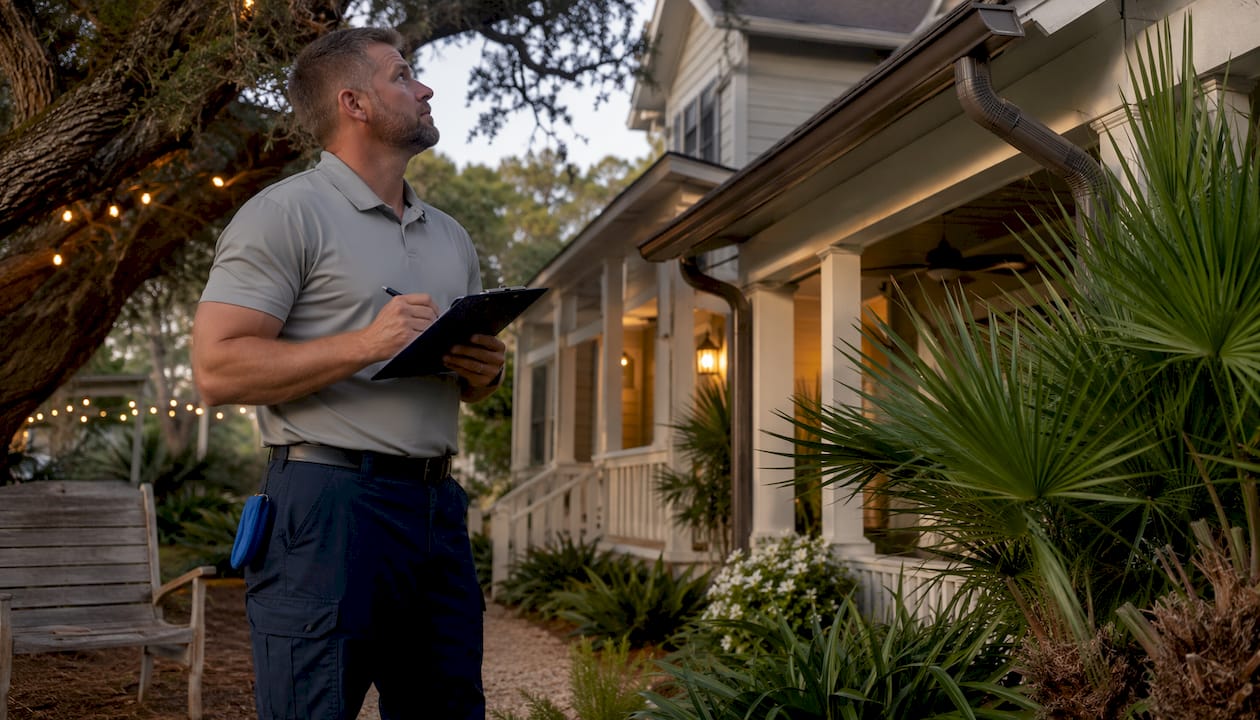
Why a Professional Home Inspection Is Your Best Protection in Alabama
The most critical piece of first time home buyer information for Alabama buyers is this: the state follows a caveat emptor principle, meaning sellers are not required to disclose defects unless you ask directly. That single legal reality makes a professional home inspection less of an optional step and more of a financial necessity.
A home inspection is a thorough, visual examination of a property’s accessible systems and components — roof, foundation, electrical, plumbing, HVAC, and more. An inspector’s job is to find what a casual walkthrough never reveals. Relying on seller assurances over a professional report is one of the most common and costly mistakes first-time buyers make.
Common issues uncovered in Alabama homes include:
Foundation settling or moisture intrusion, especially in coastal and clay-soil areas
Aging or undersized electrical panels and ungrounded outlets
Roof damage from Gulf Coast storms and UV exposure
HVAC systems running past their service life in Alabama’s demanding heat
Plumbing leaks hidden behind walls or under slabs
Termite damage, which Alabama’s warm climate makes a persistent concern
Including an inspection contingency in your purchase agreement gives you the legal right to negotiate repairs, request a price reduction, or walk away if the findings are serious. Without it, you absorb every defect the seller never mentioned.
The Home Buying Process in Alabama: Steps Every First-Time Buyer Should Know
Buying your first home in Alabama follows a clear sequence, though a few steps work differently here than in other states.
Check your credit and set a budget. Your credit score drives your loan eligibility and interest rate. Alabama’s median home price is $288,500, well below the national median of $439,701, but a mortgage still demands careful budgeting. Keep monthly housing costs at or below 25% of your take-home pay.
Explore AHFA programs. The Alabama Housing Finance Authority offers two flagship programs. First Step provides below-market, 30-year fixed rates on FHA, VA, USDA, and Freddie Mac loans and has helped a significant number of Alabama households. Step Up serves both first-time and repeat buyers with down payment assistance, capped at a fixed amount or percentage of the sales price.
Get preapproved with an AHFA participating lender. A preapproval letter tells sellers you are a serious buyer and defines your real price ceiling. Ask specifically whether your lender participates in AHFA programs before you apply.
Make an offer with an inspection contingency. Once you find the right home, your offer should include a clause making the purchase contingent on a satisfactory inspection. This protects you if the report surfaces significant problems.
Schedule the inspection promptly. Most contracts allow 7–10 days for inspections. Book your inspector the same day your offer is accepted so you have time to review findings and negotiate before deadlines pass.
Close with clear eyes. Closing costs in Alabama generally run 3–6% of the purchase price. Review every line item before signing. Your inspection report, appraisal, and title search all feed into this final stage.
Pro Tip: A preapproval letter is a powerful tool in a competitive market. Sellers and their agents treat it as proof you can actually close, which can give you an edge over buyers who only have a pre-qualification estimate.

What a Comprehensive Home Inspection Covers in Alabama
Alabama’s Standards of Practice define the minimum scope for licensed inspectors: foundations, framing, roofing, electrical systems, plumbing, HVAC, and insulation. The best inspectors exceed that baseline significantly.
Standard inspection components:
Roof covering, gutters, and drainage
Foundation, grading, and drainage around the structure
Electrical panel, wiring, outlets, and switches
Plumbing supply and drain lines, water heater
HVAC equipment, ductwork, and ventilation
Attic insulation and framing
Windows, doors, and exterior cladding
Interior walls, ceilings, and floors
Advanced tools that go further:
Thermal imaging identifies insulation gaps, hidden moisture, and overheated electrical components without opening walls. Moisture meters confirm suspected leaks. Combustible gas detectors locate natural gas or propane leaks. Carbon monoxide detectors flag unsafe CO conditions. FAA-licensed drones provide detailed roof views when walking the surface is unsafe.
Specialty add-on services:
Service | What It Checks |
Sewer scope | Main drain line condition and blockages |
Mold swab testing | Surface mold identification with lab analysis |
Indoor air quality sampling | Airborne contaminants with certified lab report |
Pool and spa inspection | Equipment, safety features, and structural condition |
Detached structure inspection | Garages, workshops, and outbuildings |
Reports should arrive the same day as the inspection, organized with photos and video so you can see exactly what the inspector saw, not just read about it.
How to Choose a Reliable Home Inspector in Alabama
Credentials are the starting point, not the finish line. Here is what to verify before you book:
InterNACHI certification. This is the gold standard in the industry, recognized by the U.S. Department of Education. It requires passing the Standards of Practice and Code of Ethics exams, plus ongoing annual education.
FAA drone licensing. An inspector using a drone without FAA certification creates a safety and liability risk. Verify the license before assuming drone coverage is legitimate.
Errors & Omissions insurance at $1 million or above. Alabama may set a lower minimum, but E&O coverage at $1 million protects you if a defect is missed and later costs you significantly.
General Liability insurance at $2 million. Most purchase contracts make the buyer responsible for damage an inspector causes. An inspector with a $2 million general liability policy means that risk does not fall back on you.
Willingness to let you attend. Any inspector who discourages your presence at the inspection is a red flag. Attending lets you ask questions in real time and understand findings before the report arrives.
5-star Google reviews with responses. Check whether the inspector responds to every review. It signals they take client relationships seriously, not just the transaction.
Testing beyond the minimum. Alabama law requires inspecting a “representative number” of outlets, switches, windows, and doors. An inspector who tests every accessible one gives you a far more complete picture.
For a deeper look at homebuyer protection in Alabama, the inspection process is your single best tool under the state’s buyer beware framework.
Alabama Buyer Protections and Real Estate Transaction Norms
Alabama’s caveat emptor standard places the burden of discovery squarely on you as the buyer. Sellers are not legally required to volunteer information about defects, though they cannot actively misrepresent the property’s condition. This is meaningfully different from states with mandatory disclosure forms covering dozens of known issues.
What this means practically: your real estate agent, your inspection contingency, and your inspector are your primary protections. A few additional norms worth knowing:
Alabama does not require an attorney to be present at closing, though many buyers choose to use one for title review. Title insurance is standard and protects you against ownership disputes or liens that surface after closing. Flood zone status matters significantly in coastal Baldwin and Mobile counties — verify FEMA flood zone designation before making an offer, as flood insurance can add substantially to your annual carrying costs.
Before making an offer, a free home valuation can help you confirm whether the asking price aligns with current market conditions in your target area.
A Clear Cost Breakdown for First-Time Buyers in Alabama
Understanding every cost category before you close prevents surprises at the settlement table.
Down payment: Ranges from 3% (some conventional loans) to 3.5% (FHA) to 20% (to avoid private mortgage insurance). AHFA’s Step Up program covers up to $10,000 or 4% of the purchase price in down payment assistance.
Closing costs: Typically 3–6% of the purchase price in Alabama. On a $288,500 home, expect $8,655 to $17,310. These fees cover appraisal, title search, title insurance, attorney fees if applicable, lender origination charges, and prepaid items like homeowners insurance and property taxes.
Home inspection fees: Base inspection costs vary by property size and age. Specialty add-ons like sewer scopes, mold testing, and air quality sampling carry additional fees, though bundling services with a single inspector typically saves money versus scheduling multiple vendors.
Ongoing ownership costs: Property taxes, homeowners insurance, and HOA dues if applicable. Gulf Coast properties often require separate wind and flood policies, which can be significant depending on flood zone designation.
Reserve funds: Budget for immediate repairs or replacements the inspection identifies. Even a well-maintained home may have a water heater or HVAC unit nearing end of life. Knowing this before closing gives you negotiating leverage and prevents a financial shock in your first months of ownership.
For first-time homebuyer inspection steps that walk you through exactly what to expect from scheduling through report review, that resource covers the process in practical detail.
Ready to Inspect? Trinity Home Inspections Serves Gulf Coast Alabama
[
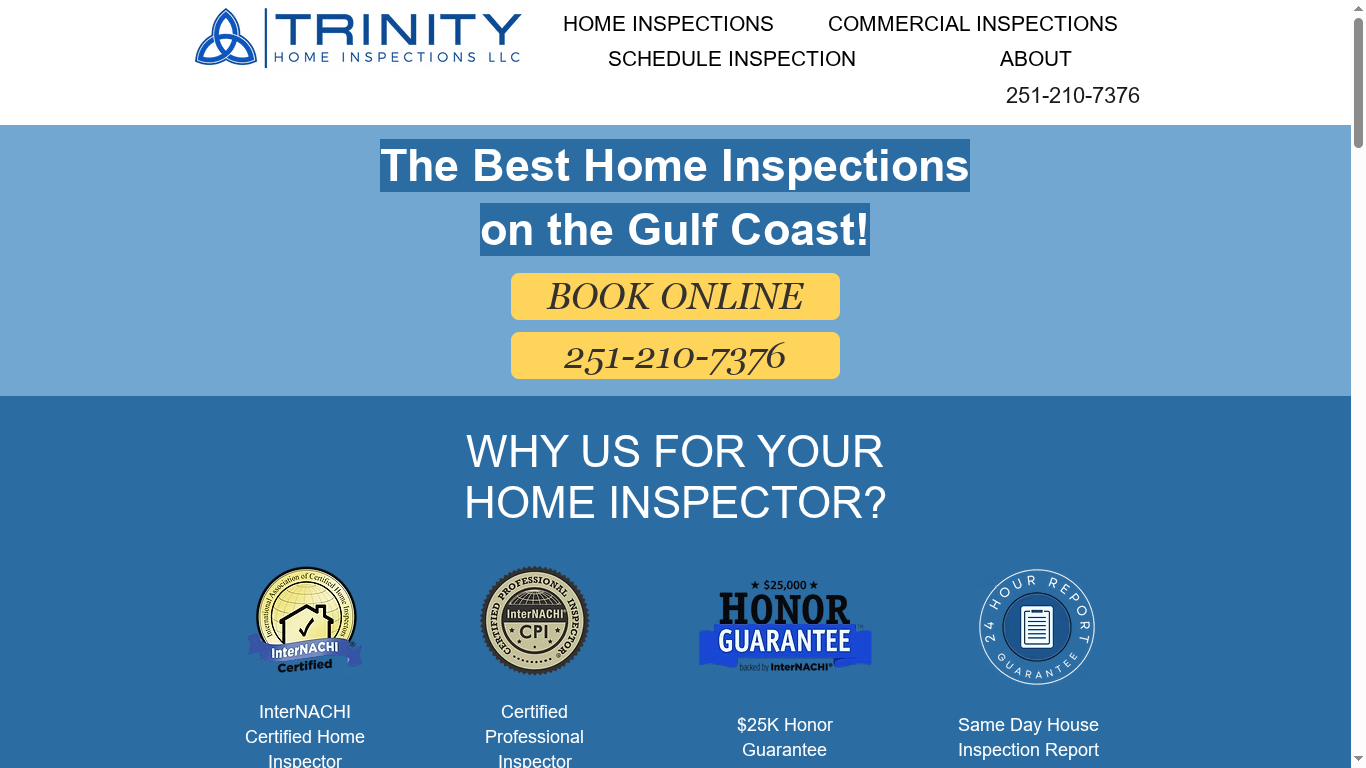
Alt text: Trinity Home Inspections inspector in khaki pants and blue shirt with white pocket logo inspecting a home for first-time buyers in Mobile, Alabama.
Trinity Home Inspections gives Alabama first-time buyers something specific: a certified, locally rooted inspector who treats your purchase with the same care he would want for his own family. Led by Matt Cameron, an InterNACHI-certified inspector with FAA drone licensing and the National Home Inspectors Exam completed, Trinity carries $1 million in Errors & Omissions insurance and a $2 million general liability policy — well above what Alabama requires.
Every inspection includes free thermal imaging, moisture meters, gas and CO detection, and same-day photo and video-rich reports. Specialty services including mold testing, sewer scopes, air quality sampling, and pool inspections are available as add-ons, bundled to save you money. Trinity serves Mobile, Baldwin, Escambia, Washington, Monroe, and Clarke counties, including Daphne, Fairhope, Spanish Fort, Foley, Gulf Shores, and Orange Beach.
Call 251-210-7376 or visit TrinityInspectionsLLC.com to schedule your inspection today.
Key Takeaways
Alabama’s caveat emptor laws make a professional home inspection the most important step a first-time buyer can take to protect their investment before closing.
Point | Details |
Alabama is buyer beware | Sellers are not required to disclose defects, so your inspection is your primary protection. |
AHFA programs reduce upfront costs | First Step and Step Up offer down payment assistance up to $10,000 or 4% of the purchase price. |
Closing costs run 3–6% | On a $288,500 home, budget $8,655 to $17,310 in closing costs beyond your down payment. |
Insurance coverage matters | Verify your inspector carries at least $1M in E&O and $2M in general liability before booking. |
Trinity Home Inspections | InterNACHI-certified, FAA-licensed, same-day reports with free thermal imaging across Gulf Coast Alabama. |
FAQ
What does a home inspection cover in Alabama?
A licensed Alabama home inspector evaluates the foundation, roof, electrical, plumbing, HVAC, insulation, windows, and doors. Inspectors following Alabama’s Standards of Practice must report significant deficiencies with explanations and recommendations.
Do I have to attend the home inspection?
Attendance is not required, but it is strongly recommended. Being present lets you ask questions in real time and understand the findings before the written report arrives.
What first-time buyer programs does Alabama offer?
The Alabama Housing Finance Authority offers First Step, which provides below-market 30-year fixed mortgage rates, and Step Up, which adds down payment assistance up to $10,000 or 4% of the purchase price for qualifying buyers.
How much should I budget for a home inspection in Alabama?
Base inspection fees vary by property size and age. Specialty services like mold testing, sewer scopes, and air quality sampling add to the total. Bundling add-ons with a single inspector like Trinity Home Inspections typically costs less than hiring separate vendors for each service.
What insurance should my home inspector carry?
Look for at least $1 million in Errors & Omissions insurance and $2 million in general liability. Alabama sets lower minimums, but most purchase contracts hold the buyer responsible for damage an inspector causes, so your inspector’s coverage directly affects your risk.
Recommended

