
What Does It Take To Become A Home Inspector In Alabama

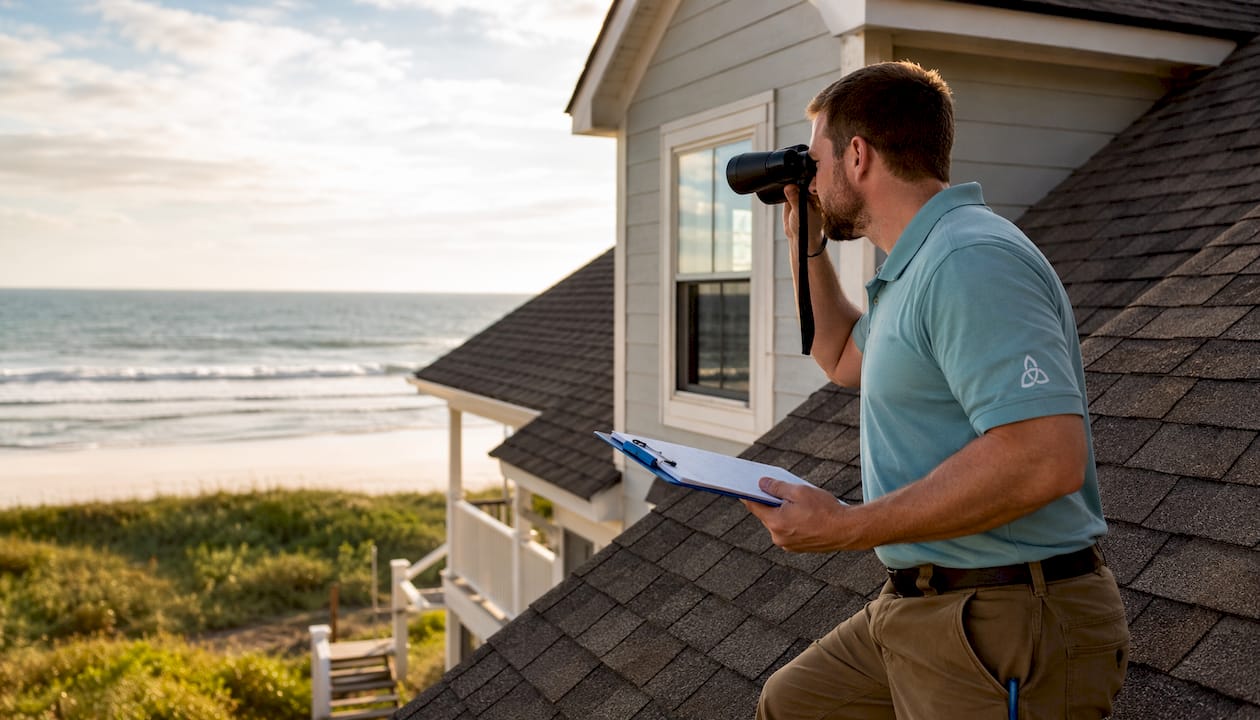
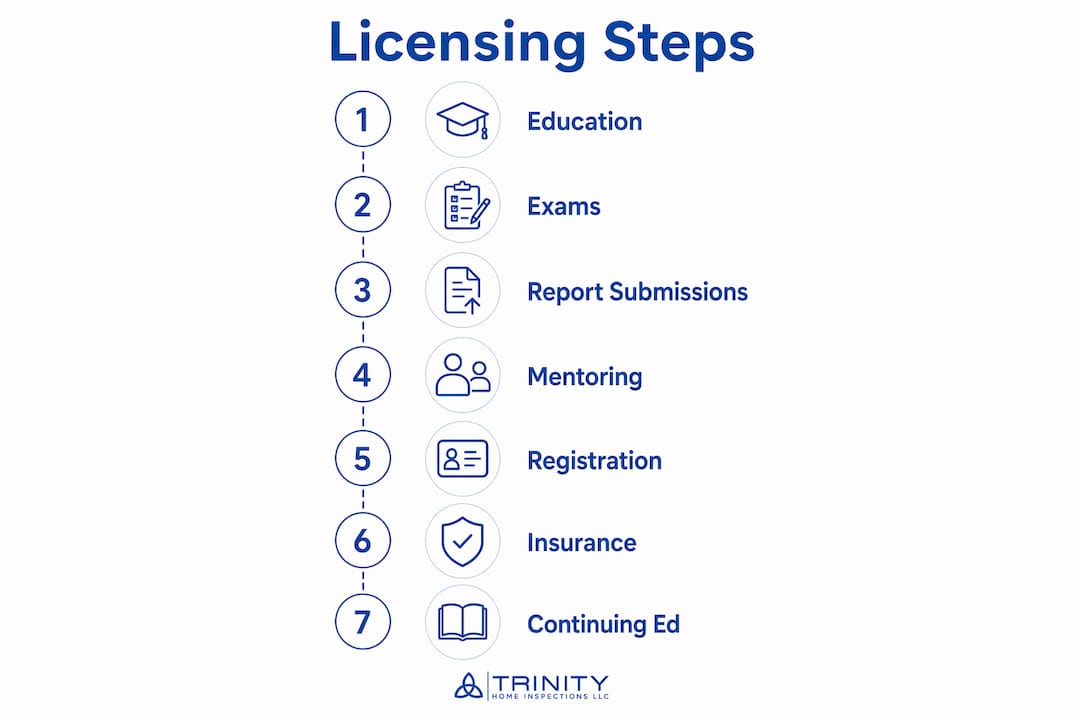
To become a licensed home inspector in Alabama, you must complete approved education, pass two required exams, submit 25 inspection reports with 10 mentor-reviewed, carry minimum liability and E&O insurance and register with the state. Most people complete this process within a few months.
Quick checklist of what you need:
Complete approved education hours (an approved amount of education hours, or a qualifying combination of education and inspections)
Pass the ASHI Standards & Ethics exam
Pass the EBPHI/NHIE (National Home Inspector Examination)
Submit 25 inspection reports, with 10 reviewed and certified by a qualified inspector
Carry minimum liability and Errors & Omissions (E&O) insurance
Register with the Alabama Division of Construction Management
Renew your registration annually and complete continuing education
Training providers used by most Alabama applicants include InterNACHI and AHIT. Startup costs typically run $400–$3,000, depending on your training path, tools, and insurance choices.
1. What Does It Take To Become A Home Inspector In Alabama?
Alabama’s Division of Construction Management administers the state’s home inspector registration program. The requirements are specific, and skipping any one of them will delay your application.
Two primary qualifying pathways exist:
Standard route: 120 hours of approved home inspector education plus 35 completed inspections
Experience route: 35 hours of approved education plus 100 paid inspections and at least one year of work experience as a home inspector
Additional qualifying alternatives under Alabama Admin. Code r. 355-17-1-.06 include:
Active membership in ASHI or an equivalent professional body recognized by the Building Commission
Approval or certification by the VA, HUD, SBCCI, or CABO to inspect residential construction
Licensure in Alabama as a general contractor, registered professional engineer, registered professional architect, or residential home builder
Required for every applicant regardless of route:
Pass both the ASHI Standards & Ethics exam and the EBPHI/NHIE
Submit 25 inspection reports (10 reviewed by a qualified inspector)
Provide proof of required insurance
Submit a notarized application with all required forms and fees
Renew annually and maintain insurance in force
Pro Tip: Start your application file on day one. Alabama requires notarized forms, insurance certificates, and participation logs — missing a single document can push your approval back by weeks.
2. Where to get the education Alabama requires
Alabama accepts education from courses approved by recognized professional bodies or the Alabama Home Inspectors Advisory Committee. Two providers dominate the new-inspector market: InterNACHI and AHIT (American Home Inspectors Training). Both offer courses that satisfy Alabama’s hour requirements and include the report-writing instruction the state specifically requires.
When comparing programs, look for these features:
Report-writing modules with practice exercises
Roof, structure, and electrical system coverage
Field lab or ride-along components
NHIE exam prep content
Clear statement that the course meets Alabama’s approved-hours requirement
Training program length typically runs 40–200 hours depending on the state and format. Alabama’s 120-hour standard sits in the middle of that range. Online delivery is widely available and costs less than in-person formats, though hands-on field labs add real value for new inspectors who have no construction background.
Pro Tip: If you have a background in construction, electrical work, or HVAC, the experience-route (35 hours + 100 inspections) may get you licensed faster. Confirm your work history qualifies before enrolling in a full 120-hour program.
3. What the two required exams cover and how to pass them
Every Alabama applicant must pass both exams before the license application is approved. Neither is optional, and both must be passed within the required window for your application to proceed.
ASHI Standards & Ethics exam This test covers the ASHI Standards of Practice and Code of Ethics. It focuses on what a home inspector is required to inspect, what is excluded, and the professional conduct rules that govern the profession. Study the ethical standards in home inspection alongside the official ASHI Standards document.
EBPHI/NHIE (National Home Inspector Examination) The NHIE is a standardized exam administered by the Examination Board of Professional Home Inspectors (EBPHI). It covers building systems, structural components, professional practice, and report writing. The NHIE is the common licensing exam across most licensed states, making it a reliable national credential.
A practical study plan over several weeks:
Weeks 1–2: Complete your training course modules on structure, roofing, and electrical systems
Weeks 3–4: Study ASHI Standards of Practice and Code of Ethics in full
Weeks 5–6: Take at least two full NHIE practice exams; note weak areas
Weeks 7–8: Review weak areas and retake practice exams
Week 9: Schedule both exams; allow a buffer week before your application deadline
4. How to meet the 25-report and mentoring requirement
The report submission requirement is where many applicants slow down. You must draft 25 inspection reports and have 10 of them reviewed, corrected, and certified by a qualified inspector.
Who qualifies as a mentor? Under Alabama’s rules, a qualified inspector must hold a valid Alabama home inspector registration and have at least five years of standing. That five-year requirement is the most common bottleneck new applicants face.
Steps to complete this requirement:
Identify two or three potential mentors early, before you finish your coursework
Contact local inspection companies and ask about supervised inspection opportunities
Confirm your mentor’s registration date with the Division of Construction Management
Complete inspections alongside your mentor and draft your own reports for each
Have your mentor review, correct, and sign the required certification forms for 10 reports
Keep a compliant participation log for all 25 reports, using the exact forms required by the Division
Pro Tip: Finding a qualified mentor is commonly the hardest practical step in Alabama. Start reaching out months before you need them. Many applicants wait until after their exams and then lose weeks searching. A mentor who has been licensed for five-plus years and inspects regularly is your best option.
5. Insurance, registration, and your ongoing legal duties
Alabama sets specific minimum insurance amounts by statute. Under Title 34, Chapter 14B, every applicant must provide a certificate from an Alabama-licensed insurance company showing:
$20,000 minimum for property damage
$50,000 per person for bodily injury or death
$100,000 per occurrence for bodily injury or death to more than one person
E&O insurance in an amount and form prescribed by the Building Commission (the administrative code sets this at $250,000)
Insurance minimums required by the Alabama Division of Construction Management: $20,000 property damage / $50,000 per person / $100,000 per occurrence / $250,000 E&O. These are floors, not recommendations.
Those minimums are the legal baseline. Many working inspectors carry significantly more. Trinity Home Inspections, for example, carries $1M in E&O and a $2M general liability policy.
Application checklist:
Notarized application form (required by the Division)
Insurance certificates meeting the minimums above
Proof of passing both required exams
Participation log and report certification forms
Application fee
Renew annually and keep your insurance in force without a lapse. A lapse in coverage can affect your registration status.
This article is general information, not legal advice. Confirm current requirements directly with the Alabama Division of Construction Management for your specific situation.
6. The tools, skills, and continuing education that build a real career
Passing your exams and getting registered is the starting line, not the finish. Agents and buyers prioritize training, report quality, and fast delivery over the license itself.
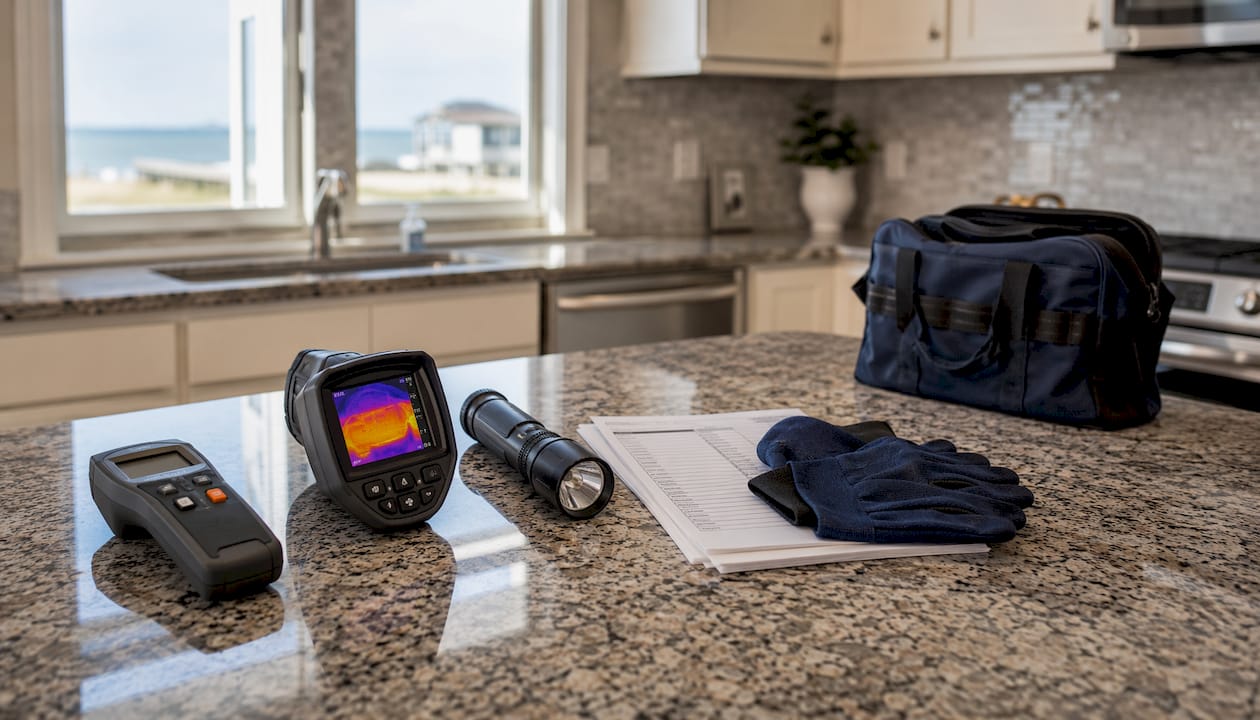
Minimum field toolkit:
Flashlight and headlamp
Ladder (6-foot and extension)
Moisture meter
Outlet/GFCI tester
Basic HVAC tools and thermometer
Recommended upgrades for Gulf Coast Alabama work:
Thermal imaging camera (free with every Trinity Home Inspections inspection; see what thermal imaging finds)
CO detector and combustible gas leak detector
FAA-licensed drone for roof inspections when safe access is limited
Report skills that agents notice:
Same-day delivery
Color-coded priority sections (safety/major, issues/defects, DIY/minor)
High-quality photos and video for items that move, make noise, or show moisture
Pro Tip: In Gulf Coast Alabama, thermal imaging pays for itself quickly. Moisture intrusion, missing insulation, and overheated electrical components are common findings in coastal homes. Getting your FAA drone license early also opens roof inspections on steep or wet roofs where ladder access is unsafe.
7. Realistic timeline and startup costs for Alabama
Most new inspectors go from zero to licensed within a few months. Costs vary widely based on education, exams, application fees, insurance, tools, and software, with total startup investment spanning from low four figures to several thousand dollars.
Recurring annual costs include insurance renewals, continuing education, and association membership fees. To reduce startup costs without sacrificing quality, start with a solid online course, borrow or rent specialty tools for your first few inspections, and invest in report software early since agents notice report quality immediately.
8. How to get your first clients and build your business
New inspectors face a clear choice: join an established inspection company as an employee or launch independently. Starting with an established company gives you volume and mentorship fast. Going independent gives you more control but requires you to build a client base from scratch.
First-year marketing checklist:
Set up a Google Business Profile with your license number and service area
Introduce yourself to five local real estate agents per week
Offer a free sample report so agents can see your format and quality
Deliver every report the same day
Ask satisfied clients for a Google review immediately after the inspection
Add specialty services (mold testing, sewer scope) as soon as you are trained
Starter business setup:
Form an LLC for liability protection
Use a written inspection agreement for every job
Choose inspection report software that supports photos, video, and color-coded priorities
Set up online scheduling and payment from day one
What’s included in a typical residential inspection:
Full visual inspection of structure, roof, electrical, plumbing, HVAC, and interior
Photo-rich digital report delivered same day
Thermal imaging scan (when conditions allow)
Plain-English priority summary
Post-inspection walkthrough or phone debrief
Tips for choosing a home inspector in Alabama gives you a client’s perspective that is worth reading before your first paid job.
9. Optional certifications that raise your income and credibility
Your state registration gets you in the door. Specialty certifications are what get you called back.
Mold testing specialist: High demand in Gulf Coast Alabama due to humidity and moisture intrusion; pairs naturally with a standard inspection
Sewer scope operator: Adds a revenue-generating add-on that many buyers specifically request
Infrared/thermography certification: Backs up your thermal imaging work with a recognized credential
Pool and spa inspection: Common add-on in Baldwin and Mobile County markets
FAA Part 107 drone license: Required to legally fly a drone commercially; opens aerial roof inspections and adds a visible differentiator
InterNACHI offers specialty course certificates that clients and agents recognize. Pricing specialty services as bundles rather than individual add-ons tends to increase average job value while making the decision easier for clients.
Key Takeaways
Becoming a licensed home inspector in Alabama requires completing approved education, passing two exams, submitting 25 reports with 10 mentor-reviewed, carrying minimum insurance, and registering annually with the Division of Construction Management.
Point | Details |
Two qualifying routes | Complete 120 hours of education plus 35 inspections, or 35 hours plus 100 paid inspections with one year of experience. |
Two required exams | Pass both the ASHI Standards & Ethics exam and the EBPHI/NHIE before submitting your application. |
Report submission rule | Draft 25 inspection reports; 10 must be reviewed and certified by a qualified inspector with five-plus years of standing. |
Insurance minimums | Alabama requires at least $20,000 property damage, $50,000 per person, $100,000 per occurrence bodily injury, and $250,000 E&O coverage. |
Trinity Home Inspections | Holds InterNACHI certification, FAA drone license, and carries $1M E&O and $2M general liability — well above state minimums. |
A Gulf Coast Inspector’s Honest Take on What Actually Matters
Most people researching how to become a home inspector focus on the paperwork. The license requirements are real and you have to meet them, but the inspectors who build lasting careers in this market focus on something different: the moment a client or agent opens that report.
The five-year mentor requirement catches nearly every new applicant off guard. You can finish your coursework, pass both exams, and still be waiting months for a qualified mentor to sign off on your reports. Start that search before you finish your education, not after.
The other thing worth saying plainly: the insurance minimums Alabama sets are floors, not a business strategy. A $20,000 property damage policy does not cover a flooded kitchen or a car damaged by a falling ladder. Carry more than the minimum from day one, and tell your clients you do. That transparency builds trust faster than any marketing.
On the Gulf Coast specifically, moisture is the story in almost every inspection. Thermal imaging is not a premium add-on here; it is a practical necessity. The same goes for drone access on steep or wet roofs. Invest in those tools early, get the FAA license, and you will stand out in a market where many inspectors still skip them.
The inspectors who earn consistent referrals from agents are the ones who deliver clear, honest reports the same day, show up on time, and treat every home with the same care they would want for their own family. That is not a slogan. It is the actual job.
Ready for a Professional Inspection on the Gulf Coast?
Trinity Home Inspections serves Baldwin, Mobile, Escambia, Washington, Monroe, and Clarke counties with InterNACHI-certified inspections, same-day photo and video reports, and free thermal imaging included on every job. Whether you are buying, selling, or just want to know what you own, you get a clear, honest report delivered the same day.
[
](https://www.TrinityInspectionsLLC.com) Alt text: Trinity Home Inspections inspector in khaki pants and blue shirt with white pocket logo conducting a home inspection in Gulf Coast Alabama
What’s included with every Trinity inspection:
Full visual inspection of structure, roof, electrical, plumbing, HVAC, and interior
Same-day color-coded digital report with photos and video
Free thermal imaging scan (when conditions allow)
Post-inspection walkthrough or phone debrief
Access to add-ons: mold testing, sewer scope, pool/spa, and indoor air quality
Sellers can also book a pre-listing inspection to get ahead of surprises before buyers walk through the door.
Call 251-210-7376 or visit TrinityInspectionsLLC.com to schedule your inspection.
Useful Sources
Alabama Division of Construction Management — Home Inspector Licensing: Official registration page with application forms, requirements, and renewal information
Ala. Admin. Code r. 355-17-1-.06 — Home Inspector License Requirements: Full text of qualifying pathways and statutory alternatives
Chapter 170-X-24 Alabama Home Inspectors Registration Program: Administrative code covering insurance minimums, report requirements, and mentor qualifications
Alabama Code Title 34, Chapter 14B, Section 34-14B-3: Statutory application requirements including insurance certificate language
InterNACHI — Alabama Licensing and Certification: State-specific summary of requirements and professional development paths
EBPHI — National Home Inspector Examination: NHIE exam overview and registration guidance
AHIT — Do You Need a License to Be a Home Inspector?: Career guidance on licensing vs. certification and what agents value
FAQ
How long does it take to become a licensed home inspector in Alabama?
Most applicants complete the process within a few months, covering education, exams, report submission, and state registration.
What exams are required to become a home inspector in Alabama?
Alabama requires passing both the ASHI Standards & Ethics exam and the EBPHI/NHIE (National Home Inspector Examination) before your application is approved.
How much does it cost to become a home inspector in Alabama?
Startup costs typically run $400–$3,000 depending on your training path, tools, and insurance choices.
What insurance does Alabama require for home inspectors?
Alabama requires minimum liability and Errors & Omissions coverage amounts as set by state statute and administrative code.
Does Trinity Home Inspections hire or mentor new inspectors in Alabama?
Trinity Home Inspections is an InterNACHI-certified inspection company serving Gulf Coast Alabama. Contact them at 251-210-7376 to ask about local opportunities or to schedule an inspection.
Recommended

