
High Efficiency Water Heaters: Reducing Home Energy Costs

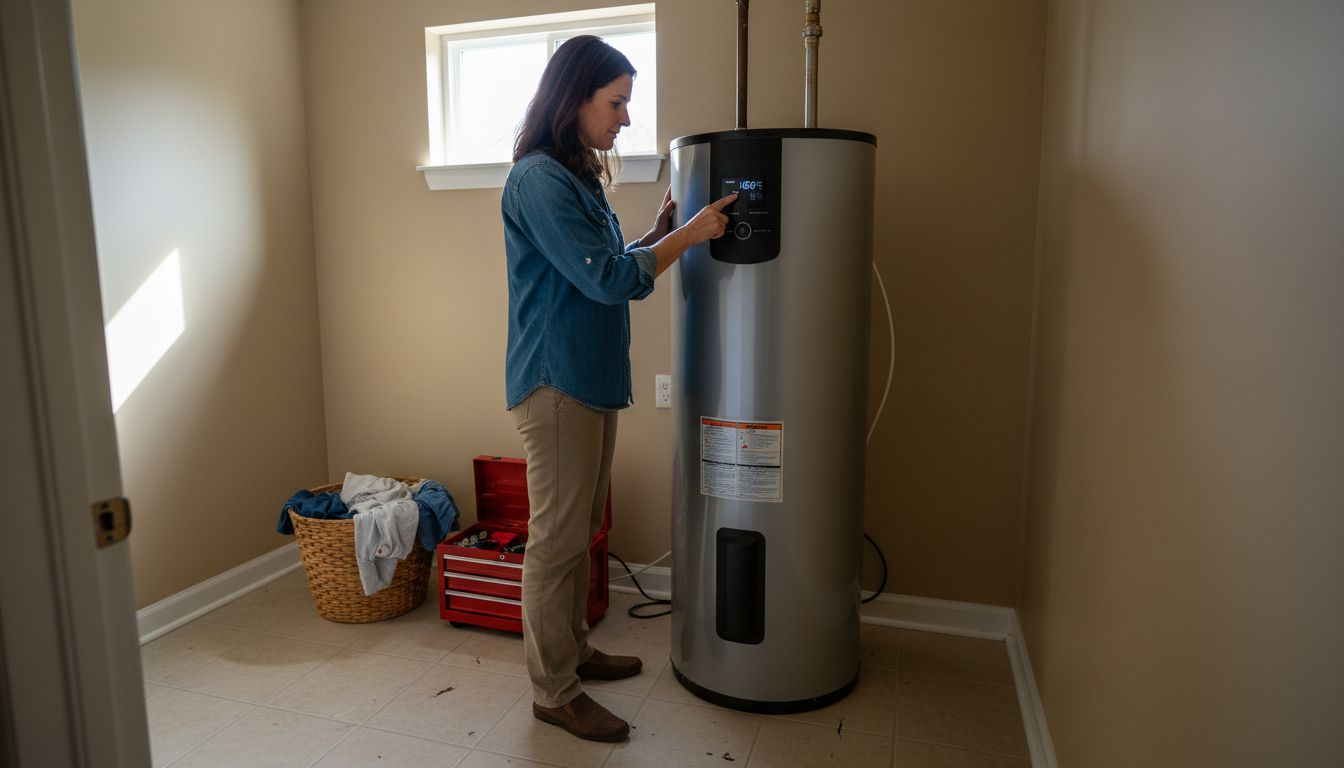
Replacing an old water heater often feels like an afterthought for many new homeowners in Baldwin and Mobile counties. However, the choice between a conventional unit and a high efficiency model affects your wallet every single month. With the U.S. Department of Energy’s finalized standards, American households are projected to save approximately 7.6 billion dollars annually by upgrading to technologies like heat pump water heaters. This guide explains what makes high efficiency water heaters different and gives you clear options for reducing both costs and carbon footprint in your newly purchased Alabama home.
Table of Contents
Key Takeaways
Point | Details |
High Efficiency Water Heaters Save Money | Upgrading to high efficiency models can save homeowners up to $1,800 on utility bills over the appliance’s lifespan. |
Understanding Different Types is Crucial | Familiarity with various water heater types aids in making informed purchasing decisions regarding energy efficiency and long-term costs. |
Installation Quality Impacts Performance | Proper sizing and installation by qualified contractors are essential for maximizing the efficiency and longevity of water heaters. |
Proactive Replacement is Key | Replacing older, inefficient units can significantly lower energy consumption and costs in the long run. |
What Are High Efficiency Water Heaters?
A high efficiency water heater is any water heating system that uses significantly less energy to deliver the same amount of hot water as traditional models. Unlike conventional electric resistance or gas water heaters that generate heat through direct combustion or electrical resistance, high efficiency units employ advanced technologies like heat pump systems to move heat from one place to another rather than creating it from scratch. This fundamental difference in approach translates directly into lower energy consumption and reduced utility bills over the life of the unit. The difference is measurable and certified: energy factor ratings compare how much hot water a heater produces relative to the energy it consumes, with high efficiency models achieving ratings between 1.5 and 2.0, compared to conventional units that typically range from 0.5 to 0.95.
For homebuyers in Baldwin and Mobile counties looking at newly purchased homes, understanding this distinction matters because it directly affects your monthly operating costs. Federal efficiency standards now require new water heaters to meet minimum performance levels, and the shift toward high efficiency technology is substantial. The U.S. Department of Energy has finalized standards requiring heat pump technology in common sized electric models, projecting American households will save approximately 7.6 billion dollars annually on energy and water bills through these upgrades. If your home has an older water heater, it’s almost certainly consuming far more energy than necessary. Replacing it with a high efficiency alternative is one of the most straightforward ways to reduce your home’s energy footprint while recouping the investment through lower monthly costs.
High efficiency water heaters come in several varieties, though heat pump water heaters represent the most common high performance option. These systems extract heat from the surrounding air or ground and use a small amount of electricity to move that heat into your hot water tank, similar to how an air conditioner works in reverse. Other high efficiency approaches include tankless water heaters that heat water on demand, solar water heaters that leverage Alabama’s abundant sunshine, and condensing gas water heaters that capture heat from exhaust gases. Each type has different installation requirements, upfront costs, and long term performance characteristics, but they all share the core principle of delivering more hot water per unit of energy consumed compared to conventional alternatives.
When evaluating a home you’re considering purchasing in our area, the age and condition of the water heater deserves attention during the inspection process. An older, inefficient unit represents a hidden operating cost that accumulates month after month. At Trinity Home Inspections, we evaluate water heater condition, age, and performance as part of every comprehensive home inspection across Baldwin, Mobile, and surrounding counties. Understanding what you’re actually dealing with gives you leverage in negotiations and clarity about future upgrade costs.
Pro tip: If you’re buying a home with an older water heater, request quotes from trusted contractors before closing so you have realistic upgrade costs figured into your negotiation and budget planning.
Main Types and How They Work
When you’re evaluating a home’s water heating system, understanding the different types available helps you make informed decisions about potential upgrades and long term costs. The water heater landscape has expanded significantly in recent years, moving beyond the traditional tank model most homeowners grew up with. Several types of water heaters are available including storage tank models, tankless systems, heat pump units, solar heaters, and hybrid approaches. Each operates on a different principle, and knowing how they work explains why some are more efficient than others and which option might make sense for your specific situation in Baldwin or Mobile County.
Storage Tank Water Heaters remain the most common type found in existing homes across our region. These systems maintain a large insulated tank filled with hot water, ready for immediate use whenever you turn on a faucet or shower. A heating element powered by electricity, natural gas, propane, or oil continuously maintains the water temperature inside the tank, even when you’re not using hot water. This approach works reliably and costs less upfront, but it wastes energy keeping water hot 24/7, whether you need it or not. Tankless Water Heaters operate on the opposite principle, heating water only when you demand it. Cold water flows through a high powered heating element or burner and emerges hot within seconds. You get hot water instantly without maintaining a reservoir, which eliminates standby heat loss. However, they require higher upfront investment and may struggle to deliver hot water to multiple fixtures simultaneously.
Heat Pump Water Heaters represent the efficiency breakthrough gaining momentum nationwide. Rather than generating heat through combustion or electrical resistance, these systems extract heat energy from surrounding air and move it into the water tank using electricity. Picture an air conditioner working in reverse, pulling warmth from the environment and concentrating it where you need it. This approach is significantly more efficient because you’re moving existing heat rather than creating new heat, consuming roughly 50 percent less electricity than conventional electric resistance models. Heat pump water heaters are cost-effective and clean energy technology that reduces strain on the electric grid, which is why federal efficiency standards are pushing the industry toward this technology.
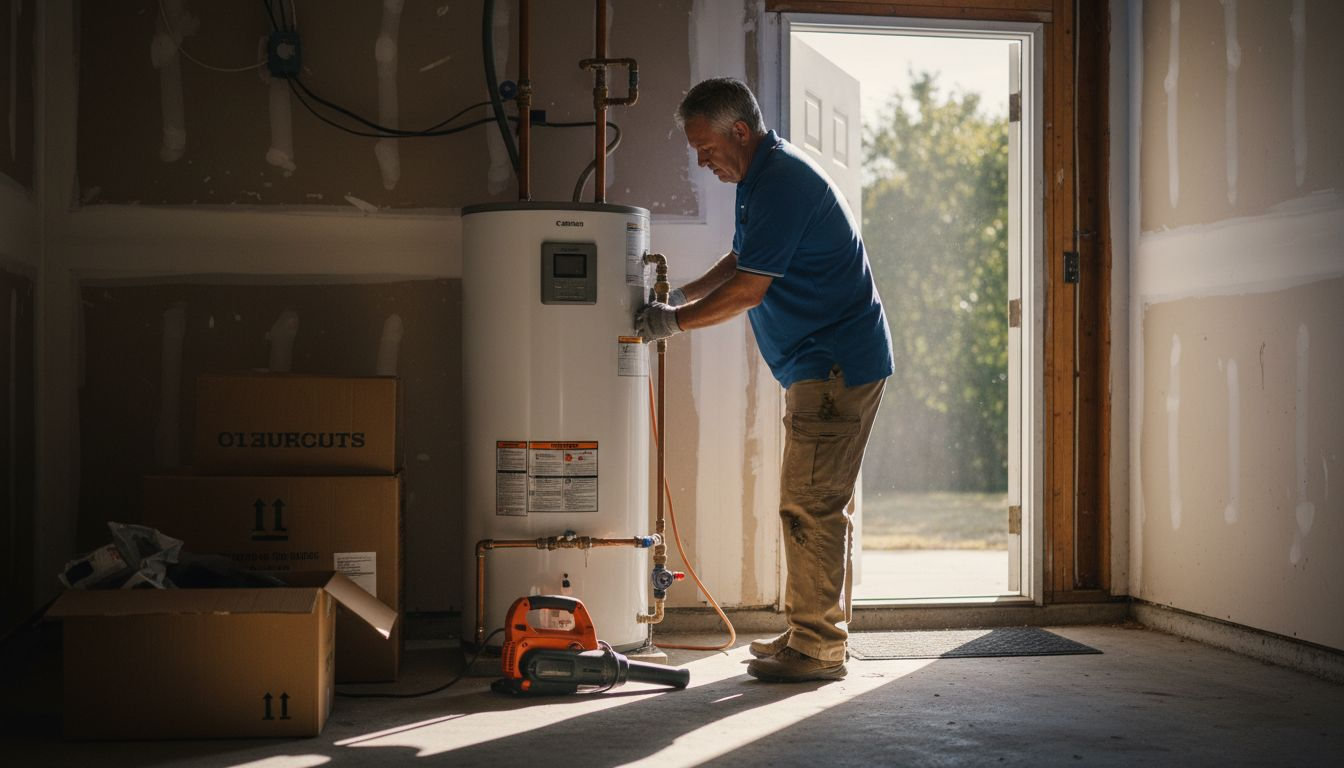
Solar Water Heaters use sunlight captured by rooftop panels to heat water, with backup conventional heating for cloudy days or high demand periods. This works exceptionally well in Alabama given our sunny climate. Indirect Water Heaters use your home’s existing heating system to warm water through a heat exchanger, making them efficient in homes with radiant heating systems. Each type has distinct advantages depending on your climate, budget, available space, and hot water demand patterns. During a pre-purchase home inspection, we evaluate what you currently have and can discuss realistic upgrade paths that match your long term goals and budget.
Here’s a side-by-side look at common water heater types and their efficiency features:
Type | How It Generates Heat | Average Energy Factor | Typical Upfront Cost |
Storage Tank | Heats and stores water 24/7 | 0.5 - 0.95 | $400 - $800 |
Tankless | Heats water on demand | 0.82 - 0.99 | $800 - $1,500 |
Heat Pump | Moves heat from air into water | 1.5 - 2.0 | $1,200 - $2,000 |
Solar | Uses sunlight via rooftop panels | 1.8 - 2.5 (varies) | $2,500+ |
Pro tip: Ask your real estate agent or inspector about the water heater’s age and fuel type before making an offer, then research replacement costs for that specific system so you understand the true cost of ownership.
Energy Savings and Performance Features
The real appeal of high efficiency water heaters lies in what they deliver over time: measurable reductions in your monthly energy bills and a smaller environmental footprint. When you’re evaluating whether to upgrade an older unit or factor replacement costs into a home purchase decision, understanding the specific performance metrics helps you calculate realistic payback timelines. Water heater efficiency is measured using the energy factor (EF), a standardized rating that accounts for how much hot water the unit produces relative to the energy it consumes, while also factoring in standby heat loss and cycling losses. This metric gives you a true apples-to-apples comparison across different models. Heat pump water heaters achieve energy factor ratings from 1.5 to 2.0, which means they use one-third to one-half the electricity of conventional electric resistance models. That’s not a marginal improvement. That’s transformative for your utility bills.
The financial impact compounds over the years you own the system. A homeowner upgrading from a conventional electric resistance water heater to a heat pump model can expect to save approximately $1,800 on utility bills over the appliance’s lifespan. Multiply that across millions of households, and the scale becomes staggering: the finalized federal efficiency standards are expected to save Americans 124 billion dollars over 30 years while simultaneously reducing 332 million metric tons of carbon dioxide emissions. For your household in Baldwin or Mobile County, this translates to real money staying in your pocket every single month. A family that uses hot water for showers, laundry, and dishes might see monthly savings ranging from 30 to 50 dollars depending on usage patterns and local energy rates.
Beyond the efficiency rating itself, several design features enhance real world performance. Proper tank sizing ensures you have adequate hot water during peak demand times, like mornings when multiple family members shower before work. Improved insulation on the tank reduces standby heat loss, so the water stays hot longer without constantly reheating. Heat traps installed on inlet and outlet pipes prevent hot water from draining back into cold water lines through natural convection. First hour rating measures how much hot water the system can deliver during the busiest hour of household use, helping you select a unit that matches your actual needs rather than oversizing or undersizing. These features work together to eliminate wasted energy and ensure reliable performance when you need it most.
When you’re shopping for a new water heater or evaluating one that came with a home you’re purchasing, request the EF rating from the manufacturer or look for the yellow EnergyGuide label required on all new units. Compare that number to your current system if you’re upgrading. The higher the EF, the lower your operating costs will be. During a home inspection at Trinity Home Inspections, we document your existing water heater’s age and condition, which gives you concrete data for making replacement decisions that fit your budget and timeline.
Pro tip: Check your water heater’s first hour rating when comparing models, not just the efficiency rating, because you need a system that can handle your household’s peak hot water demand without running out.
Typical Costs and Long-Term Value
Yes, high efficiency water heaters cost more upfront than conventional models. This is the barrier that stops many homeowners from upgrading, even when the math clearly supports making the switch. A standard electric resistance storage water heater might cost 400 to 800 dollars installed, while a heat pump water heater typically runs 1,200 to 2,000 dollars including labor. That’s a significant difference sitting in front of you. But here’s where the story changes: those higher initial costs represent a calculated investment that pays dividends every month for the next 10 to 15 years. Replacing traditional electric resistance storage water heaters with electric heat pump models typically results in average savings of about 1,800 dollars on utility bills over the appliance’s lifetime. For many homeowners in Baldwin and Mobile counties, that means the heat pump pays for itself through energy savings in roughly five to seven years, and then every month after that is pure savings.
The payback calculation depends on several factors specific to your situation. Your current electricity rates matter significantly. If you’re in an area with higher utility costs, the payback timeline accelerates. Your household’s hot water usage also affects the equation. A family of five running multiple showers daily and doing frequent laundry will see faster returns than a couple using minimal hot water. The age and condition of your existing water heater influences your decision too. If your current unit is 10 years old and showing signs of corrosion or leaking, you’re already facing replacement costs regardless of whether you upgrade to high efficiency or simply buy another conventional model. In that scenario, choosing the efficient option means you’re only paying for the upgrade, not the replacement itself.
Calculating your specific value requires examining your current water heater’s energy factor and estimating your annual hot water energy costs. While efficient water heaters may have higher initial purchase prices, their higher energy factors translate into lower annual energy usage and costs. Compare your current monthly utility bill to what you’d expect with a high efficiency unit. Most utility companies provide historical usage data on your account. Divide that by 12 to find your average monthly cost, then estimate how much would be water heating. A high efficiency system could cut that figure by 30 to 50 percent. Run those numbers through a standard payback calculator, and most people discover the investment makes financial sense within the first half of the water heater’s useful life.
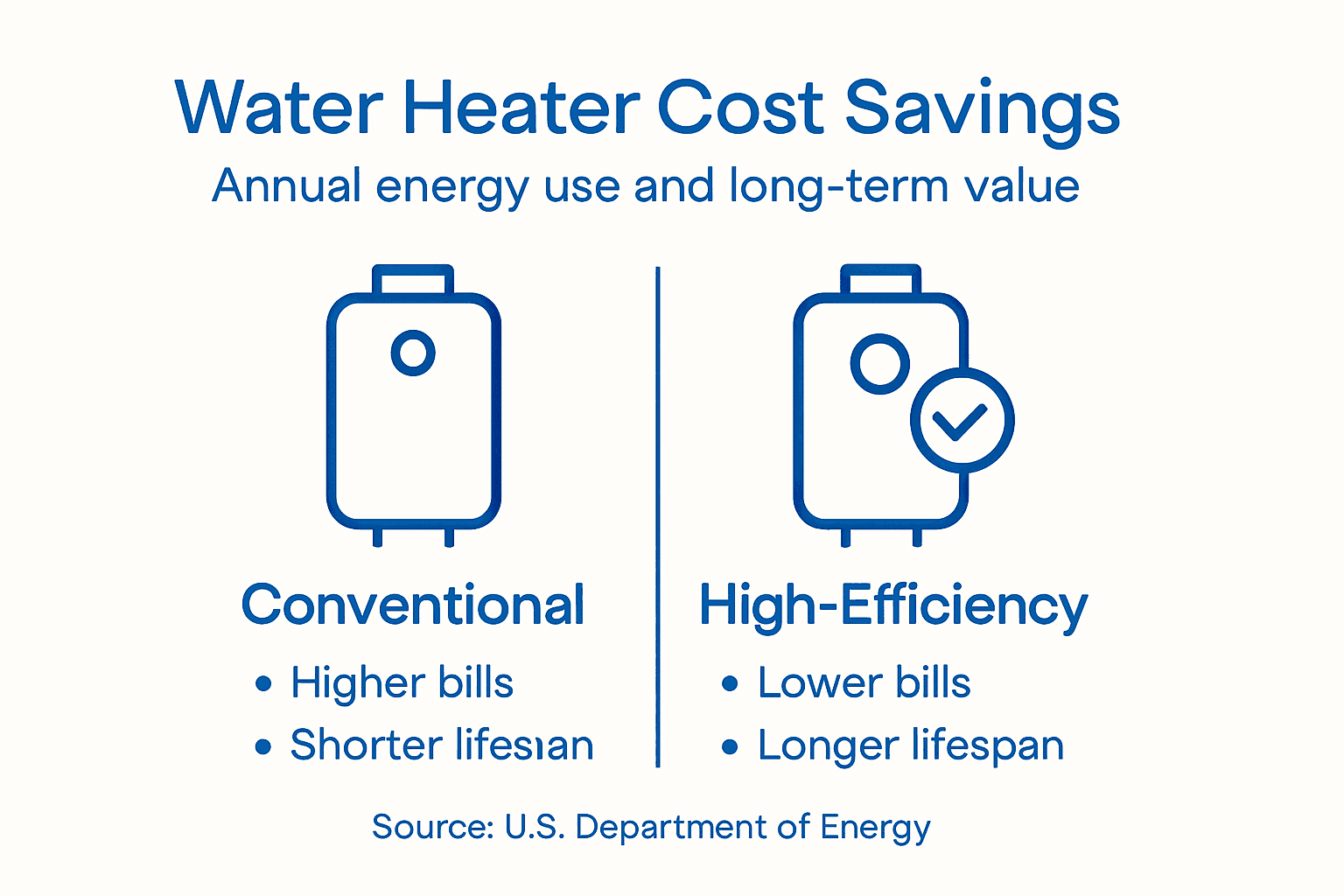
Beyond dollars and cents, high efficiency water heaters deliver value through reliability and longevity. Better insulation and refined components mean fewer repairs and longer operational life. Solar water heaters with backup systems offer protection against future rate increases. Tankless models eliminate the risk of tank failure and water damage entirely. If you’re buying a home with an older water heater, factor replacement into your purchase offer or budget planning. If you’re considering upgrading your current system, the long term value proposition supports making the leap.
The following table summarizes cost, savings, and payback for high efficiency vs. conventional water heaters:
Factor | Conventional Electric | Heat Pump Electric |
Upfront Cost | $400 - $800 | $1,200 - $2,000 |
Estimated Lifetime Savings | Minimal | Around $1,800 |
Energy Use Reduction | None | 50% less |
Payback Timeframe | Not applicable | 5 - 7 years |
Pro tip: Get quotes from at least two contractors for any water heater upgrade, as installation costs vary widely and impact your total payback timeline.
Common Installation Mistakes to Avoid
The difference between a water heater that performs flawlessly for 15 years and one that underperforms or fails prematurely often comes down to installation quality. Even the most advanced, efficient unit will disappoint you if it’s installed incorrectly. The mistakes happen frequently enough that experienced contractors see them repeatedly, and they’re preventable with proper planning and qualified labor. Understanding what goes wrong helps you ask the right questions when hiring someone to handle the work and protects your investment in an efficient system.
Incorrect sizing stands out as the most common installation error. Common installation mistakes include incorrect sizing of the water heater leading to inefficiency and insufficient hot water supply. Oversizing creates problems that many homeowners don’t anticipate. A tank that’s too large sits there heating water you’ll never use, cycling on and off repeatedly to maintain temperature, wasting energy the entire time. Undersizing creates the opposite frustration: you run out of hot water during morning showers because the system can’t keep up with demand. Proper sizing requires calculating your household’s peak hot water needs, which depends on simultaneous hot water usage and the temperature rise required for your incoming water. A qualified contractor determines this through a load calculation, not guesswork. For a family of four in Baldwin County, that might mean a 50 to 60 gallon tank, but your specific situation could warrant something different.
Poor placement and insulation represent secondary but significant mistakes. Installing a water heater in an uninsulated attic or garage in Alabama’s humid climate sets it up for efficiency loss and shortened lifespan. Long pipe runs from the heater to your bathrooms mean hot water sits in pipes cooling down before reaching the tap, wasting both energy and water. Inadequate insulation on the tank itself increases standby heat loss. Improper heat trap installation on inlet and outlet pipes allows hot water to drain backward through natural convection. Installation mistakes such as improper capacity selection, poor insulation, or incorrect placement can reduce energy efficiency and system longevity. These issues compound, turning a high efficiency system into a mediocre performer.
Improper venting and safety issues affect both performance and safety. Gas water heaters require adequate venting to remove combustion byproducts. Heat pump water heaters need adequate air circulation around the unit to extract heat from surrounding air. Blocking vents or installing the system in confined spaces prevents it from operating at rated efficiency. Some installers fail to install required relief valves or drain pans, creating potential safety hazards. Others skip pressure testing on gas lines or fail to verify electrical connections meet code. These aren’t cosmetic oversights. They create genuine safety risks and voided warranties.
When you’re hiring a contractor for a water heater installation, verify they’re licensed and insured, ask about their sizing methodology, and request references from recent installations. A qualified professional takes time to understand your household’s hot water usage patterns rather than simply replacing whatever size was there before. They explain their approach and can reference specific calculations for your situation. If a contractor’s estimate seems unusually low or they rush through sizing questions, that’s a warning sign worth heeding.
Pro tip: Request a written warranty covering both parts and labor, and ask the contractor to walk you through the first hour rating and daily operating costs so you understand what you’re getting.
Secure Your Home’s Future with a Trusted Water Heater Inspection
Choosing a high efficiency water heater is a smart step toward cutting energy costs and creating a more comfortable home environment. However, understanding the condition and performance of your current system or the one in a home you plan to buy is critical. At Trinity Home Inspections, we help homeowners and buyers in Baldwin, Mobile, and surrounding Gulf Coast Alabama areas identify hidden inefficiencies, aging equipment, and potential safety concerns before they become costly problems. Our InterNACHI-certified inspections include thorough assessments of water heaters using modern tools like thermal imaging to detect heat loss and system issues.

Don’t let an old or improperly installed water heater drain your budget or cause surprises after closing. Visit Trinity Home Inspections today to schedule your comprehensive home inspection. Benefit from same-day detailed reports, actionable insights about your water heater’s efficiency, and trusted advice on upgrades that fit your budget. Empower yourself with clarity and confidence before making one of the biggest investments of your life. Explore how our inspections can give you a true picture of your home’s energy efficiency and safety at our main site. When you buy, sell, or own a home in the Gulf Coast, choose a partner that cares about your peace of mind.
Frequently Asked Questions
What is a high efficiency water heater?
A high efficiency water heater is a system that uses significantly less energy to produce hot water compared to traditional models, utilizing advanced technologies like heat pumps to move heat rather than create it.
How do high efficiency water heaters save on energy costs?
High efficiency water heaters can cut energy consumption by up to 50% compared to conventional models, translating to substantial savings on monthly utility bills over their operational lifespan.
What are the different types of high efficiency water heaters available?
Types of high efficiency water heaters include heat pump water heaters, tankless water heaters, solar water heaters, and condensing gas water heaters, each offering different benefits and efficiencies.
How do I determine the right size for my water heater?
Proper sizing requires calculating your household’s peak hot water needs, based on simultaneous usage and the temperature rise required for incoming water. A professional contractor can help determine this through a load calculation.
Recommended
