
The Home Buying Process for First Time Buyers, Step by Step


Buying your first home follows a set order: check your finances, get preapproved, shop loans, hire an agent, find a home, make an offer, complete inspection and appraisal, clear underwriting, then close. Most first-time buyers finish in 4 to 8 months from start to keys, though a fast track in a low-inventory market can move quicker. Your first move today: pull your credit report, gather two years of tax returns and pay stubs, and check whether your state’s housing finance agency offers down payment help.
Financial prep and credit check
Mortgage shopping and preapproval
Agent selection and house hunting
Offer and negotiation
Inspection and appraisal
Underwriting and closing
Typical timeline: Freddie Mac data shows active house hunting alone averages around 8 weeks, but first-time buyers often need longer for financial prep before that search even starts.
Key Takeaways
The home buying process for first-time buyers moves through six sequential stages, and skipping preparation at any stage typically adds weeks to closing.
Point | Details |
Get preapproved before touring homes | A verified preapproval letter carries more weight with sellers than a prequalification estimate. |
Compare three Loan Estimates | Look at APR and Total Loan Costs, not just the advertised interest rate, to find real savings. |
Check state HFA assistance early | Down payment programs often provide $5,000 to $25,000 but require education courses and lead time. |
Attend your home inspection | Walking the property with your inspector helps you separate urgent repairs from minor maintenance. |
Choose Trinity Home Inspections for clarity | Same-day, thermal-imaging-included reports give buyers negotiating power before the closing deadline. |
Getting Your Finances Ready for the Home Buying Process for First Time Buyers
Lenders look at your debt-to-income ratio, or DTI, before anything else. Add up your monthly debts, divide by your gross monthly income, and you’ll see roughly where you stand. Most conventional loans want that number under 43%, though HUD-backed FHA loans sometimes stretch higher with strong compensating factors.
Your credit score comes next. Pull your report, dispute any errors you find, and pay down credit card balances for 60 to 90 days before applying. Small, consistent payments do more for your score than one big lump payment right before you apply.
Check your credit report for errors and dispute them immediately.
Calculate your DTI and compare it against lender thresholds.
Research your state’s housing finance agency for down payment assistance.
Build savings for earnest money, closing costs, and a reserve cushion.
State HFAs commonly offer assistance grants or forgivable loans between $5,000 and $25,000, though eligibility and funding vary widely by state and often require a homebuyer education course. Save separately for earnest money (often 1% to 3% of the purchase price), closing costs, and at least a small reserve fund for surprises after move-in.
What Loan Types Should First-Time Buyers Compare?
Fixed-rate conventional loans suit buyers who want payment stability for the long haul. Adjustable-rate mortgages fit shorter timelines but carry rate-change risk. FHA loans help buyers with lower credit scores or smaller down payments, VA loans serve eligible veterans with no down payment required, and USDA loans support rural purchases with reduced upfront costs.
Points, APR, and the Total Interest Percentage (TIP) tell you more than the advertised rate alone. The CFPB’s Loan Estimate breaks down these figures so you can compare lenders on equal footing.
Request written Loan Estimates from at least three lenders.
Compare Total Loan Costs and APR, not just the interest rate.
Ask each lender to itemize origination and processing fees.
Pro Tip: Two lenders quoting the same rate can have wildly different closing costs. Always compare Section J of the Loan Estimate, the Total Closing Costs line, side by side.
What Documents Do You Need for Mortgage Preapproval?
Preapproval carries far more weight than prequalification. Prequalification is a quick estimate based on numbers you report; preapproval means a lender has verified your income, assets, and credit. Sellers take preapproved offers seriously.
Gather 30 days of pay stubs and two years of W-2s or tax returns.
Pull two to three months of bank and asset statements.
Get a written preapproval letter, noting it typically expires in 30 to 90 days.
Avoid opening new credit accounts, financing a car, or changing jobs until after closing.
Underwriters recheck your credit and employment right before closing, so any financial shake-up during escrow can delay or derail your loan.
How Do You Find the Right Agent and Home?
Look for an agent who regularly works with first-time buyers and knows your target neighborhoods well. Ask how many transactions they closed in the past year and how they handle multiple-offer situations.
Separate your must-haves (bedrooms, school district, commute) from your nice-to-haves.
Set up automated listing alerts so you see new inventory the day it hits the market.
Tour homes on a consistent schedule rather than reacting one listing at a time.
Ask your agent how local inventory levels are shaping offer strategy right now.
In tight markets, homes move fast and buyers sometimes waive contingencies to compete. In slower markets, you’ll have more room to negotiate repairs and price after inspection.
What Goes Into a Strong Purchase Offer?
Your offer includes price, earnest money deposit, financing terms, and a proposed closing date. Earnest money typically runs 1% to 3% of the purchase price and gets held in escrow as a good-faith deposit toward your down payment.
Set your offer price using recent comparable sales, not the listing price alone.
Include an inspection contingency, letting you renegotiate or exit based on findings.
Include an appraisal contingency, protecting you if the home appraises below the offer price.
Include a financing contingency, protecting your earnest money if your loan falls through.
Waiving contingencies can strengthen a competitive offer, but it also shifts real risk onto you. Talk through the trade-offs with your agent before removing any protection.
Inspection vs. Appraisal: What’s the Difference?
The home inspection and the appraisal serve two completely different purposes, and confusing them costs buyers real money. You hire the inspector to evaluate the home’s condition. Your lender orders the appraisal to confirm the home’s market value supports the loan amount.
Inspection: paid by you, focused on systems, safety, and function.
Appraisal: ordered by the lender, focused on comparable market value.
Both typically happen in the two to three weeks after your offer is accepted.
Common inspection findings like roof damage, electrical issues, or moisture problems can shift the entire negotiation. HUD’s homebuying guidance treats the inspection step as one of the core protections in the process, right alongside shopping for a loan and making an offer.
Pro Tip: After inspection, you generally have four paths: ask the seller to make repairs, request a credit at closing, renegotiate the price, or walk away if your contingency allows it. Choose based on repair cost estimates, not emotion.
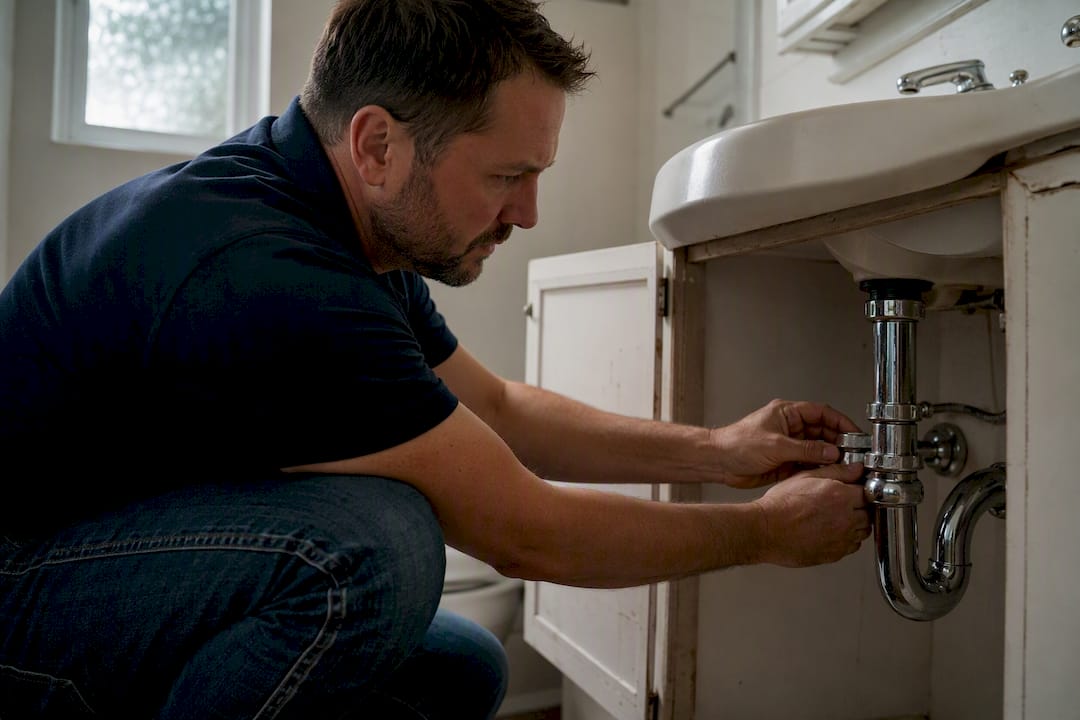
What Should You Expect During a Professional Home Inspection?
A thorough inspection covers far more than a walk-through with a flashlight. At Trinity Home Inspections, every inspection includes roof access when it’s safe to walk; FAA-licensed drone footage is used when it isn’t. Thermal imaging spots hidden moisture and missing insulation that a visual check alone would miss, and moisture meters confirm suspected leaks before they become expensive repairs.
Ask the inspector if you can attend and walk the property with them.
Ask what tools they use, including thermal imaging and gas or CO detectors.
Ask how quickly you’ll receive photos, video, and a written report.
Ask which findings are safety issues versus minor maintenance items.
A same-day, color-coded report separates DIY and minor items from real safety and structural concerns, so you know within hours what actually needs negotiating and what can simply go on your future maintenance list.
Trinity’s house inspection checklist gives buyers a system-by-system breakdown to reference against their own report.
What Happens During Underwriting and Closing?
Underwriters verify your income, assets, employment, and credit one more time before final approval. Delays usually trace back to unexplained bank deposits, last-minute credit changes, or missing documentation, so respond to lender requests fast.
Receive your Closing Disclosure at least three business days before closing.
Compare every line against your original Loan Estimate for discrepancies.
Confirm wire instructions by phone, using a known number, never a number from an email.
Bring certified funds or confirm your wire cleared before signing.
Closing costs typically run 2% to 5% of the loan amount, covering lender fees, title insurance, recording fees, and prepaid taxes or insurance. Wire fraud targeting closings has become common enough that title companies now warn every buyer to verify instructions independently.
How Long Does Each Stage Actually Take?
Phase | Typical Duration |
Financial prep and credit cleanup | 1 to 3 months |
Preapproval and active house hunting | 4 to 8 weeks |
Accepted offer to closing | 30 days |
Complete documents and quick lender responses shorten your timeline.
Last-minute credit changes or incomplete paperwork stretch it out.
Start your state HFA application early since processing adds time.
A Local Note on Buying with Confidence
Buying your first home should feel exciting, not confusing. I’ve watched plenty of first-time buyers walk into an inspection nervous about what we’d find, and walk out relieved because they finally understood their home instead of just hoping for the best. That clarity, delivered the same day, is the whole point.
— Matt
Get a Clear Picture Before You Close
Trinity Home Inspections gives first-time buyers something most inspection companies don’t: same-day, color-coded reports that separate real safety concerns from small maintenance items, at no extra charge for thermal imaging.
[

Instead of guessing what a repair estimate should look like or waiting days for a report while your contingency clock runs out, you get photos, video, and drone roof footage the same day, so you can negotiate with facts instead of assumptions. Every inspection includes InterNACHI-certified evaluation, FAA-licensed drone roof views when access is limited, and a trusted contractor list for any repairs you decide to pursue. Buyers can also pair their inspection with a property and deed search to confirm ownership history and permits before closing.
What’s included:
Same-day, searchable digital report with high-quality photos and video
Free thermal imaging on every inspection
Color-coded priorities: DIY/Minor, Issues/Defects, Safety/Major
Optional add-ons: sewer scope, mold testing, indoor air quality sampling
Call 251-210-7376 or visit Trinityinspectionsllc to schedule your inspection and get the clarity you need before you sign anything.
Where to Verify Program Details and Official Forms
HUD’s homebuying guidance outlines every federal step from affordability to closing.
The CFPB’s Home Loan Toolkit explains how to read Loan Estimates and Closing Disclosures line by line.
California Housing Finance Agency shows one example of how state HFA down payment assistance is structured.
Trinity’s first-time buyer guide walks through where inspections fit into your overall purchase timeline.
Sources
FAQ
What Are the Steps for a First-Time Buyer?
The core sequence is financial preparation, mortgage preapproval, agent selection and house hunting, making an offer, inspection and appraisal, then underwriting and closing, as outlined by HUD.
What Are the Rules for a First-Time Home Buyer?
Most federal and state programs define a first-time buyer as someone who hasn’t owned a primary residence in the past three years, which determines eligibility for many assistance programs.
How Long Does the Entire Process Take?
Most first-time buyers need 4 to 8 months from financial prep to closing, though a fast-moving market can shorten that window.
Can I Attend My Own Home Inspection?
Yes, and reputable inspectors, including Trinity Home Inspections, welcome it. Attending lets you ask questions in real time and understand which findings actually matter for negotiation.
What If the Inspection Finds Problems?
You typically have four options: request repairs, ask for a closing credit, renegotiate the price, or withdraw your offer if your contingency allows it.
Recommended