
Red Flags When Buying a House: What to Check Before You Sign


Six findings should stop you before you sign anything: active foundation movement, water intrusion or mold, unsafe electrical wiring, major roof failure, sewage backups, and a seller who refuses to allow an inspection. If you spot any of these during a showing or an inspection, don’t waive your inspection contingency and don’t skip the specialist follow-up. Nearly 86% of home inspections turn up at least one issue, so finding something isn’t the alarm. Finding one of these six is.
The goal isn’t to scare you off every older home or every property with a cracked driveway. It’s to help you tell the difference between a $200 fix and a $20,000 gamble.
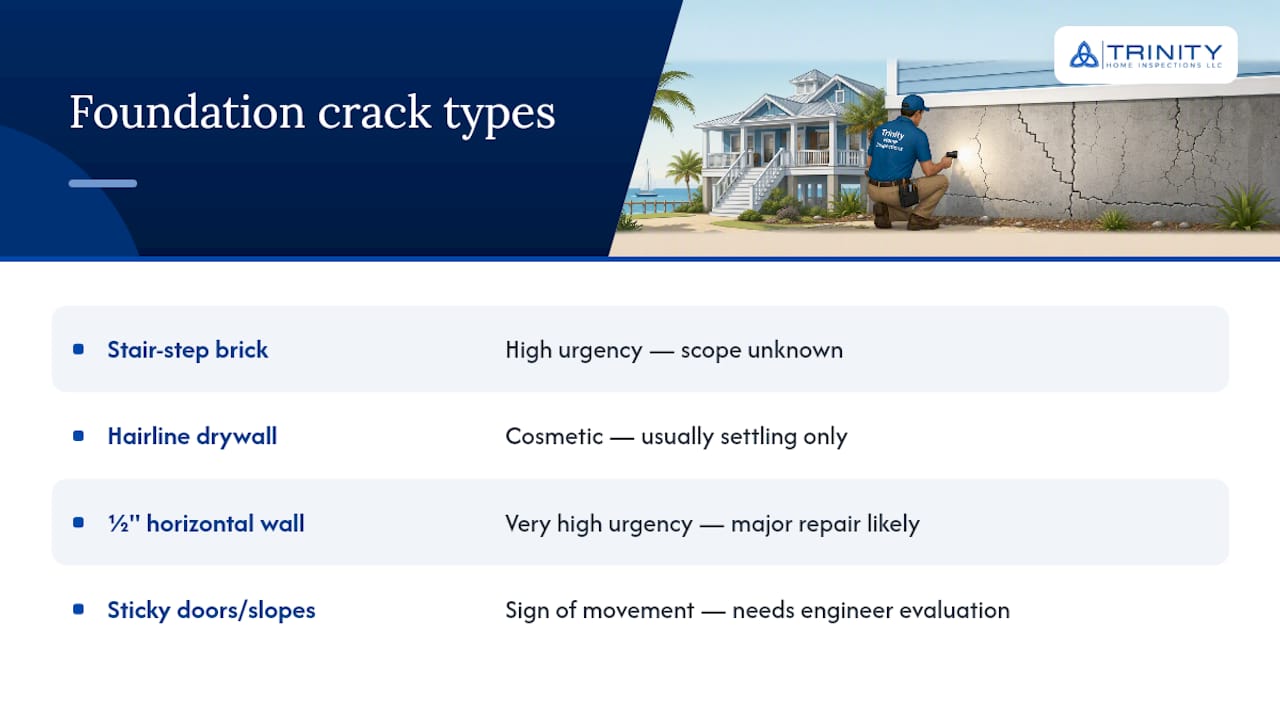
Foundation movement — stair-step cracks, horizontal cracks wider than a quarter inch, or sloping floors
Active water intrusion or mold — fresh staining, musty odors, or visible growth in crawlspaces and basements
Unsafe electrical systems — outdated panels, exposed wiring, or DIY work without permits
Major roof failure — sagging decking, widespread missing shingles, or a roof past its expected lifespan
Sewage or sewer line backups — slow drains throughout the house, sewage odor, or old clay pipe with tree-root intrusion
Seller refuses inspection access — this alone should end the conversation before you go further
Keep your inspection contingency in the contract, hire a qualified home inspector, and bring in a specialist for anything that falls outside general home inspection standards.
Key Takeaways
Trustworthy home inspections separate immediate deal-breakers, like foundation movement and active water intrusion, from negotiable maintenance items you can budget around later.
Point | Details |
Know the six deal-breakers | Foundation movement, water intrusion, unsafe wiring, roof failure, sewage backups, and inspection refusal warrant a hard stop. |
Most findings are minor | About 86% of inspections turn up an issue, but severity matters more than quantity. |
Verify before you negotiate | Get specialist estimates from a structural engineer, electrician, or roofer before asking for repairs or credits. |
Check title and disclosures | Pull a preliminary title report and compare seller disclosures against what the inspection actually finds. |
Hire a credentialed inspector | Trinity Home Inspections is InterNACHI certified, fully insured, and includes thermal imaging on every inspection. |
This article is general information, not a substitute for advice from a qualified financial advisor. Consult a qualified financial professional about your own circumstances before acting on anything here.
Major Red Flags When Buying a House, System by System
A home can look move-in ready and still be hiding six-figure problems behind fresh paint. The trick is knowing which systems tend to hide the expensive stuff, and what the visible clues actually mean. Foundation and structural movement, roof deterioration, plumbing leaks, and outdated electrical systems are among the most common reasons homes fail inspection, and each one carries a different level of urgency.
Structural and foundation issues top the list because the repair scope is often unknown until an engineer digs in. Stair-step cracks in brick, horizontal cracks in poured concrete, doors and windows that stick or won’t latch, and visibly sloping floors all point toward foundation movement. A hairline vertical crack in drywall is usually cosmetic settling. A half-inch horizontal crack in a foundation wall is a different animal entirely, and it’s the kind of thing our foundation warning signs guide breaks down in more detail.
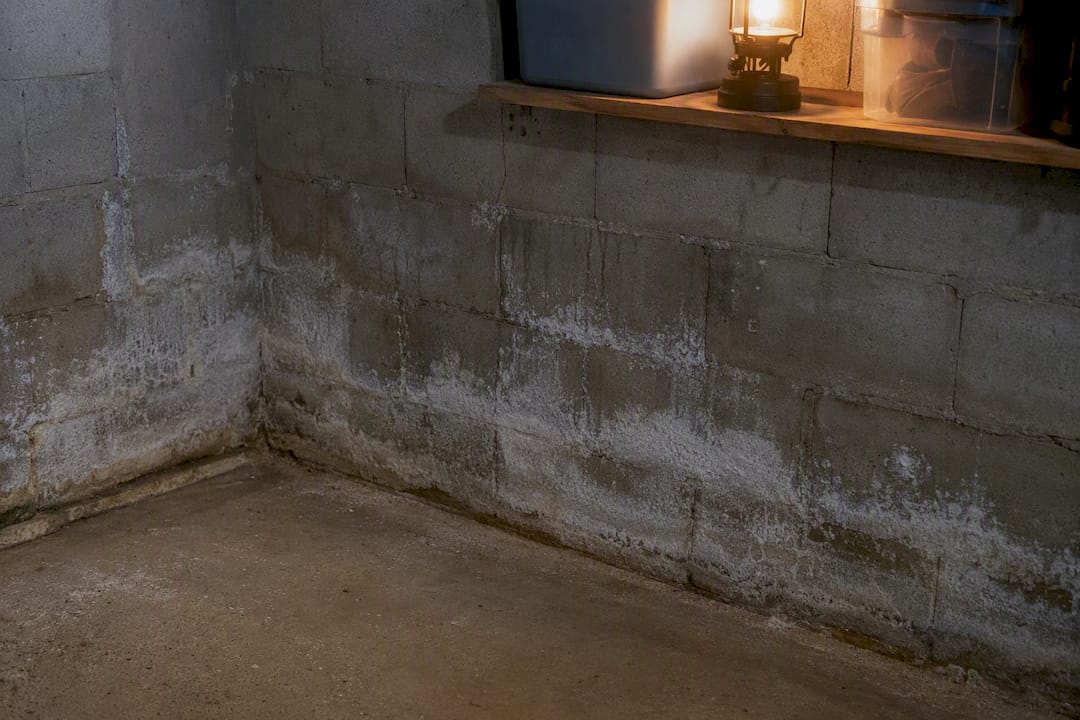
Water and drainage problems rarely show up as a flood. They show up as a faint water line on drywall, powdery white efflorescence on basement block, a musty smell that the seller’s candles can’t quite cover, or grading that slopes toward the house instead of away from it. Left alone, water intrusion becomes a mold problem, and mold problems become expensive ones.
Roof condition depends heavily on age and material. Ask when it was last replaced. Curling or missing shingles, granule buildup in the gutters, sagging roof decking, and failed flashing around chimneys or vents are all signs the roof is near or past its service life. If you want a deeper checklist before you commit to a full replacement estimate, this roof red-flag guide is worth a look.
Electrical hazards are one of the more dangerous categories because they’re not always visible without opening a panel. Federal Pacific or Zinsco panels, double-tapped breakers, aluminum branch wiring, and exposed splices outside a junction box are all things a licensed electrician should evaluate, not just a home inspector’s visual check.
Plumbing red flags include low water pressure, visible pipe corrosion, and a rotten-egg or sewage smell near drains. Sewer line problems are notorious for surfacing only after closing, especially in homes with old clay pipe or mature trees near the main line.
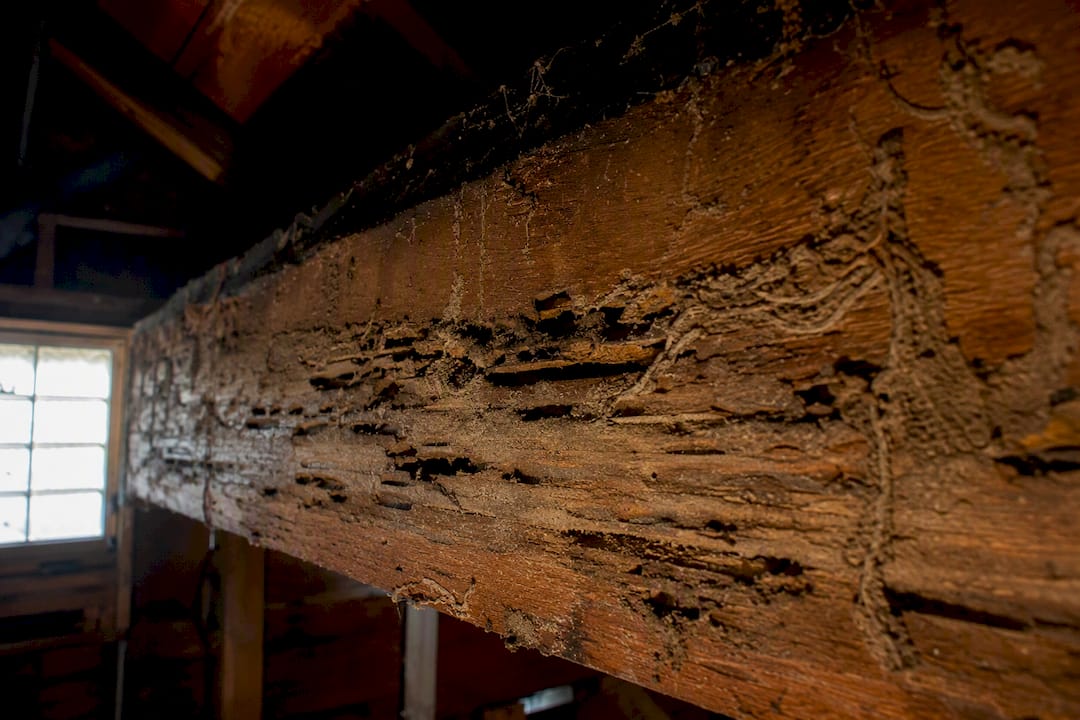
Pests and termite damage compromise structural wood over time, and many lenders require a clear termite letter before closing, especially in the Gulf South where termite pressure is high year-round.
Age of major systems matters just as much as their current function. An HVAC system, water heater, or roof nearing the end of its expected lifespan will affect your budget and possibly your homeowners insurance eligibility, even if it’s technically still working today.
Cosmetic camouflage deserves its own mention. Fresh paint on one wall, new carpet in only one room, or furniture pushed against a wall for no obvious reason can be hiding a stain, a crack, or a repair the seller doesn’t want you to notice.
Neighborhood and HOA concerns round out the list. A cluster of vacant or poorly maintained homes nearby, restrictive HOA rules, or pending zoning changes won’t show up on an inspection report, but they can affect resale value and daily quality of life for years.
Pro Tip: Ask your inspector to walk the roof, not just view it from a ladder. A boots-on inspection catches soft decking and loose flashing that a ground-level look misses entirely.
What to Do When an Inspection Turns Up a Red Flag
Finding a problem doesn’t automatically mean walking away. It means slowing down and verifying what you’re actually dealing with.
Request records first. Ask the seller for permits, past repair invoices, and warranty documents on any system in question.
Bring in a specialist. A structural engineer, licensed electrician, roofer, or sewer camera technician can confirm the scope and cost far more precisely than a general inspection alone.
Get written estimates, not verbal ballparks, so you have real numbers for negotiation.
Decide your negotiation path: ask the seller to complete repairs before closing, request a credit, or set up an escrow holdback for work that can’t be finished in time.
Check financing and insurance impacts. Some lenders won’t fund a loan on a home with an active roof leak or unpermitted electrical work, and some insurers won’t write a policy until it’s resolved. Our guide to inspection findings that delay insurance approval covers this in more depth.
Most inspections turn up at least one issue, so don’t panic at a long punch list. The real skill is triage: separate the $150 GFCI outlet fix from the $15,000 foundation repair with unknown scope. If the estimate range is wide, the specialist is hedging, or the fix touches the home’s structure, sewer line, or electrical service, that’s usually when walking away makes more sense than negotiating. For details on how repair negotiations typically play out, our repair guide for buyers and sellers walks through the process step by step.
Choosing an Inspector Who Actually Protects You
Not every inspection is created equal, and the quality of your inspector directly affects how well protected you are. Zillow recommends confirming an inspector’s credentials, insurance, and asking for a sample report before you hire them, and we agree completely, because a vague report full of generic checkboxes doesn’t give you much to negotiate with.
Look for these credentials as a baseline:
InterNACHI certification, recognized through the International Association of Certified Home Inspectors’ Standards of Practice
Errors & Omissions and general liability insurance, ideally well above state minimums
FAA drone certification, for safe roof documentation when walking the roof isn’t possible
Ongoing annual education, since building materials and code references keep changing
A thorough inspection should include a same-day report loaded with photos and video, thermal imaging to catch hidden moisture or missing insulation, moisture meter readings, and carbon monoxide or gas leak checks where applicable. If an inspector rushes through the home, won’t let you tag along, or can’t produce insurance proof, treat that as its own red flag.
A clear, well-organized report that separates safety issues from cosmetic ones is what turns an inspection into real negotiating leverage. If the sample report you’re shown is vague or disorganized, the real one probably will be too.
Quick Showing Checklist for Spotting Red Flags in Person
You don’t need a clipboard to catch the obvious stuff during a 15 minute walkthrough.
Walk the perimeter and check grading, gutters, downspouts, and any visible foundation cracks.
Run the faucets, flush the toilets, and open the electrical panel door to look for obvious rust or burn marks.
Sniff for musty or sewage odors, and look for patches of new paint that seem oddly placed.
Peek into the attic or crawlspace if it’s accessible, watching for staining, gaps in insulation, or droppings.
Pay attention to how the seller or agent behaves. Evasive answers about past leaks or restricted access to certain rooms are behavioral red flags worth noting.
Title and Ownership Issues Buyers Often Overlook
A home can pass every physical inspection and still come with a legal mess attached. Liens from unpaid contractors, old tax debt, or a previous divorce settlement can attach to a property and follow it to a new owner if they aren’t cleared before closing. Boundary disputes with neighbors, easements you didn’t know existed, and unclear chain of ownership from inherited properties are all things a title search is designed to catch.
Title insurance protects you against most of these issues, but it doesn’t replace due diligence upfront. Ask your closing attorney or title company for a preliminary title report early in the process, not the week before closing, so there’s time to resolve anything unusual. A property record search through your local county can also reveal permit history and prior ownership transfers worth reviewing before you get too attached to a house. This is exactly the kind of groundwork that pairs well with a full inspection, since a clean structural report doesn’t mean much if the title itself is clouded.
If a seller seems reluctant to produce a clear title or keeps deflecting questions about liens, treat that hesitation the same way you’d treat a refused inspection request. It’s a signal to slow down, not speed up.
When Pricing Behavior Itself Is the Warning Sign
Some red flags have nothing to do with the house and everything to do with how it’s being sold. A price set noticeably below comparable homes in the area can mean a motivated seller, or it can mean the seller already knows about a problem and is pricing it in before you find out. Pressure tactics like artificial bidding wars, deadlines that seem designed to rush your decision, or an agent who discourages you from getting an independent inspection all deserve scrutiny.
Watch for language in the listing itself. Phrases like “sold as-is, no exceptions” or “seller will not make repairs” aren’t automatically dealbreakers, but combined with an unusually aggressive price or a compressed offer window, they suggest the seller expects buyers to skip their due diligence. A confident seller with nothing to hide rarely objects to a reasonable timeline or a standard inspection contingency.
Compare the listing price against recent comparable sales yourself rather than relying solely on your agent’s summary. If a home is priced well under similar properties nearby with no obvious explanation like a smaller lot or dated finishes, ask why directly. Sometimes the answer is simple. Sometimes it points straight to one of the structural or systems issues covered earlier in this guide.
What a History of Price Cuts and Repeat Buyers Tells You
A property that’s been relisted multiple times, or one that’s fallen out of contract with more than one buyer, is trying to tell you something. Public listing history through most real estate platforms shows days on market and prior price changes, and a pattern of repeated reductions often means either the home is overpriced for its condition or previous buyers walked away after an inspection revealed something the current listing doesn’t mention.
It’s not always bad news. Sometimes a deal fell through over financing, a contingency on the buyer’s own home sale, or a change in personal circumstances unrelated to the property. But a home that’s gone under contract and back on the market two or three times deserves a direct question to the listing agent: why did the previous deals collapse? Agents are bound by disclosure rules in most states regarding material defects, and a straightforward question sometimes gets a more candid answer than the listing history alone provides.
Treat a long time on market with multiple price drops as a prompt for extra due diligence, not an automatic pass. Order your inspection, ask pointed questions about prior offers, and factor the pattern into your negotiating position rather than your final decision alone.
Gaps in Seller Disclosures Are Their Own Red Flag
Most states require sellers to complete a disclosure form covering known material defects, but “known” is the operative word. A disclosure that lists nothing at all, especially on an older home, is often more suspicious than one with a few honest items noted. Every house has something worth mentioning, and a blank form can mean the seller genuinely doesn’t know, or it can mean they’re choosing not to look too closely.
Compare the disclosure against what your inspector actually finds. If the inspection turns up an obviously old repair, a patched roof leak, or evidence of a past mold remediation that wasn’t disclosed, that discrepancy matters even if the current condition looks fine. It tells you something about how forthcoming the seller has been throughout the process, and it may open the door to negotiation or, in some cases, legal recourse after closing depending on your state’s disclosure laws.
Ask your agent directly whether the seller has lived in the home or if it’s a rental or inherited property, since owners with less direct experience with the house often have thinner disclosures. Cross-reference the disclosure against permit records where available. A renovation that shows up in county permit history but not on the disclosure form is worth a direct conversation before you move forward.
Environmental Hazards That Don’t Announce Themselves
Mold, radon, and asbestos share one thing in common: none of them are obvious from a standard walkthrough. Mold often hides behind walls or under flooring where past water intrusion occurred, and a musty smell is sometimes the only clue before a swab test confirms it. Radon is colorless and odorless, and it’s a leading cause of lung cancer risk in homes with unmitigated levels, which is why a short-term radon test is a routine add-on in many regions regardless of the home’s age.
Asbestos shows up most often in homes built before the 1980s, typically in old flooring tile, pipe insulation, or textured ceiling finishes. It’s not automatically dangerous if it’s undisturbed and in good condition, but any planned renovation that would disturb those materials changes the calculation significantly.
None of these hazards are dealbreakers by default. What matters is testing before closing rather than guessing, and building remediation costs into your negotiation if something comes back positive. A qualified inspector can often flag conditions that warrant testing, even when testing itself falls outside the standard inspection scope.
Why Most Buyers Focus on the Wrong Red Flags
The conventional advice on house hunting spends too much time on cosmetic warning signs and not enough on the ones that actually cost money. Buyers fixate on outdated kitchens and dated carpet while walking past a hairline foundation crack without a second thought, mostly because dated finishes are easy to picture fixing and structural problems are not.
What the research actually supports is a simpler filter: prioritize anything with an unknown repair scope over anything with a known one. A cracked driveway has a knowable cost. A foundation crack does not, until an engineer opens it up. That distinction should drive where your attention and your negotiating leverage go, not the size of the punch list.
I’d also push back on the idea that a long inspection report means a bad house. Nearly 86% of inspections find something, and most of it is minor. The buyers who end up regretting a purchase usually aren’t the ones who found problems. They’re the ones who never looked closely enough to find them in the first place.
— Matt
Trinity Home Inspections: Same-Day Answers Before You Sign
If you’re standing in a home wondering whether that crack in the garage floor is nothing or something, you don’t have to guess, and you shouldn’t have to wait days for an answer either. Trinity Home Inspections delivers a same-day, photo and video rich report, so you’re making your decision with real information while the contingency clock is still running, not after it’s too late to act.
[

What’s included with every inspection:
Same-day digital report with high-resolution photos and video
Free thermal imaging to catch hidden moisture and insulation gaps
Moisture meter readings and carbon monoxide and gas leak detection
FAA-certified drone roof inspections when walking the roof isn’t safe
Optional add-ons like sewer scope camera inspections and mold testing
We’re InterNACHI certified, carry insurance well above Alabama’s minimum requirements, and we welcome you to walk the entire inspection with us. If you’d like a property record or permit history pulled alongside your inspection, our real estate property and deed search service covers Baldwin, Mobile, and Escambia counties. Call 251-210-7376 or visit Trinityinspectionsllc to schedule your inspection before your contingency window closes.
Sources
FAQ
What Is the Number One Red Flag When Buying a House?
Active foundation movement, such as stair-step brick cracks or sloping floors, tops most inspectors’ concern list because the repair scope is often unknown until a structural engineer evaluates it.
Is a House Sold Many Times a Red Flag?
Frequent resales or repeated price drops aren’t automatically a dealbreaker, but they warrant direct questions to the listing agent about why previous deals fell through before you make an offer.
How Do I Know if a Crack Is Serious or Just Cosmetic?
Hairline vertical cracks in drywall are usually cosmetic settling, while horizontal cracks, stair-step patterns in brick, or cracks wider than a quarter inch often signal foundation movement worth a specialist review.
Should I Still Buy a House if the Inspection Finds Issues?
Not necessarily a reason to walk away. Most inspections turn up at least one issue, and the right response is usually negotiation, not automatic cancellation, unless the finding is a structural, electrical, or water intrusion deal-breaker.
What Should I Do if the Seller Refuses an Inspection?
Treat it as a serious warning sign and consider walking away, since a seller unwilling to allow a standard inspection is often signaling they already know something they’d rather you not find.
Recommended