Pay at Closing Home Inspection – Buyer Impact Explained

Updated: Oct 9

Thinking about buying your first home in Baldwin County can feel overwhelming, especially when it comes to understanding inspection payments and closing costs. Managing your budget is often a top concern, and choosing a pay at closing home inspection may offer real flexibility during this exciting but stressful process. By learning how this payment method changes both your upfront expenses and your final negotiations, you can move forward with confidence and avoid last-minute surprises before you get the keys.
Table of Contents
Key Takeaways
Point | Details |
Pay at Closing Concept | A pay at closing home inspection allows buyers to defer inspection fees until closing, integrating them into closing costs for financial flexibility. |
Buyer Responsibilities | Homebuyers must ensure clear communication and documentation with inspectors and lenders regarding payment arrangements. |
Qualification Criteria | To qualify, buyers need an approved mortgage, inspection contingency, and compliance with specific lender conditions. |
Legal and Documentation Risks | Buyers should maintain thorough records and obtain written agreements to avoid potential legal pitfalls and transaction delays. |
What Is Pay at Closing Home Inspection
A pay at closing home inspection is a specialized service that allows homebuyers to defer their home inspection payment until the final closing of their real estate transaction. Unlike traditional inspection models where buyers pay immediately after the service, this approach integrates the inspection fee directly into the closing costs, offering financial flexibility during the home purchase process.
The core concept of pay at closing involves several key characteristics:
The home inspection fee is rolled into the overall closing costs
Payment is delayed until the property’s final settlement
Reduces upfront out-of-pocket expenses for homebuyers
Typically requires prior agreement between the inspector and buyer
Home closing costs can include multiple components, and incorporating the inspection fee into this process provides several strategic advantages. By integrating the inspection payment with other transaction expenses, buyers can manage their immediate financial resources more effectively.
Homebuyers should understand that while this payment method offers convenience, it requires careful documentation and clear communication with both the home inspector and the mortgage lender. Paid Outside of Closing (POC) processes highlight the importance of transparent financial arrangements to ensure smooth transaction processing.
Here is a comparison of traditional home inspection payments versus pay at closing payments:
Feature | Traditional Payment | Pay at Closing Payment |
Payment Timing | Immediately after service | At final closing |
Upfront Cash Needed | Required | Often not required |
Impact on Buyer’s Cash Flow | Reduces cash reserves | Preserves cash for purchase |
Closing Paperwork Complexity | Minimal | May require extra documentation |
Lender Involvement | Not involved | Must be notified/approve |
Pro tip: Always confirm the specific payment terms and get written agreement about the pay at closing arrangement before scheduling your home inspection to avoid potential misunderstandings.
How the Process Works for Alabama Buyers
In Alabama, the pay-at-closing home inspection process follows a structured workflow that provides buyers with flexibility and protection during their real estate transaction. Home inspection regulations ensure that buyers receive comprehensive property evaluations before finalizing their purchase, with specific guidelines governing how inspections are conducted and paid for.
The typical process for Alabama buyers involves several key steps:
Select a licensed home inspector
Schedule the inspection during the contract’s contingency period
Coordinate payment method (traditional or pay at closing)
Review detailed inspection report
Negotiate repairs or adjust purchase terms if needed
Buyers have multiple payment options when working with home inspectors in Alabama. Home buying support recommends understanding all financial arrangements before closing, including how inspection fees will be handled.
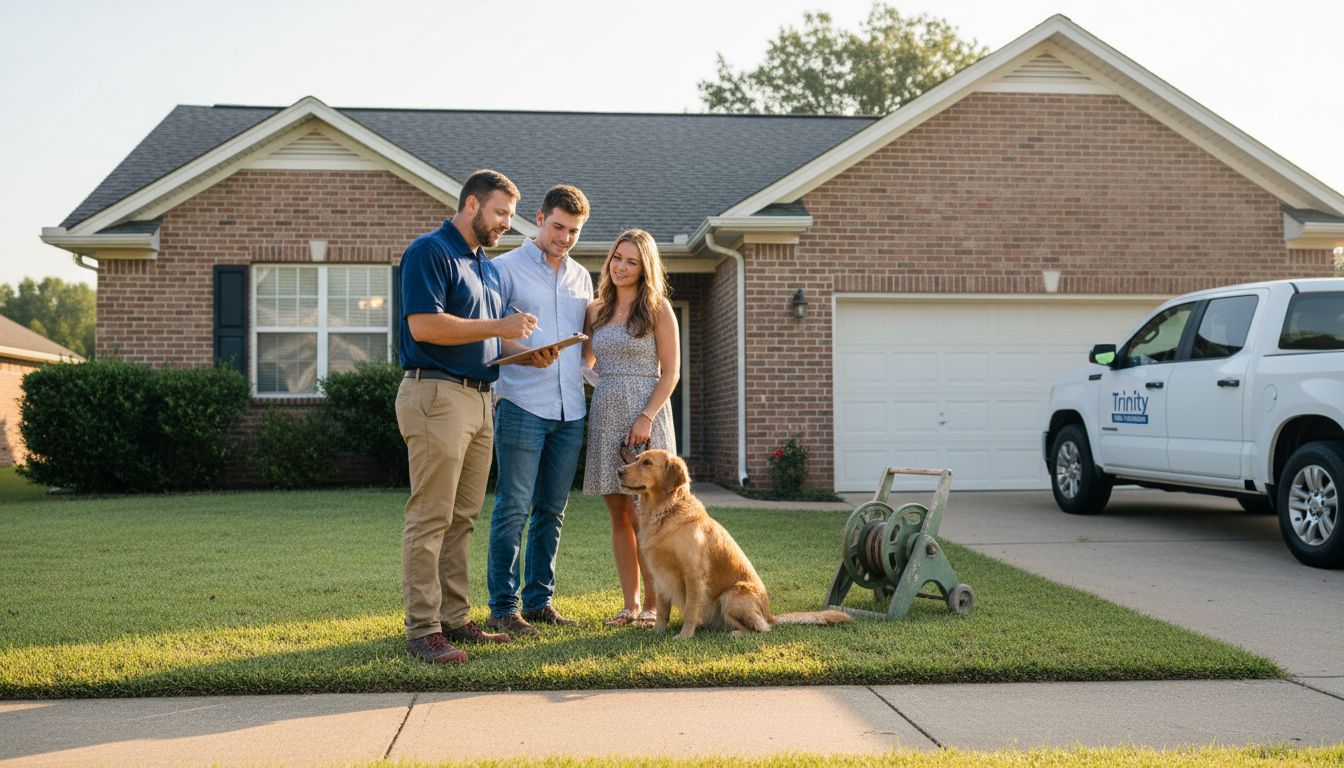
Alabama-specific considerations for pay at closing home inspections include verifying that the mortgage lender approves this payment method and ensuring all documentation is properly prepared. Some lenders may have specific requirements about how inspection fees are integrated into the closing costs.
Pro tip: Request a written agreement from your home inspector that clearly outlines the pay at closing terms to prevent any misunderstandings during the transaction.
Key Benefits and Drawbacks to Know
The pay at closing for home inspection approach plays out in specific ways across Gulf Coast Alabama real estate deals, and the details matter more than generic pros and cons.
Here’s how it benefits buyers in real transactions:
Cash stays available at closing: Buyers moving to Baldwin or Mobile County often need funds for moving costs, utility deposits, and first repairs, so deferring the inspection fee keeps more cash on hand at the table.
Fewer upfront payments to track: Rolling the inspection fee into closing costs means one fewer invoice to pay separately during an already paperwork-heavy week.
Negotiating leverage stays intact: Because the inspection happens before closing, findings can still support a repair credit or price adjustment even though the fee itself isn’t due yet.
In a typical scenario, an inspection turns up an issue such as aging roof flashing or a minor plumbing leak. The seller may agree to a repair credit at closing so the buyer can handle the fix after taking possession, rather than delaying the sale for repairs to be completed first, a practice detailed by AL.com’s explanation of pay at closing inspections. That credit gets documented alongside the pay-at-closing inspection fee on the same settlement statement.
Drawbacks show up mostly in documentation and timing:
Repair credit paperwork stacks up: When a seller repair credit and a deferred inspection fee both need to appear on the closing disclosure, the settlement agent has more line items to reconcile correctly.
Lender sign-off adds a step: Some lenders require written confirmation that the inspection fee deferral won’t affect the loan’s closing cost limits before they’ll approve the file.
Last-minute changes cause delays: If a repair credit amount shifts after the final walkthrough, both the credit and the inspection fee may need to be re-disclosed, pushing the closing date.
Southeastern states handle these same negotiations through standard practice rather than separate rules: Florida, Georgia, and Mississippi purchase contracts generally allow seller credits for repairs identified in inspection reports, with the credit amount capped by what the buyer’s loan program permits for seller contributions. Buyers relocating across state lines should expect the same core mechanics, just confirm local contract forms and lender caps before assuming identical terms.
Pro tip:Obtain written documentation from your home inspector and mortgage lender that explicitly outlines the pay at closing inspection terms, and get any repair credit amount in writing before the final walkthrough.
Who Qualifies and What Lenders Require
Baseline requirements that apply across loan types include:
Approved mortgage application: Underwriting must be far enough along that the lender can confirm final loan terms.
Purchase contract with inspection contingency: The contract needs to spell out the inspection period and how fees will be handled.
Sufficient credit score and documented income: Standard underwriting checks that apply to the loan regardless of inspection payment method.
Acceptable debt-to-income ratio: Confirmed before the lender will sign off on any deferred fee arrangement.
Each loan type adds its own layer:
Loan Type | Inspection-Related Requirement | What to Verify |
FHA | Property must meet HUD minimum property standards for habitability and safety | Ask your lender whether pay-at-close fees count toward FHA closing cost limits |
VA | Property must pass VA Minimum Property Requirements in addition to a standard inspection | Confirm the VA appraisal and inspection are scheduled separately, since VA rules address the appraisal, not the inspection fee timing |
Conventional | Lender discretion applies; pay-at-close is more often allowed when the inspection report shows no major structural or safety issues | Request the lender’s specific threshold for what counts as a major issue, per consumer finance guidance on closing disclosures |
Closing cost disclosures list every inspection-related fee, so reviewing that document closely is the clearest way to confirm how your lender is handling the arrangement.
Use this checklist before assuming you qualify:
Confirm your loan type’s rule: FHA and VA loans hinge on property condition standards; conventional loans hinge more on lender discretion.
Ask about closing cost caps: Some loan programs limit total seller or lender credits, which can affect whether a deferred inspection fee fits within those limits.
Get the lender’s answer in writing: A short email confirming the pay-at-close arrangement is approved protects you if questions come up later.
Check for geographic lender variation: The same loan type can carry different inspection-fee policies from one lender or region to the next, so never assume a prior transaction’s terms carry over.
Pro tip:Request a detailed written explanation from your lender about their specific requirements for your loan type (FHA, VA, or conventional) before scheduling the inspection, to avoid transaction delays.
Make Pay-at-Closing Home Inspections Easy with Trinity Home Inspections
Navigating the complexities of a pay at closing home inspection can be stressful. You want clear protections for your investment without upfront cash strain. At Trinity Home Inspections, we understand these challenges and provide InterNACHI-certified inspections that give you the clarity to proceed confidently. Our same-day photo and video-rich reports, including free thermal imaging, ensure you get actionable insights that protect your home purchase and your wallet.
Whether you need thorough roof inspections with FAA drone technology or detailed reports to satisfy your lender’s requirements, Trinity offers trustworthy, faith-based professionalism across Baldwin, Mobile, and the Gulf Coast Alabama area. Avoid surprises, streamline your closing process, and preserve your cash flow all while trusting an inspected home backed by certified expertise.
Secure your home inspection with a company that values integrity, transparency, and your peace of mind. Visit Trinity Home Inspections today to schedule your service and learn how our detailed inspection process supports Alabama homebuyers choosing pay at closing options. Get the confidence you deserve and make your next home decision with certainty.
Explore how our professional inspections align with your homebuying needs here: Trinity Home Inspections, Home Inspection Benefits, and Contact Us.
Frequently Asked Questions
What is a pay at closing home inspection?
A pay at closing home inspection allows homebuyers to defer the inspection payment until the final closing of their real estate transaction, rolling the fee into the overall closing costs.
What are the benefits of using a pay at closing home inspection?
The main benefits include reduced upfront out-of-pocket expenses, enhanced financial management during the home purchase, and simplified transaction paperwork.
What does the process involve for buyers selecting a pay at closing inspection?
The process typically involves selecting a licensed home inspector, scheduling the inspection during the contract’s contingency period, coordinating the payment method, and reviewing the inspection report to negotiate repairs if necessary.
Are there any drawbacks to pay at closing home inspections?
Potential drawbacks include additional documentation requirements, the need for lender approval, and the risk of complications if the payment terms are not clearly documented and communicated.
Recommended