
Pool Inspection Checklist For Gulf Coast Homebuyers

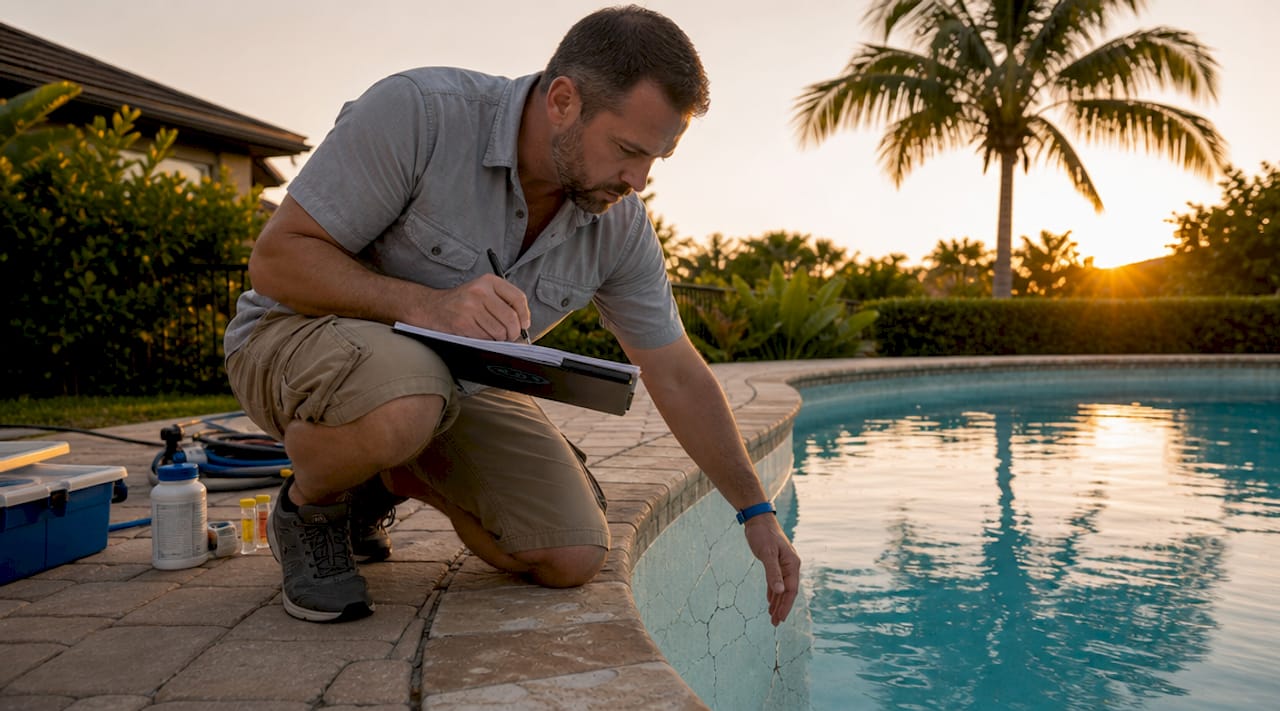
A pool inspection checklist for Gulf Coast homebuyers is a structured pre-purchase evaluation covering the pool shell, mechanical equipment, plumbing, electrical systems, safety barriers, and water chemistry before closing. In the Gulf Coast Alabama market, from Gulf Shores and Orange Beach to Daphne and Fairhope, pools face salt air corrosion, UV degradation, and shifting sandy soils that accelerate wear far faster than inland properties. A standard home inspection covers pool equipment only visually, which means hidden defects routinely go undetected. Dedicated pool inspections can save buyers between $1,400 and over $20,000 in post-closing repair costs. Knowing exactly what to check before you sign protects your investment, your family, and your negotiating position.
1. What a Gulf Coast pool inspection checklist actually covers
A pre-purchase pool evaluation is the industry term for what most buyers call a pool inspection checklist. It goes well beyond a visual walkthrough and includes operational testing of every major system. The six core areas are structural integrity, mechanical equipment, plumbing and circulation, electrical and bonding, safety barrier compliance, and water chemistry. Each area carries distinct risk on the Gulf Coast because of the regional climate and soil conditions. Understanding what falls under each category helps you ask the right questions before you hire an inspector and before you make an offer.
Licensed home inspectors operate under standards that limit pool checks to visual observations, meaning they do not run heaters under load, pressure test plumbing lines, or measure salt cell amperage. That limitation is not a flaw in the inspector. It is simply outside the scope of a general home inspection. For Gulf Coast buyers, that gap matters because the most expensive pool defects are the ones you cannot see from the deck.
2. Structural and surface checks every buyer should make
The pool shell is the foundation of everything else. Cracks in the shell, delaminating plaster, loose tile, and damaged coping are the most visible signs of structural trouble, and they are also the most expensive to repair if left unaddressed. On the Gulf Coast, sandy and expansive soils cause settling that stresses pool shells differently than clay-heavy inland soils. A crack that looks cosmetic may indicate ongoing movement beneath the deck.
Key structural items to evaluate:
Shell cracks: Hairline cracks in plaster are common and often cosmetic. Cracks that run through the shell wall or follow a pattern across the floor indicate structural movement and require engineering review.
Interior finish condition: Rough, pitted, or stained plaster surfaces suggest the finish is near the end of its lifespan. Replastering typically costs $5,000 to $10,000 depending on pool size.
Tile and coping: Loose, missing, or cracked tile along the waterline is a sign of freeze-thaw stress or settling. Coping stones that rock or show gaps allow water intrusion behind the shell.
Pool deck: Look for cracking, uneven sections, and poor drainage slopes. Trip hazards and standing water near the pool are both safety and structural concerns.
Salt and UV damage: Coastal air accelerates surface oxidation on exposed concrete and stone. Chalky, flaking, or discolored deck surfaces near the waterline often indicate salt-driven deterioration.
Pro Tip: Ask the seller when the pool was last resurfaced. Most plaster finishes last 10 to 15 years. If the pool is approaching or past that window, budget for resurfacing as a negotiation point or a near-term expense.
3. Pool equipment inspection: what to test and why
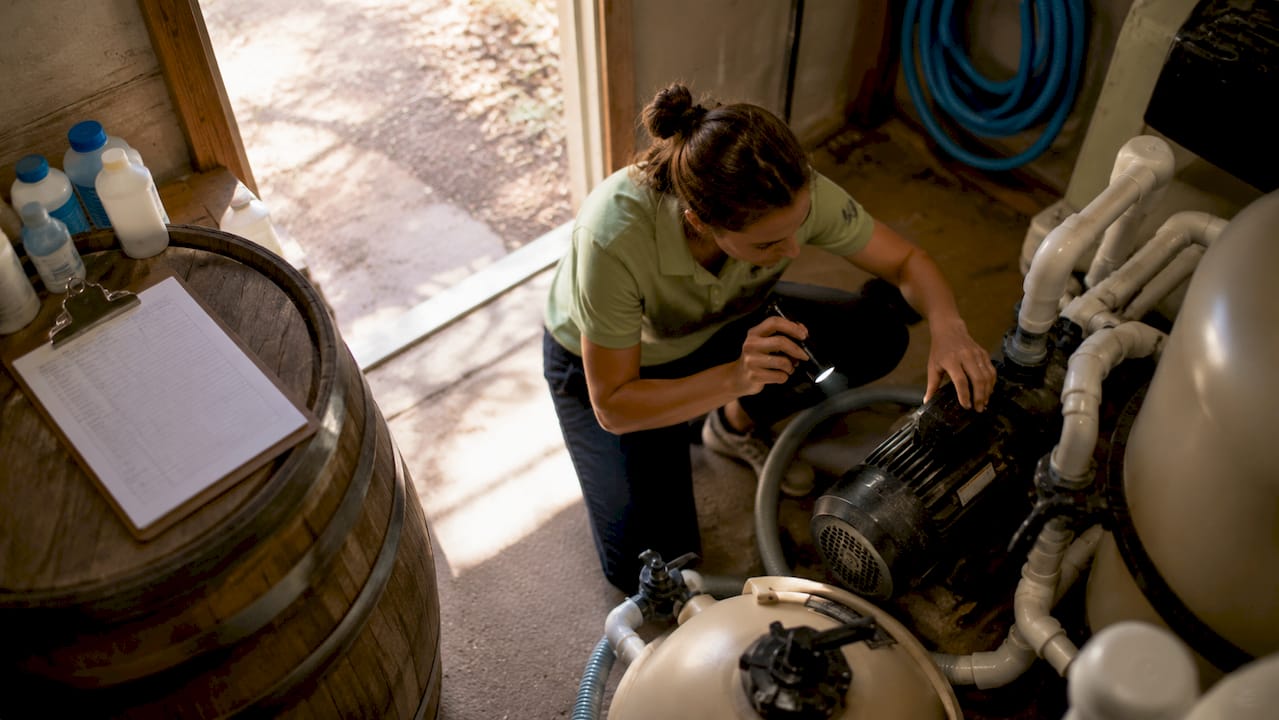
Pool equipment is where the most expensive surprises hide. A Gulf Coast pool inspection that skips operational testing of the pump, filter, heater, and salt system is not giving you the full picture. Dedicated inspectors perform pump bearing analysis, heater load firing, salt cell amperage measurement, and calibrated water chemistry testing. Each of those tests reveals information a visual check simply cannot.
Equipment checklist for buyers:
Pump motor: Run the pump and listen for grinding, humming, or vibration. These sounds indicate bearing wear. Check the pump housing for cracks and the shaft seal for dripping water.
Filter system: Identify whether the pool uses a sand, cartridge, or diatomaceous earth (DE) filter. Check the pressure gauge reading. A pressure more than 10 psi above the clean baseline means the filter needs service or replacement.
Heater: Gas and heat pump heaters should fire under full load during inspection. Look for corrosion on the heat exchanger, burner tray rust, and proper venting. Coastal salt air accelerates heater corrosion significantly.
Salt chlorinator: If the pool uses a salt system, the salt cell should be tested for amperage output. A cell producing below its rated amperage is near the end of its useful life. Salt cells typically last three to five years and cost $300 to $700 to replace.
Automation and controls: Verify that any smart automation panel, timers, and remote controls operate correctly. Outdated or non-functional automation systems add cost and inconvenience.
Department of Energy compliance: Pool pump motors manufactured after 2021 must meet Department of Energy variable-speed efficiency standards. Single-speed pumps on older pools may require replacement under local utility or code requirements.
Pro Tip: Request maintenance records for all equipment. A pump with no service history and visible corrosion on the motor housing is a red flag regardless of how it sounds during a brief test run.
4. Plumbing, water circulation, and leak detection
Pool plumbing is almost entirely underground, which makes it the hardest system to evaluate and the most expensive to repair when something goes wrong. Visual inspection alone will not find a slow leak in a buried return line. Pressure testing suction and return lines is the only reliable method for detecting sub-surface leaks before closing. This test involves isolating each line and applying air or water pressure to confirm it holds without dropping.
What to check in the plumbing and circulation system:
Skimmers: Inspect skimmer baskets, lids, and throat openings for cracks. A cracked skimmer body is a common leak source and costs $300 to $800 to replace.
Return fittings: Look for white calcium deposits or staining around return fittings. These deposits often indicate a slow leak at the fitting connection.
Main drain covers: Confirm that main drain covers are secured and meet Virginia Graeme Baker Act anti-entrapment standards. Loose or missing covers are a safety violation.
Autofill valve: If the pool has an autofill system, ask the seller about recent water usage. Unusually high water bills or a constantly running autofill valve are strong indicators of a leak.
Deck and soil conditions: Sinking deck sections, soft spots near the pool equipment pad, or persistent dampness in the surrounding soil all suggest underground water loss. The Gulf Coast water table is high, which can complicate leak detection and repair costs.
Cleaner lines: Dedicated cleaner suction lines should be pressure tested alongside main plumbing. These lines run under the deck and are a common failure point on pools more than ten years old.
Cross-referencing the seller’s water bills with the autofill usage history is one of the most underused tools in a homebuyer pool checklist. A pool that loses more than a quarter inch of water per day beyond normal evaporation has a leak. In Gulf Coast summer conditions, evaporation alone can account for a quarter to half inch per day, so context matters.
5. Electrical safety and code compliance
Pool electrical systems carry life-safety consequences that no other part of the inspection matches. Faulty bonding, missing GFCI protection, or damaged underwater wiring create electrocution risks that are invisible to the eye. Every Gulf Coast homebuyer needs to verify these systems before closing, not after.
Safety feature | What to verify | Consequence if missing |
GFCI protection | All outlets within 20 feet of water must be GFCI-protected | Shock or electrocution risk; code violation |
Pool bonding | Continuous bonding wire connecting all metal components | Voltage gradients in water; serious injury risk |
Underwater lighting | No water intrusion in fixture housing; proper wet-rated wiring | Shock hazard; costly fixture replacement |
Safety fence | Minimum 48-inch height with self-closing, self-latching gate | Drowning liability; code-compliant fencing required |
Gate hardware | Latch must be on pool side and out of child reach | Child access risk; local ordinance violation |
Non-compliant pool safety barriers including fences and self-closing gates can cost thousands to fix after purchase, making early identification critical for negotiation. In Baldwin and Mobile counties, local codes align with International Residential Code requirements for pool barriers, and violations discovered after closing become the buyer’s financial responsibility.
Inspect the bonding wire visually where it connects to the pump motor, light niches, and any metal ladders or handrails. Corrosion at these connection points is common in coastal environments and indicates the bonding system needs professional evaluation. A licensed electrician should verify continuity if any connections look compromised.
6. Water chemistry testing and what the numbers reveal
Pool water chemistry is a direct report card on how well the pool has been maintained. The key parameters are pH, free chlorine, total alkalinity, calcium hardness, and cyanuric acid (CYA). Each one affects swimmer safety, equipment longevity, and surface condition. Calibrated reagent test kits, not pool store test strips, are the standard for accurate pre-purchase readings.
Key chemistry indicators:
pH: The target range is 7.4 to 7.6. Low pH corrodes metal equipment and irritates skin. High pH reduces chlorine effectiveness and causes scale buildup.
Free chlorine: Should read between 1 and 3 ppm. Readings below 1 ppm indicate chronic under-chlorination and possible algae or bacterial growth.
Total alkalinity: The target range is 80 to 120 ppm. Low alkalinity causes pH to swing wildly, stressing surfaces and equipment.
Calcium hardness: Ideal range is 200 to 400 ppm. Low calcium causes water to leach calcium from the plaster, accelerating surface deterioration.
Cyanuric acid (CYA): A CYA level above 100 ppm chemically locks the pool, rendering chlorine ineffective and requiring an immediate drain and refill costing approximately $600. This is one of the most overlooked negotiation points in a pre-purchase pool evaluation.
Pro Tip: Bring a calibrated reagent test kit to the showing or ask your inspector to test water chemistry on-site. A pool with green tint, visible algae, or heavy scale buildup is telling you the maintenance history has been inconsistent, and the equipment has likely suffered for it.
Staining on the pool floor and walls also tells a story. Brown or rust-colored stains indicate metal contamination, often from corroding equipment or well water. Black stains suggest black algae, which is notoriously difficult to eradicate. Both conditions add remediation cost to your post-purchase budget.
Key takeaways
A thorough Gulf Coast pool inspection covers six systems: structure, equipment, plumbing, electrical, safety barriers, and water chemistry, and each one carries real financial risk if skipped before closing.
Point | Details |
Structural checks matter most | Shell cracks, delaminating plaster, and deck settling are the costliest repairs and must be evaluated before closing. |
Equipment needs operational testing | Visual checks miss pump bearing failure, heater corrosion, and low-output salt cells that cost hundreds to thousands to replace. |
Plumbing requires pressure testing | Underground leaks are invisible without pressure testing suction and return lines; high water bills are the only surface clue. |
Electrical safety is non-negotiable | Missing GFCI protection, faulty bonding, and non-compliant fencing create liability and safety risks that become the buyer’s problem after closing. |
Water chemistry reveals maintenance history | CYA above 100 ppm requires a $600 drain and refill; staining and algae signal chronic neglect that affects equipment lifespan. |
What I’ve learned after inspecting Gulf Coast pools that buyers almost missed
I have walked pool decks from Orange Beach to Mobile where the seller’s disclosure said “pool in good working order” and the reality told a completely different story. The most common pattern I see is a pool that looks clean and runs during the showing but has a pump motor that is weeks from failure, a salt cell producing half its rated output, and a skimmer with a hairline crack that has been slowly losing water for two years.
The buyers who come in with a detailed homebuyer pool checklist and a dedicated pool inspection add-on are the ones who close with confidence. The buyers who rely on a general home inspection alone are the ones who call me six months later asking why their pool equipment pad is sinking. Standard home inspections are not designed to catch these issues. That is not a criticism. It is just the reality of scope.
What I tell every Gulf Coast buyer is this: the pool is often the most expensive system on the property after the structure itself. Treat it that way. Schedule your pool inspection 7 to 14 days before closing so you have time to negotiate repairs within your inspection contingency period. A detailed report with photos, equipment readings, and chemistry results gives you real leverage. A verbal “it looks fine” gives you nothing.
The Gulf Coast climate is hard on pools. Salt air, intense UV, and sandy soils create conditions that age equipment and surfaces faster than most sellers realize or disclose. That is not a reason to avoid buying a home with a pool. It is a reason to inspect it properly before you do.
— Matt
Schedule your Gulf Coast pool inspection with Trinity Home Inspections
[
Trinity Home Inspections provides dedicated pool and spa inspection add-ons for homebuyers across Baldwin, Mobile, Escambia, and surrounding Gulf Coast Alabama counties. Every pool inspection includes operational equipment testing, water chemistry readings, safety barrier evaluation, and a same-day photo and video report with color-coded findings. You will know what is urgent, what can wait, and what to budget for before you close. Before signing, verify the pool’s permit history with a permit and deed search to confirm the pool was legally built and inspected. Schedule your inspection today at TrinityInspectionsLLC.com or call 251-210-7376.
FAQ
What does a pool inspection checklist include?
A pre-purchase pool evaluation covers the pool shell, interior finish, deck, mechanical equipment, plumbing, electrical systems, safety barriers, and water chemistry. Each area is tested operationally, not just observed visually.
How much does a Gulf Coast pool inspection cost?
Pool inspection costs range from approximately $150 for a basic check to $400 to $600 for a comprehensive pool inspection that includes equipment testing and detailed reporting. The cost is minor compared to the potential repair savings.
When should I schedule a pool inspection before closing?
Schedule your pool inspection 7 to 14 days before closing to allow enough time to negotiate repairs within a typical 10 to 15 day inspection contingency period.
Can a standard home inspection replace a dedicated pool inspection?
No. Licensed home inspectors are limited to visual observations and do not perform operational tests like heater load firing or plumbing pressure testing. A dedicated pool inspection is the only way to detect hidden defects before closing.
What pool safety features are required by code in Gulf Coast Alabama?
Pool safety barriers must meet International Residential Code requirements, including a minimum 48-inch fence height, self-closing gates, and self-latching hardware positioned on the pool side of the gate. Non-compliant barriers require remediation at the buyer’s expense after closing.
Recommended