
Seller Disclosure Laws – How They Impact Alabama Home Sales


Selling your home in Baldwin or Mobile County often means facing tough questions about your property’s past and present condition. Alabama law brings unique rules, so understanding what you must legally reveal is crucial for avoiding costly surprises. By highlighting the importance of seller disclosure, this guide helps homeowners confidently share property details, minimize risks, and build trust with potential buyers in the local real estate market.
Table of Contents
Key Takeaways
Point | Details |
Seller Disclosure Is Essential | Sellers in Alabama must disclose known property defects to ensure informed buyer decisions and avoid future legal disputes. |
Disclosure Categories Are Comprehensive | Key areas of disclosure include structural integrity, major home systems, environmental hazards, and legal considerations. |
Legal Obligations Vary by State | Alabama’s “buyer beware” principle means that disclosure requirements differ from those in many other states, sometimes making disclosures voluntary. |
Proactive Practices Reduce Risks | Conduct pre-sale inspections and maintain thorough documentation to build buyer trust and reduce the likelihood of disputes after the sale. |
What Is Seller Disclosure in Real Estate?
Seller disclosure represents a critical legal protection that ensures transparency during property transactions across Alabama. Legal obligations for sellers require homeowners to reveal any known defects or issues with their property before completing a sale, helping potential buyers make informed decisions.
At its core, seller disclosure is a formal process where property owners must provide comprehensive information about the property’s condition, history, and potential problems. This documentation typically covers several key areas:
Structural issues with the home
Known environmental hazards
Past water damage or flooding
Electrical or plumbing system problems
Presence of pest infestations
Any ongoing legal disputes related to the property
The purpose of these disclosures goes beyond simple transparency. Seller disclosure statements protect both buyers and sellers by establishing a clear record of the property’s condition at the time of sale. By mandating honest reporting, these documents help prevent future legal disputes and provide buyers with critical information about their potential investment.
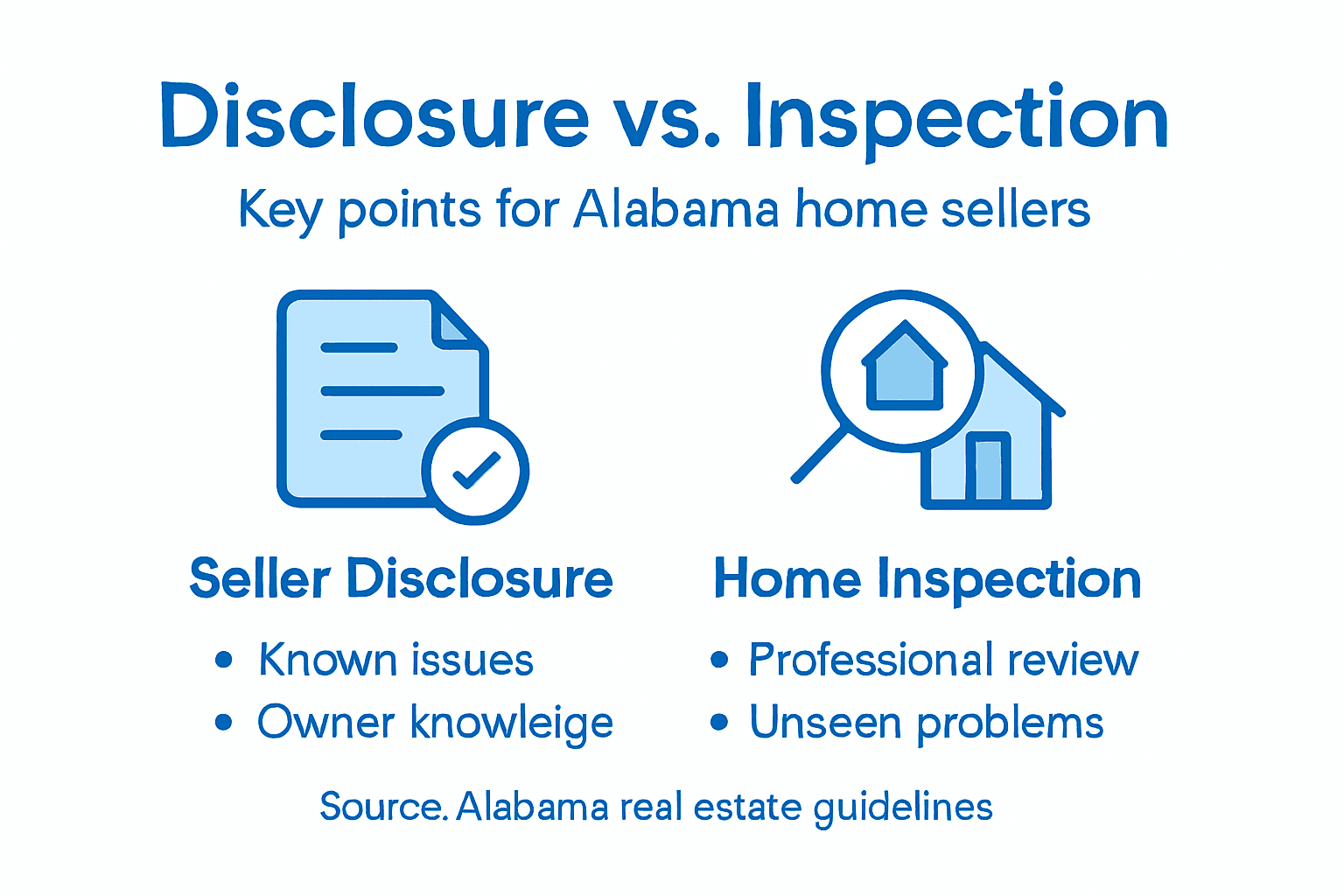
It’s important to understand that seller disclosures are not exhaustive home inspections. These documents represent the seller’s personal knowledge about the property and should not replace professional evaluations. Buyers are still encouraged to conduct their own comprehensive home inspections to uncover any additional issues not disclosed by the seller.
Here’s how seller disclosure compares to a professional home inspection in real estate transactions:
Aspect | Seller Disclosure | Professional Inspection |
Source of Information | Seller’s own knowledge | Licensed inspector’s findings |
Legal Requirement | Required in specific scenarios | Typically buyer’s choice |
Detail Level | Summarized facts by the seller | In-depth, technical evaluation |
Liability for Omissions | Seller can be held liable | Inspector has limited liability |
Ideal Usage | Initial understanding of property | Confirm condition before purchase |
Pro tip: Always request and carefully review the complete seller disclosure document before finalizing any real estate transaction, and consider consulting with a local real estate professional who understands Alabama’s specific disclosure requirements.
Types of Property Information Sellers Disclose
In Alabama real estate transactions, sellers are legally obligated to provide comprehensive details about their property’s condition and history. Material defects that impact property value represent the core of these disclosure requirements, ensuring potential buyers understand exactly what they are purchasing.
The disclosure process covers multiple critical categories of property information:
Structural Integrity
Foundation issues
Roof damage or leaks
Wall or ceiling structural problems
Major Home Systems
HVAC functionality
Electrical system conditions
Plumbing system performance
Environmental Hazards
Asbestos presence
Radon levels
Lead paint
Microbial growth areas
Property History
Previous flooding incidents
Pest infestation records
Water damage history
Legal Considerations
Boundary disputes
Easement restrictions
Ongoing property liens
Real estate professionals understand that comprehensive property disclosures extend beyond physical conditions. They must also reveal potential stigmatizing events that might impact a buyer’s decision, such as previous deaths on the property or significant criminal activities that could affect the property’s perceived value.
Sellers are expected to provide honest, complete information based on their personal knowledge. This means disclosing both current and past issues that could materially affect the property’s desirability or market value. While sellers are not required to conduct extensive investigations, they must truthfully report any known issues discovered during their ownership.
Pro tip: Maintain detailed documentation of all property repairs, improvements, and known issues to ensure a comprehensive and legally compliant seller disclosure.
Alabama Seller Disclosure Requirements Explained
Alabama’s real estate market operates under a unique legal framework known as caveat emptor, or “buyer beware” principle. Complex disclosure rules create a nuanced environment where sellers have specific legal obligations that differ from many other states.
Under Alabama law, sellers are not universally required to disclose every property defect. However, several critical exceptions exist that mandate disclosure:
Mandatory Disclosure Scenarios
Health or safety-threatening defects
Material defects directly questioned by buyers
Defects discovered through fiduciary relationships
Known structural or environmental hazards
Federal Disclosure Requirements
Lead-based paint disclosures for homes built before 1978
Asbestos and other environmental hazard notifications
Known microbial growth or water damage history
Seller disclosure practices in Alabama remain complex, with sellers typically choosing to provide voluntary disclosure forms. While not legally mandated in all circumstances, these forms serve as a critical protection mechanism for both buyers and sellers, helping to prevent potential future legal disputes.
The nuanced nature of Alabama’s disclosure laws means sellers must carefully navigate their legal obligations. Knowingly concealing significant defects that could impact health, safety, or property value can still result in legal liability, even under the caveat emptor principle. Transparency remains the best approach for sellers seeking to protect themselves during real estate transactions.
The table below summarizes Alabama’s unique seller disclosure obligations versus general U.S. expectations:
Topic | Alabama | Most Other States |
General Disclosure Law | Caveat emptor applies | Mandatory disclosure laws |
Required Disclosure Form | Often voluntary | Usually statutory forms |
Key Exceptions | Health/safety, direct inquiry | Nearly all material defects |
Failure to Disclose Risks | Liability in certain cases | Broader legal liability |
Pro tip: Consult with a local real estate attorney to understand the specific disclosure requirements that apply to your unique property situation.
Legal Risks and Liabilities for Sellers
Sellers in Alabama face significant potential legal consequences when they fail to properly disclose property defects. Legal claims from nondisclosure can result in serious financial and legal repercussions that extend far beyond the initial real estate transaction.
The potential legal risks for sellers who deliberately or negligently withhold property information include:
Direct Financial Consequences
Monetary damages to compensate buyers
Cost of necessary property repairs
Potential attorney’s fees
Court-ordered contract rescission
Legal Action Types
Fraud claims
Misrepresentation lawsuits
Breach of disclosure obligations
Intentional concealment charges
Failure to disclose material defects can expose sellers to substantial legal vulnerability, even when properties are marketed “as-is.” Courts consistently interpret disclosure requirements broadly, emphasizing the seller’s obligation to reveal known issues that could materially impact the property’s value or habitability.

Importantly, legal liability extends beyond just the seller. Real estate agents and brokers involved in the transaction may also face potential legal consequences if they were aware of undisclosed defects. This means multiple parties could be held responsible for intentional or negligent nondisclosure, creating a complex legal landscape for property transactions.
Pro tip: Document all known property conditions and consult with a real estate attorney to ensure comprehensive and legally compliant disclosure before listing your property.
Essential Tips for a Smoother Home Sale
Successful home sales in Alabama require strategic preparation and transparent communication. Proactive seller strategies can significantly reduce potential legal risks and streamline the transaction process for both parties.
Key strategies for ensuring a smoother home sale include:
Pre-Sale Preparation
Conduct a professional home inspection
Address minor repairs proactively
Gather maintenance documentation
Organize property history records
Disclosure Best Practices
Be honest about known property issues
Document all disclosed information
Provide clear, comprehensive details
Answer buyer questions transparently
Legal and Professional Support
Consult a real estate attorney
Work with experienced real estate agents
Understand local disclosure requirements
Maintain open communication channels
Effective home sale strategies emphasize transparency and thorough documentation. By anticipating potential buyer concerns and proactively addressing them, sellers can build trust and reduce the likelihood of post-sale disputes.
Navigating the complexities of Alabama’s real estate market requires a strategic approach. Professional home inspections, comprehensive documentation, and transparent communication can transform a potentially stressful transaction into a smooth, successful experience for both buyers and sellers.
Pro tip: Schedule a pre-listing home inspection to identify and address potential issues before marketing your property, giving you a competitive advantage in the real estate market.
Ensure Clarity and Confidence with Professional Home Inspections in Alabama
Navigating the complexities of seller disclosure laws in Alabama can be stressful. With the state’s unique caveat emptor principle and specific disclosure exceptions, it is crucial to have a clear understanding of your property’s condition before selling or buying. Trinity Home Inspections offers expert InterNACHI-certified inspections designed to uncover hidden issues using advanced tools like thermal imaging and FAA-licensed drone roof inspections. This thorough approach helps sellers disclose accurately and buyers negotiate confidently.
Ready to avoid surprises and protect your investment? Visit Trinity Home Inspections to schedule your professional home inspection today. Learn more about the importance of thorough inspections and how we provide you with same-day detailed reports that empower smart, informed decisions in Baldwin, Mobile, and the surrounding Gulf Coast areas. Don’t wait—experience peace of mind that only comes from trusted, transparent inspections.
Frequently Asked Questions
What is seller disclosure in real estate?
Seller disclosure is a legal requirement for property owners to reveal any known defects or issues with their property before completing a sale, ensuring transparency and allowing buyers to make informed decisions.
What information must sellers disclose in Alabama?
Sellers must disclose known structural issues, environmental hazards, past water damage, pest infestations, and any ongoing legal disputes related to the property, among other critical details.
What are the legal risks for sellers who fail to disclose defects?
Sellers may face financial consequences, legal action such as fraud claims or misrepresentation lawsuits, and potential liability if they knowingly withhold information about material defects that affect the property’s value or safety.
How does seller disclosure differ from a professional home inspection?
Seller disclosure is based on the seller’s personal knowledge and is a summary of issues, while a professional home inspection provides a detailed, technical evaluation of the property’s condition by a licensed inspector.
Recommended