
DIY <$50 or Pay Hundreds: Remove Moss From Asphalt Shingles Safely

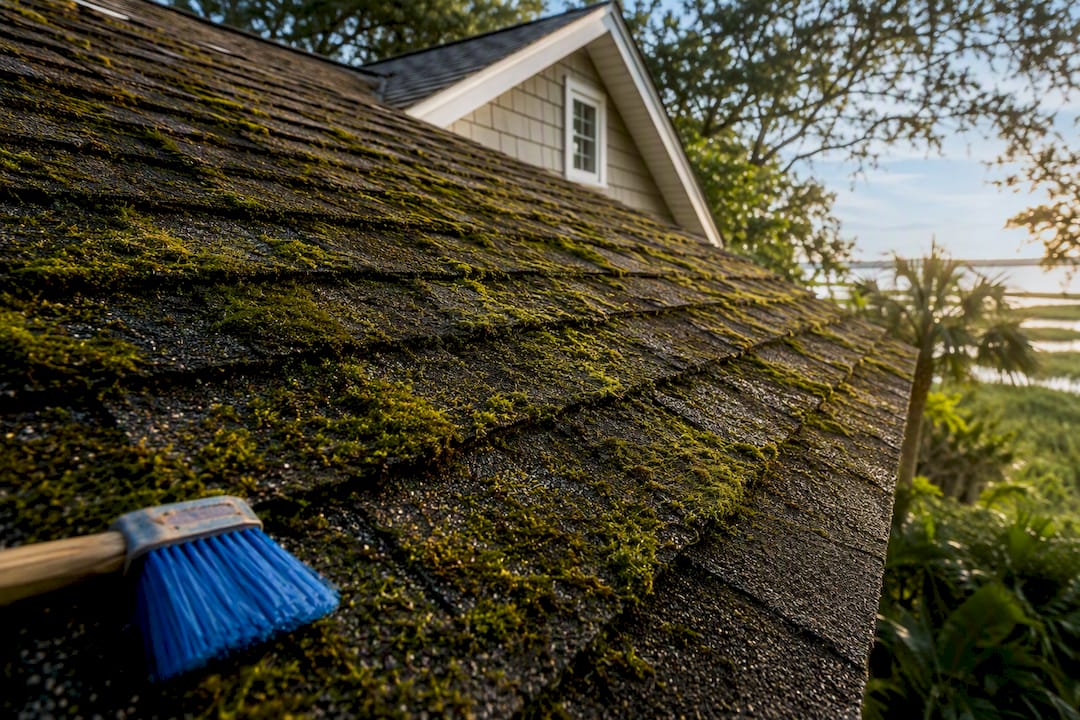
Yes, moss should be removed from asphalt shingles, but carefully. Left alone, moss traps moisture against the shingle surface and works its way under tabs, which shortens roof life. The safest approach is a shingle-safe soft-wash treatment followed by gentle removal, never a pressure washer. If your roof is steep, brittle, or heavily covered, call a professional before you climb a ladder.
TL;DR:
Moss traps moisture against shingles, softens the asphalt, lifts tabs, and pulls granules, accelerating roof deterioration and increasing leak risk if left untreated.
Use a diluted bleach and water mix applied with low pressure, allowing a 15-20 minute contact time before gentle rinsing, and avoid pressure washing or stiff brushes.
Hire professionals if the moss covers large areas, the roof is steep or brittle, or safety hazards are present; DIY is suitable for small, calm, overcast days with proper precautions.
Installing zinc or copper strips along the ridge can prevent moss recurrence, along with routine gutter clearing, trimming overhangs, and improving attic ventilation.
Regular inspections and moisture testing help detect early damage, and reactive chemical runoff should be managed carefully to protect surrounding plants and waterways.
Why Moss Damages Asphalt Shingles
Moss is not the same problem as algae, and mixing the two up leads homeowners to underreact. Algae mainly causes those dark streaks you see on roofs in humid regions. It is a cosmetic nuisance. Moss is a living mat that holds water against the shingle surface around the clock, and that constant moisture works two ways: it softens the asphalt mat over time and it physically lifts shingle tabs as the moss grows thicker, according to Malarkey Roofing. Once tabs lift even slightly, wind-driven rain can travel sideways underneath them instead of running off, and the Asphalt Roofing Manufacturers Association notes this lateral water movement is exactly how small moss patches turn into interior leaks.
Granule loss follows close behind. As moss roots and rhizoids spread across the shingle surface, they grab and pull at the protective mineral granules that shield the asphalt from UV damage.
Certain conditions make moss growth almost inevitable:
Shaded roof sections under overhanging trees, especially north-facing slopes
Accumulated leaf litter and pine needles that hold moisture against shingles
Clogged gutters that back water up onto lower roof edges
Humid, low-airflow climates common along the Gulf Coast
Safe Removal Methods That Protect Shingles
Removing moss the wrong way often does more damage than leaving it alone for another season. The method matters as much as the timing.
Mix a shingle-safe soft-wash solution. ARMA recommends a 50:50 mix of laundry-strength liquid chlorine bleach and water, applied with a low-pressure sprayer. Avoid stronger concentrations. They increase the risk of granule loss without speeding up the results.
Let it dwell, then rinse gently. Give the solution 15 to 20 minutes of contact time so it can break down the moss at the root, then rinse from a garden hose at low pressure, working from the ridge down toward the gutters.
Remove dead moss without scraping. Once the moss has died back over a few days, a soft-bristle brush or a leaf blower clears loose debris without gouging granules. Skip the putty knife unless you are working an isolated, easily reached patch, and even then use light pressure, per Oregon State University’s extension guidance.
Protect plants, gutters, and metal fixtures. Wet down foliage below the work area beforehand and cover sensitive plants, since bleach runoff can scorch grass and shrubs.
Three things are off the table entirely: pressure washers, aggressive scrubbing with stiff brushes, and high-concentration caustic cleaners. This Old House and IKO both warn that pressure washing strips the granule layer instantly, and that kind of damage is not cosmetic. It shortens the life of the roof and typically voids the shingle manufacturer’s warranty outright.
Pro Tip: Test your soft-wash mix on a small, hidden section of roof first, like a section over a shed dormer or a low back slope, and wait 24 hours to confirm the shingle color and texture hold up before treating the whole roof.
When to Hire a Pro and a Homeowner Safety Checklist
Not every mossy roof is a DIY job, and knowing the difference keeps you off a ladder you shouldn’t be on. Call a professional when any of these apply: the roof pitch is steep enough that standing is difficult, the shingles feel brittle or crack underfoot, moss covers more than a small section of the roof, you notice sagging near valleys, or the moss sits close to skylights and flashing where a misstep causes real damage.
Cost is often the deciding factor for homeowners weighing DIY against hiring out. A basic DIY kit, sprayer, bleach, brush, and safety gear, typically runs under $50, while professional moss treatment and removal runs into the hundreds of dollars depending on roof size and pitch, according to The Roofing Brief. If your roof needs scaffolding, fall protection, or a second person for safety, a professional visit usually costs less than an emergency room bill.
If you do go the DIY route, run through this checklist first:
Set up your ladder on level, stable ground with someone spotting from below
Use a harness or fall-arrest anchor point on any pitch steeper than a gentle slope
Press on a few shingles in an inconspicuous area to check for brittleness before working the whole roof
Choose a calm, dry, overcast day. Wind and direct sun both cause chemical solutions to evaporate or drift
Cover or pre-wet landscaping below your work zone
Our roof inspection checklist walks through the same structural checks a professional runs before recommending cleaning versus repair.
Prevention and Long-Term Fixes to Reduce Recurrence
Cleaning moss off once solves today’s problem. Preventing it from coming back is what actually protects your roof investment. Zinc and copper strips, installed near the ridge, release trace metal ions that wash down the roof slope with every rain and create a surface moss struggles to colonize. Zinc strips generally last several years before needing replacement, while copper strips hold up significantly longer, per The Roofing Brief. Installation is straightforward, but check with your shingle manufacturer first. Some warranties specify how and where metal strips can be attached.
Beyond strips, a few routine habits cut moss pressure significantly—trim overhanging branches to let more sunlight and airflow reach shaded roof sections
Trim overhanging branches to let more sunlight and airflow reach shaded roof sections
Clear leaf litter and pine needles from valleys and behind chimneys each season, not just in fall
Keep gutters flowing freely so water does not back up onto lower shingle courses (our gutter cleaning guide covers the basics)
Improve attic ventilation where heat and moisture buildup contribute to a damp roof deck
If you are replacing shingles anyway, ask about algae and moss-resistant shingle lines, and make sure flashing details around valleys and chimneys are installed correctly the first time. Our seasonal roof maintenance checklist breaks these tasks down by time of year for Gulf Coast homes specifically.
What an Inspector Looks for on a Moss-Affected Roof
An InterNACHI-certified inspector reads a mossy roof differently than a homeowner standing in the yard. We check for lifted or curled tabs where moss has worked underneath, granule loss patterns in the gutter downspouts, and moisture intrusion at valleys where lateral water flow tends to concentrate.
Thermal imaging helps spot moisture that has already worked its way into the roof deck, even before a stain shows up on the ceiling below, and a moisture meter confirms suspicious readings on the spot. For steep or fragile roofs where walking the surface isn’t safe, drone imagery gives us the same visual detail without the risk. Every finding gets sorted into a plain recommendation: clean it yourself, repair a specific section, replace the roof, or run additional testing if we suspect trapped moisture is feeding mold growth in the attic.
Environmental Considerations When Using Chemical Treatments
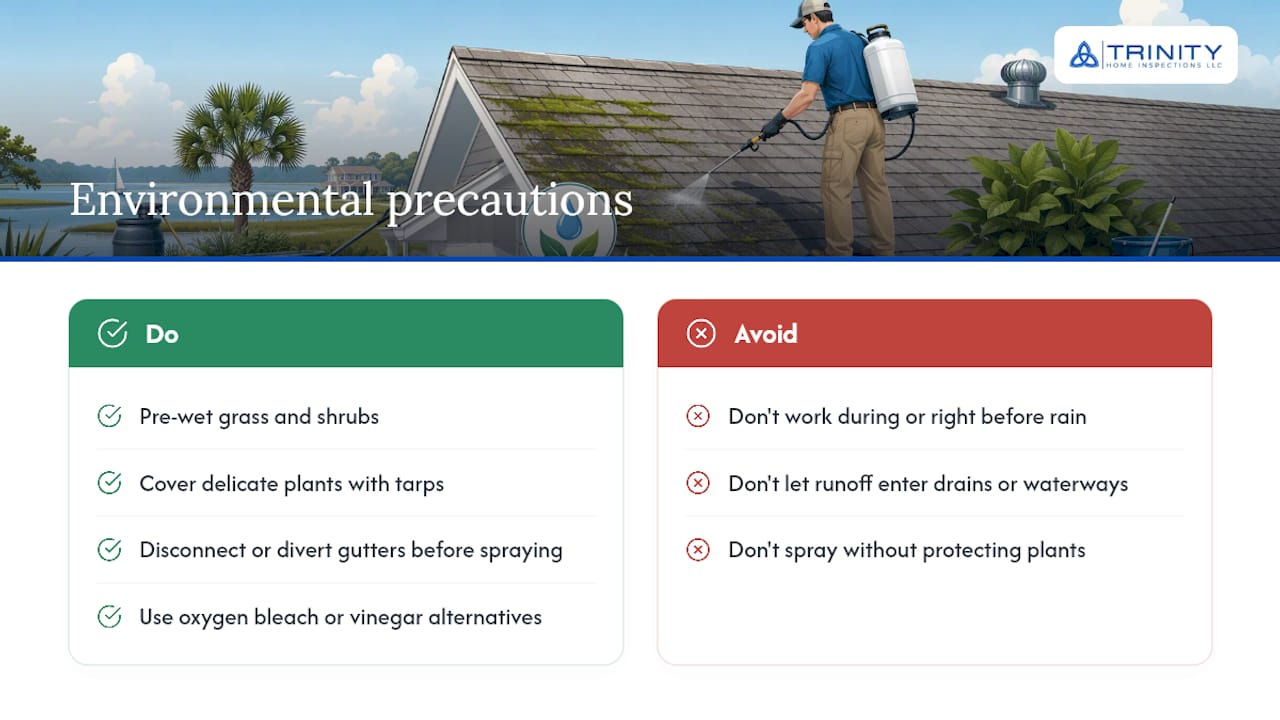
Bleach solutions are effective against moss, but they are not harmless once they run off your roof. Diluted chlorine bleach breaks down relatively quickly in sunlight and open air, yet the runoff still lands somewhere, typically your gutters, downspouts, and the soil or landscaping directly below the roofline.
Pre-wetting grass and shrubs before you spray dilutes the concentration that eventually reaches root systems, and covering delicate plants with tarps during application prevents direct chemical contact entirely. If your gutters drain into a rain barrel, garden bed, or storm drain that feeds a local waterway, disconnect that connection temporarily or divert runoff to a spot that can absorb it safely.
Homeowners increasingly reach for oxygen bleach or vinegar-based solutions as gentler alternatives, and Lowe’s how-to guidance lists both as viable options for lighter moss coverage. These break down faster and carry less risk to nearby plants, though they may need a longer dwell time or a second application on established growth. Whatever solution you choose, avoid working during or right before rain. A downpour within hours of treatment washes the chemical off before it has finished doing its job, wasting the product and sending a stronger dose into your yard than intended.
Author’s Final Take: Treat It, Don’t Ignore It
Moss on your roof is not an emergency, but it is not nothing either. The right response is a gentle soft-wash and a habit of prevention, never a pressure washer promising a quick fix. If you’re in a shaded, humid corner of the Gulf Coast where moss keeps coming back no matter what you try, that recurrence itself is worth a professional look. An inspection tells you whether you’re managing a cosmetic nuisance or an early structural issue before it becomes an expensive one.
— Matt
How Trinity Home Inspections Helps You Decide
Cleaning moss off your own roof works fine for plenty of homeowners, but when you’re not sure whether that moss has already caused hidden damage, a professional inspection gives you a clear answer before you spend a weekend on a ladder. Trinity Home Inspections offers something a DIY moss treatment can’t: an objective, documented look at what’s actually happening under those shingles.
[

What’s included in a roof-focused inspection: a roof walk or drone roof inspection depending on pitch and safety, free thermal imaging to spot trapped moisture, moisture meter checks around valleys and flashing, and a same-day photo and video report you can share with a contractor or keep for your own records. If you’re getting ready to list your home, our pre-listing inspection service documents roof condition before a buyer’s inspector finds it first. Call 251-210-7376 or visit TrinityInspectionsLLC.com to schedule an inspection and find out whether that mossy roof needs a simple cleaning or something more.
Sources
FAQ
What is the best way to remove moss from asphalt roof shingles?
A diluted chlorine bleach soft-wash, mixed roughly 50:50 with water, applied at low pressure with a 15 to 20 minute dwell time, followed by a gentle low-pressure rinse works best without stripping granules.
Does Dawn dish soap kill roof moss?
Dish soap can help loosen surface grime but it does not reliably kill moss at the root the way a bleach-based or oxygen bleach solution does, so it works better as a rinse aid than a primary treatment.
What time of year is best to remove moss from a roof?
Late spring or early fall, during mild, dry weather, gives treatment solutions time to work before heavy rain or freezing temperatures arrive, and cooler temperatures reduce evaporation during application.
What can I spray on my shingles to kill moss?
A 50:50 laundry-strength chlorine bleach and water mix is the standard shingle-safe option, while vinegar or oxygen bleach solutions offer a gentler alternative for lighter moss coverage.
How do I know if moss has already damaged my shingles?
Look for lifted or curled tabs, granules collecting in your gutters, or soft spots on the roof deck. If you spot any of these signs, a professional roof inspection can confirm whether you need cleaning, repair, or replacement.
Recommended

