
Energy Star roofing membranes: lower costs, boost comfort

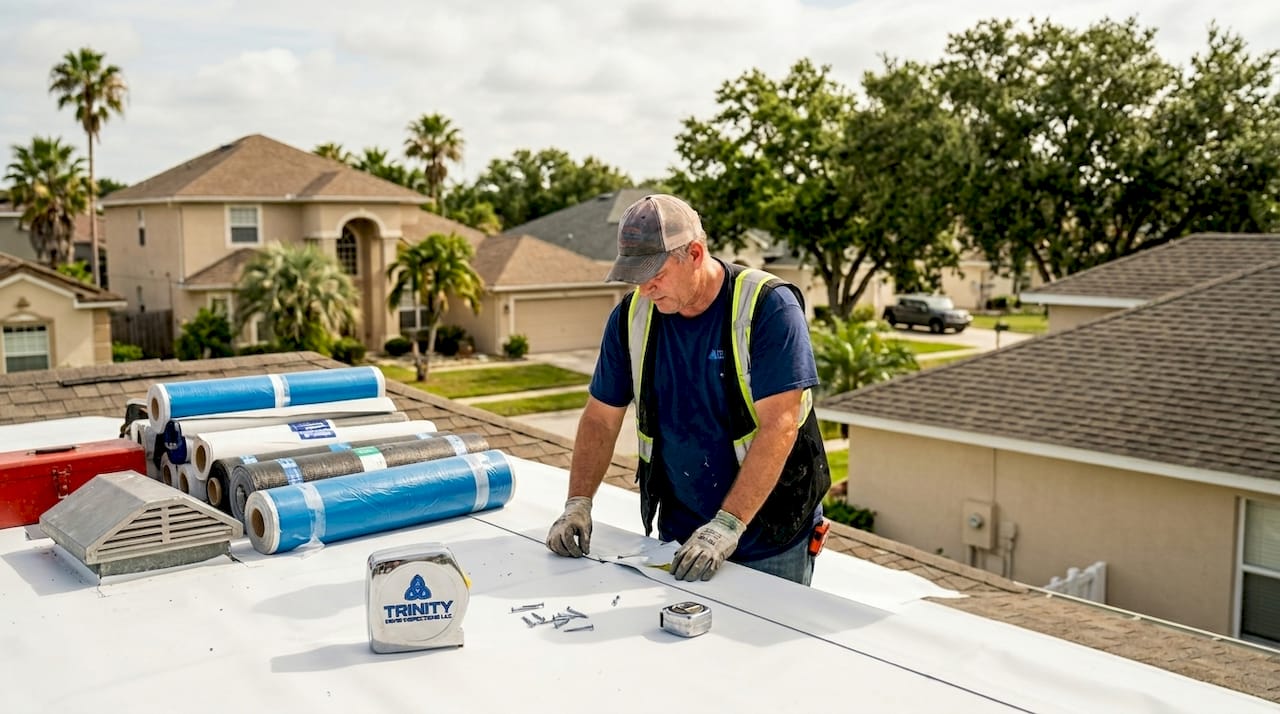
Plenty of homeowners on the Gulf Coast assume that slapping a white or light-colored membrane on their roof automatically qualifies it as energy efficient. It’s an easy assumption to make, especially when contractors casually toss around terms like “cool roof” without any numbers to back them up. The reality is more specific, and more useful, than a simple color rule. True Energy Star roofing membranes must meet tested solar reflectance (SR) and thermal emittance (TE) standards before they earn that label. Knowing the difference between a genuinely qualified membrane and a look-alike can mean hundreds of dollars in annual cooling savings for homes in Baldwin County, Mobile, Gulf Shores, and across coastal Alabama.
Key Takeaways
Point | Details |
Verified ratings matter | Only membranes meeting certified solar reflectance and thermal emittance values qualify for Energy Star savings. |
Roof type is critical | Energy Star requirements and best membranes differ based on your roof’s slope and Gulf Coast climate. |
Installation affects savings | Proper installation and seam welding ensure you get the cooling and waterproofing performance you pay for. |
Check claims yourself | Official Energy Star and CRRC product directories are the only reliable way to confirm a membrane’s true status. |
Storm resistance needed | Energy Star membranes don’t automatically provide hurricane or flooding protection; always confirm all roofing approvals separately. |
What makes a roofing membrane Energy Star qualified?
Let’s start with the two numbers that matter most: solar reflectance and thermal emittance. Solar reflectance (SR) is the fraction of sunlight a roof surface bounces back into the atmosphere instead of absorbing as heat. Think of it like the difference between wearing a white cotton shirt versus a black polyester one on a July afternoon in Fairhope. The white shirt reflects radiant heat; the black one soaks it in. A higher SR means less heat enters your attic and living spaces.
Thermal emittance (TE) is the roof’s ability to release any heat it does absorb. A surface with high TE cools back down quickly after the sun shifts or a cloud passes over. Together, SR and TE determine what’s called a roof’s “radiative performance,” and that is exactly what Energy Star measures.
Here is something most homeowners never hear from a salesperson: Energy Star cool roof performance evaluates the radiative properties of the finished roof surface, not structural integrity, fire resistance, or wind uplift. In other words, a membrane can carry the Energy Star label and still need separate evaluations for wind resistance, fire ratings, and waterproofing. These are entirely different categories. Don’t assume one certification covers them all.
Key differences between cool roofs and standard membranes:
Standard membranes prioritize waterproofing and tensile strength, with no radiative performance requirement
Cool roofs are designed and tested specifically for SR and TE values at the surface layer
Energy Star labeling is based on independent lab testing, not manufacturer claims alone
A membrane can be both waterproof and Energy Star qualified, but those are two separate performance areas
Coatings, laminates, and topcoats affect SR/TE and can change qualification status if they wear off
When you look at roofing materials broadly, you’ll find that even within the “cool roof” category there’s enormous variation. Not all white membranes perform the same. Surface chemistry, coating thickness, and granule composition all affect the actual tested numbers.
Typical Energy Star SR/TE values at initial rating:
Roof slope category | Minimum initial SR | Minimum initial TE | Example product type |
Low-slope (≤ 2:12) | 0.65 | 0.90 | PVC, TPO white membranes |
Steep-slope (> 2:12) | 0.25 | 0.90 | Reflective asphalt shingles, tiles |
Aged (3-year) low-slope | 0.50 | 0.90 | Same products, tested after weathering |
Aged steep-slope | 0.15 | 0.90 | Same products, tested after weathering |
Notice that Energy Star also requires aged ratings, tested after three years of real-world exposure. A membrane might start with a flashy SR of 0.80 and drop significantly after a few Alabama summers. If the aged SR falls below the threshold, it doesn’t qualify. This is a detail that separates genuinely efficient products from marketing-friendly ones.
“A roof that reflects 65% of sunlight can reduce rooftop temperatures by up to 50 to 60 degrees Fahrenheit compared to a conventional dark roof, translating to measurable reductions in air conditioning energy use.” — U.S. Department of Energy
If you’re weighing membrane options alongside energy efficient metal roofing, understanding these SR/TE thresholds helps you compare apples to apples regardless of material type.
Roof slope, membrane types, and Alabama’s unique climate
Now that you know SR and TE are the foundation of Energy Star qualification, the next variable is your actual roof. Slope changes everything.
Energy Star requirements differ depending on whether your roof is low-slope (a pitch of 2:12 or less) or steep-slope (greater than 2:12), meaning homeowners must confirm which category their roof falls into before assuming any single SR/TE threshold applies. This matters enormously in coastal Alabama, where you’ll find everything from flat-roofed commercial-style beach homes in Orange Beach to steep traditional pitched roofs inland in Foley or Daphne.
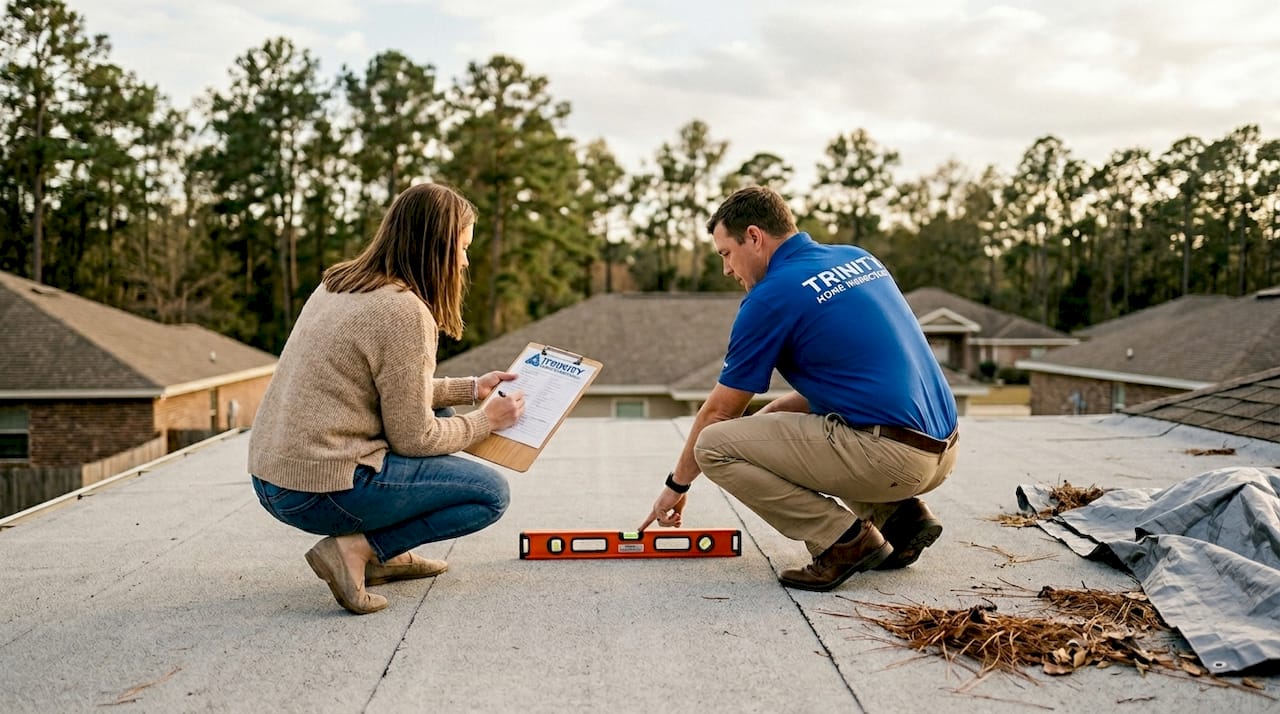
Slope comparison and membrane options:
Roof category | Pitch range | Minimum initial SR | Common membrane types | Gulf Coast suitability |
Low-slope | ≤ 2:12 | 0.65 | PVC, TPO, EPDM, modified bitumen | High (common on beach homes, additions) |
Steep-slope | > 2:12 | 0.25 | Reflective shingles, metal, tile | High (traditional residential pitches) |
For low-slope roofs, three membrane systems dominate the market:
PVC (polyvinyl chloride): Naturally white, highly reflective, excellent chemical resistance, and heat-weldable seams make it a strong performer in humid coastal climates. It tends to cost more upfront but holds reflectivity well over time.
TPO (thermoplastic polyolefin): Also white and heat-weldable, generally less expensive than PVC, and widely used in Energy Star applications. Quality varies significantly between manufacturers, so verified ratings matter here.
EPDM (ethylene propylene diene terpolymer): Traditionally black, though white versions exist. White EPDM can meet Energy Star thresholds, but the black version definitely does not, regardless of what a brochure implies.
Gulf Coast Alabama adds specific complications that don’t show up in a generic product spec sheet. Humidity levels stay elevated for most of the year, which accelerates membrane aging and can reduce reflectance if algae or mold colonize the surface. Salt air in communities like Gulf Shores and Orange Beach creates additional surface degradation over time. Ponding water after heavy rain is common on low-slope roofs and tests waterproofing performance in ways that SR/TE numbers simply don’t capture.
For homeowners concerned about storm season, protecting your HVAC system and your Gulf Coast home’s envelope from heat gain and moisture starts at the roof level. And if your home is in a wind zone, a wind mitigation report in Alabama may reveal whether your roof assembly meets the requirements for insurance discounts that go well beyond energy savings.
When comparing weather-resistant roofing options for storm-prone regions, the lesson is consistent: energy performance and structural performance are separate conversations that both need to happen.
Pro Tip: Before you purchase any membrane, have your contractor measure your roof’s actual slope and pull the manufacturer’s Energy Star data sheet for that specific slope category. A membrane rated for steep-slope roofs installed on a low-slope surface may not meet the required SR threshold for your application, and that means no real energy benefit despite the premium price.
Installation matters: Getting true Energy Star performance
Here’s a fact that surprises many homeowners. You can purchase a genuinely Energy Star-qualified membrane and still end up with poor energy performance if the installation isn’t done correctly. The product certification only guarantees what the material can do under ideal conditions. Real-world performance depends heavily on how it’s put on your roof.
Energy Star-labeled membrane products are installed using industry-standard roofing mechanics including fastened, adhered, thermally welded, or ballasted systems, and the installation method directly affects whether you retain the intended cooling performance over time. Each method has specific requirements that can’t be skipped without consequences.
Here’s how a proper membrane installation typically unfolds:
Substrate preparation: The existing roof deck or substrate must be clean, dry, and flat. Any soft spots, wet insulation, or debris left beneath the membrane creates both waterproofing vulnerabilities and potential long-term surface irregularities.
Insulation placement: Rigid insulation boards are typically installed over the deck before the membrane. Gaps, misalignment, or inadequate R-value at this stage reduce the overall thermal benefit of your cool roof.
Membrane attachment: Depending on the system, sheets are mechanically fastened, fully adhered with adhesive, or ballasted with gravel. Each method has wind uplift implications that are separate from energy performance.
Seam welding: For PVC and TPO, seams between membrane sheets are heat-welded using hot-air tools. This is the most technically demanding part of the job.
Detail work: Penetrations, drains, edges, and flashings require separate detailing that must match the membrane system’s specifications exactly.
The seam welding step deserves special attention. Heat-welded seams require correct welding temperature, speed, and proper substrate prep, and failure to follow the membrane’s seam and attachment procedures can undermine both waterproofing and long-term surface performance, ultimately negating the practical cooling benefit you paid for. A welder moving too fast creates a weak seam that separates under thermal expansion. Moving too slow can burn or pucker the membrane. Both failures allow moisture intrusion, and moisture trapped under a membrane destroys the insulation layer that contributes significantly to your energy savings.
Studies on cool roof field performance consistently show that poorly installed membranes underperform their rated SR/TE values because surface contaminants accumulate faster at seams, edges, and irregularities in the membrane plane. In a humid climate like coastal Alabama, that degradation is accelerated.
Your Alabama roof maintenance checklist should include annual seam inspections, drain clearing, and surface cleaning to preserve your membrane’s reflective properties over time. Ignoring these steps is one of the fastest ways to lose the energy benefit you paid to achieve.
For storm protection, a wind-resistant roofing installation also depends on attachment method and detail quality, reinforcing why proper installation documentation matters for multiple performance areas at once.
Pro Tip: Ask your contractor to provide photos of the seam welds at completion, along with documentation that the welding equipment was calibrated correctly. This gives you evidence for any future warranty claims and confirms the installer followed the membrane manufacturer’s specifications.
Real-world examples: Trusted products and how to verify claims
At this point, you know what makes a membrane qualify, you know your roof slope matters, and you know installation is critical. Now let’s get specific about products and how to confirm what you’re actually buying.
The Sika Sarnafil S 327-60 EnergySmart is a good example of what a credible Gulf Coast-appropriate product looks like. This 60-mil PVC thermoplastic membrane features heat-weldable seams, a top lacquer coating designed to reduce dirt pickup, and documented solar reflectance and thermal emittance values. The lacquer coating matters specifically for humid climates because algae and dirt accumulation is one of the primary mechanisms that reduces reflectance over time in areas like the Gulf Coast.
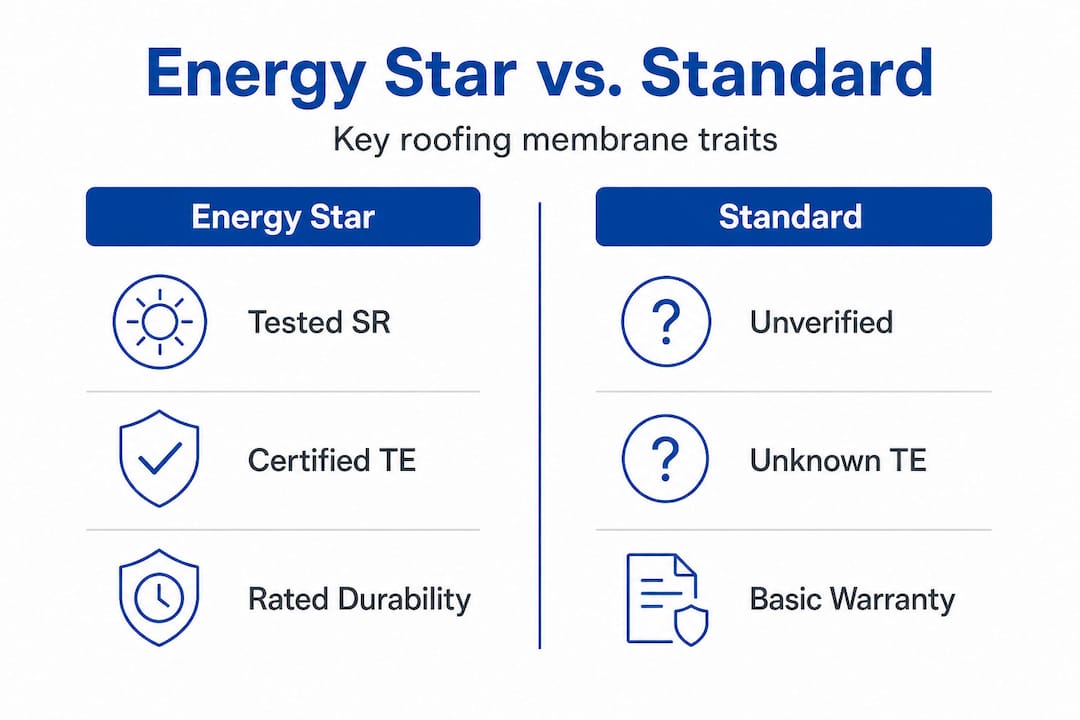
Product performance comparison:
Product / type | Initial SR | Aged SR | Initial TE | Energy Star low-slope minimum | Qualifies? |
Sika Sarnafil S 327-60 EnergySmart | ≥ 0.77 | ≥ 0.68 | ≥ 0.90 | SR 0.65 / TE 0.90 | Yes |
Generic white TPO (unverified) | Unknown | Unknown | Unknown | SR 0.65 / TE 0.90 | Cannot confirm |
Standard gray EPDM | ~0.06 | ~0.06 | ~0.86 | SR 0.65 / TE 0.90 | No |
Low-quality cool-roof coating | ~0.70 | ~0.45 | ~0.85 | SR 0.50 aged / TE 0.90 | Likely fails aged |
The difference between a confirmed product and an “unverified generic” isn’t a minor detail. Contractors sometimes market reflective membranes that sound similar but haven’t been independently tested or listed in official directories.
Here’s how to verify any membrane’s Energy Star status before you commit:
Step 1: Ask the contractor for the specific product name and manufacturer model number. Vague descriptions like “cool white TPO” are not sufficient.
Step 2: Use the official Energy Star roof product list to confirm whether that exact product appears in the EPA’s current listing for your slope category.
Step 3: Cross-check with the Cool Roof Rating Council (CRRC) rated products directory, which publishes independent lab-tested SR and TE values including aged ratings.
Step 4: Confirm that the listed values meet the minimum thresholds for your specific roof slope, not just any Energy Star threshold.
Step 5: Ask for the product data sheet and verify the SR and TE values match what appears in the official directories.
This five-step process takes about 20 minutes and can save you from spending money on a product that delivers minimal real-world benefit. Reviewing your roof maintenance history and records alongside a new membrane purchase ensures your investment is protected from day one.
The nuance most Alabama homeowners miss about cool roof membranes
Here’s our honest take after inspecting roofs across Baldwin and Mobile counties: most homeowners focus almost entirely on the Energy Star label and almost not at all on whether the product and installation actually work together to protect their home in a Gulf Coast storm.
Energy Star certification is valuable. Lower cooling bills, reduced urban heat island effect, and longer membrane life are real benefits worth pursuing. But the label only certifies one thing: radiative performance under lab conditions. Even a genuinely cool membrane requires separate verification of waterproofing performance for wind-driven rain and ponding, because Energy Star cooling labeling does not certify wind uplift or structural integrity. You need separate roofing, wind, and fire approvals or an assembly-level evaluation to confirm those properties.
This distinction becomes critical during hurricane season. A membrane rated SR 0.77 with no verified wind uplift rating installed on a Gulf Shores vacation property is a liability, not an asset. We’ve seen membrane installations where the Energy Star spec sheet was pristine and the installation documentation was nonexistent. When a storm comes through, the absence of proper wind uplift testing and attachment documentation can void your insurance claim.
The most expensive roofing mistakes we encounter aren’t from homeowners choosing the wrong color. They come from homeowners who were sold on a single metric, whether it’s reflectance, price, or warranty length, without asking whether the complete system was right for their specific home and location.
Your best approach is to treat Energy Star qualification as one column in a checklist, not the final answer. Every Gulf Coast roof also needs to pass muster on wind resistance, fire ratings, waterproofing, and local code compliance. If a contractor can’t provide documentation for all of these alongside the Energy Star data, ask for it in writing before you sign.
For homeowners maintaining a Gulf Coast home exterior, that same thorough verification mindset applies to every component. Roofs, walls, soffits, and penetrations all work together, and a weakness anywhere reduces the protection everywhere else.
Connect with trusted experts for your Gulf Coast roofing project
Choosing the right Energy Star membrane is only the beginning. Knowing whether your existing or newly installed roof is actually performing as intended requires eyes on it from someone who understands both energy efficiency and Gulf Coast weather conditions.
[
At Trinity Home Inspections, we inspect roofs across Baldwin, Mobile, Escambia, Washington, Monroe, and Clarke counties with thermal imaging included at no extra charge. Our reports come with same-day photos and video so you can see exactly what we see. Whether you’re buying a home with a cool roof claim you want verified, getting ready to sell, or just want peace of mind before storm season, we’re here to help. Start with a thorough property and permit check to confirm roof work was properly permitted, schedule a pre-sale home inspection to catch issues before buyers do, or add mold inspection and testing if moisture has been a concern under your roofing system. We make the process straightforward and the findings clear.
Frequently asked questions
What is the difference between an Energy Star cool roof and a regular white roof?
An Energy Star cool roof must meet tested solar reflectance and thermal emittance thresholds verified by independent labs, while a generic white roof may look similar but provide no certified cooling performance. Cool-roof qualification is radiative-performance based, varies by roof slope, and reflective color alone is not enough to guarantee Energy Star-level results.
How do I check if a roofing membrane is truly Energy Star certified?
Look up the exact product name and model in the official Energy Star roof product list and cross-reference with the Cool Roof Rating Council’s rated products directory to confirm tested SR and TE values for your specific slope category. Never rely solely on a contractor’s verbal assurance or a product brochure.
Are installation methods important for cooling performance?
Yes, significantly. Heat-welded seams require correct welding temperature and substrate prep, and failure to follow manufacturer procedures undermines both waterproofing and long-term reflective surface performance, meaning you lose the cooling benefit you paid for.
Does an Energy Star roofing membrane also protect against wind and flooding?
No. Energy Star cooling labeling does not certify wind uplift or structural integrity, so Gulf Coast homeowners must also verify separate wind, fire, and waterproofing approvals or assembly-level evaluations to ensure full storm protection alongside energy efficiency.
Recommended
