Caulk the Toilet Base but Leave a 1 to 2 Inch Rear Gap, Inspectors Say

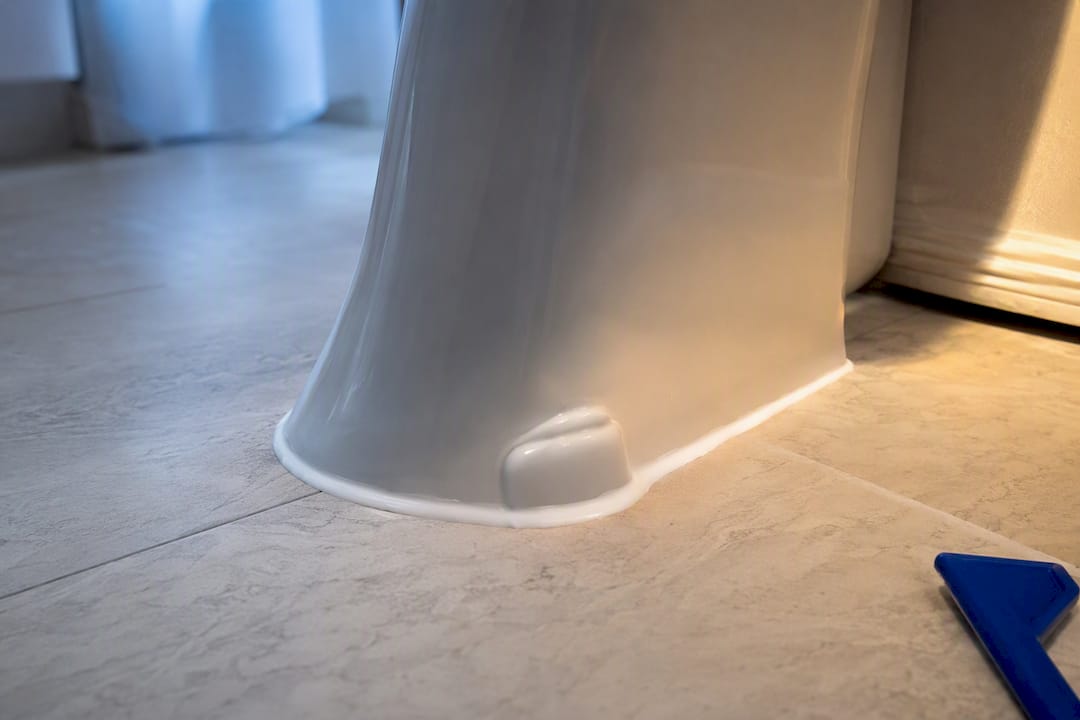
Yes, the base of a toilet should be caulked, and plumbing codes back that up. The caveat that trips up most homeowners: leave a small gap at the back uncaulked. That gap lets you spot a wax-ring leak before it rots your subfloor.
TL;DR:
Leaving a small uncaulked gap at the back of the toilet base allows early leak detection and helps prevent hidden rot.
Local building enforcement may permit a small opening if it serves leak spotting, but full sealing is generally recommended for moisture prevention.
Silicone or hybrid polymer caulk resists mold and stays flexible; avoid latex or epoxy-based sealants for longevity and proper flex.
Before caulking, ensure the toilet is stable to prevent covering issues with loose bolts or a faulty wax ring, and check periodically for signs of leaks.
Re-caulk every three to five years or sooner if cracks or gaps appear; monitor the rear gap monthly to catch slow leaks early.
What Plumbing Codes Say About Sealing a Toilet to the Floor
Building codes don’t leave this to guesswork. The International Plumbing Code requires that joints where a fixture contacts the floor or wall be sealed to keep out moisture and prevent sanitation problems. The intent is straightforward: a toilet base is a magnet for mop water, condensation, and the occasional overflow, and an open seam there invites bacteria and rot.
Where things get interesting is enforcement. A formal interpretation issued by Springfield, Missouri concluded that a joint can still meet code even when a small portion of it is intentionally left open, as long as that gap serves a purpose, namely spotting leaks early. That single ruling gave plumbers cover to keep doing what they’d already been doing for years.
A few things worth knowing before you pick up a caulk gun:
Code language focuses on intent (watertight, sanitary joints), not a rigid inch-by-inch measurement.
Local building departments and inspectors vary in how strictly they enforce full sealing versus a partial gap.
The ICC’s code database is the place to check exact wording if you want to see it for yourself.
When in doubt about your specific municipality, a quick call to your local building department settles it faster than any online debate ever will.
Should You Caulk the Toilet Base? Weighing the Trade-Offs
Caulking isn’t a simple yes-or-no decision once you look at what’s actually at stake on both sides.
Caulk prevents water intrusion from above. Mop water, spilled cleaning solution, and condensation off the tank all want to travel under the bowl. A sealed edge stops that path cold.
Caulk improves the finish and makes cleanup easier. A tiled or vinyl floor with a clean caulk line around the base looks finished instead of patched.
Caulk stops minor rocking. A toilet that shifts slightly when you sit down often firms up once the base is sealed, though caulk is never a substitute for tight closet bolts.
Full sealing can hide a wax-ring failure. If water leaks from underneath the bowl and the entire perimeter is sealed, that water has nowhere to go but sideways into your subfloor, where it can sit undetected for months.
A sealed leak is a harder repair. By the time discoloration or a soft spot shows up on the floor, you’re usually looking at subfloor replacement, not just a new wax ring.
The practical middle ground: caulk the front and sides, leave a small gap at the back uncaulked. Uneven floors, bathrooms prone to flooding, or a local code that demands a full seal are the situations where full caulking makes more sense than the compromise.
Best Caulk Types for a Toilet Base
Material choice matters as much as technique. 100% silicone caulk is the standard recommendation because it stays flexible, resists mold, and holds up against the moisture cycle a bathroom floor goes through every day. Hybrid polymer sealants (sometimes labeled siliconized or modified polymer) work nearly as well and often bond a little better to porous grout lines.
Skip latex caulk. It shrinks and cracks faster than silicone, and once it separates from the porcelain, you’re back to square one within a year or two. Epoxy-based caulk has the opposite problem: it’s rigid, which means it can’t flex with minor floor movement, and removing it later is a genuine chore.
A few extra pointers:
Pick a mildew-resistant formula for bathrooms, especially ones with limited ventilation.
Match the caulk color to your grout or flooring, or go with white for a clean look against porcelain.
Paintable caulk exists but rarely matters here since most bathroom trim work doesn’t extend to the toilet base.
How to Caulk a Toilet Base the Right Way
Before you touch a caulk gun, confirm the toilet itself is solid. Rock it gently side to side. Any movement means loose closet bolts or a failed wax ring, and caulking over that problem just buries it. If the bowl shifts, tighten the bolts first; if it’s still loose after that, you’re likely dealing with a flange or wax ring issue that needs fixing before any sealant goes down. Our guide to replacing a toilet flange walks through that repair in detail.
What you’ll need: a tube of 100% silicone or hybrid polymer caulk, a caulk gun, painter’s tape, rubbing alcohol and a clean rag, and a utility knife for tooling the bead.
Clean the base and floor thoroughly with rubbing alcohol and let it dry completely. Caulk won’t bond to a damp or dusty surface.
Run painter’s tape along the floor and around the porcelain base to keep your line crisp.
Apply a steady bead around the front and both sides of the toilet base.
Stop the bead about 1 to 2 inches short on each side of the rear, leaving that section open.
Smooth the bead with a wet finger or a caulk tool, then pull the tape while the caulk is still workable.
Let it cure per the product label, usually 24 hours, before mopping near it.
Check the finished bead for gaps or air pockets, and keep an eye on that rear opening in the weeks after. Any drips, discoloration, or mineral staining near the gap is your early warning sign.
Pro Tip: Write the caulking date somewhere handy, like the inside of the toilet tank lid with a marker. Check the rear gap after one month, then again each quarter for the first year. That habit catches a slow leak long before it becomes a subfloor problem.
How Often Should You Re-Caulk a Toilet Base?
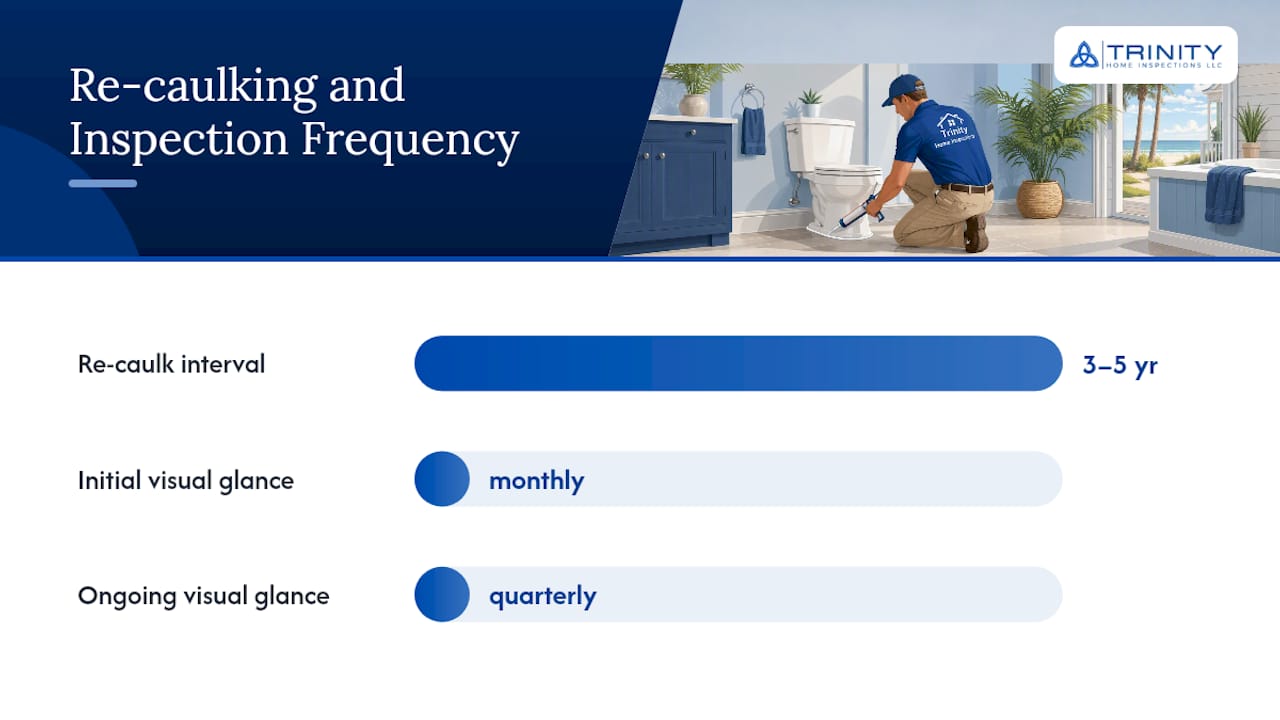
Plan on re-caulking every 3 to 5 years, sooner in a high-moisture bathroom or if you notice the caulk pulling away from the porcelain. Quality silicone holds up well, but bathroom floors take a beating from humidity, cleaning chemicals, and foot traffic.
Between re-caulking jobs, a few quick habits go a long way:
Glance at the rear gap monthly for the first few months after any new caulk job, then quarterly after that.
Press gently on the flooring near the base. Softness or give underfoot is a sign of hidden moisture damage.
Take a sniff near the base. A persistent musty smell often shows up before any visible sign of a leak.
If something feels off but you can’t confirm it visually, a moisture meter or thermal imaging can catch concealed moisture before it spreads to the subfloor or floor joists.
When Should You Call a Plumber or Inspector?
Some warning signs go beyond a DIY fix. A soft or springy floor around the base, water that keeps reappearing no matter how many times you wipe it up, visible mold at the caulk line, or caulk that keeps failing within months instead of years all point to something deeper than a cosmetic touch-up.
A trained plumber or home inspector checking this area will typically look at:
Flange condition and height relative to the finished floor
Wax ring integrity underneath the bowl
Closet bolt tightness and corrosion
Subfloor moisture using tools like a moisture meter or thermal camera
Depending on what they find, the fix might be as simple as a new wax ring or as involved as raising a low flange or replacing rotted subfloor material. Left unaddressed, that kind of hidden leak can travel down into the joists below, which is exactly the kind of damage our crawlspace moisture guide covers in more depth.
An Inspector’s Take on Caulking Toilets
After years of crawling under houses and photographing what water does when nobody’s watching, the rule of thumb holds up: caulk the front and sides, leave a small gap at the back uncaulked, unless your local inspector specifically requires a full seal. A toilet that’s secure and level matters more than the caulk line itself. Get the bolts tight first, then seal it. If you’re ever unsure whether what you’re seeing near the base is normal wear or a sign of something worse, a quick moisture scan settles it.
— Matt
Book a Toilet and Subfloor Moisture Check
Trinity Home Inspections gives you something most general contractors can’t: a same-day photo and video report backed by free thermal imaging, so a suspected leak around your toilet base doesn’t sit as a guessing game for days while you wait on results.
[

When you book a targeted toilet and subfloor check, here’s what’s included:
What’s included:
Visual inspection of the caulk line, flange, and surrounding flooring
Moisture meter readings at the base and adjacent subfloor
Thermal imaging scan when conditions allow, at no extra charge
A same-day digital report with photos and plain-English notes on what needs attention
If you’re getting ready to list your home, our pre-listing inspection service covers this and every other plumbing detail buyers tend to ask about, so surprises don’t show up during negotiations. Call 251-210-7376 or visit Trinityinspectionsllc to get a moisture scan scheduled this week.
Sources
FAQ
Is caulking around the base of a toilet required by code?
Codes like the IPC require watertight joints where fixtures meet the floor, but a formal interpretation in Springfield, Missouri allows about 10% of that joint to stay open for leak detection. Local enforcement still varies, so check with your building department if you need a definitive answer.
What happens if you don’t caulk around a toilet?
Without caulk, mop water, spills, and condensation can seep under the base and sit against the floor, which raises the risk of mold, warped flooring, and unpleasant odors over time.
Should you silicone around the bottom of a toilet?
Yes, 100% silicone is one of the best choices for a toilet base because it stays flexible and resists mildew far better than latex caulk.
What is the best caulk to use around a toilet base?
100% silicone or a hybrid polymer sealant works best. Avoid latex, which shrinks and cracks, and avoid epoxy, which is too rigid and difficult to remove later.
How often should toilet base caulk be replaced?
Plan on replacing it roughly every 3 to 5 years, or sooner if you notice cracking, gaps, or discoloration near the base.
Recommended