
Should You Get a Sewer Scope on a New Construction Home?

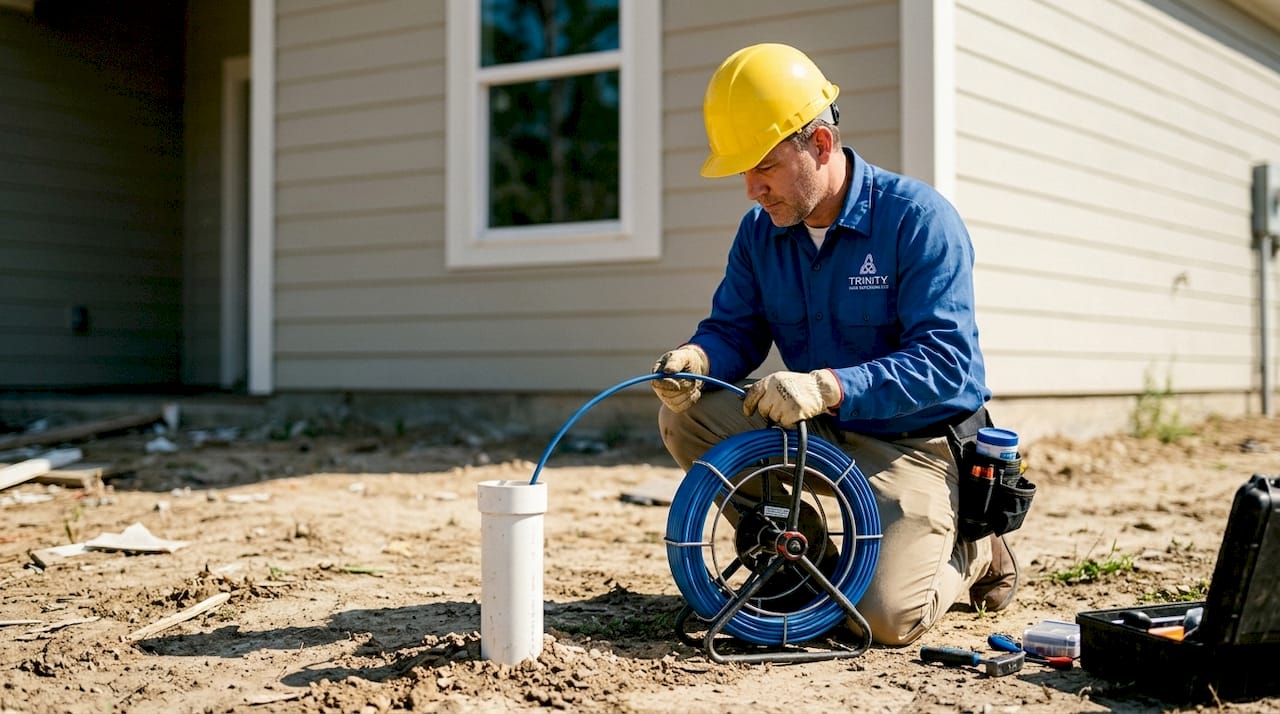
A sewer scope inspection is a non-invasive camera examination of your home’s main sewer lateral, and it is one of the most overlooked protections a new construction buyer can add before closing. Many buyers assume a brand-new home means brand-new, problem-free pipes. That assumption is wrong, and it can be expensive. Hidden installation defects, construction debris, and equipment damage are common findings in new builds across Baldwin County, Mobile, and the Gulf Coast Alabama region. This article explains exactly why you should get a sewer scope on a new construction home, what the process looks like, and how to use the results to protect your investment before you sign anything.
Should you get a sewer scope on a new construction home?
Yes. Getting a sewer scope on a new construction home is necessary because new builds carry a specific set of sewer risks that a standard home inspection will not catch. The industry term for this service is a sewer lateral inspection, though most buyers and inspectors call it a sewer scope. Both terms refer to the same process.
The core misconception is that new means clean. Builders move fast, subcontractors work in tight windows, and underground pipes get buried before anyone looks inside them. Homes less than 5 years old commonly show defects like improper pipe slopes and structural damage from soil settlement. That finding directly challenges the idea that age is a reliable indicator of condition.
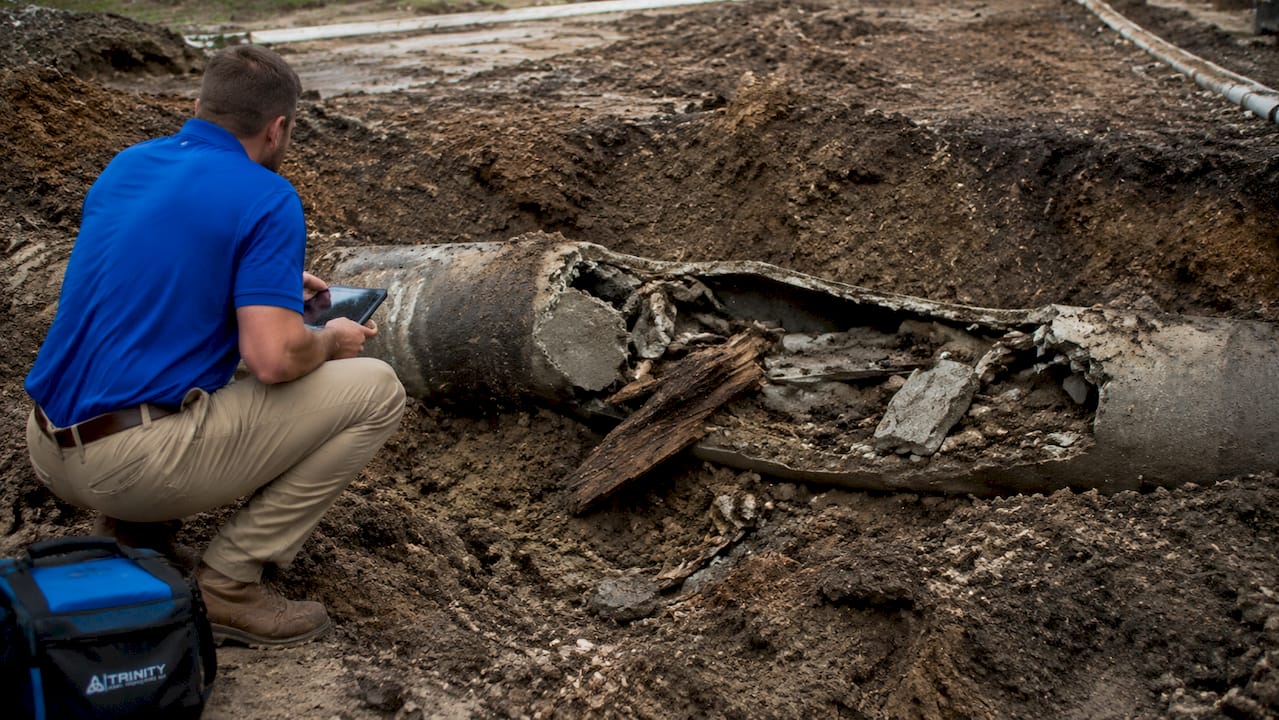
Municipal inspectors check for code compliance. They do not crawl inside your pipes with a camera. Municipal inspections miss construction debris, alignment errors, and incomplete connections that only a sewer scope reveals. Code compliance and long-term functionality are two different things.
What common sewer line issues are found in new construction homes?
New construction sewer defects fall into several categories, and most of them are invisible from the surface. New construction sewer damage is frequently caused by heavy equipment crushing pipes, construction debris left inside lines, or misalignment and improper grading during rapid installation.
Here are the most common findings a sewer scope reveals in new builds:
Construction debris inside pipes. Concrete, grout, and wood scraps get dropped into open lines during the build. They harden or lodge in place and restrict flow.
Crushed or misaligned pipes. Heavy machinery operating near buried lines can crush PVC or shift pipe joints out of alignment. This creates low spots where waste collects.
Improper pipe slope. Sewer lines require a specific downward grade to drain by gravity. Lines installed too flat or with negative slope cause chronic backups.
Disconnected or incomplete connections. Some inspections have found sewer lines that were never connected to the municipal system at all. Waste had nowhere to go.
Root intrusion from new landscaping. Freshly planted trees and shrubs near sewer lines can send roots toward pipe joints within the first year or two.
Blocked lines from cement or grout. Trades working near open cleanouts sometimes allow materials to fall in, creating partial or full blockages.
Each of these defects is buried underground and completely hidden from a visual walkthrough. A standard home inspection does not include a camera inside the sewer lateral.
Pro Tip: Ask your inspector to check whether the sewer cleanout access point is clearly marked and accessible before scheduling the scope. A buried or missing cleanout can delay the inspection and add cost.
The practical consequence of missing these issues is significant. A crushed pipe or disconnected line discovered after closing becomes your financial problem entirely. Discovered before closing, it becomes the builder’s problem to fix.
How is a sewer scope inspection performed?
A sewer scope inspection is straightforward and takes roughly 30–60 minutes. The process is non-invasive and requires no digging. Here is what happens from start to finish:
The inspector locates the cleanout. This is a capped pipe access point, usually near the foundation or in the yard, that provides direct entry to the main sewer lateral.
A waterproof camera is inserted. The inspector feeds a high-resolution camera through the cleanout and into the main sewer line. The camera transmits live video to a monitor.
The inspector documents the full line. The camera travels from the home toward the municipal connection, recording the interior condition of the pipe in real time.
Findings are recorded on video. Any defects, debris, misalignments, or blockages are captured on video with location markers. This footage becomes part of your inspection report.
The inspector reviews findings with you. You see exactly what the camera saw. If there is a problem, you have video evidence to present to the builder.
At Trinity Home Inspections, sewer scope video is included directly in the same-day digital report. You do not wait days for results. The video documentation is the most valuable part of the process because it gives you concrete, undeniable evidence if you need to negotiate repairs.
The non-invasive nature of the inspection is worth emphasizing. No trenching, no excavation, no damage to the yard or foundation. The camera goes in through the cleanout and comes back out. The entire process is clean and efficient.
What are the financial benefits of a sewer scope on a new home?
The financial case for a new construction sewer assessment is straightforward. Sewer scope inspections typically cost between $175 and $300, with bundled inspections on the lower end of that range. Compare that to the cost of repairing or replacing a damaged sewer lateral after closing, which routinely runs into five figures.
Scenario | Estimated Cost |
Sewer scope inspection (bundled) | $175–$200 |
Sewer scope inspection (standalone) | Up to $400 |
Sewer lateral repair (partial) | $3,000–$8,000 |
Full sewer line replacement | $10,000–$25,000+ |
Builder repair if caught before closing | $0 to buyer |
The numbers tell a clear story. A small investment before closing can prevent a large, uninsured expense after closing.
Sewer lateral responsibility transfers immediately at closing. Unlike appliances, sewer lines typically carry no warranty coverage, so homeowners bear the full financial burden for any issues discovered post-closing, even if the builder caused the damage. That is not a technicality. It is the standard language in most purchase contracts.
The strategic value of a pre-closing inspection is that it shifts repair responsibility to the builder while you still have leverage. During the contingency period, you can request repairs, a price reduction, or in serious cases, walk away from the purchase entirely. After closing, none of those options exist.
Pro Tip: Schedule your sewer scope during the inspection contingency period, not after it expires. Once contingencies are released, your negotiating position disappears regardless of what the camera finds.
Real estate professionals consistently treat sewer scopes as a cost-effective risk management tool that gives buyers real negotiating power. The inspection is not just about finding problems. It is about knowing your position before you commit.
For buyers who want to understand the full cost picture, the sewer scope inspection savings breakdown at Trinity Home Inspections covers how these inspections reduce long-term risk in detail.
When is the best time to schedule a sewer scope inspection?
Timing a new construction sewer inspection correctly makes a significant difference in what you can do with the results. The optimal timing is late in construction, before final landscaping and grading, when any damage caused by heavy machinery is still accessible and before the pipe becomes buried under finished yard work.
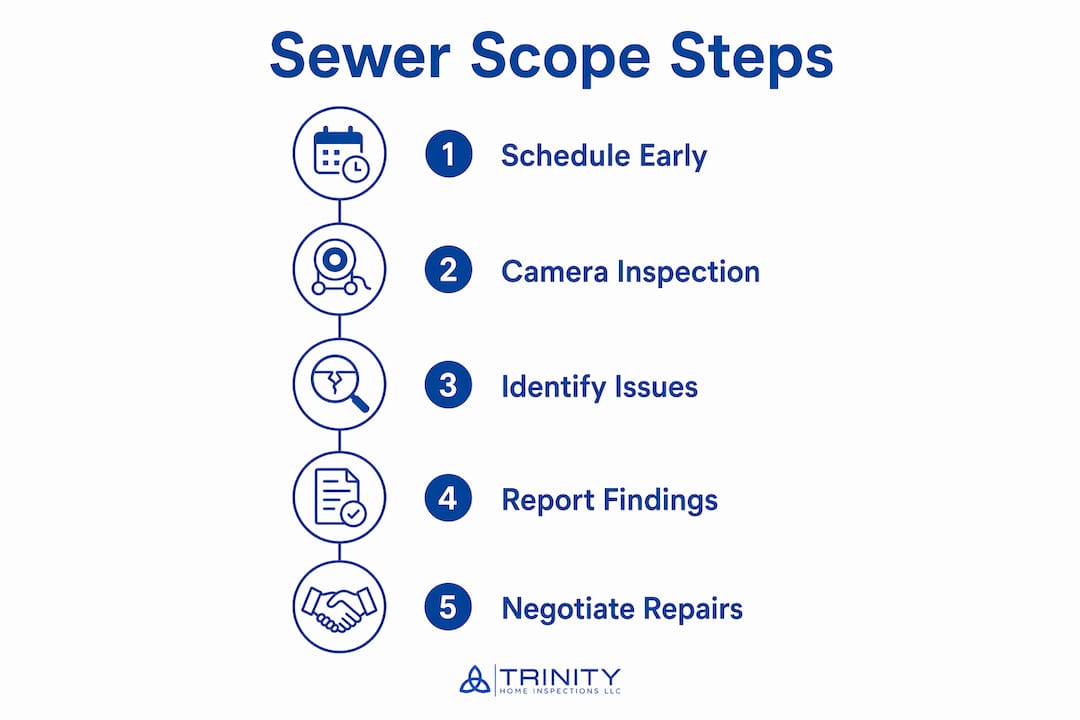
Here is how to integrate a sewer scope into your new home purchase process:
Schedule during the contingency period. This is the window between contract acceptance and closing when you have the right to inspect and negotiate. Do not let this window close before the sewer scope is complete.
Coordinate with your general home inspection. Bundling the sewer scope with your standard home inspection saves money and keeps your schedule tight. Trinity Home Inspections offers both as a combined service.
Request inspection before final grading. Once the yard is graded and landscaped, accessing certain sections of the sewer lateral becomes harder. Earlier is better.
Confirm cleanout access with the builder. Some new builds have cleanouts that are not yet marked or are temporarily covered. Confirm access before your inspector arrives.
Review the builder’s inspection records. Ask what municipal inspections were performed and when. This tells you what was checked and what was not. It also helps your inspector know what to look for.
Buyers who inspect sewer lines before new landscaping is complete have the clearest path to holding the builder accountable. Once the yard is finished and the keys are handed over, that path closes.
For a broader look at why new construction homes need professional inspection beyond just the sewer line, the new build inspection guide from Trinity Home Inspections covers the full picture. You may also find it useful to review why buyers request mold inspections before closing as part of a complete pre-closing inspection plan.
Key Takeaways
A sewer scope inspection on a new construction home is the single most cost-effective step a buyer can take to protect against hidden underground defects before closing.
Point | Details |
New builds are not defect-free | Homes under 5 years old regularly show crushed pipes, debris, and improper slopes. |
Municipal inspections are not enough | Code compliance checks miss construction debris and alignment errors inside the pipe. |
Inspection cost vs. repair cost | A $175–$200 scope can prevent $10,000+ in post-closing sewer repairs. |
Timing determines leverage | Scheduling during the contingency period gives you the power to negotiate or walk away. |
Responsibility transfers at closing | After closing, sewer lateral repairs fall entirely on the homeowner, not the builder. |
What I tell every new construction buyer before they close
I have scoped sewer lines in brand-new homes across Mobile and Baldwin County, and the findings still surprise people. Buyers walk into these inspections expecting a clean bill of health. What we find instead is concrete debris sitting in a pipe, a line that drops the wrong direction, or in one case, a connection that was never completed to the municipal system. The home was days from closing.
The mistake I see most often is buyers treating a new build like it has already been vetted. The builder’s inspections are code inspections. They confirm that the work meets minimum legal standards. They do not confirm that the sewer line is clean, properly graded, and fully connected. Those are two completely different things, and conflating them is an expensive error.
Age is not a condition indicator. I have scoped 20-year-old lines in better shape than lines installed six months ago. What matters is how the work was done, how fast it was done, and what happened to the pipe after it was buried. Heavy equipment, rushing subcontractors, and open lines on a busy job site are a reliable recipe for hidden problems.
The video evidence from a sewer scope is also your best negotiating tool. A builder can dismiss a verbal concern. They cannot dismiss footage of a crushed pipe or a blocked line. I have seen that footage get buyers full repairs at zero cost, simply because the evidence was undeniable and the contingency period was still open.
My recommendation is simple. Add a sewer scope to every new construction purchase. The cost is low, the risk of skipping it is high, and the peace of mind is worth every dollar.
— Matt
Schedule your new construction sewer scope with Trinity Home Inspections
[

Trinity Home Inspections serves homebuyers across Mobile, Baldwin, Escambia, and surrounding Gulf Coast Alabama counties with InterNACHI-certified inspections and same-day video reports. Sewer scope inspections are available as a standalone service or bundled with a full home inspection to save you time and money. Every sewer scope includes video documentation delivered in your report the same day. If you are purchasing a new construction home and want to protect your investment before closing, schedule your inspection early in the contingency period. You can also explore our pre-listing inspection services if you are on the selling side. Call us at 251-210-7376 or visit TrinityInspectionsLLC.com to book today.
FAQ
What is a sewer scope inspection?
A sewer scope inspection is a non-invasive camera examination of a home’s main sewer lateral from the cleanout to the municipal connection. It provides real-time video documentation of the pipe’s interior condition.
Is a sewer scope necessary for a new construction home?
Yes. New construction homes regularly show defects like crushed pipes, construction debris, and improper slopes that municipal code inspections do not catch. A sewer scope is the only way to verify the line’s actual condition before closing.
How much does a sewer scope cost on a new build?
Sewer scope inspections typically cost between $75 and $175, with bundled inspections on the lower end. That cost is minimal compared to sewer line repairs that can exceed $10,000 after closing.
When should I schedule a sewer scope on a new construction home?
Schedule the inspection during your real estate contingency period and before final landscaping is complete. Inspecting before final grading gives you the best access to the pipe and the most leverage to negotiate repairs with the builder.
Can I use sewer scope findings to negotiate with the builder?
Yes. Video evidence from a sewer scope is concrete documentation that builders cannot easily dispute. If defects are found during the contingency period, you can request repairs, a price adjustment, or withdraw from the purchase entirely.
Recommended