
Standing Water In A Crawlspace: How Serious Is It?

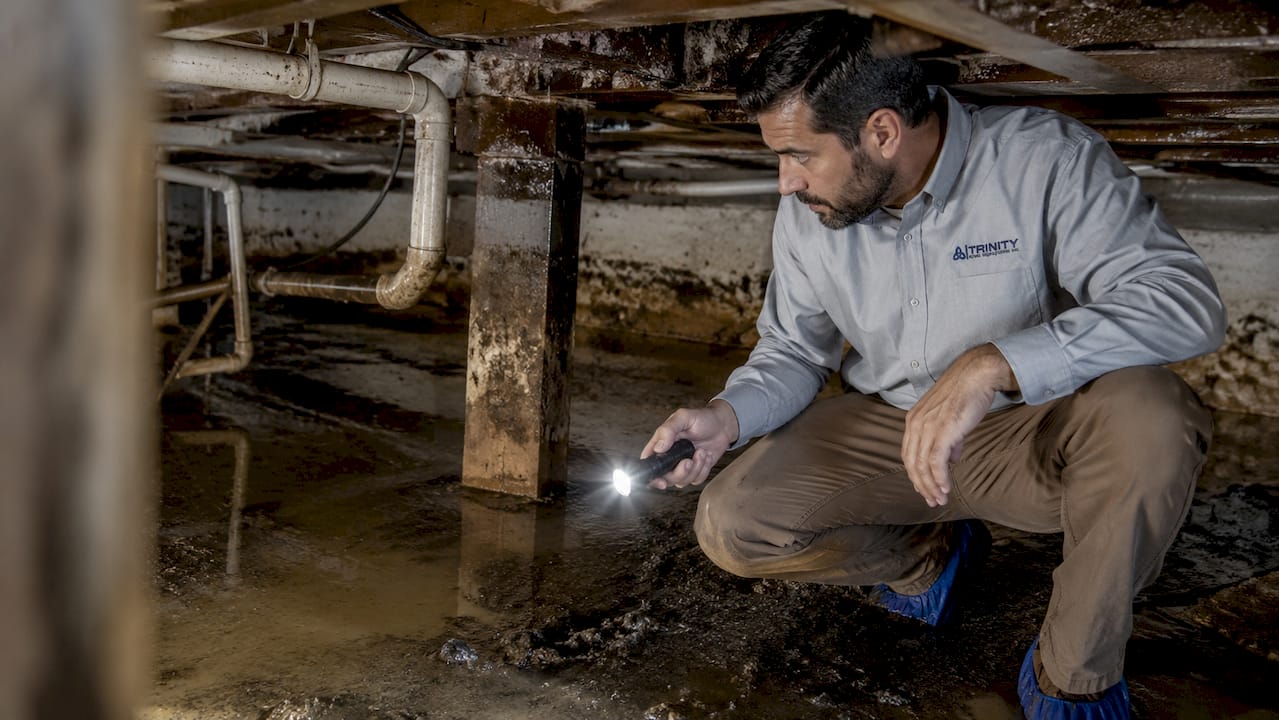
Standing water in a crawlspace is defined as any pooled or accumulated water that sits on the crawlspace floor and does not drain within a normal drying period. This is one of the most serious conditions a Gulf Coast Alabama home can have. Mold growth begins within 24–48 hours of water exposure, and untreated crawlspace flooding can lead to repair costs between $8,000 and $15,000 once floor joists and structural beams are involved. The industry term for this category of problem is “crawlspace water intrusion,” and it covers everything from a slow plumbing leak to full seasonal flooding. In humid coastal climates like Mobile and Baldwin County, the conditions that cause water intrusion are present year-round, which makes early detection and fast action the two most important things you can do to protect your home.
What causes standing water in crawlspaces in Gulf Coast Alabama homes?
The most common cause of standing water in a crawlspace is failed exterior water management, not a cracked foundation or a plumbing catastrophe. That distinction matters because it changes where you look first and what you fix first.
Here are the six most frequent sources of crawlspace water intrusion in Gulf Coast Alabama homes:
Poor exterior grading. When the soil around your foundation slopes toward the house instead of away from it, every rain event pushes surface water directly under your home. Alabama’s clay-heavy soils make this worse because clay holds water rather than absorbing it.
Missing, clogged, or short downspouts. Gutters that dump water within two feet of the foundation are one of the leading contributors to crawlspace flooding. A properly extended downspout should discharge water at least four to six feet from the foundation wall.
High groundwater tables. In low-lying areas near Mobile Bay, the Tensaw Delta, or coastal communities like Gulf Shores and Orange Beach, the water table can rise seasonally and push water up through the soil floor of a crawlspace. No amount of interior drainage fixes this without also addressing exterior pressure.
Plumbing and HVAC leaks. Supply lines, drain lines, and condensate drain pans from HVAC equipment all run through crawlspaces. A slow drip from a fitting can go unnoticed for months and create a persistent wet zone under your floors.
Failed or absent vapor barriers. A vapor barrier is a polyethylene sheet installed across the crawlspace floor to block ground moisture from evaporating upward. When it is torn, missing, or improperly overlapped, ground moisture accumulates freely.
Clogged or absent interior drainage. Some crawlspaces have perimeter drain tile or French drains designed to collect and redirect water. When these clog with sediment or root intrusion, water backs up and pools.
Gulf Coast Alabama’s combination of heavy rainfall, high humidity, and clay soil creates conditions where multiple causes often occur at the same time. A crawlspace moisture guide specific to lower Alabama walks through how these regional factors stack up against each other.
How does standing water affect the structure and health of your home?
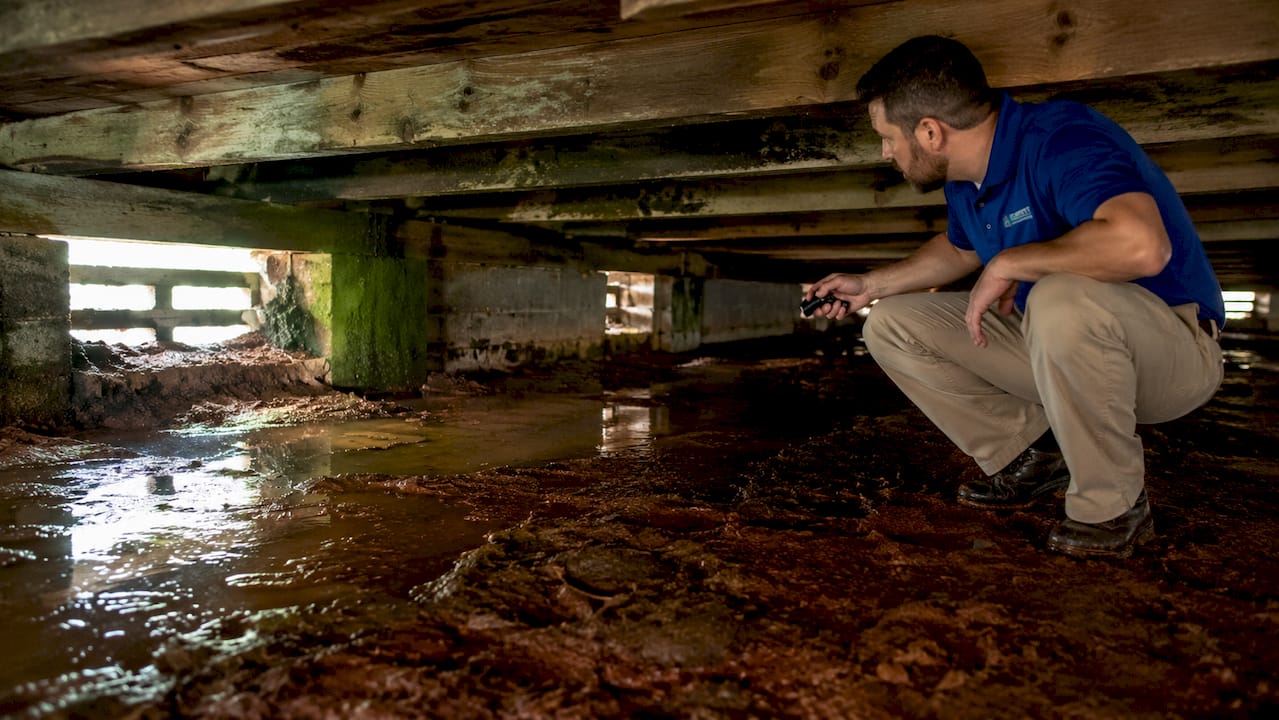
Standing water in a crawlspace does not stay in the crawlspace. Up to 40% of the air on a home’s first floor comes directly from the crawlspace. That means mold spores, moisture, and contaminants travel upward into the rooms where your family lives and breathes.
The damage follows a predictable sequence:
Mold and mildew growth. Mold colonies establish within 24–48 hours on wet wood, insulation, and vapor barriers. Residents with asthma, allergies, or respiratory conditions feel the effects first, often before any visible mold is discovered.
Wood rot in structural members. Floor joists, beams, and sill plates absorb moisture and begin to soften. Once wood rot spreads to load-bearing members, the repair scope expands quickly and costs escalate toward the $8,000–$15,000 range cited by foundation repair professionals.
Pest infestations. Persistent crawlspace moisture attracts termites, carpenter ants, and rodents. Termites are especially destructive because they consume wood from the inside out, making damage invisible until it is severe. You can read more about termite damage signs in crawlspaces to know what to look for.
Deterioration of interior finishes. Elevated humidity from a wet crawlspace causes wood flooring to cup and buckle, paint to peel, and wallpaper to separate. Homeowners often spend money fixing these symptoms without ever finding the crawlspace source.
Stack effect air circulation. The stack effect is the natural upward movement of air through a home driven by temperature differences. It continuously pulls crawlspace air, including moisture and volatile organic compounds, into living areas. Standing water turns this normal ventilation process into a health hazard.
Electrical hazards. Water that contacts wiring, junction boxes, or electrical equipment in the crawlspace creates a shock risk. This is not a theoretical concern. Corroded wiring from repeated moisture exposure is a fire risk even after the water is gone.
Pro Tip: If you notice a musty smell on your first floor that gets stronger after rain, your crawlspace is the first place to check. That odor is mold or mildew, and it means the stack effect is already pulling contaminated air into your living space.
How can you identify standing water and assess its seriousness?
Identifying crawlspace water issues early gives you the most options and the lowest repair costs. The warning signs range from obvious to subtle, and knowing both categories helps you catch problems before they compound.
Visible and sensory warning signs:
Pooled or standing water visible from the crawlspace access hatch
A persistent musty or sewage odor coming from floor vents or the access door
Sagging, soft, or bouncy floors above the crawlspace
Visible mold patches on joists, insulation, or the vapor barrier
Insulation that has fallen from between joists due to moisture weight
Rust stains on metal components like HVAC ducts, straps, or fasteners
Safety precautions before entering:
Never enter a flooded crawlspace if water is in contact with electrical wiring, outlets, or equipment. Energized components in standing water create a lethal shock hazard. Turn off the circuit breaker serving the crawlspace before any entry, and if you smell sewage, treat the water as a biohazard and call a professional immediately.
Assessing severity:
Minor dampness on the vapor barrier after heavy rain is different from standing water that covers the crawlspace floor. Dampness that dries within 24 hours is a moisture management concern. Water that persists beyond 48 hours, covers a large area, or has a sewage or chemical odor requires professional extraction and investigation.
A moisture meter pressed against floor joists gives you a concrete reading. Wood moisture content above 19% puts joists at risk for mold. Above 28%, wood rot becomes active. Probing joists with a screwdriver also works: if the tip sinks easily into the wood, rot is already present.
Pro Tip: When assessing a home you are considering buying in Baldwin or Mobile County, ask specifically whether the crawlspace has ever had standing water. Sellers are required to disclose known defects in Alabama, but not every seller volunteers crawlspace history. A crawlspace inspection before closing gives you documented evidence either way.
What are the best steps to fix standing water problems and prevent recurrence?
Fixing crawlspace water issues requires addressing the source, removing the water, and then protecting against recurrence. Skipping any one of these steps leads to the same problem returning.
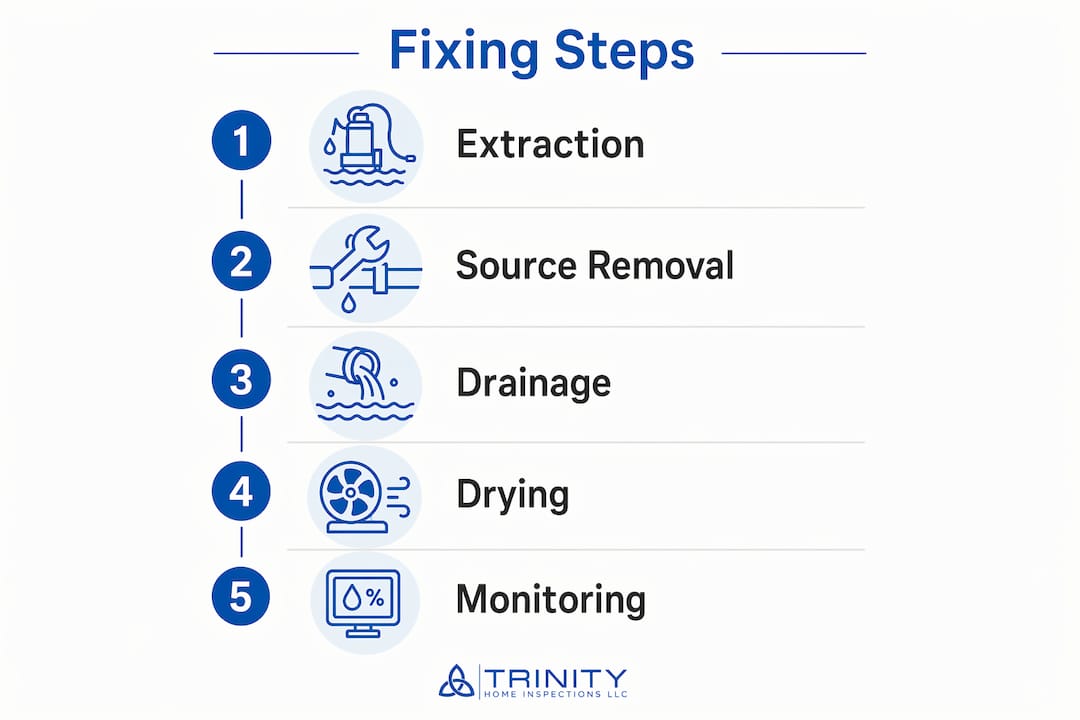
Step 1: Professional water extraction
Professional water removal costs between $800 and $3,000 depending on water volume, contamination level, and crawlspace accessibility. This is the necessary first step. You cannot assess damage, install drainage, or dry the space effectively while water is still present.
Step 2: Fix the root cause
Most standing water problems trace back to exterior water management failures. Address these before spending money on interior solutions:
Regrade soil around the foundation so it slopes away at a minimum of one inch per foot for the first six feet
Clean gutters and extend downspouts at least four to six feet from the foundation
Repair or replace any plumbing or HVAC components leaking in the crawlspace
Address any sewer line issues with a professional sewer scope inspection if sewage odor was present
Step 3: Install interior drainage solutions
Once exterior sources are controlled, interior systems protect against residual groundwater pressure and heavy rain events:
Vapor barriers (6-mil polyethylene minimum, 20-mil for encapsulation) block ground moisture from evaporating into the crawlspace
Sump pumps collect water that enters despite exterior controls and discharge it away from the foundation
French drains or perimeter drain tile channel water toward the sump pit before it pools
A crawlspace drainage cost guide breaks down what homeowners in Gulf Coast Alabama typically pay for each of these systems in 2026.
Step 4: Dry and monitor
Dehumidifiers and fans support drying after water removal, but using them without fixing the water source is a waste of time and money. They cannot overcome continuous water intrusion. Once the source is fixed and water is extracted, a crawlspace dehumidifier set to maintain relative humidity below 60% helps prevent mold recurrence.
A comprehensive approach combining exterior grading, professional extraction, and interior drainage systems produces durable results. Temporary fixes like plastic sheeting draped loosely over wet soil or moisture absorber packets do not solve the underlying problem.
Ongoing maintenance checklist:
Inspect gutters and downspouts every spring and fall
Check the vapor barrier annually for tears, gaps, or standing water
Test the sump pump before the rainy season
Schedule a professional crawlspace inspection every one to two years
Key Takeaways
Standing water in a crawlspace is a structural and health emergency that requires professional extraction, root-cause repair, and interior drainage to prevent mold, wood rot, and pest damage.
Point | Details |
Act within 24–48 hours | Mold growth begins within 24–48 hours; delays push repair costs toward $8,000–$15,000. |
Fix exterior drainage first | Most crawlspace flooding traces to poor grading or failed gutters, not foundation failure. |
Air quality is at stake | Up to 40% of first-floor air comes from the crawlspace, making moisture a health issue. |
Dehumidifiers alone are not enough | Drying equipment cannot overcome an active water source; fix the root cause first. |
Professional inspection is the safest path | Electrical hazards and sewage contamination make wet crawlspaces dangerous to enter without assessment. |
What I have learned inspecting crawlspaces across Gulf Coast Alabama
The most common mistake I see homeowners make is treating crawlspace water as a nuisance rather than a warning. They throw a dehumidifier under the house, close the access hatch, and move on. Six months later, they are looking at rotted joists and a mold remediation bill that dwarfs what a proper fix would have cost.
What surprises most people is how quickly the damage spreads. Wood rot does not stay in one spot. It follows the moisture, and in a humid Gulf Coast summer, moisture is everywhere under a home with standing water. I have inspected homes in Daphne and Foley where the floor felt completely solid from above, but the joists underneath were soft enough to push a screwdriver through by hand. The homeowners had no idea.
The stack effect is the piece most homeowners never think about. Your home breathes. It pulls air from the lowest point upward. If that air is carrying mold spores and moisture from a wet crawlspace, your family is breathing it every day. That is not a scare tactic. It is physics, and it is why I take crawlspace conditions as seriously as I take the roof or the electrical panel.
My honest advice: do not confuse a dry crawlspace on the day you bought the house with a crawlspace that stays dry. Gulf Coast Alabama gets significant rainfall, and groundwater tables shift with the seasons. A crawlspace that looked fine in october can have standing water by february. Routine inspections are the only way to catch that before it becomes expensive.
If you are buying a home in Mobile, Baldwin, or Escambia County, insist on a crawlspace inspection before closing. If you already own a home and have not looked under it in a year or more, schedule one. The cost of an inspection is a fraction of what you will spend if water damage goes undetected.
— Matt
Trinity Home Inspections can help you protect your home from crawlspace water damage
[

Alt text: Trinity Home Inspections inspector in khaki pants and blue shirt inspecting a crawlspace for standing water in Gulf Coast Alabama
Trinity Home Inspections serves homeowners, buyers, and investors across Mobile, Baldwin, Escambia, and surrounding Gulf Coast Alabama counties. Every inspection includes moisture meter readings, thermal imaging at no extra charge, and a same-day photo and video report that documents crawlspace conditions clearly. When mold is suspected, Trinity Home Inspections offers mold testing services with certified lab results. For homes where a plumbing leak may be contributing to crawlspace water, a sewer scope add-on checks the main line without any digging. If you are buying or selling, a pre-listing inspection surfaces crawlspace issues before they become negotiating surprises.
Call 251-210-7376 or visit TrinityInspectionsLLC.com to schedule your inspection today.
FAQ
How serious is standing water in a crawlspace?
Standing water in a crawlspace is a serious structural and health issue. Mold begins growing within 24–48 hours, and untreated water damage can cost $8,000–$15,000 to repair once floor joists are affected.
How long can water sit in a crawlspace before causing damage?
Damage begins within 24–48 hours. Mold establishes on wet wood and insulation quickly, and prolonged standing water accelerates wood rot and attracts termites and rodents.
Can standing water in a crawlspace affect indoor air quality?
Yes. Up to 40% of the air on a home’s first floor comes from the crawlspace. Mold spores, moisture, and contaminants travel upward through the stack effect into living areas.
What is the first step to fix standing water in a crawlspace?
Professional water extraction is the first step, typically costing $800–$3,000. After extraction, the root cause, whether poor grading, failed gutters, or a plumbing leak, must be repaired before any interior drainage solution is installed.
Is it safe to enter a crawlspace with standing water?
Not without precautions. Turn off the circuit breaker serving the crawlspace before entry, and do not enter if water is in contact with electrical wiring or equipment. If sewage odor is present, treat the water as a biohazard and call a professional.
Recommended
