
Salt Air Corrosion Near the Alabama Coast: Homebuyer Guide

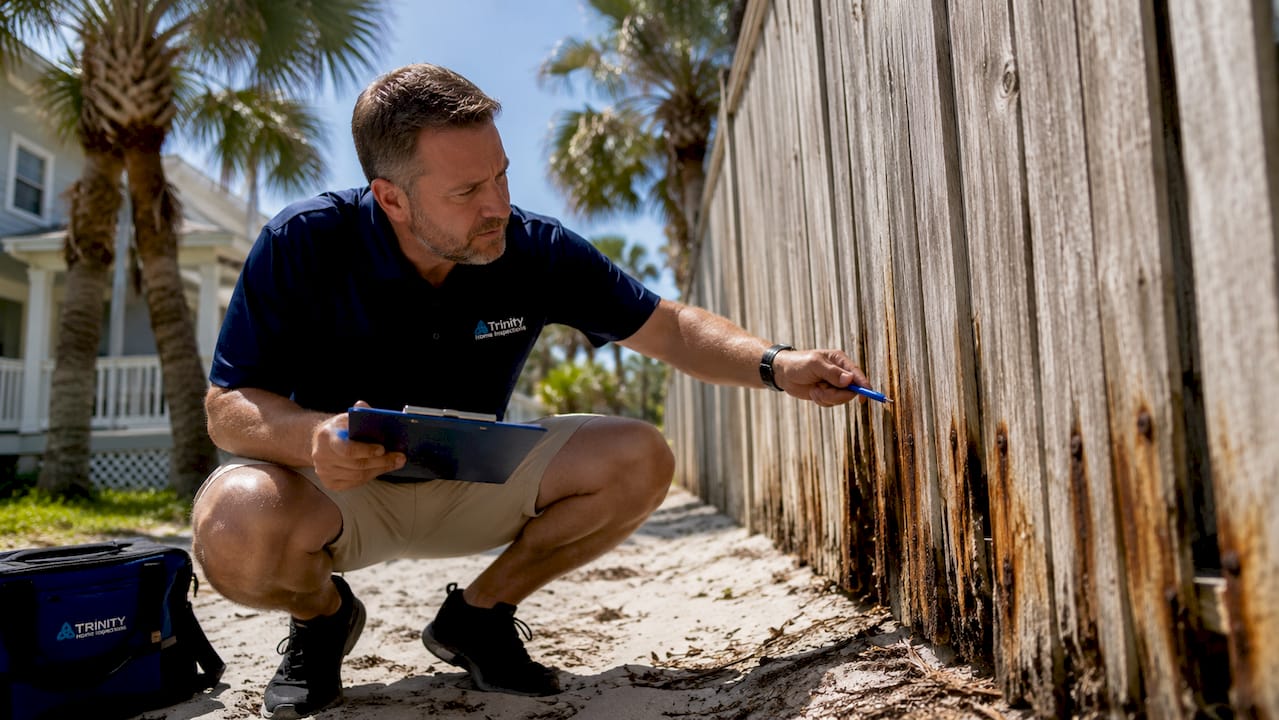
Salt air corrosion is the accelerated deterioration of home materials caused by airborne salt particles combining with moisture near the Alabama Coast, and every homebuyer in Baldwin and Mobile counties needs to understand it before closing. The industry term for this process is atmospheric corrosion, specifically classified under ISO 9223 corrosivity categories as C3 (medium) to C5 (very high) depending on your distance from the Gulf. What homebuyers should know about salt air corrosion near the Alabama Coast comes down to three realities: it affects more components than most buyers expect, it reaches farther inland than most buyers realize, and it costs far more to fix than to prevent. Salt air corrosion causes billions of dollars in annual property damage across coastal regions. That number reflects what happens when buyers skip prevention and wait for visible damage to appear.
How does salt air cause corrosion and what home components are most vulnerable?
Salt air corrosion works through electrochemical reaction. Airborne salt particles land on metal surfaces and dissolve in moisture, creating a conductive film that pulls electrons from the metal. That electron transfer is corrosion, and it happens continuously in a coastal environment like Gulf Shores, Orange Beach, or Fairhope.
The components most vulnerable on an Alabama Coast home include:
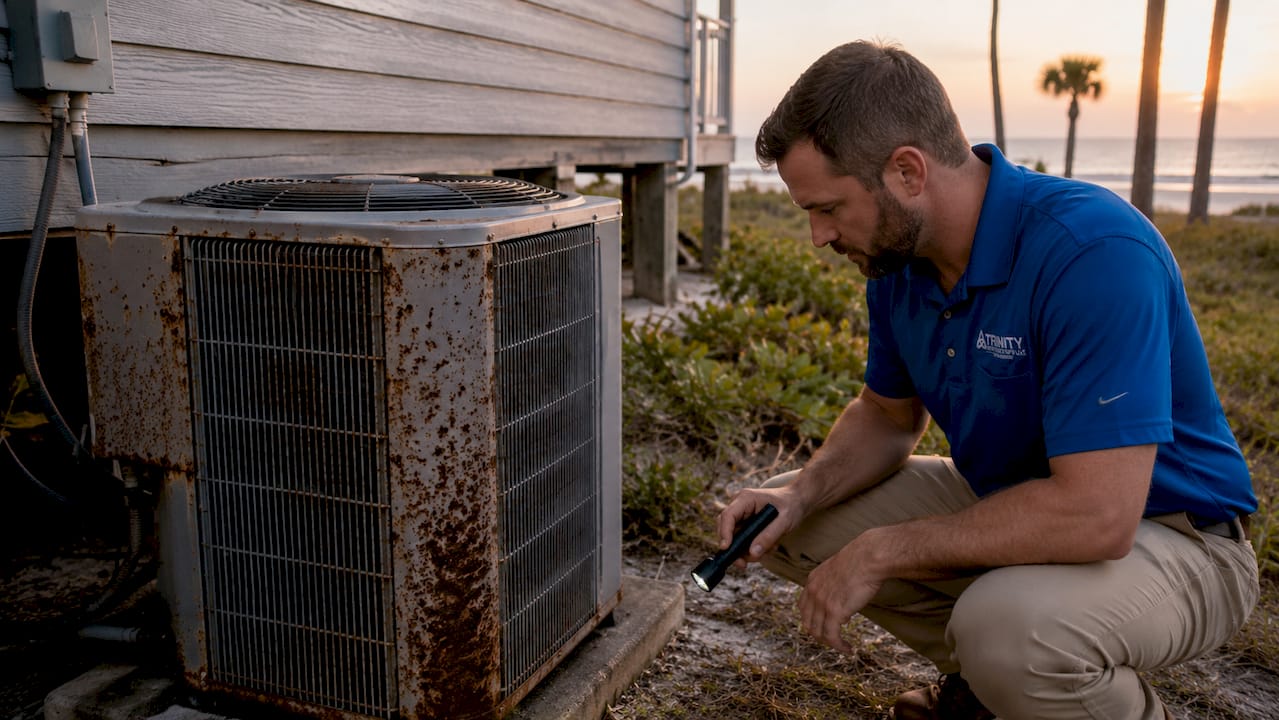
HVAC coils and condenser units: Outdoor units sit directly in salt-laden air and corrode faster than any other mechanical system.
Metal railings and fasteners: Standard carbon steel railings rust visibly within one to two seasons near the shoreline.
Exterior paint and coatings: Salt particles abrade and penetrate paint films, causing peeling, bubbling, and chalking.
Window frames and tracks: Aluminum frames pit and tracks seize when salt deposits build up in the channels.
Plumbing and exposed copper lines: Salt air accelerates galvanic corrosion where dissimilar metals meet.
Roofing fasteners and flashing: Metal screws and flashing corrode at the point of contact with decking, creating leak pathways.
Salt air penetrates up to 1 mile inland under normal conditions, with concentration dropping from 100% at the shoreline to roughly 10% at one mile out. That reduction sounds reassuring, but even 10% salt concentration causes measurable damage over years. A home in Daphne or Spanish Fort is not immune. Buyers purchasing property several miles from the water still face real corrosion risk, just on a slower timeline.
Corrosion symptoms to watch for during a property walkthrough include rust staining on exterior walls below metal fixtures, pitting on aluminum window frames, fogged or etched glass panes, and paint that peels from the bottom edges of siding. Each symptom signals that corrosion is already underway and that the repair clock has started.
Component | Corrosion Risk Level | Common Symptom |
Outdoor HVAC unit | Very High | Coil pitting, reduced efficiency |
Metal railings | High | Rust staining, surface flaking |
Exterior paint | High | Peeling, chalking, bubbling |
Window frames | Medium to High | Pitting, fogged glass, stuck tracks |
Plumbing lines | Medium | Pinhole leaks, discolored water |
Roofing fasteners | Medium | Rust streaks on roof deck |
What preventive maintenance routines should homebuyers adopt for salt air protection?
Consistent maintenance is the single most effective tool against salt air damage in Alabama. A written schedule keeps you from skipping tasks during busy seasons, and the tasks themselves are not complicated. The challenge is frequency and follow-through.
Rinse exterior surfaces weekly to monthly. Fresh water rinsing removes salt deposits before they penetrate coatings. Focus on railings, window frames, outdoor furniture, and any exposed metal. Low-pressure fresh water washing of HVAC coils two to four times per year significantly slows corrosion on outdoor units.
Schedule quarterly HVAC professional maintenance. Coastal HVAC systems need more frequent attention than units in inland Alabama. A technician familiar with Gulf Coast conditions will clean coils with appropriate solutions, check for pitting, and apply corrosion-resistant coatings where needed. Quarterly professional maintenance with specialized coil cleaning can roughly double the lifespan of outdoor HVAC equipment near the Gulf Coast. That is a significant return on a routine service call.
Clean window tracks weekly. Salt deposits in window and door tracks cause mechanical failure over time. A quick wipe with a damp cloth removes buildup before it hardens and locks the track.
Use purified water for glass cleaning. Tap water in coastal areas carries minerals that leave deposits on glass when they dry. Purified water for glass cleaning prevents mineral spotting and permanent etching, which is costly to restore once it sets.
Inspect and touch up exterior paint annually. Any breach in the paint film gives salt air direct access to the substrate. Walk the perimeter of the home each spring and address chips, cracks, or peeling sections before the summer humidity season intensifies.
Schedule a professional home inspection annually. A trained inspector identifies corrosion in areas you cannot easily see, including crawlspaces, attic fasteners, and behind HVAC equipment. The top reasons to get a home inspection in Alabama include catching corrosion damage before it becomes a structural issue.
Pro Tip: Clear window and door tracks every week, not every month. Salt deposits harden quickly in Alabama’s heat and humidity. A 30-second wipe prevents a $400 track replacement.
Which materials best resist salt air corrosion on the Alabama Coast?
Material selection is the most consequential decision a coastal homebuyer or builder makes. The wrong materials fail prematurely and generate repair costs that dwarf the original savings. The right materials hold up for decades with routine care.
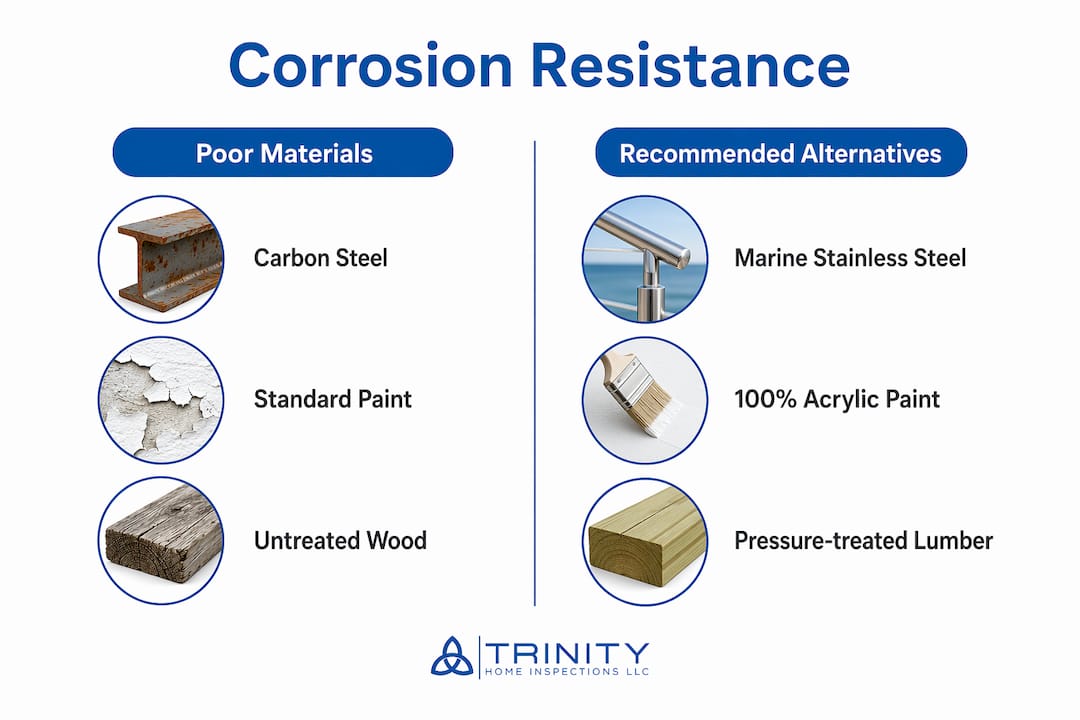
Marine-grade stainless steel (316 or 316L) with molybdenum content is the standard for coastal hardware, railings, fasteners, and fixtures. Molybdenum increases resistance to chloride attack, which is the specific mechanism salt air uses to corrode metal. Standard 304 stainless steel, which is common inland, lacks sufficient molybdenum and corrodes visibly near the Gulf within a few years.
For exterior wood, pressure-treated lumber rated for ground contact provides better resistance than standard framing lumber, but it still needs a quality sealant reapplied every one to two years. Composite decking materials with solid cores outperform hollow-core options because they give salt air fewer entry points.
Exterior paint on coastal homes should use a 100% acrylic formula with a mildew-resistant additive. Alkyd (oil-based) paints chalk and crack faster in the combination of salt air and UV exposure common along the Alabama Gulf Coast. For roofing, metal roofs with Kynar 500 or Hylar 5000 coatings provide strong corrosion resistance. Standard galvanized steel roofing corrodes faster in high-salinity environments and is not the best choice for homes within a mile of the water.
Material | Performance Near Coast | Recommended Alternative |
Standard carbon steel | Fails within 1–3 years | Marine-grade 316/316L stainless steel |
304 stainless steel | Moderate; corrodes near shore | 316L stainless with molybdenum |
Alkyd exterior paint | Chalks and cracks quickly | 100% acrylic with mildew inhibitor |
Standard galvanized roofing | Corrodes in high-salinity zones | Kynar 500-coated metal roofing |
Hollow-core composite decking | Salt infiltrates core | Solid-core composite decking |
Pro Tip: When touring a home for purchase, bring a small magnet. If it sticks to the railings or exterior hardware, those are standard steel or low-grade stainless. Marine-grade 316 stainless is weakly magnetic at best. Knowing the hardware grade tells you a lot about what the previous owner invested in.
How does salt air corrosion affect indoor plumbing and HVAC systems?
Salt air does not stop at the exterior walls. It infiltrates through gaps around windows, doors, and HVAC penetrations, and it raises indoor humidity levels that accelerate corrosion inside the home. Buyers often focus on what they can see outside and miss what is happening inside.
Salt air increases corrosion risk inside plumbing by forming conductive films on pipe surfaces that accelerate rust and galvanic reactions, especially in unprotected cast iron and copper pipes. Older homes in Mobile and Baldwin counties with cast iron drain lines are particularly vulnerable. Pinhole leaks in copper supply lines are another common finding in coastal homes that have not had regular plumbing inspections.
Strategies to protect indoor systems include:
Insulate cold water lines in crawlspaces and garages. Condensation on cold pipes in humid coastal air creates a constant moisture film that feeds corrosion. Foam pipe insulation eliminates the condensation source.
Improve crawlspace and garage ventilation. Stagnant, humid air in enclosed spaces accelerates corrosion on metal components. Proper cross-ventilation or a crawlspace encapsulation system keeps moisture levels manageable.
Control indoor humidity. Keeping indoor relative humidity between 45% and 55% reduces the moisture available for electrochemical corrosion on interior metal surfaces. A coastal home humidity control strategy is not optional in Gulf Coast Alabama. It is part of basic home maintenance.
Schedule HVAC coil cleaning quarterly. Indoor evaporator coils also corrode in high-humidity coastal environments, especially if the air handler pulls in outside air. A corroded evaporator coil reduces efficiency and eventually fails, requiring full replacement.
Have plumbing inspected before purchase. A sewer scope inspection uses a camera to check the main drain line for corrosion, cracking, and buildup that a standard visual inspection cannot detect.
The combination of salt air infiltration and Alabama’s high ambient humidity creates conditions that age indoor systems faster than most buyers from inland states expect. Budget for these systems accordingly.
What are the financial implications of salt air corrosion for Alabama Coast homebuyers?
Salt air corrosion is a financial issue as much as a maintenance issue. Buyers who understand the cost structure make better decisions at the negotiating table and avoid expensive surprises after closing.
Early detection and regular inspections reduce repair costs by 80–90% compared to waiting for visible structural damage. That gap is the core financial argument for proactive maintenance. A corroded HVAC coil caught early costs a few hundred dollars to treat. A failed unit costs $5,000 to $10,000 to replace.
Typical annual maintenance budgets for salt air-affected homes range between $2,500 and $5,000. That figure covers quarterly HVAC service, exterior rinsing, paint touch-ups, hardware inspections, and one professional home inspection per year. Buyers who skip this budget often face repair bills that far exceed it in a single year.
Key financial considerations for coastal homebuyers include:
Negotiate based on inspection findings. Corrosion damage identified during a pre-purchase inspection gives you real leverage to request price reductions or seller-paid repairs.
Factor maintenance costs into your total housing budget. A coastal home priced attractively may carry higher annual maintenance costs than a comparable inland property.
Check insurance coverage for corrosion-related damage. Standard homeowner’s policies typically exclude gradual corrosion damage. Understand what your policy covers before you close.
Disclose known corrosion issues if you sell. Alabama requires sellers to disclose known material defects. Corrosion that affects structural integrity or mechanical systems qualifies.
Plan for accelerated replacement cycles. HVAC units, exterior paint, and hardware near the Gulf Coast have shorter useful lives than manufacturer estimates, which are based on average conditions, not coastal Alabama conditions.
Key Takeaways
Salt air corrosion near the Alabama Coast is a predictable, manageable risk that costs far less to prevent than to repair, and every homebuyer in Baldwin or Mobile County should treat it as a line item in their budget from day one.
Point | Details |
Salt air reaches inland | Corrosion risk extends up to 1 mile from shore, affecting homes well beyond the waterfront. |
Material choice matters most | Marine-grade 316/316L stainless steel outperforms standard metals and pays for itself over time. |
Quarterly HVAC service doubles equipment life | Professional coil cleaning four times per year is the highest-return maintenance task for coastal homes. |
Prevention costs far less than repair | Annual maintenance budgets of $2,500–$5,000 prevent repairs that can cost many times more. |
Indoor systems need attention too | Plumbing, crawlspaces, and HVAC interiors corrode from salt air infiltration and high humidity. |
What I’ve learned inspecting coastal homes in Baldwin and Mobile counties
I have walked through hundreds of homes across Gulf Shores, Orange Beach, Fairhope, and Mobile. The pattern I see most often is not dramatic structural failure. It is the slow accumulation of deferred maintenance that buyers inherit without knowing it.
The most common missed item is the HVAC condenser. Buyers look at the age of the unit and assume it has years left. What they do not see is the corroded coil fins that have already cut efficiency by 30% and will cause a full failure within one season. A trained eye and a moisture meter tell a different story than a quick glance.
The second most common issue is window track corrosion in older aluminum-frame homes. Tracks seize, windows stop operating, and what looks like a minor inconvenience turns into a full window replacement because the frame itself has corroded through. I have seen this in homes less than 10 years old near the water.
My honest advice to every buyer near the Alabama Coast: do not skip the inspection, and do not hire an inspector who does not know this environment. Coastal inspections require specific knowledge of what salt air does to materials over time. An inspector who learned their trade in a landlocked state may miss what an experienced Gulf Coast inspector catches immediately. The coastal HVAC maintenance protocols alone are different enough to matter. Hire someone who knows the difference.
Coastal living is worth it. The Gulf Coast is one of the most beautiful places in the country to own a home. Going in with clear eyes about maintenance requirements makes the experience better, not worse. You are not buying a problem. You are buying a property that rewards consistent care.
— Matt
How Trinity Home Inspections helps coastal homebuyers protect their investment
Trinity Home Inspections provides InterNACHI-certified inspections across Baldwin, Mobile, and surrounding Gulf Coast Alabama counties, with specific attention to the corrosion risks that coastal homes carry. Every inspection includes free thermal imaging to detect hidden moisture, moisture meter readings in crawlspaces and around plumbing, and a same-day photo and video report you can use at the negotiating table.
[
For coastal homes, Trinity Home Inspections also offers sewer scope inspections to check drain lines for corrosion damage, and mold testing services for homes where moisture infiltration has created conditions for mold growth alongside corrosion. You get one report, one visit, and clear answers before you close.
Call 251-210-7376 or visit TrinityInspectionsLLC.com to schedule your inspection.
FAQ
How far inland does salt air corrosion affect Alabama homes?
Salt air penetrates up to 1 mile inland under normal conditions. Even at that distance, salt concentration remains high enough to cause measurable corrosion over time.
What is the best material for railings and hardware near the Alabama Coast?
Marine-grade stainless steel 316 or 316L with molybdenum content is the best choice. It resists chloride attack far better than standard 304 stainless or carbon steel.
How often should I have my HVAC serviced in a coastal Alabama home?
Quarterly professional maintenance is the standard for homes near the Gulf Coast. That frequency roughly doubles outdoor equipment lifespan compared to annual service schedules.
How much should I budget annually for salt air maintenance in Alabama?
Plan for $2,500 to $5,000 per year for a coastal Alabama home. That budget covers HVAC service, exterior cleaning, paint maintenance, and a professional inspection.
Does a standard home inspection cover salt air corrosion?
A standard inspection evaluates visible components, but a coastal-experienced inspector knows where to look for corrosion that is not immediately visible. Ask your inspector specifically about their experience with Gulf Coast properties before you book.
Recommended

