
Thermal Imaging in a Home Inspection: What It Finds

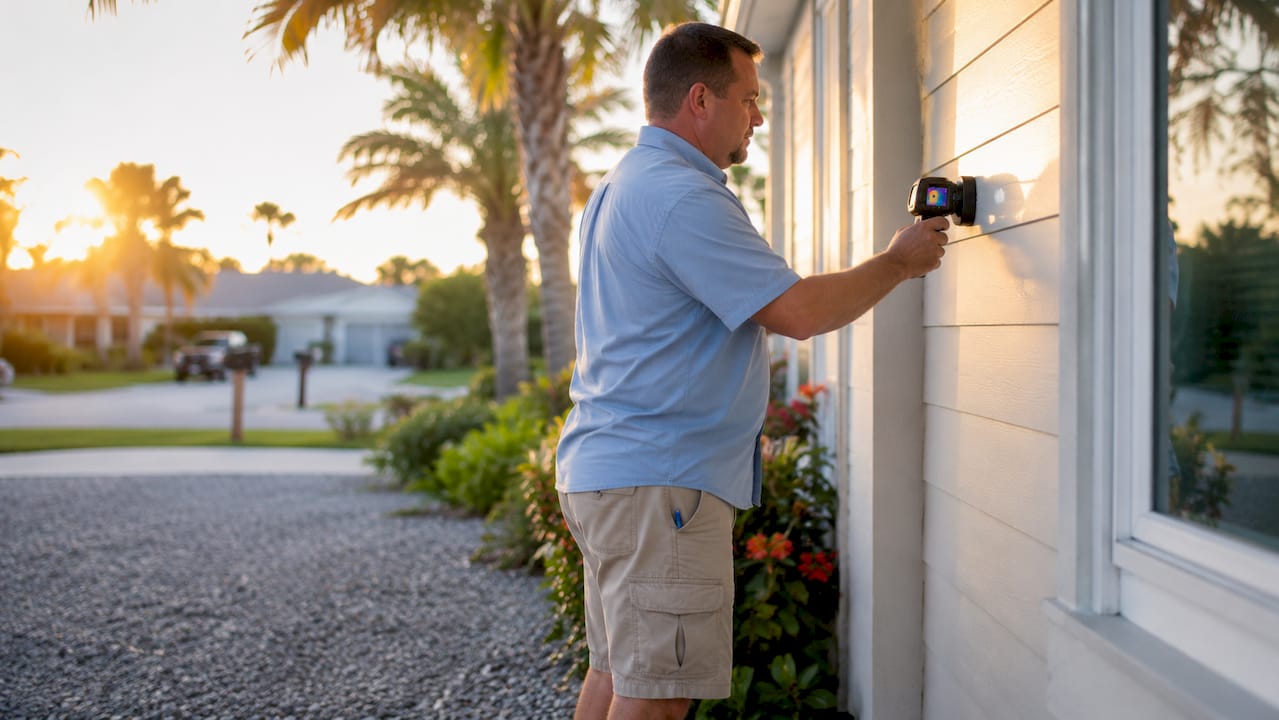
Thermal imaging in a home inspection is a non-destructive screening method that detects surface temperature differences using an infrared camera to reveal hidden building issues. The industry term for this process is infrared thermography. It identifies problems like moisture intrusion, insulation voids, HVAC duct leaks, and electrical overheating that are invisible to the naked eye. The U.S. Department of Energy recognizes thermographic inspections as a reliable tool for diagnosing energy loss and building deficiencies. Trinity Home Inspections includes thermal imaging at no extra charge with every inspection across Baldwin, Mobile, and the surrounding Gulf Coast Alabama area.
What does thermal imaging detect in a home inspection?
Infrared thermography reveals a wide range of hidden problems by reading temperature differences on surfaces. A trained inspector reads those temperature patterns the way a doctor reads an X-ray. The findings guide further investigation, not final diagnosis.
Here are the most common issues a thermal camera in inspections can identify:
Moisture intrusion and water leaks. Water-soaked building materials hold temperature differently than dry materials. A wet ceiling or wall cavity shows as a cool, irregular patch on the thermal image. This is one of the most valuable hidden moisture detections thermal imaging provides.
Insulation voids and gaps. Missing or settled insulation creates temperature differentials along walls, ceilings, and floors. These voids show up clearly when there is a meaningful temperature difference between inside and outside the home.
HVAC duct leaks. Conditioned air escaping through leaky ductwork creates warm or cool streaks along walls and ceilings. Identifying these leaks early prevents energy waste and uneven comfort throughout the home.
Electrical hot spots. Overloaded circuits, failing breakers, and loose connections generate heat. The U.S. Department of Energy confirms that thermal imaging can identify these electrical hot spots through panel covers, which supports fire prevention and safety assessments.
Roof and attic heat loss. Thermal scans of attic spaces reveal where heat escapes through the roof deck, helping homeowners prioritize insulation upgrades.
Plumbing leaks behind walls. Active water supply leaks warm the surrounding framing. A thermal camera can flag these areas for follow-up with a moisture meter.
Thermal imaging benefits extend well beyond the inspection day. When you know where insulation is missing or where a circuit is running hot, you can address those issues before they become expensive repairs. Common issues in new homes are frequently found with infrared thermography, even in recently built properties where construction defects are not yet visible.
Pro Tip: Ask your inspector to scan the electrical panel during the inspection. Overloaded breakers and loose connections produce heat signatures that are invisible without a thermal camera, and catching them early is one of the clearest thermal imaging benefits available.
What are the limitations of thermal imaging in a home inspection?
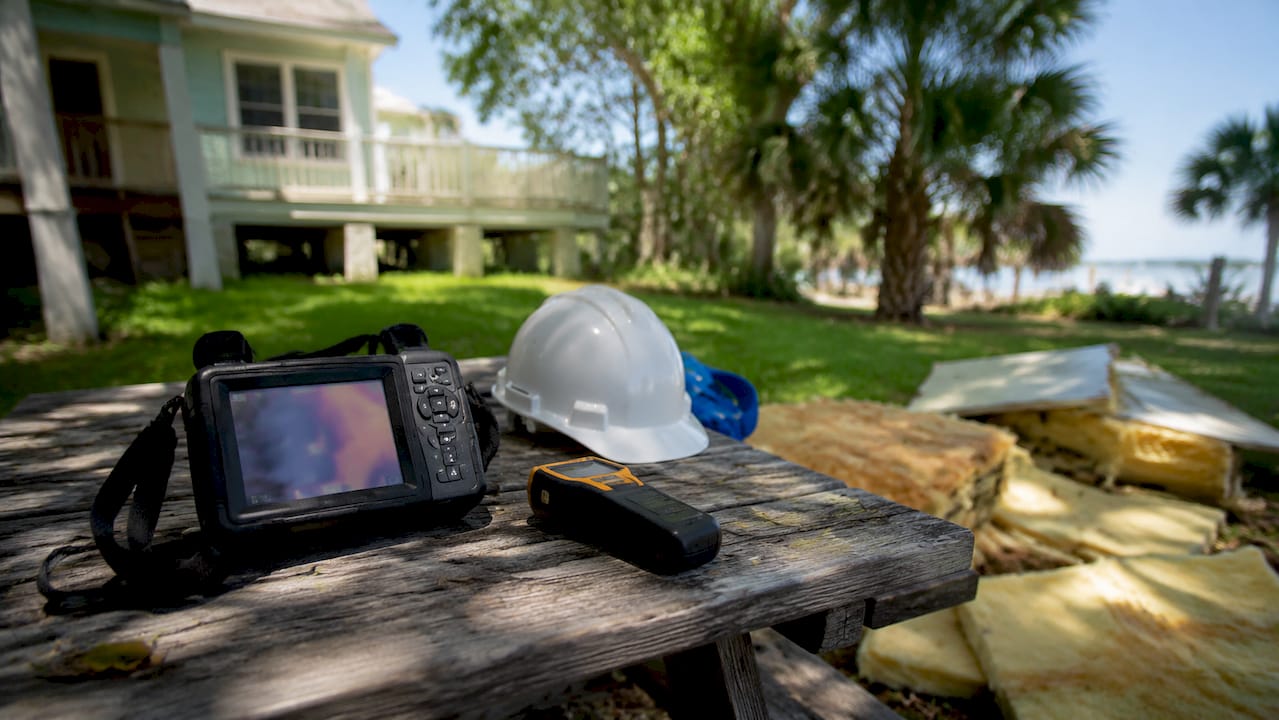
Thermal imaging cannot see through walls. This is the most common misconception buyers bring to an inspection. The camera reads surface temperatures only. What lies behind the drywall stays hidden unless the temperature difference is large enough to conduct through the surface material.
Understanding these limitations protects you from false confidence and helps you ask the right follow-up questions:
It cannot detect mold directly. Thermal imaging identifies temperature patterns that suggest moisture, but mold cannot be confirmed without physical sampling and lab testing. A cool spot on a wall means moisture is possible. It does not mean mold is present.
It cannot measure moisture content. A thermal anomaly is a symptom, not a measurement. Moisture meters are required to confirm whether a surface is actually wet and to what degree.
It cannot diagnose root causes. Seeing a cool patch near a window tells you something is wrong. It does not tell you whether the cause is a failed window seal, a roof leak above, or a plumbing supply line nearby.
It misses defects without thermal signatures. Structural cracks, corroded pipes, faulty outlets, and mechanical failures that do not generate or absorb heat will not appear on a thermal image. Thermal imaging as a diagnostic indicator supplements a visual inspection. It does not replace it.
It is affected by surface materials. Shiny metal surfaces reflect heat from other sources, creating false readings. Concrete slabs retain heat from sunlight for hours, masking real anomalies underneath.
The National Home Inspection Authority notes that over-reliance on color patterns without complementary tools like moisture meters leads to misinterpretation of thermal images. This is why the inspector’s judgment matters as much as the camera itself.
Pro Tip: Before booking an inspection, ask the inspector what tools they use alongside the thermal camera. A professional should always pair infrared findings with a moisture meter and a thorough visual inspection. If they rely on the camera alone, that is a red flag.
How do environmental conditions affect thermal imaging accuracy?
Environmental conditions directly control whether a thermal scan produces useful results. A scan done on a mild spring day with 68°F inside and 70°F outside will show almost nothing. The camera needs contrast to work.
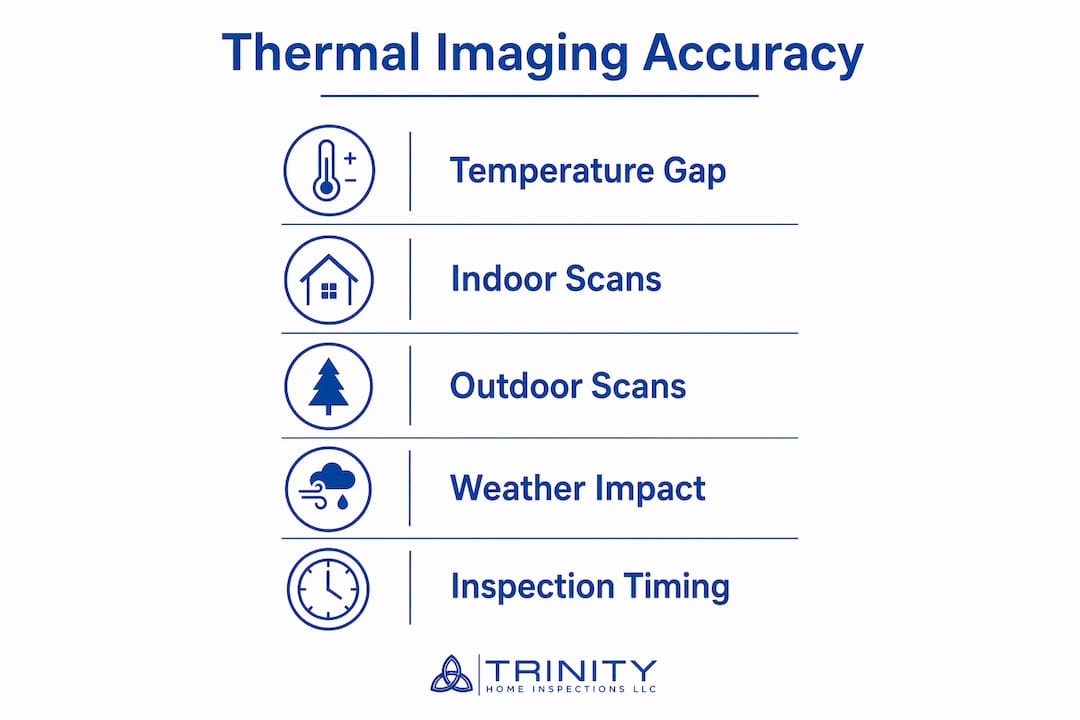
The U.S. Department of Energy recommends a minimum indoor-outdoor temperature difference of 10°F for effective thermographic inspections. Without that differential, insulation voids and moisture patterns simply do not show up with enough contrast to be meaningful. In Gulf Coast Alabama, the best conditions for thermal scans occur in cooler months, typically november through february, when the gap between indoor air conditioning and outdoor temperatures is widest.
The table below summarizes the key environmental factors and their impact on scan quality:
Factor | Effect on Thermal Scan | Best Practice |
Indoor-outdoor temperature gap | Low gap reduces contrast; anomalies become invisible | Aim for 10°F+ difference |
Direct sunlight on exterior walls | Heats surfaces unevenly, creating false hot spots | Scan interior surfaces; avoid post-sunrise exterior scans |
Recent rain | Evaporative cooling can mimic moisture intrusion | Wait 24 hours after heavy rain for exterior scans |
Wind | Cools surfaces unevenly, masking real anomalies | Interior scans are more reliable on windy days |
Equipment grade | Consumer cameras have lower resolution and sensitivity | Professional-grade cameras capture finer temperature differences |
Interior scans consistently outperform exterior scans because indoor conditions are controlled. Sunlight, wind, and rain do not interfere with a wall scan taken from inside the home. The National Home Inspection Authority confirms that professional-grade infrared thermography and consumer-grade thermal scans differ greatly in value. Equipment quality matters, but inspector expertise in reading the data matters even more.
Pro Tip: Schedule your inspection during cooler months if possible, especially in Alabama. The larger the temperature gap between inside and outside, the more useful the thermal scan will be for spotting insulation gaps and moisture issues.
How to use thermal imaging findings as a homebuyer or homeowner
A thermal anomaly on your inspection report is the beginning of an investigation, not the end. Knowing what to do next is what turns a finding into a real decision.
Here is a practical framework for acting on thermal imaging results:
Confirm with a moisture meter. Any cool or damp-looking area flagged by the thermal camera should be tested with a moisture meter before drawing conclusions. This step separates a real water intrusion from a temperature artifact.
Request further physical inspection. If moisture is confirmed, the next step is identifying the source. That may mean checking the roof above, the plumbing supply lines nearby, or the window flashing on the exterior.
Use findings in negotiations. Thermal imaging findings that are confirmed by additional tools give you documented evidence of a defect. That documentation supports repair requests or price adjustments before closing. Buyers who ask the right questions before closing are better positioned to negotiate.
Plan preventative maintenance. Insulation voids and minor duct leaks do not always require immediate repair, but they do belong on your maintenance budget. Addressing them before they worsen saves money over time.
Do not skip the standard visual inspection. Thermal imaging is a complement to a full inspection, not a substitute. Defects without heat signatures, such as structural cracks, corroded fasteners, or improperly wired outlets, require a trained inspector’s eyes and hands.
What’s included with Trinity Home Inspections thermal imaging service:
Professional-grade infrared camera scan of accessible interior surfaces
Electrical panel thermal scan for hot spots
Moisture meter follow-up on flagged areas
Thermal findings documented with photos in your same-day report
Plain-English explanation of every flagged area and recommended next steps
Trinity Home Inspections pairs every thermal scan with a moisture meter and a full visual inspection. Thermal findings are documented with photos and explained in plain English in your same-day report. If the scan flags something that warrants mold testing, the team can add that service on the spot without scheduling a separate appointment.
Key Takeaways
Thermal imaging is a powerful screening tool, but its findings only carry full weight when paired with moisture meters, visual inspection, and a trained inspector who knows how to read the data.
Point | Details |
Thermal imaging detects surface anomalies | It identifies moisture, insulation gaps, and electrical hot spots through temperature differences. |
It cannot see through walls | Results are surface readings only; root causes require follow-up with additional tools. |
Environmental conditions matter | A 10°F+ indoor-outdoor temperature gap is needed for reliable scan results. |
Inspector expertise is critical | Equipment quality alone does not determine accuracy; trained interpretation separates findings from false positives. |
Thermal imaging supplements, not replaces, visual inspection | Defects without heat signatures are missed if you rely on the camera alone. |
What I have learned after scanning hundreds of homes
I have run the thermal camera through attics in july heat and through crawl spaces in january cold. The tool never stops surprising me, and it never stops reminding me of its limits.
The biggest misconception I see from buyers is the belief that a thermal camera is essentially an X-ray machine. They expect it to show them everything hiding behind every wall. When I explain that it reads surface temperatures and nothing more, I can see the adjustment happen in real time. That adjustment is healthy. It means they will take the findings seriously without over-reading them.
The most valuable thermal finds I have made were not dramatic. A faint cool streak along a second-floor ceiling turned out to be a slow roof leak that had been wicking into the framing for months. No visible staining. No odor yet. The thermal camera caught it early enough that the repair was a few hundred dollars instead of a full ceiling replacement. That is the real value of this tool. It finds problems at the stage where they are still manageable.
What I also tell every client is this: the camera is only as useful as the person holding it. I have seen inspectors wave a thermal camera around a room for thirty seconds and call it done. That is not an inspection. Effective infrared thermography requires proper environmental conditions, professional-grade cameras, and a trained inspector interpreting data within the context of the home’s construction and history. When those three things come together, the results are genuinely useful. When they do not, you get a colorful image that means very little.
My honest advice is to ask your inspector how long they spend on the thermal scan and what they do when they find an anomaly. The answer tells you everything about whether the tool is being used properly or just checked off a list.
— Matt
Thermal imaging at Trinity Home Inspections: what to expect
Trinity Home Inspections includes professional thermal imaging at no extra charge with every inspection across Mobile, Baldwin, and the Gulf Coast Alabama region.
[

Every scan is performed with a professional-grade infrared camera and paired with moisture meter verification on any flagged area. Thermal findings are documented with photos and written in plain English in your same-day report. If the scan raises concerns about moisture, Trinity can add mold testing services or a pre-listing inspection without scheduling a second visit. Call 251-210-7376 or visit TrinityInspectionsLLC.com to book your inspection today.
FAQ
What does thermal imaging detect in a home inspection?
Thermal imaging detects surface temperature anomalies that indicate moisture intrusion, insulation voids, HVAC duct leaks, and electrical hot spots. It cannot see through walls or identify defects that do not produce a heat signature.
Can thermal imaging find mold?
Thermal imaging cannot detect mold directly. It identifies cool, damp-looking surface patterns that suggest moisture conditions where mold could grow, but lab testing is required to confirm mold presence.
What temperature conditions are needed for a good thermal scan?
A minimum indoor-outdoor temperature difference of 10°F is needed for reliable results. Scans performed in mild conditions with little temperature contrast produce images that are too flat to be useful.
Is thermal imaging included in a standard home inspection?
Not always. Many inspection companies charge extra for thermal imaging. Trinity Home Inspections includes it at no additional cost with every inspection when conditions allow.
Does thermal imaging replace a visual home inspection?
Thermal imaging does not replace a visual inspection. It supplements it by revealing temperature-related symptoms that eyes cannot see. Defects without heat signatures, such as structural cracks or corroded connections, still require a trained inspector’s direct examination.
Recommended
