
Understanding Inspection Reports: A Step-by-Step Guide
- Matt Cameron

- Nov 9, 2025
- 8 min read

More than 80 percent of homebuyers say the home inspection report influences their purchase decision. Facing a stack of unfamiliar paperwork, many buyers feel overwhelmed before they even see the inspector’s findings. Knowing how to get organized and understand the inspection process from the start can make the difference between confusion and confidence. This guide gives you a step by step strategy to approach each part of your inspection report so you can make smart choices about your investment.
Table of Contents
Quick Summary
Key Point | Explanation |
1. Gather essential documentation | Collect past renovations, maintenance logs, and utility bills before the inspection. This provides context and helps the inspector assess your property effectively. |
2. Review the inspection report thoroughly | After the inspection, break down the report into sections. Focus on critical systems and prioritize findings based on urgency and potential costs. |
3. Understand issue severity clearly | Assess issues based on safety, potential damage, and repair costs. Prioritize urgent problems over cosmetic concerns for actionable insights. |
4. Verify recommendations with professionals | Categorize findings by priority and obtain quotes for significant repairs. This helps you make informed decisions when negotiating with the seller. |
5. Create a strategic action plan | Use inspection insights to negotiate repairs, adjust the purchase price, or decide to walk away. Develop a clear plan for addressing issues after the inspection. |
Step 1: Prepare for Receiving Your Inspection Report
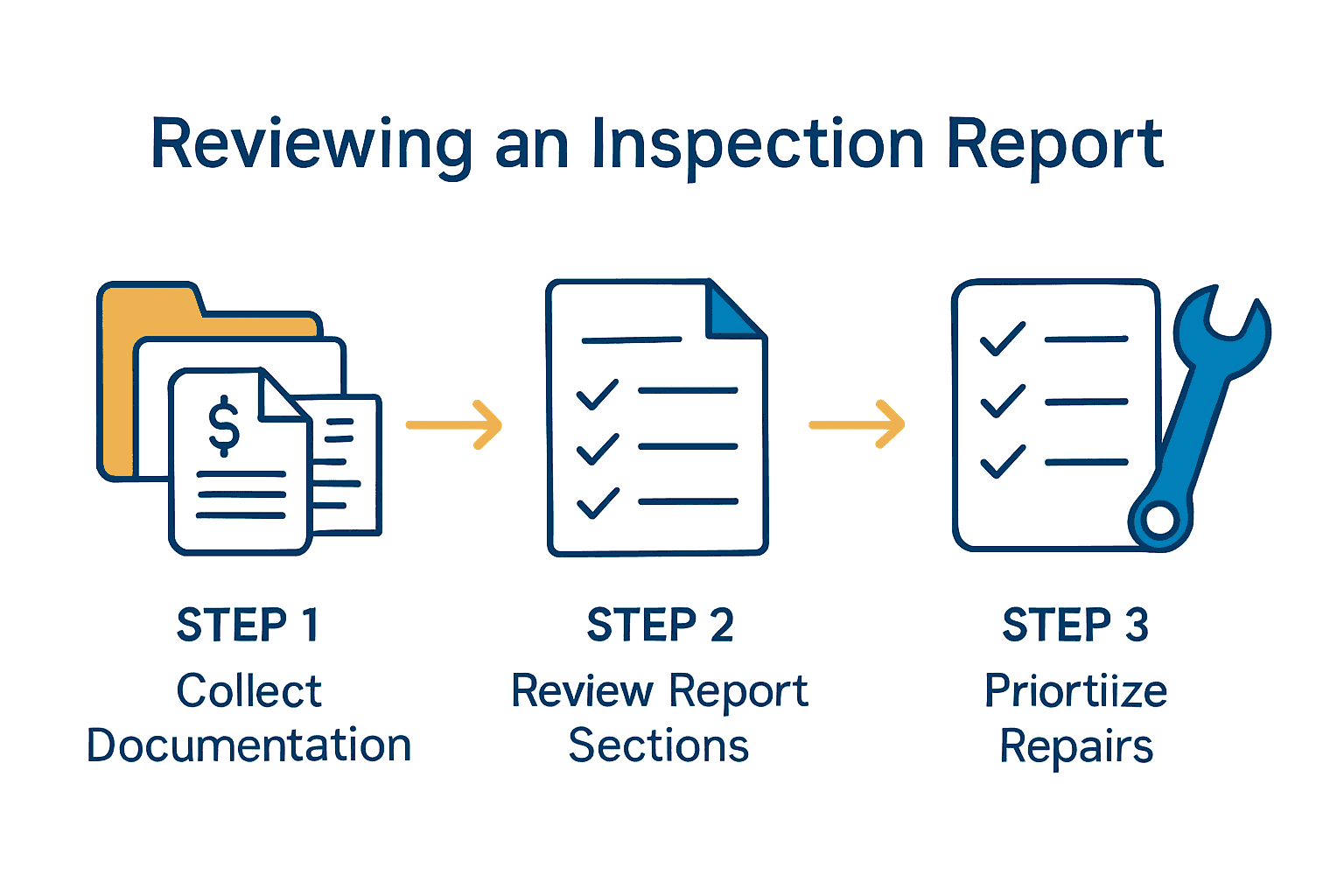
Preparing for your home inspection report requires strategic organization and proactive planning. Your goal in this step is to gather all necessary documentation and create a structured approach for receiving and reviewing your inspection findings.
According to Tufts University, maintaining organized files is critical for successful inspections. This means collecting and organizing all relevant property documents before the inspection. Start by assembling key paperwork such as past renovation records, home maintenance logs, utility bills, property tax statements, and any previous inspection reports. Having these documents readily available will help provide context and historical information about your property.
To streamline the process, create a dedicated folder or digital file where you can quickly store and access these documents. Consider scanning physical papers and creating digital backups to prevent potential loss. Additionally, be prepared to answer questions about your home’s history, recent repairs, or known issues. Clear communication and thorough documentation will help inspectors conduct a more comprehensive assessment.
One critical tip: Review your home from an objective perspective before the inspection. Walk through each room and note any visible maintenance concerns or potential problem areas. This proactive approach allows you to address minor issues beforehand and demonstrates your commitment to home upkeep. Your next step will be understanding the actual inspection process and what to expect during the on-site evaluation.
Learn more about inspection reports in our Inspection Reports Explained guide.
Step 2: Review Key Findings and Sections Carefully
Reviewing your home inspection report requires careful attention and a methodical approach. Your goal is to understand every detail about your property’s condition and identify any potential issues or necessary repairs.
According to Consumer Reports, the best way to comprehend your inspection report is to be present during the actual inspection and then carefully review the written documentation afterward. When examining the report, focus on specific sections that cover critical home systems such as electrical, plumbing, roofing, foundation, and structural integrity. Pay special attention to any recommendations for further evaluation or potential repair needs.

Break down the report into manageable sections and review each systematically. Look for categorizations like minor maintenance items, significant repair recommendations, and critical structural concerns. Some reports use color coding or severity ratings to help you quickly understand the urgency of different issues. Create a prioritized list of recommended actions based on safety implications and potential cost of repairs. The North Carolina Real Estate Commission recommends discussing any questions or uncertainties directly with your home inspector to gain deeper insights.
One critical tip is to distinguish between cosmetic issues and structural problems. Cosmetic concerns like paint chips or minor scuffs are typically less urgent compared to foundation cracks or electrical system deficiencies. Consider consulting with professional contractors for expert opinions on significant repair recommendations. Your next step will involve determining which issues require immediate attention and developing a strategic plan for addressing them.
Learn more about understanding detailed inspection reports in our 7 Essential Examples of Inspection Reports guide.
Step 3: Interpret Issues and Assess Severity
Understanding the nuances of your home inspection report requires careful analysis and a strategic approach to interpreting potential issues. Your goal is to transform technical findings into actionable insights about your property’s condition.
According to InterNACHI, interpreting inspection reports can be challenging due to technical language and complex terminology. Most reports categorize issues using standard severity classifications that help you understand the urgency and potential impact of identified problems. Look for common descriptors like minor maintenance, significant repair, safety concern, or immediate action required. These classifications provide a clear roadmap for prioritizing potential repairs and understanding the overall health of your property.
To effectively assess severity, consider three primary factors: safety implications, potential for further damage, and immediate repair costs. Safety concerns should always take precedence over cosmetic or minor issues. For instance, electrical system problems or structural defects demand more urgent attention compared to superficial paint or minor cosmetic wear. InterNACHI recommends comparing your specific report with sample inspection reports to develop a better understanding of how professionals categorize and document different types of issues.
One critical tip is to create a prioritized action plan based on the report’s findings. Rank issues from most critical to least urgent, considering both immediate safety risks and potential long term consequences of neglecting repairs.
Consulting with professional contractors or specialists can provide additional clarity on complex issues. Your next step will involve developing a strategic approach to addressing the most pressing concerns identified in your inspection report.
Learn more about understanding detailed inspection reports in our 7 Essential Examples of Inspection Reports guide.
Step 4: Verify Recommendations and Repairs Needed
Verifying inspection report recommendations requires a strategic and careful approach to protect your investment and ensure the property meets your expectations. Your goal is to transform inspection findings into a clear action plan for addressing potential issues.
According to the North Carolina Real Estate Commission, buyers have several options when confronting repair recommendations. You can ask the seller to make specific repairs, renegotiate contract terms, or even consider terminating the contract if the issues are significant. Consumer Reports suggests using the inspection report as a negotiation tool to potentially lower the property price or request that the seller complete necessary repairs before closing.
To effectively verify recommendations, categorize the findings into three priority levels: critical safety issues, significant structural problems, and minor maintenance items. For critical and significant issues, obtain professional quotes from licensed contractors to understand the exact repair scope and potential costs. This will give you concrete information to negotiate with the seller or decide whether the property represents a sound investment. Be prepared to get multiple professional opinions for complex or expensive repair recommendations.
One critical tip is to remain objective and avoid emotional decision making. Some repair needs are normal for properties of a certain age, while others might be deal breakers. Consider the overall condition of the home, the cost of recommended repairs, and how they compare to the property’s market value. Your next step involves developing a comprehensive repair strategy and determining which issues you are willing to address personally versus those you will request the seller to remedy.
Learn more about navigating home inspection repairs with our Home Inspection Repair Guide for Confident Buyers and Sellers.
Step 5: Take Action Based on Inspection Insights
Taking strategic action after receiving your home inspection report is crucial for protecting your investment and making informed real estate decisions. Your goal is to transform inspection findings into a proactive plan that addresses potential property concerns.
Consumer Reports recommends using the inspection report as a powerful negotiation tool. This means leveraging the detailed findings to either request repairs from the seller, negotiate a lower purchase price, or potentially walk away from the transaction if significant issues are uncovered. The North Carolina Real Estate Commission further advises that buyers have multiple options when confronting inspection results, including renegotiating contract terms or exercising their right to terminate the contract.
To effectively take action, create a comprehensive strategy that prioritizes inspection findings. Start by categorizing issues into immediate safety concerns, significant structural problems, and minor maintenance items. For each category, develop a specific action plan. Immediate safety concerns might require professional intervention before closing, while minor issues could be addressed after purchase. Get detailed repair estimates from licensed contractors to understand the financial implications of each recommended repair. This approach allows you to make informed decisions about whether to proceed with the purchase, request seller concessions, or explore alternative properties.
One critical tip is to remain emotionally detached and approach the inspection results as a business decision. Not every issue is a deal breaker, but some might significantly impact the property’s value or your long term maintenance costs. Consider the overall condition of the home, the cost of repairs, and how these factors align with your budget and investment goals. Your final step involves consulting with your real estate agent to negotiate the most favorable terms based on the inspection insights.
Learn more about navigating home inspection challenges with our How to Pass a Home Inspection guide.
Make Informed Home Decisions with Trusted Inspection Experts
Reading and understanding your home inspection report can feel overwhelming. You want clarity on which issues are urgent and which can wait. The challenge is interpreting technical details and deciding your next steps with confidence. This guide helps you grasp every part of your report — from minor maintenance to critical repairs — so you can protect your home investment.
At Trinity Home Inspections, we bring decades of experience serving the Gulf Coast community. Led by Matt Cameron, we combine professionalism, integrity, and a deep commitment to your peace of mind. Our detailed and easy-to-understand reports help you navigate those tough inspection findings. Whether you are buying or selling, trust us to provide unbiased and comprehensive insights you can rely on. Ready to take control of your property decisions? Visit Trinity Home Inspections today and schedule your inspection with experts who care.
Learn more about how to interpret your report in detail with our 7 Essential Examples of Inspection Reports guide and gain confidence before making any repair choices with the Home Inspection Repair Guide for Confident Buyers and Sellers. Your next smart step is just a click away.
Frequently Asked Questions
How do I prepare for receiving my inspection report?
You can prepare by gathering all relevant documentation, such as renovation records, maintenance logs, and past inspection reports. Create a dedicated folder to store these documents, ensuring they’re readily accessible during your inspection review.
What should I focus on when reviewing my home inspection report?
Focus on critical sections covering home systems like electrical, plumbing, and roofing. Break down the report into categories and prioritize the recommendations based on urgency and potential repair costs.
How can I effectively interpret the issues noted in my inspection report?
To interpret issues, look for severity classifications such as minor maintenance or immediate action needed. Assess each issue based on safety implications, potential for further damage, and immediate repair costs, helping you prioritize what to address first.
What steps should I take if my inspection report highlights significant issues?
If significant issues are highlighted, categorize them into critical safety concerns and major structural problems. Obtain repair estimates from licensed contractors to understand the costs and negotiate with the seller or make informed decisions about your purchase.
How can I take action based on the findings of my inspection report?
Create a strategic action plan that prioritizes inspection findings, focusing on immediate safety concerns first. For each category of issues, develop specific steps to address them, which may include negotiating repairs or estimating costs before finalizing your purchase.
Should I consult professionals after reviewing my inspection report?
Yes, consulting professionals for significant repairs or complex issues is advisable. This provides clarity on repair options and costs, ensuring you’re fully informed before making any financial decisions related to the property.
Recommended

