
Stackable Washer and Dryer Guide for Gulf Coast Homes

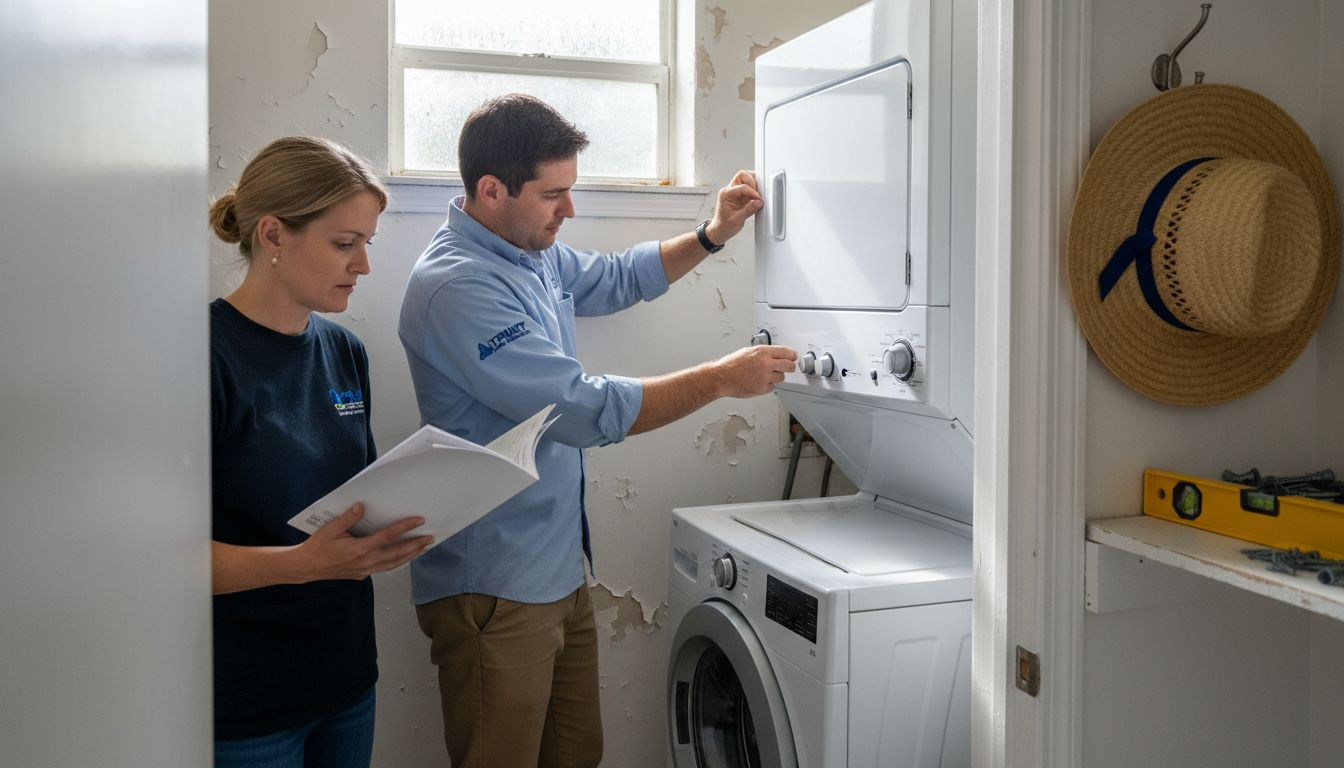
Limited laundry space is a common challenge in Gulf Coast homes, especially in compact condos and coastal residences. Stackable washer and dryer units provide a practical solution that reclaims valuable square footage without sacrificing cleaning power. This guide walks you through selection, installation requirements, energy efficiency considerations, and maintenance strategies tailored for Alabama’s humid climate, helping you make informed decisions that maximize functionality and protect your investment.
Key takeaways
Point | Details |
Space savings | Stackable units save up to 50% floor space compared to side-by-side configurations, ideal for tight Gulf Coast layouts. |
Installation requirements | Proper ventilation, dedicated 240V circuits, and humidity management are critical for safe, code-compliant operation. |
Energy efficiency | Energy Star certified models reduce energy use by 25-30% and water consumption by 33%, lowering utility bills. |
Climate considerations | High humidity and salt air require corrosion-resistant materials and regular inspections to maintain durability. |
Maintenance essentials | Clean lint traps after each use, inspect vents annually, and check seals regularly to extend appliance lifespan. |
Introduction to stackable washers and dryers
Stackable washer and dryer units are vertically connected appliances that place the dryer directly above the washer. This configuration saves up to 50% floor space compared to side-by-side arrangements, making them increasingly popular in Alabama’s Gulf Coast region where compact home designs and multi-use spaces are common.
Front-load models dominate the stackable market because their door design allows safe vertical installation. You’ll find these units in apartments, condos, and small homes throughout Mobile, Baldwin, and Escambia counties where maximizing square footage matters. The vertical footprint typically measures just 27 inches wide by 30-34 inches deep, freeing up valuable floor area for storage or other uses.
Benefits for Gulf Coast homeowners include:
Fits neatly in closets, bathrooms, or hallway alcoves
Allows laundry facilities in homes without dedicated laundry rooms
Frees up space for space optimization techniques in tight areas
Maintains full-size washing and drying capacity despite compact footprint
Simplifies installation in second-story or garage conversions
Modern stackable units offer the same capacity as traditional models, typically ranging from 3.5 to 4.5 cubic feet for washers. This means you don’t sacrifice laundry volume for space savings. The vertical design works particularly well in coastal homes where floor space commands a premium and multi-functional rooms are the norm.
Installation requirements and space considerations
Proper installation ensures your stackable unit operates safely and efficiently in Alabama’s demanding climate. Start by verifying you have adequate space, not just for the appliances themselves but also for door clearances and ventilation access.
Critical spatial requirements:
Minimum footprint: 27 inches wide by 30-34 inches deep
Height clearance: 75-80 inches for stacked configuration
Door swing space: Add 25-30 inches in front for loading access
Ventilation clearance: 4-6 inches behind unit for airflow
Dryer venting to the exterior is mandatory in Alabama’s humid climate. Poor ventilation traps moisture indoors, promoting mold growth and reducing appliance efficiency. Alabama building codes require specific ventilation standards to ensure moisture control and fire safety. Rigid metal ducting works best, with runs kept as short and straight as possible.
Electrical requirements are non-negotiable. Gas dryers need 120V outlets, but electric models demand dedicated 240V circuits with proper amperage. Never use extension cords or share circuits with other appliances. Improper wiring creates fire hazards and voids warranties.
Pro Tip: Measure your space twice and verify vent routing before purchasing. Many installation problems stem from overlooked spatial constraints or impossible vent paths that require costly modifications later.
Professional installation or inspection ensures compliance with local codes and manufacturer specifications. This matters especially in Gulf Coast communities where housing associations may impose additional requirements. Understanding home safety inspection steps helps identify potential installation issues before they become expensive problems. Proper setup from the start protects your investment and maintains your home’s value. Regular home maintenance inspection catches developing issues early.
Ventilation parallels the importance of garage ventilation fans for humidity reduction and bathroom ventilation in coastal homes, all critical for moisture management in Gulf Coast properties.
Energy efficiency and cost implications
Energy efficiency directly impacts your long-term ownership costs. Energy Star certified stackable washers save 25-30% energy and 33% water compared to conventional models. In Alabama’s Gulf Coast region where cooling costs run high and water bills add up, these savings matter.
A typical household completes 300 loads annually. An efficient stackable unit can save you $50-70 yearly on electricity and $40-50 on water. Over a 10-year lifespan, that’s $900-1,200 in your pocket. Front-load washers in stackable configurations naturally use less water because they tumble clothes rather than submerging them.
Energy and water comparison:
Appliance Type | Energy Use (kWh/year) | Water Use (gallons/year) | Annual Cost Estimate |
Energy Star Stackable | 105-125 | 2,500-3,000 | $135-165 |
Standard Stackable | 140-165 | 3,500-4,000 | $180-210 |
Side-by-Side Traditional | 150-180 | 4,000-4,500 | $195-230 |
Higher-efficiency models cost more upfront but the payback period runs 3-5 years. After that, savings compound. Look for models with moisture sensors that automatically stop cycles when clothes are dry, preventing energy waste from over-drying.
Pro Tip: Check with Alabama Power or your local utility provider for rebates on Energy Star appliances. Many Gulf Coast utility companies offer $50-100 rebates that reduce your initial investment.
Efficiency matters beyond your wallet. Lower energy consumption reduces strain on Alabama’s power grid during peak summer months when air conditioning demand surges. Pairing efficient laundry appliances with high efficiency water heaters creates compound savings. Additional strategies for energy saving for homes and saving money on utilities magnify these benefits across your entire household.
Common misconceptions about stackable units
Several myths discourage homeowners from considering stackable washer and dryer units. Let’s separate fact from fiction with data.
Myth 1: Stackable units have smaller capacity. Modern stackable washers offer 3.5 to 4.5 cubic feet, matching or exceeding many traditional top-load models. A 4.5 cubic foot washer handles king-size comforters easily. Capacity depends on the specific model, not the stacking configuration.
Myth 2: Stacked appliances require more maintenance. Maintenance frequency is identical to side-by-side units when properly installed. The vertical arrangement doesn’t add mechanical complexity. You’ll clean lint traps, inspect hoses, and check seals on the same schedule regardless of configuration.
Myth 3: Front-load washers always develop mold. Mold grows when moisture gets trapped. Leave the washer door ajar between loads and wipe door seals monthly. This simple practice prevents mold in any climate. Gulf Coast humidity makes this habit even more important, but it’s not unique to stackable units.
Myth 4: You can’t access the dryer easily. Most stackable configurations place dryer controls at chest height, actually improving ergonomics compared to bending over for front-load dryers in side-by-side setups. Accessing the dryer drum requires a small step stool for some users, but modern designs minimize this inconvenience.
Durability in coastal climates: Salt air and humidity do accelerate corrosion on any appliance. However, protective measures like corrosion-resistant materials and proper ventilation mitigate these effects effectively. The stacking configuration itself doesn’t make units more vulnerable.
Assess your household’s laundry volume before choosing capacity. A family of four typically needs at least 4.0 cubic feet to handle weekly loads efficiently. Smaller households can opt for compact 3.5 cubic foot models that still deliver space savings.
Comparison with side-by-side laundry setups
Choosing between stackable and side-by-side configurations depends on your space, budget, and physical needs. Here’s an objective comparison.
Space efficiency: Stackable units save up to 50% floor space, freeing roughly 6-9 square feet in typical installations. That’s room for storage cabinets, a utility sink, or simply easier movement in tight quarters. Side-by-side setups require 50-60 inches of width compared to just 27 inches for stackables.
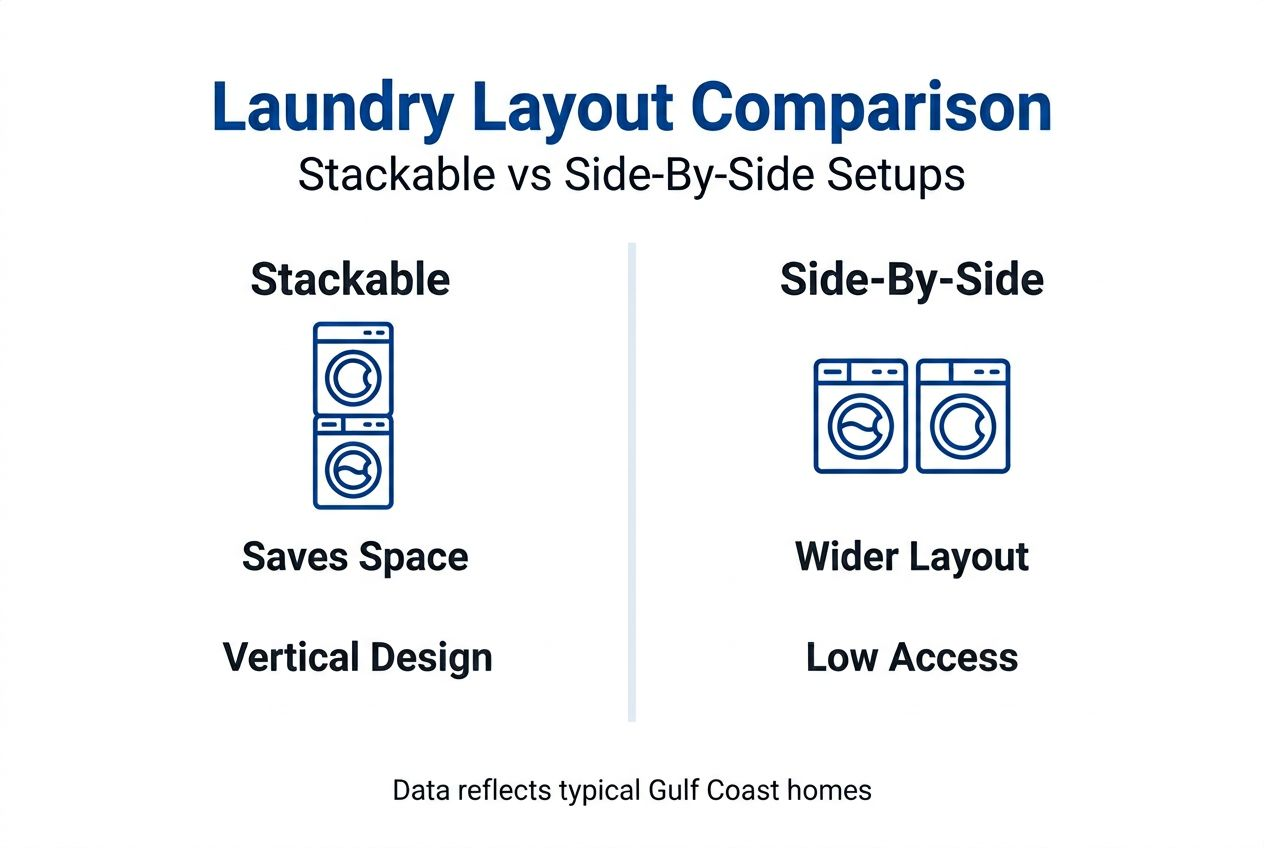
Accessibility considerations: Side-by-side models offer easier access for loading both appliances. You’re not reaching up to the dryer or using a step stool. This matters significantly for users with mobility limitations or back problems. Stackables place dryer controls at comfortable heights but require lifting clothes higher.
Feature comparison:
Feature | Stackable | Side-by-Side |
Floor Space | 27" W x 30-34" D | 50-60" W x 30-34" D |
Capacity | 3.5-4.5 cu ft | 3.5-5.0 cu ft |
Energy Efficiency | Front-load, typically higher | Varies by model type |
Accessibility | Requires reaching/step stool | Easy access to both |
Installation Flexibility | Fits closets, small spaces | Requires dedicated room |
Average Cost | $1,200-2,500 (set) | $1,000-3,000 (set) |
Energy and water efficiency: Front-load washers dominate the stackable market, and they typically use 30-40% less water than top-load models. Side-by-side setups can include either configuration, so efficiency varies widely. If you’re comparing front-load stackable to side-by-side front-loaders, efficiency is comparable.
Cost considerations: Stackable units cost slightly more due to specialized stacking kits and installation requirements. Budget $1,200-2,500 for quality stackable sets versus $1,000-3,000 for side-by-side configurations. Installation costs may run higher for stackables if ventilation modifications are needed.
Best use cases:
Choose stackable for: Apartments, condos, small homes, closet installations, maximizing floor space
Choose side-by-side for: Dedicated laundry rooms, users with mobility concerns, households preferring top-load washers, existing wide laundry spaces
Neither option is universally superior. Match your choice to your specific space constraints, physical needs, and household requirements.
Impact of Gulf Coast climate on appliance durability and performance
Alabama’s Gulf Coast presents unique challenges for appliance longevity. High humidity levels averaging 70-75% and salt-laden air accelerate corrosion and moisture damage. Understanding these factors helps you protect your investment.
Salt air penetrates homes within 10 miles of the coast, affecting properties throughout Mobile Bay, Gulf Shores, and Orange Beach. Salt deposits on metal surfaces promote rust and corrosion, particularly on electrical connections, control panels, and external casings. Stackable units face the same exposure as any appliance, but their compact installation in enclosed spaces can trap moisture if ventilation is poor.
Protective strategies for coastal installations:
Select models with corrosion-resistant exteriors and stainless steel drums
Apply silicone-based sealants around electrical connections during installation
Ensure dryer vents exhaust completely outside, not into attics or crawlspaces
Install dehumidifiers in laundry closets or rooms lacking windows
Schedule annual inspections to catch early corrosion before it spreads
Proper ventilation is critical. Trapped moisture from washing and drying creates ideal conditions for mold and accelerates metal corrosion. Every load releases humidity into the air. Without adequate airflow, this moisture condenses on surfaces and penetrates appliance components. Understanding garage ventilation fans for humidity reduction and bathroom ventilation tips applies equally to laundry spaces.
Warning signs of climate damage:
Rust spots on external panels or around door seals
Musty odors indicating mold growth in washer drum or door gasket
Electrical issues from corroded connections
Reduced drying efficiency from lint buildup in humid vent pipes
Inspect your stackable units quarterly for these signs. Catching problems early prevents expensive repairs or premature replacement. Wipe down external surfaces monthly and check vent pipes for lint accumulation, which worsens in humid conditions.
Coastal homeowners should budget for slightly shorter appliance lifespans, typically 8-12 years versus 12-15 years in drier climates. However, diligent maintenance and protective measures significantly extend service life even in harsh Gulf Coast conditions.
Maintenance and troubleshooting tips
Regular maintenance extends your stackable washer and dryer’s lifespan and prevents costly breakdowns. Follow this practical checklist tailored for Gulf Coast conditions.
Essential maintenance schedule:
After every load: Remove lint from dryer trap and check for moisture in washer door seal
Monthly: Wipe washer door gasket with vinegar solution to prevent mold, inspect hoses for cracks or bulges
Quarterly: Clean washer dispenser drawers, check dryer vent for obstructions, verify unit remains level
Annually: Professionally clean entire dryer vent system, inspect electrical connections for corrosion, test moisture sensors
As needed: Replace worn door seals, tighten loose fasteners, recalibrate if cycles seem off
Lint accumulation is your biggest fire risk. Clean the visible trap after each use, but also vacuum inside the trap housing monthly. In humid climates, lint combines with moisture to create sticky buildup that standard trap cleaning misses. Annual professional vent cleaning removes this hidden hazard.
Pro Tip: Schedule annual professional inspections, especially in Gulf Coast environments. Trained technicians catch developing issues like corroded wiring or failing moisture sensors before they cause breakdowns or safety hazards.
Common problems and solutions:
Poor drying performance: Check for kinked vent hoses, clogged lint traps, or overloading. Ensure outdoor vent flap opens freely.
Unusual noises: Coins, buttons, or small items trapped in drum baffles cause clicking. Grinding suggests worn bearings needing professional repair.
Washer won’t drain: Inspect drain hose for clogs or kinks. Check pump filter for debris blockage.
Excessive vibration: Verify unit is level using built-in leveling feet. Unbalanced loads or damaged shock absorbers also cause shaking.
Moisture or mold smell: Leave washer door ajar between uses. Run monthly cleaning cycles with washer cleaner tablets.
Avoid these installation mistakes that cause ongoing problems: undersized electrical circuits creating voltage drops, vent hoses with too many turns restricting airflow, units installed unlevel causing premature bearing wear, and inadequate clearance preventing proper ventilation.
Documented maintenance protects warranty coverage and proves proper care if you sell your home. Following spring HVAC maintenance tips and home maintenance inspection guidance creates a complete home care routine that preserves value and prevents expensive emergency repairs.
Local building codes and home inspection insights
Complying with Alabama Gulf Coast building codes protects your safety and home value. Understanding inspection focus areas helps you avoid installation mistakes.
Alabama building codes mandate specific ventilation standards for laundry appliances, emphasizing exterior venting to control moisture and fire risk. Many local jurisdictions and housing associations in Baldwin and Mobile counties impose additional requirements, particularly in coastal communities where moisture management is critical.
Key code requirements for stackable units:
Dryer vents must exhaust directly outside, never into attics, crawlspaces, or garages
Maximum vent run typically limited to 25 feet of straight rigid metal ducting (less for each elbow or turn)
Electrical installations must use dedicated circuits with proper wire gauge and breaker ratings
Units must be accessible for maintenance and emergency shut-off
Stacking kits must meet manufacturer specifications for weight and stability
Home inspectors focus on these areas during evaluations. Proper installation signals responsible home maintenance and reduces buyer concerns. Inspectors check for correct venting materials, adequate electrical supply, secure stacking attachments, and signs of moisture damage or mold growth.
Inspection benefits for buyers and sellers:
Buyers gain negotiating power if installations don’t meet code
Sellers can proactively address issues before listing
Documented compliance increases home value and sale speed
Early detection of moisture problems prevents structural damage
Housing associations in Gulf Coast communities often require permits for appliance installations that modify venting or electrical systems. Verify requirements with your HOA before proceeding. Non-compliant installations can trigger fines or required removal.
Understanding home safety inspection steps helps you prepare for the process. Professional inspectors follow standardized property inspection workflows that include appliance installation verification. While sewer line inspection covers different systems, the principle remains the same: proactive inspection catches problems before they escalate.
Code compliance isn’t just about passing inspections. Proper installation protects your family from fire hazards, prevents moisture damage that costs thousands to remediate, and ensures appliances operate efficiently throughout their expected lifespan. Cutting corners on installation creates expensive problems that surface during home sales or after system failures.
Discover professional home inspection services in Alabama’s Gulf Coast
Understanding stackable washer and dryer requirements is just the start. Professional inspection ensures your installation meets safety standards and functions optimally in Gulf Coast conditions.

Trinity Home Inspections specializes in detailed appliance and system evaluations across Mobile, Baldwin, and Escambia counties. Our InterNACHI-certified inspectors examine stackable unit installations for code compliance, proper venting, electrical safety, and moisture control issues specific to coastal environments. We verify permit compliance through real estate home permit search services, helping buyers and sellers avoid compliance surprises.
Our inspections include free thermal imaging to identify hidden moisture problems around laundry installations, and we offer specialized indoor air quality testing when mold concerns arise. For sellers, our pre-listing home inspections identify issues before they derail negotiations. Same-day reports with detailed photos and videos give you the clarity needed to make confident decisions. Whether you’re buying, selling, or maintaining your Gulf Coast home, professional inspection protects your investment.
Frequently asked questions
What size laundry space is needed for stackable washer and dryer units?
Typical stackable units require a footprint approximately 27 inches wide by 30-34 inches deep. You’ll also need 75-80 inches of height clearance for the stacked configuration. Include an additional 25-30 inches in front of the unit for door swing and loading access, plus 4-6 inches behind for ventilation clearance.
Are stackable washers and dryers energy efficient in Alabama’s climate?
Yes, Energy Star certified stackable units save up to 30% on energy and 33% on water compared to conventional models. These savings translate to $90-120 annually in reduced utility costs for typical Gulf Coast households. Front-load designs in stackable configurations naturally use less water, making them well suited to Alabama’s utility cost considerations.
How does coastal humidity affect stackable appliance performance?
High humidity and salt air accelerate corrosion on appliance components, particularly electrical connections and metal surfaces. Proper exterior venting prevents moisture buildup that promotes mold and rust. Regular inspections catch early corrosion, and using corrosion-resistant materials during installation mitigates humidity damage effectively. Annual professional maintenance extends appliance lifespan even in harsh Gulf Coast conditions.
What are key maintenance tips for stackable washer and dryer units?
Clean the dryer lint trap after every single use to prevent fire hazards. Schedule annual professional vent cleaning to remove hidden lint buildup that accumulates in humid climates. Inspect door seals, hoses, and electrical connections quarterly for wear or corrosion. Leave the washer door ajar between loads and wipe door gaskets monthly with vinegar solution to prevent mold growth in Gulf Coast humidity.
Recommended