
Maximize under stairs storage in Gulf Coast Alabama homes

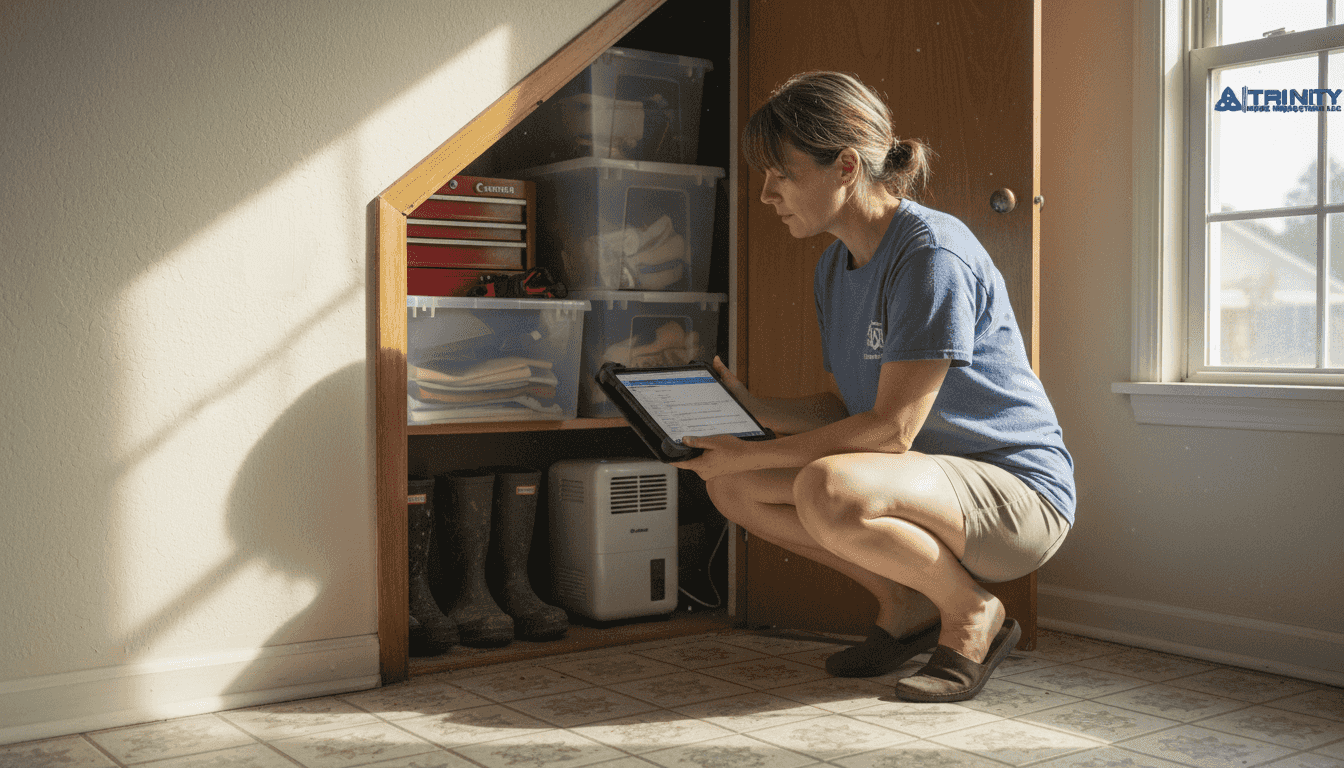
Many Gulf Coast Alabama homeowners think simple shelving suffices for under stairs storage, but this overlooks a critical challenge: humidity. Without proper ventilation and moisture-resistant materials, your storage can quickly become a breeding ground for mold and rot. This guide will show you how to create climate-adapted under stairs storage that maximizes space safely and efficiently, protecting your investment in one of the South’s most humid regions.
Key takeaways
Point | Details |
Inspect thoroughly before building | Assess moisture levels and structural integrity to prevent costly damage after installation. |
Choose climate-resistant materials | Marine-grade plywood with proper ventilation prevents mold in Gulf Coast humidity. |
Custom solutions maximize space | Built-ins increase usable storage by up to 30% compared to basic shelving. |
Professional inspection reduces risk | Experts identify hidden moisture and electrical hazards DIY approaches often miss. |
Maintain ventilation regularly | Routine checks preserve storage safety and extend material lifespan. |
Understanding under stairs spaces in Gulf Coast Alabama homes
Your under stairs space is more complex than it appears. The dimensions and shape vary dramatically based on your home’s design, affecting what storage solutions will actually work.
Gulf Coast Alabama homes face unique challenges due to average humidity levels ranging 50-70% year round. This constant moisture affects wood durability and creates ideal conditions for mold growth. Without proper planning, that convenient storage nook becomes a maintenance nightmare.
Moisture accumulation beneath stairs is especially common in our region. The enclosed space traps humid air with limited natural airflow. Before installing any storage, check for existing water damage, mold spots, or musty odors that signal moisture problems.
Here’s what to evaluate in your under stairs space:
Measure actual usable dimensions accounting for sloped ceiling and obstacles
Check for existing moisture stains or soft spots indicating water damage
Assess current ventilation paths and air circulation patterns
Identify electrical wiring or plumbing that may limit installation options
Test humidity levels with a meter to establish baseline conditions
Similar garage ventilation fans humidity reduction principles apply under stairs. Good airflow prevents moisture buildup that damages stored items and building materials. Think of it like your crawlspace, another enclosed area where vapor barriers crawlspaces Alabama homeowners use to control humidity.
Proper assessment saves you from installing storage that fails within months. Take time to understand your specific space and climate challenges before moving forward.
Climate-specific challenges and solutions for under stairs storage
Gulf Coast humidity doesn’t just make summers uncomfortable. It actively threatens any under stairs storage you build without proper precautions.
The enclosed nature of under stairs spaces creates stagnant air pockets. When combined with 60-70% humidity, this environment promotes rapid mold growth on wood surfaces and stored items. Standard construction materials simply won’t hold up.
Humidity-driven mold and rot risks require moisture-resistant materials and ventilation integration. This isn’t optional in our climate; it’s essential for storage that lasts.
Here are critical climate adaptations for Gulf Coast homes:
Install marine-grade plywood instead of standard wood products
Apply moisture-resistant sealants to all exposed wood surfaces
Integrate passive vent grills at top and bottom for natural air circulation
Consider small battery-powered fans for active airflow in tight spaces
Use metal or plastic organizational components instead of cardboard boxes
Ignoring ventilation is the number one reason under stairs storage projects fail in humid regions. Air must move through the space continuously, even when doors are closed.
Pro Tip: Install adjustable vent grills that let you control airflow seasonally. During peak summer humidity, maximize ventilation. In drier winter months, you can reduce it slightly while maintaining adequate circulation.
The same principles that make attic ventilation Alabama homes essential apply under stairs. Without air movement, moisture accumulates and creates perfect conditions for microbial growth. Many homeowners learn about reducing air conditioning techniques that improve whole-home ventilation, which benefits enclosed storage spaces too.
Don’t let climate challenges stop you from maximizing your home’s storage potential. With the right materials and ventilation strategy, under stairs storage thrives even in Gulf Coast humidity.
Design and material recommendations for durable and efficient storage
Smart design transforms awkward under stairs space into highly functional storage. The key is customization that works with your stairwell’s unique dimensions.
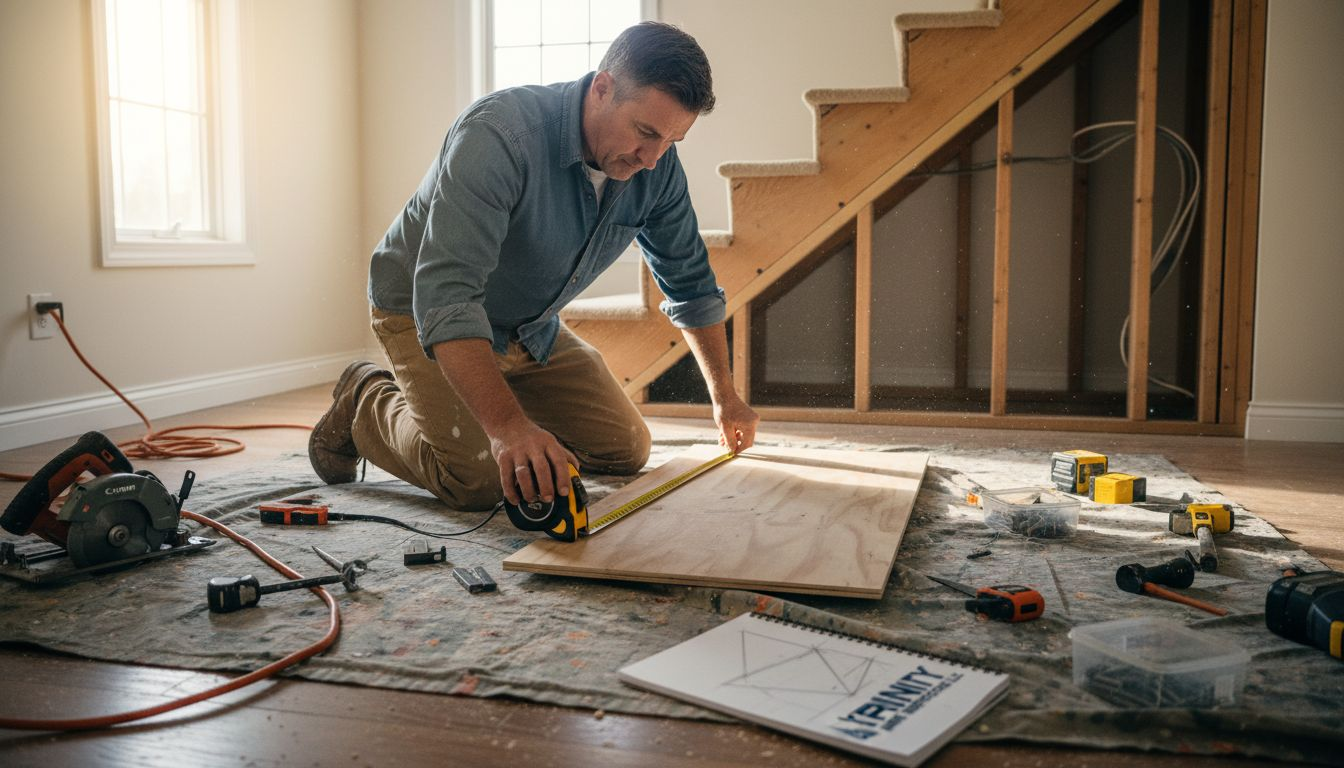
Custom-built under stairs storage can increase usable space by up to 30%, depending on stairwell design. Generic shelving wastes the irregular areas where ceiling height drops, but custom solutions capture every inch.
Follow these steps to maximize your space:
Map your stairwell’s exact dimensions including the angled ceiling line
Design pull-out drawers for deep spaces that would otherwise be inaccessible
Install adjustable shelving to accommodate items of varying heights
Build compartments sized for specific storage needs like cleaning supplies or tools
Add lighting inside to make the space truly functional
Integrate ventilation grills into the design from the start
Material selection matters enormously in our climate. Here’s how common options compare:
Material | Moisture Resistance | Durability | Cost | Best Use |
Standard plywood | Poor | 3-5 years | Low | Not recommended |
Marine-grade plywood | Excellent | 15-20 years | Medium | Primary structure |
Treated lumber | Good | 10-15 years | Medium | Framing |
Metal shelving | Excellent | 20+ years | High | Shelves, organizers |
Plastic bins/organizers | Excellent | 10-15 years | Low | Storage containers |
Marine-grade plywood resists moisture far better than standard wood products. It costs more upfront but prevents the replacement expenses that come from using cheaper materials in humid environments.
Accessibility matters as much as capacity. Deep storage that requires crawling to reach rarely gets used. Design pull-out drawers or rolling bins for items you’ll access frequently. Reserve high shelves for seasonal items you only need occasionally.
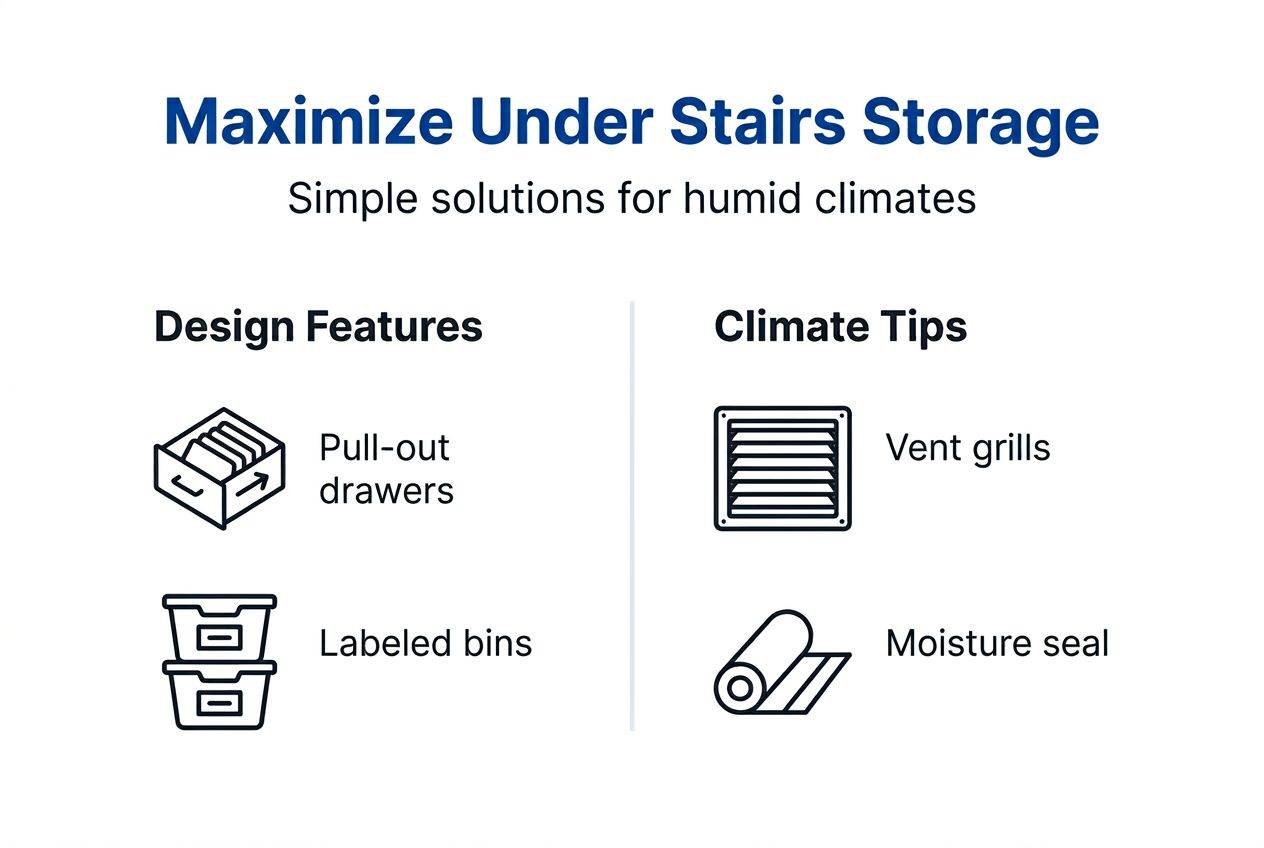
Pro Tip: Label every compartment clearly. When storage is well organized and labeled, family members actually use it properly instead of creating clutter elsewhere in your home.
Ventilation grills should integrate seamlessly with your design. Place them where they won’t block storage but will maintain airflow. Similar to garage ventilation fans humidity reduction systems, consistent air movement prevents moisture problems.
Investing in quality materials and thoughtful design pays off through decades of reliable storage. Check out custom designed storage solutions for inspiration tailored to awkward spaces like under stairs areas.
Inspection and pre-installation assessment best practices
Before building anything, you need to know what you’re working with. Professional inspection reveals hidden problems that can derail your project or create safety hazards.
Proper inspection identifies moisture issues, electrical wiring, and structural risks before storage retrofit in up to 15% of cases. That’s a significant number of homes with problems owners didn’t know existed.
Your pre-installation checklist should include:
Moisture meter readings at multiple points on walls and flooring
Visual inspection for existing mold, water stains, or wood rot
Electrical wiring location mapping to avoid drilling into live wires
Structural support assessment to ensure walls can handle shelving weight
Ventilation pathway evaluation to plan airflow integration
Photos documenting current conditions before starting work
Professional inspectors use thermal imaging to spot moisture you can’t see. They identify temperature differences that indicate water infiltration or inadequate insulation. These tools catch problems before they become expensive repairs.
Many homeowners skip this step to save money, then discover issues mid-project. Finding electrical wiring after you’ve already cut into a wall costs far more than an upfront inspection. The same applies to hidden moisture that would ruin your new storage within months.
Pro Tip: Document everything with photos and notes. If you hire contractors later, this information guides their work and prevents miscommunication about what needs addressing.
The process mirrors what you’d want in a house inspection checklist for buyers but focused specifically on your under stairs area. Think of it as a targeted assessment ensuring your project succeeds.
Professional home safety inspection steps Alabama buyers follow apply equally to renovation projects. You’re making a significant investment in your home’s functionality. Protect that investment by understanding what you’re working with.
For homeowners concerned about moisture specifically, inspectors can conduct detailed pre-renovation home inspections that include mold testing and humidity mapping. This level of detail ensures your storage solution addresses existing problems rather than hiding them behind new construction.
Scheduling an inspection saves money and headaches. It’s a small upfront cost compared to rebuilding failed storage or dealing with mold remediation later.
Practical organization and space-maximizing techniques
Building the storage is only half the battle. How you organize it determines whether it stays functional or becomes cluttered chaos.
Start with built-in organizational features during construction. Pull-out drawers, adjustable shelving, and modular compartments make accessing items easy. When storage is convenient to use, it stays organized naturally.
Implement these practical organizing strategies:
Label every shelf, drawer, and bin with clear descriptions of contents
Store frequently used items in easily accessible front areas
Reserve high shelves and deep spaces for seasonal or rarely needed items
Use clear plastic bins so you can see contents without opening them
Install hooks on door backs for hanging items like brooms or bags
Create dedicated zones for categories like cleaning supplies, tools, or holiday items
Ventilation requires ongoing attention. Schedule monthly checks to ensure vents remain clear and airflow continues. Blocked vents defeat your moisture prevention strategy completely.
Avoid overcrowding the space. Cramming too many items in reduces airflow and makes everything harder to access. If you can’t easily reach and remove an item, you won’t use that storage effectively.
Rotate stored items seasonally. This practice serves two purposes: it keeps you aware of what you own, and it exposes all items to fresh air periodically. Items left untouched for years in humid conditions deteriorate even with good ventilation.
The same preparation mindset from a pre-inspection checklist for sellers applies to maintaining storage. Regular attention prevents small issues from becoming big problems.
Think about how you’ll maintain the space when preparing for home inspection Baldwin County Alabama standards. Clean, organized, well-maintained storage adds value and functionality to your home.
Good organization isn’t just aesthetic. In humid climates, it’s essential for preserving both your storage system and the items you store. Air must circulate around items, not through a solid packed mass.
Navigating DIY versus professional installation tradeoffs
Deciding between DIY and professional installation involves more than just comparing costs. In Gulf Coast Alabama’s humid climate, mistakes have lasting consequences.
DIY installation offers obvious budget advantages. You avoid labor costs and work on your own timeline. For homeowners with carpentry skills and proper tools, this can be satisfying and economical.
But DIY carries real risks:
Missing hidden moisture problems that inspectors would catch
Drilling into electrical wiring or plumbing
Using materials inadequate for high humidity conditions
Creating ventilation that looks good but doesn’t function properly
Building structures that lack proper weight support
Professional installation brings expertise in climate-specific solutions. Contractors familiar with Gulf Coast construction know which materials work and how to integrate proper ventilation. They carry insurance covering damage during installation.
Here’s how the approaches compare:
Factor | DIY | Professional |
Upfront cost | $300-800 | $1,500-4,000 |
Hidden problem detection | Limited | Comprehensive |
Material selection expertise | Variable | High |
Installation timeline | Flexible, often longer | 2-5 days typical |
Warranty/guarantee | None | 1-5 years common |
Long-term durability | Depends on skill | Generally superior |
Liability for damage | Homeowner | Contractor insurance |
The cost difference narrows considerably when you factor in tool purchases, material waste from mistakes, and potential repairs. A $2,000 professional installation that lasts 20 years costs less than a $600 DIY project that fails in 5 years.
Homeowners with limited carpentry experience should strongly consider professional help for Gulf Coast installations. The climate challenges make this more complex than standard storage projects.
If you’re uncertain about any aspect, particularly moisture control or ventilation design, professional guidance pays for itself. You can’t afford to guess about mold prevention in our humid environment.
Balance your budget against risk tolerance and skill level honestly. The cheapest option isn’t always the most economical when you account for potential failures and repairs.
Common misconceptions and storage failures to avoid
Many Gulf Coast homeowners make the same mistakes with under stairs storage. Learning from these failures saves you time, money, and frustration.
The biggest misconception is that simple shelving suffices regardless of climate. Standard lumber and basic shelves work fine in dry climates. In our humid region, they become mold factories within two years without proper treatment and ventilation.
Skipping professional inspection is another common error. Homeowners assume their house is fine because they don’t see obvious problems. Hidden moisture behind walls or in subfloors only reveals itself after installation when stored items start showing mold.
Many people underestimate how much functional space custom solutions provide. They settle for basic shelves thinking they can’t afford built-ins, then waste 30% of available space. The reality is custom solutions pay for themselves through dramatically increased capacity.
Ignoring ventilation requirements causes most storage failures:
Sealed storage spaces trap moisture with no escape path
Vents placed incorrectly create dead air zones where mold thrives
Overcrowding blocks airflow even when ventilation exists
Failing to maintain clear vents allows dust buildup that restricts airflow
Here’s a sobering reality:
Up to 45% of Gulf Coast homes without proper ventilation experience mold in under stairs storage within two years.
That’s nearly half of all installations failing in just 24 months. The common thread? Homeowners who treated under stairs storage as a simple weekend project rather than a climate-specific construction challenge.
Another misconception involves material costs. People buy cheaper wood thinking they’ll save money, then replace everything when it rots. Marine-grade materials cost 40-60% more upfront but last four times longer, making them far more economical.
Some homeowners assume professional help is unnecessary for such a small space. But that small space contains the same moisture, electrical, and structural challenges as larger projects. Size doesn’t reduce complexity in humid environments.
Learn from these common failures. Treat your under stairs storage project with the seriousness it deserves. Proper planning, climate-appropriate materials, and adequate ventilation aren’t optional extras, they’re essential requirements for success.
Discover professional inspection and mold testing services for safer under stairs storage
Ready to maximize your under stairs space safely? Professional inspection services give you the foundation for storage that lasts decades, not months.
Before you install anything, comprehensive pre sale home inspections Alabama services reveal exactly what you’re working with. Thermal imaging identifies hidden moisture. Electrical mapping prevents dangerous drilling mistakes. Structural assessments ensure your walls can support the weight you’re planning.

Concerned about existing mold or musty odors? Mold testing services identify species present and concentration levels. This information guides remediation before you build, ensuring your new storage starts clean. Testing includes lab analysis with certified results showing exactly what you’re dealing with.
Planning permits or want to verify your home’s construction history? Property deed and permit search services uncover previous modifications that might affect your project. Past additions sometimes hide electrical or plumbing in unexpected locations.
Professional services aren’t expensive compared to failed projects. A thorough inspection costs $300-500 typically, while rebuilding rotted storage runs $2,000-4,000 plus remediation expenses. The math is simple.
Gulf Coast homeowners need climate-specific expertise. Inspectors familiar with our region understand humidity challenges and know what to look for. They’ve seen every type of moisture problem our climate creates.
Investing in professional inspection before installation protects your investment and your family’s health. Mold isn’t just unsightly, it creates respiratory problems and damages your home’s structure. Prevention costs far less than remediation.
How to maximize under stairs storage in Gulf Coast Alabama: FAQ
What are the best materials for under stairs storage in humid climates?
Marine-grade plywood with moisture-resistant sealants provides excellent durability in Gulf Coast humidity. Metal shelving and plastic organizational components resist moisture better than standard wood products. Avoid particleboard and MDF, which deteriorate rapidly in humid conditions.
How often should I inspect my under stairs storage area?
Inspect at least annually, focusing on moisture levels, ventilation function, and early mold signs. Schedule inspections before hurricane season when humidity peaks. Check vents monthly to ensure they remain clear and airflow continues properly.
What are the main risks of DIY under stairs storage installation?
DIY projects often miss hidden moisture problems, electrical wiring, and structural issues that professionals catch. Without proper climate expertise, you may choose inadequate materials or create poor ventilation. These mistakes lead to mold growth and storage failure within 2-3 years.
Can proper ventilation eliminate mold risks completely in under stairs storage?
Ventilation greatly reduces mold risk but doesn’t eliminate it entirely. You must combine good airflow with moisture-resistant materials and regular maintenance. Even with excellent ventilation, overcrowding or blocked vents can create conditions where mold develops.
Is professional inspection worth the cost for under stairs storage projects?
Absolutely. Inspections costing $300-500 prevent expensive failures and health hazards. Professionals identify problems DIY approaches miss, saving you from $2,000-4,000 in repairs later. For Gulf Coast homes, climate-specific expertise is essential for projects that last.
Recommended
