
What Do FHA Inspectors Look for in a Home Inspection?
- Matt Cameron
- 7 hours ago
- 9 min read

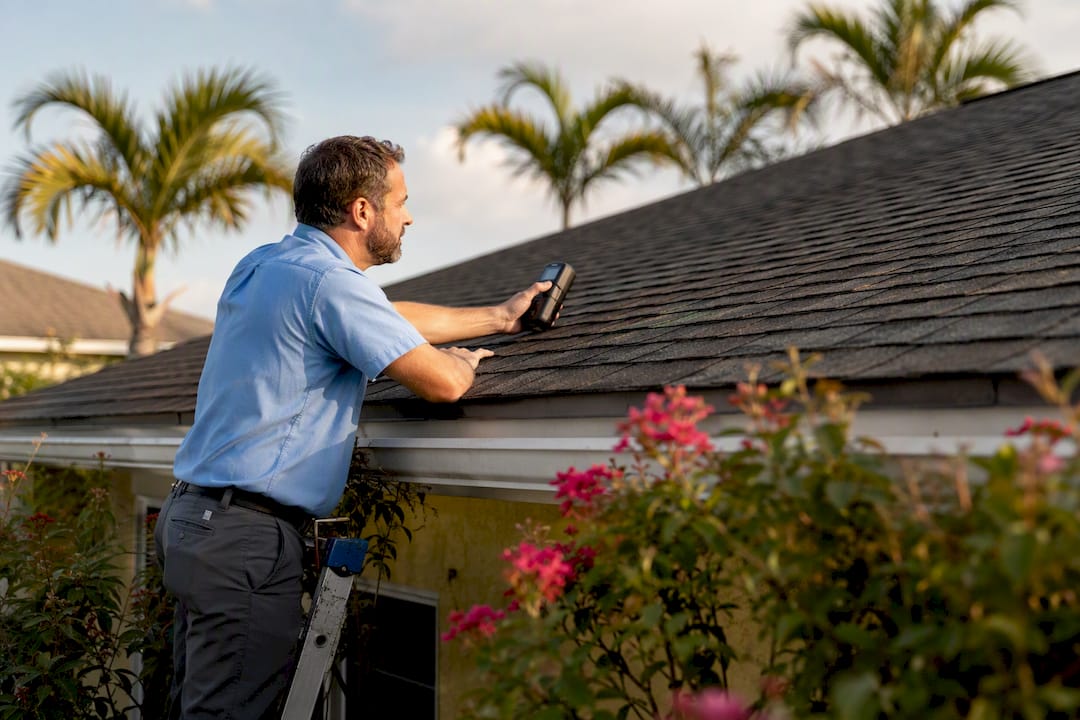
A professional InterNACHI home inspection is a visual, non-invasive check of a home’s safety, function, and maintenance across its major systems. That is what inspectors look for, whether the buyer is financing with an FHA loan, a conventional mortgage, or paying cash.
The inspector walks through and reports on:
Roof, gutters, and flashing
Exterior siding, drainage, and grading
Foundation and crawlspace or basement
Attic, insulation, and ventilation
Heating and cooling equipment
Plumbing fixtures and visible leaks
Electrical panels, outlets, and wiring
Interior doors, windows, stairs, and appliances
Every finding gets sorted into one of three buckets: safety/urgent, major/repair, or maintenance/minor. Because the inspection is visual only, it cannot catch what is hidden behind walls or buried underground.
TL;DR:
Most home inspections last between 2 to 4 hours, depending on the home’s size, age, and issues found, with larger or older homes taking longer.
Inspectors focus on visible, readily accessible systems such as the roof, foundation, HVAC, plumbing, and electrical, but cannot detect hidden problems behind walls or underground.
Safety-critical items like carbon monoxide detectors, handrails, and exposed wiring are flagged immediately, with detailed photos strongly supporting repairs and negotiations.
Inspection tools like thermal cameras, moisture meters, and drones provide insights beyond visual checks, with Trinity Home Inspections including these at no extra cost in every report.
FHA minimum standards prioritize habitability and safety, commonly identifying issues such as peeling paint, missing handrails, or roofs near the end of their service life, but generally do not require full maintenance details.
What Standards Guide the Home Inspection Checklist
Most InterNACHI-certified inspectors, including Trinity Home Inspections, follow the InterNACHI Standards of Practice, which define a general home inspection as a non-invasive, visual examination of readily accessible systems and components. The SOP covers the roof, exterior, foundation, attic, heating and cooling equipment, plumbing, electrical, and interior. It also defines a “material defect,” which is a condition serious enough to affect the home’s value, desirability, or safety.
Beyond the SOP, the InterNACHI Home Inspector Job Task Analysis breaks down the specific tasks and skills an inspector needs to evaluate each system correctly. This is the training backbone that separates a certified inspector from someone with a flashlight and a ladder.
Statistic Callout: Most general home inspections run 2 to 4 hours, depending on square footage, age, and how many issues surface along the way.
Inspectors operate systems using their normal controls (thermostats, faucets, garage door openers) and report what they observe. When something falls outside what a visual check can confirm, that is when add-ons like sewer scopes, mold sampling, or indoor air quality testing come into play.
The Room-by-Room Home Inspection Checklist Buyers Should Know
A thorough FHA inspection checklist mirrors the general home inspection checklist almost item for item. Here is what gets examined by area:
Roof. Covering condition, flashing around chimneys and vents, gutter attachment, signs of past leaks, and how many roof penetrations exist. Inspectors note whether the roof is walkable or requires perimeter laddering and drone imaging instead.
Exterior. Siding condition, door and window seals, drainage patterns around the foundation, deck and railing stability, and grading that could push water toward the house.
Foundation, basement, and crawlspace. Cracking, moisture staining, wood-to-soil contact (a common conducive condition for termites), and any signs the structure has shifted.
Attic, insulation, and ventilation. Presence and depth of insulation, adequate ventilation, and evidence of roof leaks or pest activity in the attic space.
Heating and cooling. Whether the system responds properly through the thermostat, obvious refrigerant or condensate leaks, and visible signs the equipment is nearing the end of its service life.
Plumbing. Main water shutoff location, water heater condition and venting, fixture operation at every sink and tub, drain function, and any visible leaks under cabinets.
Electrical. Service entrance condition, panel labeling and corrosion, main disconnect function, and the presence of GFCI and AFCI protection where required.
Interior. Every door and window operates correctly, stairs and handrails are secure, floors and ceilings show no unusual sagging or staining, and the garage door operates and reverses safely. Appliances get a basic functional check.
Several of these items carry real safety weight: carbon monoxide sources, improper combustion venting, and exposed live wiring get flagged immediately, regardless of category.
Pro Tip: Ask your inspector to photograph anything flagged as a safety item, not just describe it. A close-up photo of a double-tapped breaker or a missing handrail carries far more weight in a repair negotiation than a single line of text.
For a deeper look at how roofing and foundation checks work in practice, Trinity Home Inspections has separate guides covering roof inspection steps and a foundation inspection checklist.
How Inspectors Use Tools to Look Beyond the Surface
A visual inspection only shows so much; for buyers encountering new construction or punch-list inspections, understanding the role of inspections in home builds provides valuable context. That is why certified inspectors carry tools that reveal what the eye alone cannot: a moisture meter to confirm whether a stain is active or old, a thermal camera to spot missing insulation or an overheated breaker, a carbon monoxide detector, and a combustible gas leak detector. Outlet testers confirm proper wiring at every accessible receptacle, and a drone steps in when a roof pitch or condition makes walking it unsafe.
When something surfaces that a standard inspection cannot fully diagnose, sewer scopes, mold sampling, or indoor air quality testing fill the gap.
Running the HVAC through its normal thermostat controls and pairing that with a thermal scan catches problems, like an overheated electrical component behind a wall, that a purely visual walk-through would miss entirely.
Trinity Home Inspections builds several of these tools into every inspection rather than treating them as upsells. That includes same-day, photo and video-rich reports, free thermal imaging on every job, and full testing of every accessible outlet, switch, window, and door instead of just a sample.
Preparing for Inspection Day: A Realistic Timeline
Most general home inspections take 2 to 4 hours. Larger homes, older construction, and properties with several visible issues run longer.
Clear access to the attic, crawlspace, and electrical panel before the inspector arrives.
Leave the HVAC system running, or make sure it can be turned on, since inspectors typically test heating and cooling early so the system has time to respond.
Confirm all appliances have power and water is on at every fixture.
Replace burnt-out bulbs so light fixtures can be tested properly.
Unlock gates, sheds, and any outbuildings the inspector needs to reach.
Attend the walkthrough if your schedule allows. Ask about severity as findings come up, and take your own photos or notes.
A general inspection report typically lands the same day. Add-on lab results, like mold swabs or air quality samples, take longer because they depend on outside lab processing.
Turning the Report Into Next Steps
Once the report arrives, sort findings into the same three buckets the inspector used: safety, major, and maintenance. That sorting shapes how you negotiate.
Get written contractor estimates that reference the specific report items and photos, not vague verbal quotes.
Push for documented remedies: receipts and permits for completed repairs, a closing credit, or a straightforward price adjustment.
Keep the inspection contingency deadline in view. Estimates and negotiation take time, and lenders and agents both work on a clock.
Bring in a structural engineer, mold specialist, or sewer contractor when the general inspection flags something that needs deeper evaluation.
FHA Minimum Property Standards and What They Actually Require
FHA-backed loans carry their own set of minimum property standards, separate from what a general InterNACHI inspection covers. These standards focus on habitability and safety rather than a full condition report. A property needs a functioning heating system capable of maintaining adequate temperature, a roof with reasonable remaining service life and no active leaks, safe and adequate access (including a permanent stairway to any occupied second floor), and no exposed electrical wiring or environmental hazards like peeling lead-based paint in homes built before 1978.
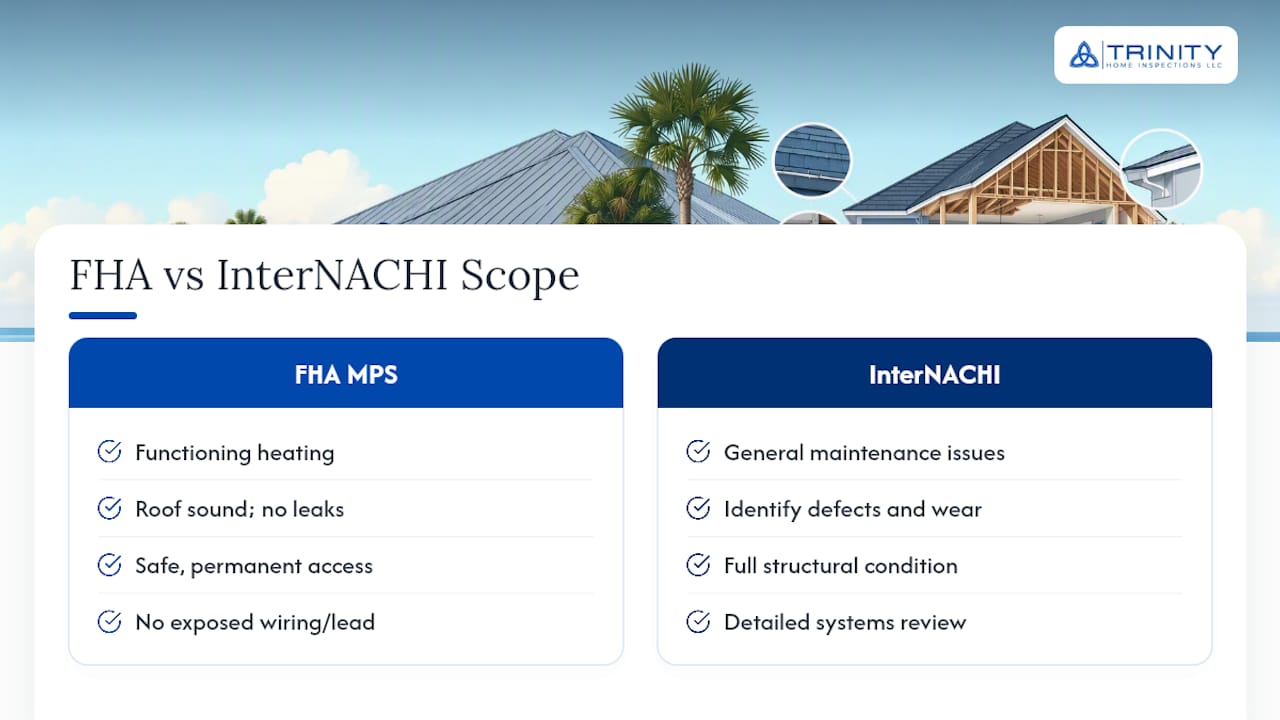
Water heaters must meet local code, plumbing needs to function without active leaks, and the property must have a clear path of egress from every bedroom. Structural soundness matters too. A foundation with active settlement or a roof structure showing sag will typically need repair before the loan can close.
For readers comparing lender-driven requirements against a general home inspection, Trinity Home Inspections has a dedicated breakdown of FHA home inspection requirements worth reviewing side by side with this guide.
Where FHA Inspections Most Often Run Into Trouble
Certain issues show up again and again during FHA property reviews. Peeling or chipping paint on homes built before 1978 is one of the most common, since it triggers a lead-based paint concern regardless of the home’s actual condition otherwise. Missing handrails on stairs with three or more risers, broken or fogged window seals, and inoperable heating systems also cause frequent holdups.
Roofs with less than a few years of remaining life, standing water or poor drainage against the foundation, and exposed wiring in basements or crawlspaces round out the list of frequent failure points. None of these are usually deal-breakers. Most get resolved with a straightforward repair before closing, but they slow the process down when they surface late.
How an FHA Review Differs From a General Home Inspection
A general InterNACHI-style home inspection, like the ones Trinity Home Inspections performs, exists to give buyers a full picture of a home’s condition: safety issues, major defects, and routine maintenance items, all documented with photos regardless of whether they affect loan approval. An FHA property review exists for a narrower purpose: confirming the home meets minimum habitability and safety standards so the loan can close.
That means a general inspection will flag things an FHA review would never mention, like worn cabinet hardware or a slow bathroom drain, because those items matter for a buyer’s maintenance planning even though they have no bearing on loan eligibility. The two serve different audiences reading for different reasons, and getting both perspectives gives buyers the clearest possible picture before they close.
Health and Safety Features FHA Reviews Pay Close Attention To
Smoke detectors and handrails get specific attention because they carry direct safety consequences. A property generally needs working smoke detectors on every level and outside sleeping areas, and handrails are expected on any stairway with three or more steps. Carbon monoxide detectors are increasingly expected near sleeping areas in homes with fuel-burning appliances or attached garages, even where not strictly mandated.
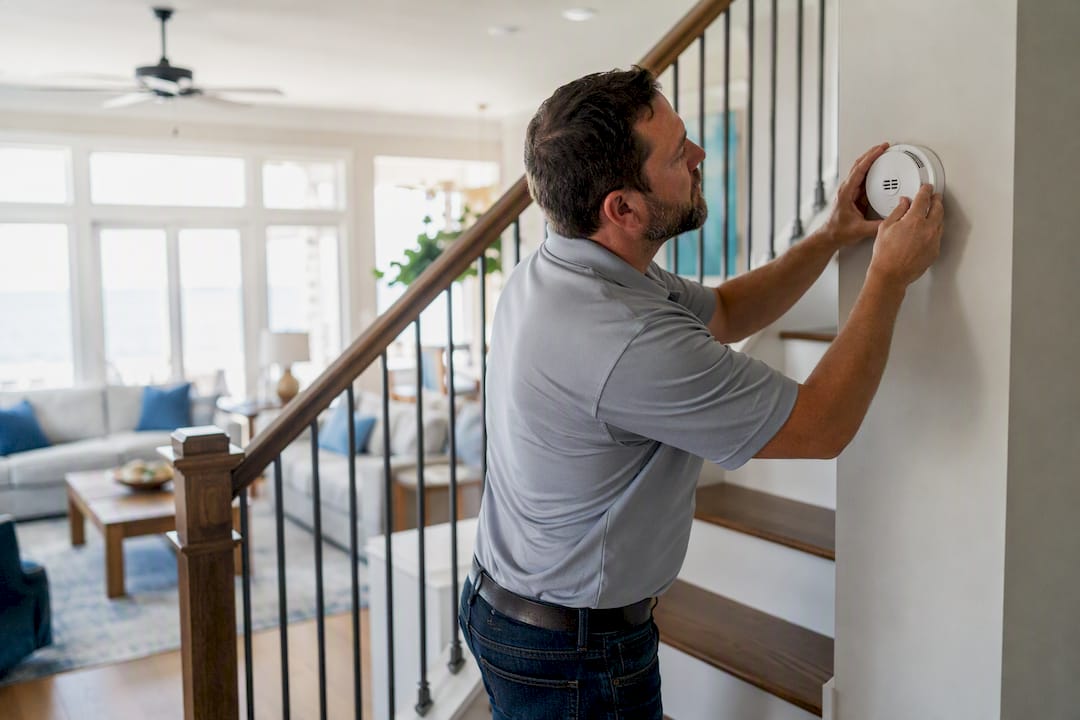
These items are inexpensive to fix, which is exactly why they cause so much friction when they get missed. A missing handrail can be corrected in an afternoon, but if it is not caught until late in the loan process, it still delays closing. It is one more reason a general home inspection early in the process, before the FHA review, tends to save buyers real time.
What I Tell Every Client Before We Start
People sometimes expect an inspection to catch everything, including problems hidden behind drywall or underground. It cannot, and any inspector who claims otherwise is overselling. What it can do is give you an honest, visual read on safety and function. Walk it with me if you can. Ask questions as we go. If something worries you, we can add thermal imaging, a sewer scope, or air quality testing to dig further.
— Matt
Book a Trinity Home Inspections Home Inspection
Trinity Home Inspections gives you a straightforward answer to the exact question this article covers: what an inspector actually checks, and what you get in writing when it’s done. Every inspector is InterNACHI-certified, FAA drone licensed, and backed by $1M in Errors & Omissions coverage and $2M in General Liability, well above what Alabama requires.
[

Every inspection includes a same-day, photo and video-rich report with color-coded findings sorted into safety, major, and maintenance categories, plus free thermal imaging on every job. We test every accessible outlet, switch, window, and door rather than a sample, and we hand you a list of trusted contractors when repairs come up. If a report raises questions about air quality, our indoor air quality testing service can dig deeper, and our property and permit search service helps you verify a home’s history before you commit.
Call 251-210-7376 or visit Trinityinspectionsllc to schedule your inspection across Baldwin, Mobile, Escambia, Washington, and Monroe counties.
Key Takeaways
A thorough home inspection checks a home’s roof, structure, systems, and safety features visually and reports findings by severity so buyers can negotiate with real evidence.
Point | Details |
Scope follows InterNACHI standards | Roof, exterior, foundation, attic, HVAC, plumbing, electrical, and interior all get checked visually. |
Findings sort by severity | Reports classify items as safety/urgent, major/repair, or maintenance/minor. |
FHA reviews focus narrower | FHA property standards check habitability and safety, not full maintenance condition. |
Prep speeds up inspection day | Clear attic access, run the HVAC, and replace burnt bulbs before the inspector arrives. |
Trinity adds tools at no extra cost | Trinity Home Inspections includes free thermal imaging and full outlet/switch testing on every job. |
Sources
FAQ
What Do FHA Inspectors Look for in a Home?
They check for safe, functioning systems and habitable conditions, including a sound roof, working heating, secure handrails, and no exposed wiring, rather than every maintenance detail a general inspection covers.
Is an FHA Inspection the Same as a Home Inspection?
No. A general home inspection, like the ones Trinity Home Inspections performs, covers full condition detail across every system, while an FHA review focuses narrowly on habitability and safety for loan approval.
How Long Does a Home Inspection Take?
Most inspections take 2 to 4 hours, depending on the home’s size, age, and how many issues come up along the way.
What Are the Most Common FHA Inspection Issues?
Peeling paint on pre-1978 homes, missing stair handrails, inoperable heating, and roofs nearing the end of their service life are among the most frequent failure points.
Can I Attend My Home Inspection?
Yes, and you should if your schedule allows. Trinity Home Inspections welcomes clients and their agents at every inspection, and walking the property with your inspector helps you understand findings firsthand.
Recommended

