
Homebuyers: What Home Inspectors Check With Drones and Thermal Imaging


A home inspector performs a non-invasive visual examination of a home’s major systems, roof to foundation, and hands you a written report identifying safety concerns, worn components, and maintenance needs. Following InterNACHI and ASHI Standards of Practice, inspectors like the team at Trinity Home Inspections use that report to give buyers and sellers real leverage in negotiations and repair planning.
TL;DR:
Major foundation cracks, active roof leaks, and outdated electrical systems are the most critical red flags requiring immediate attention.
A standard inspection does not include sewer, mold, radon, or pest testing, which must be arranged separately as add-on services.
Inspections typically last 2 to 4 hours, with reports delivered within 24 to 48 hours, and the inspector should provide an in-person walkthrough and clear documentation.
Inspectors examine accessible systems using non-invasive methods, sometimes utilizing drones and thermal imaging, but avoid cutting into walls or pulling wiring apart.
Verify the inspector’s credentials, including membership, exam scores, insurance coverage, and experience with aerial assessments, to ensure comprehensive and trustworthy service.
What Do Home Inspectors Look For, System by System?
Every accessible major system gets a hands-on look, and each one tells a different part of the home’s story. Inspectors examine these areas because they provide important information for the final report.
Roof and exterior. Inspectors check shingles, flashing, gutters, and drainage patterns around the foundation. When a roof is too steep or fragile to walk safely, a properly trained inspector will ladder the perimeter and use a drone with a high-resolution camera to document conditions instead of skipping the assessment altogether.
Structure and foundation. This is where inspectors look for visible cracks, signs of settlement, and whether floor joists and beams are doing their job. A hairline crack in a slab is common and rarely alarming. A crack that’s wide, horizontal, or paired with a sagging floor is a different conversation entirely.
Plumbing. Inspectors run fixtures, check the water heater’s age and condition, and look for visible leaks under sinks and around toilets. They also note anything suggesting a slow drain or sewer issue, though a full sewer scope with a main line camera is a separate add-on service, not part of a standard visual inspection.
Electrical. The panel gets opened and inspected for outdated wiring methods, missing breakers, and signs of overheating. Inspectors test outlets, switches, and GFCIs using their normal operating controls. They don’t cut into walls or pull wiring apart. It’s a functional test, not a forensic one.
HVAC. Heating and cooling systems get run through normal cycles to confirm they turn on, respond to the thermostat, and move air properly. Inspectors check filters, visible ductwork, and flue or chimney connections, and they’ll often note an estimated remaining service life based on the unit’s age and condition.
Attics and crawlspaces. These tight, often overlooked spaces reveal a lot: insulation levels, ventilation, moisture staining, and pest activity. If access is blocked or unsafe, a good inspector will say so directly in the report rather than guessing at what’s behind an inaccessible hatch.
Interior components. Windows and doors get opened and closed to confirm proper operation. Stairs and railings are checked for safety. Built-in appliances get tested using normal controls, and finished surfaces are reviewed for signs of past water damage or settling.
That system-by-system approach lines up closely with the checklist Realtor.com outlines for a standard inspection, and it’s the same framework behind our own InterNACHI home inspection checklist.
What Happens During a Home Inspection, Step by Step?
A home inspection follows a predictable rhythm, even though every house is different. Knowing the sequence helps you show up prepared and get more out of the walkthrough.
The agreement comes first. Before the inspector ever walks the property, you’ll sign an agreement covering scope, fee, and the access needed, attic hatches unlocked, utilities on, pets secured.
The exterior walk starts things off. The inspector circles the home, checking the roof, siding, grading, and drainage before ever stepping inside.
Interior systems get put through their paces. Plumbing fixtures run, HVAC cycles, electrical panels open up, and every accessible outlet and switch gets tested.
Attic and crawlspace checks happen next. These confirm insulation, ventilation, and structural condition in spaces most homeowners never see.
Photos and notes are documented throughout. Every finding gets recorded on the spot, not reconstructed from memory later.
A walkthrough wraps things up. The inspector reviews the biggest findings with you in person before leaving.
A typical inspection runs 2 to 4 hours, with larger or older homes taking longer due to more systems, more square footage, and often more surprises tucked into additions or renovations. Attending in person, rather than relying solely on the written report, gives you the chance to ask targeted questions on the spot and get context that photos alone won’t capture. Most reports, including ours, land in your inbox the same day or within 48 hours.
What Does a Home Inspection Report Include?
The report is where the entire inspection pays off, or falls flat, depending on how well it’s organized. A useful report includes a summary of major findings, detailed notes for each system, timestamped photos, and severity labels that separate genuine safety issues from cosmetic wear.
A well-built report typically covers:
A plain-language summary highlighting key items
Detailed findings organized by system
Severity ratings distinguishing safety hazards from minor maintenance items
Notes on estimated remaining useful life for major components
Clear recommendations on necessary repairs and items to monitor over time
Statistic Callout: Industry data shows a high share of inspections turn up at least one meaningful finding, and those findings are routinely used to negotiate repairs or credits rather than to kill deals outright.
When a report flags something outside the inspector’s scope, foundation movement that needs engineering analysis, or wiring that needs a licensed electrician’s opinion, that’s your cue to bring in a specialist for a firm repair estimate before you negotiate. Most purchase contracts give buyers a limited time to submit repair requests, ask for a credit, or invoke a contingency to walk away, but the exact deadline varies and should be confirmed in your contract. Read that window carefully; missing it can waive your negotiating leverage entirely.
What Are the Biggest Red Flags in a Home Inspection?
Some findings are worth losing sleep over. Most aren’t. Knowing the difference keeps you from either panicking over a loose cabinet hinge or ignoring a genuine structural problem.
The findings that deserve real attention include horizontal or widening foundation cracks, active roof leaks that have already caused structural rot, unsafe or outdated electrical systems like knob-and-tube wiring or overloaded panels, and long-term water intrusion that’s gone unaddressed.
Far more common are the smaller items every inspector sees on a weekly basis:
Worn or aging roof shingles nearing the end of their service life
Minor plumbing leaks under sinks or around fixtures
HVAC systems overdue for routine maintenance
Missing GFCI protection near sinks or wet areas
Poor grading or drainage directing water toward the foundation
Pro Tip: Sort every finding into two buckets before you react: safety and major systems first, cosmetic items last. A cracked bathroom tile can wait. A double-tapped breaker in the electrical panel cannot.
What Doesn’t a Standard Home Inspection Cover?
A standard inspection is visual and non-invasive by design. Inspectors don’t cut into walls, pull up flooring, or run lab tests on air or water samples unless you specifically order those services.
Common exclusions that require an add-on or a specialist include:
Sewer scope inspections using a main line camera
Radon testing
Mold sampling with certified lab analysis
Lead paint or asbestos testing
Pest and termite inspections
Pool, spa, or septic system evaluations
If the standard inspection turns up a red flag, an odd odor near a drain, cracked pool decking, or a musty attic, that’s usually the trigger to add one of these services. Pricing for add-ons varies by scope and location and is billed separately from the base inspection fee.
What Qualifications Should a Home Inspector Have?
Standards of Practice from InterNACHI and ASHI define what a licensed inspector must examine and how findings get reported. Both organizations position inspectors as generalists. They’re trained to spot the widest range of issues, not to diagnose every problem with an engineer’s precision, and a competent inspector will always recommend a specialist when a finding falls outside standard scope.
Look for these credentials when vetting an inspector:
InterNACHI or ASHI membership with completed Standards of Practice and Code of Ethics exams
Passing score on the National Home Inspectors Exam
FAA drone licensing if the inspector uses aerial roof assessments
Ongoing annual continuing education
Insurance matters just as much as certification. Ask about Errors & Omissions coverage and General Liability limits. Many states set minimums far lower than what a serious inspector actually carries, and the gap between the two tells you a lot about how seriously a company takes its own risk.
Before hiring anyone, ask: Can I attend the inspection? Do you walk roofs, or only view them from the ground? Can I see a sample report? What tools do you use? How fast will I get the report? What add-ons do you offer if something comes up?
An inspector’s job is to work for the client who hired them and report what’s actually there, not what a seller hopes to hear or a buyer wants to see.
What’s Included in a Standard Home Inspection?
A standard inspection includes a visual check of every major accessible system, timestamped photos, a written report with severity ratings, and an in-person or phone walkthrough of the findings. Add-on services extend beyond that baseline when a property calls for deeper investigation.
Price factors typically include home size, age, complexity, and how many add-ons get bundled in. Sellers preparing for a listing often benefit from the same scope of review; our seller’s home inspection checklist breaks down what to expect before putting a house on the market.
How We Approach Every Inspection at Trinity Home Inspections
I built Trinity Home Inspections around one idea: give people a report that tells the truth, not what’s convenient. That starts with InterNACHI certification and FAA drone training, so a roof that’s too dangerous to walk still gets a real look instead of a guess from the ground.
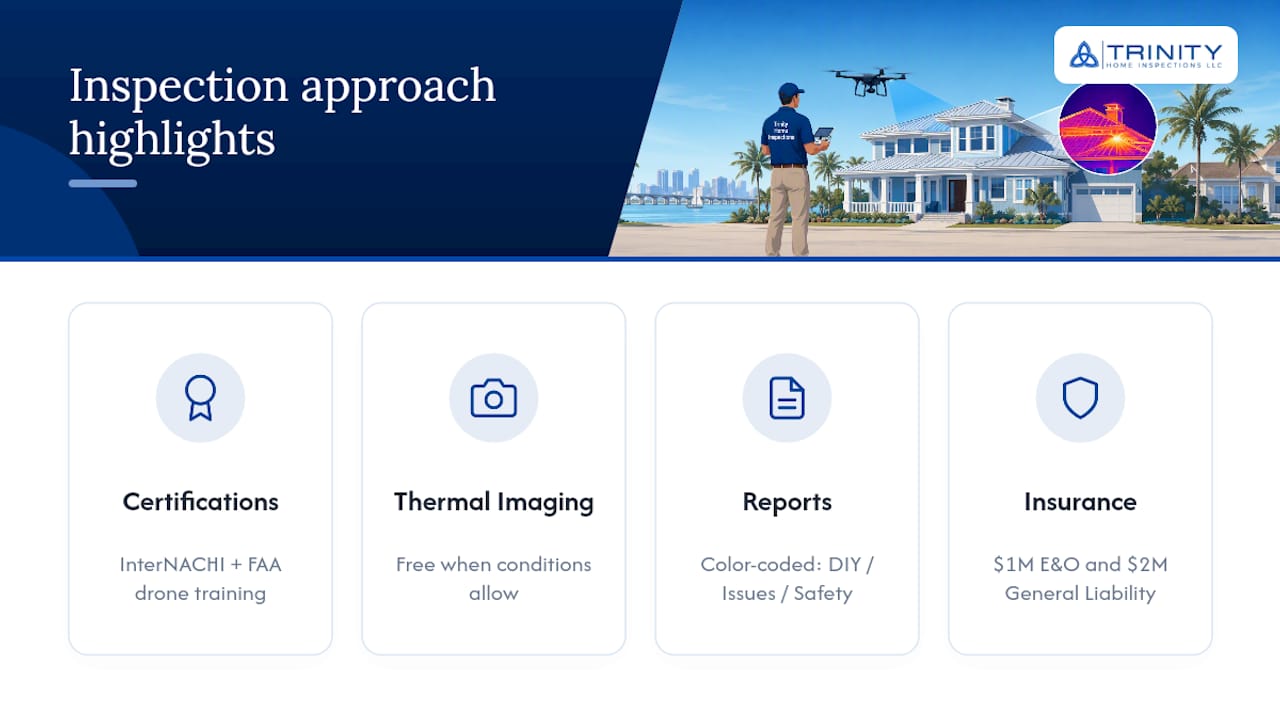
Every report we deliver includes free thermal imaging when conditions allow, at no extra charge, because we think spotting a hidden moisture pocket or an overheating electrical connection shouldn’t cost extra. Our reports are color coded into DIY/Minor, Issues/Defects, and Safety/Major categories, so you’re not stuck decoding fifty pages to find the three things that actually matter. We deliver same day in almost every case, and we walk you through the findings in person before we ever leave the property.
We also carry far more insurance than Alabama requires, $1M in Errors & Omissions and $2M in General Liability, because we’re guests in your home and we take that seriously. If you’re weighing your options across the Gulf Coast, that’s worth asking any inspector about directly. You can book with us anytime at Trinity Home Inspections.
— Matt
Book a Same-Day Inspection With Trinity Home Inspections
Trinity Home Inspections gives you what most inspectors charge extra for, free thermal imaging, same-day photo and video reports, and add-ons like sewer scopes, mold testing, and air quality sampling all under one roof so you’re not juggling three different vendors before closing.
[

Whether you’re buying, selling, or just keeping tabs on a home you already own, our color-coded reports separate real problems from small fixes so you know exactly where to focus. Sellers preparing to list can also get ahead of surprises with a pre-listing inspection before buyers ever walk through the door. Call us at 251-210-7376 or visit Trinityinspectionsllc to schedule your inspection and get a same-day report in hand.
Sources
FAQ
What Is the Biggest Red Flag in a Home Inspection?
Major foundation movement, active roof leaks causing structural rot, and unsafe or outdated electrical systems top the list of findings that warrant the most caution.
What Is a Home Inspector Responsible For?
A home inspector is responsible for visually examining a home’s accessible major systems and delivering a written report of material defects, following Standards of Practice set by organizations like InterNACHI and ASHI.
What Are the Cons of Being a Home Inspector?
Inspectors work irregular hours, spend significant time in attics, crawlspaces, and on roofs, and carry real liability exposure, which is why reputable inspectors, including Trinity Home Inspections, carry insurance well above state minimums.
Does a Home Inspection Include Sewer or Mold Testing?
No. A standard inspection is a non-invasive visual exam, so sewer scopes, mold sampling, and radon testing are offered as separate add-on services rather than part of the base inspection.
How Long Does a Home Inspection Take?
Most inspections take 2 to 4 hours, with larger or more complex homes running longer, and reports typically arrive within 24 to 48 hours, often the same day.
Recommended