
How to Detect Mold in Your Home: Gulf Coast Guide

TL;DR:
Gulf Coast homes are at high risk for mold due to persistent humidity and moisture.
Regular inspection, controlling indoor humidity, and addressing leaks prevent mold growth effectively.
Professional testing and advanced tools like thermal imaging ensure accurate detection of hidden mold issues.
Living on the Gulf Coast means enjoying warm weather, beautiful coastlines, and a tightknit community. It also means your home faces one of the most persistent threats any structure can encounter: mold! The combination of high humidity, frequent rain, and warm temperatures creates near-perfect conditions for mold to take hold. According to the EPA, mold thrives in humid conditions and can cause respiratory problems, trigger allergies, and silently damage your home’s structure over time. Catching it early is not just about protecting your health. It is about protecting one of the biggest investments you will ever make. This guide walks you through every step of mold detection, from basic preparation to professional sampling, so you can act with confidence.
Key Takeaways
Point | Details |
Humidity drives mold risk | Unchecked moisture and high indoor humidity quickly promote mold growth in Gulf Coast homes. |
Start with visual checks | Checking for visible signs and musty odors is the fastest and most effective first step. |
Advanced tools reveal hidden mold | Moisture meters and thermal imaging help uncover mold behind walls, ceilings, and HVAC systems. |
Professional sampling is selective | Expert lab testing is valuable for non-visible mold, post-remediation verification, or real estate transactions. |
Prevention is the best protection | Controlling humidity and fixing leaks early stops mold before it threatens health or property. |
Preparing for mold detection: What you need to know
Before you open a single cabinet or peek behind a wall, you need to understand what you are up against. Mold is not a problem unique to neglected or older homes. In Gulf Coast Alabama, even well-maintained properties in Fairhope, Daphne, and Gulf Shores can develop mold issues because of the region’s relentless humidity. The air here regularly pushes above 70% relative humidity outdoors, and that moisture finds its way inside through doors, windows, HVAC systems, and tiny gaps in your building envelope.
Mold needs only two things to grow: a surface and moisture. Once those conditions exist, mold can begin growing within 24 to 48 hours, which is why controlling indoor humidity is your first and most powerful line of defense. Many Gulf Coast homeowners discover mold not after a major flood but after months of slow condensation around AC vents or a small, unnoticed pipe drip under a sink.
Knowing common home inspection findings in Gulf Coast Alabama can help you understand where mold most often appears in local homes. The most frequent hotspots include:
Wall cavities and ceilings near plumbing or roof penetrations
HVAC systems and ductwork, where condensation collects on cool surfaces
Crawlspaces, which trap ground moisture and have limited airflow
Attics, especially after roof leaks or inadequate ventilation
Under carpets and flooring over concrete slabs that sweat in summer
To inspect your home properly, gather the right tools before you start. Here is what you will need:
Tool | Purpose | Estimated cost |
Hygrometer | Measures indoor relative humidity | $15–$40 |
Flashlight or headlamp | Illuminates dark corners and cavities | $10–$30 |
Moisture meter | Detects moisture in walls, floors, ceilings | $25–$80 |
N95 respirator mask | Protects lungs from mold spores | $10–$20 |
Nitrile gloves | Prevents skin contact with mold | $5–$15 |
Safety goggles | Shields eyes during close inspection | $5–$15 |
The CDC mold guidelines recommend wearing protective gear any time you suspect mold is present, even before confirmation. Spores can become airborne the moment you disturb a surface.
Pro Tip: Keep your indoor relative humidity between 30% and 50% year-round. In Gulf Coast summers, your air conditioner is your best humidity control tool. If your AC is undersized or poorly maintained, it will struggle to keep moisture levels in check, and mold risk climbs fast.
Step-by-step guide: Inspecting for visible mold and musty odors
Once you have the tools and understand the risks, here is how to thoroughly check your home for signs of mold. A systematic approach keeps you from missing areas that are easy to overlook.
1. Start with your nose. Walk slowly through each room with the HVAC off. A musty, earthy smell, similar to old books or damp soil, is often the first sign of hidden mold. Do not ignore it.
2. Check high-moisture rooms first. Bathrooms, kitchens, laundry rooms, and utility closets are prime starting points. Look under sinks, around toilet bases, and behind washing machines.
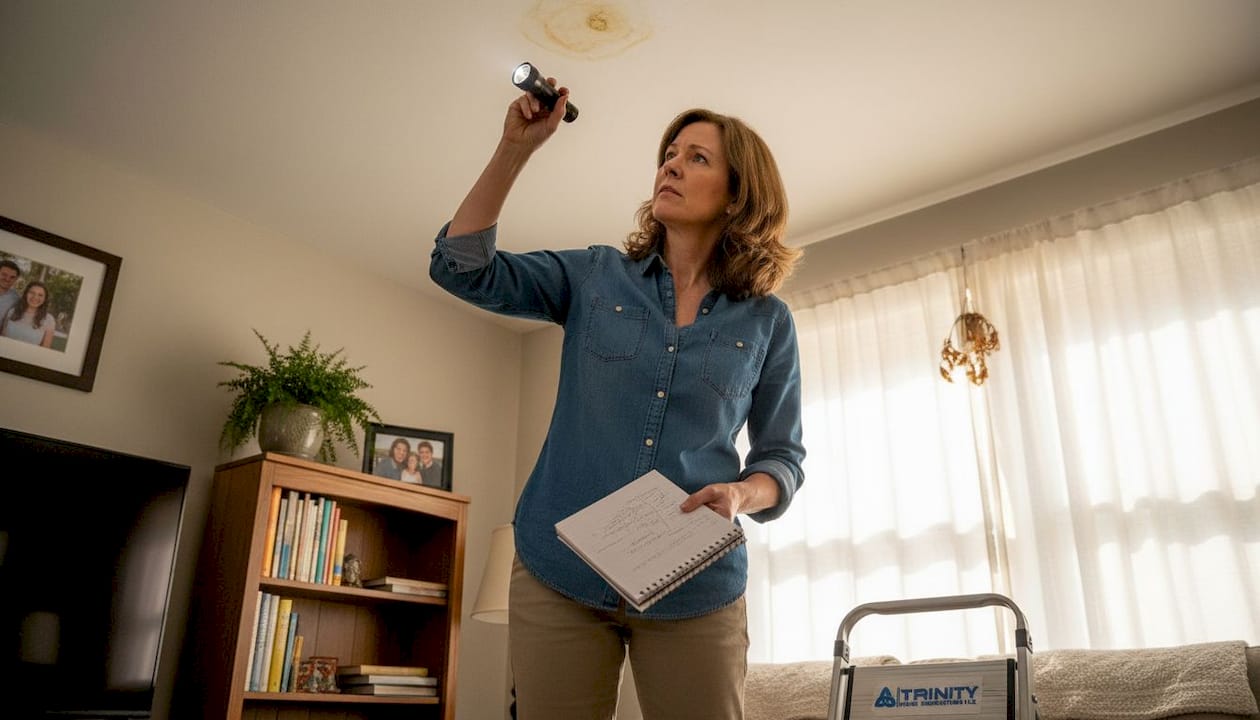
3. Inspect walls and ceilings closely. Look for discoloration, fuzzy growth, or water stains, which are the most common visual cues for mold. Staining does not always mean active mold, but it always means past moisture, and past moisture usually means future mold.
4. Open cabinets and closets. Mold loves enclosed, dark spaces with limited airflow. Pay special attention to exterior walls where condensation can form.
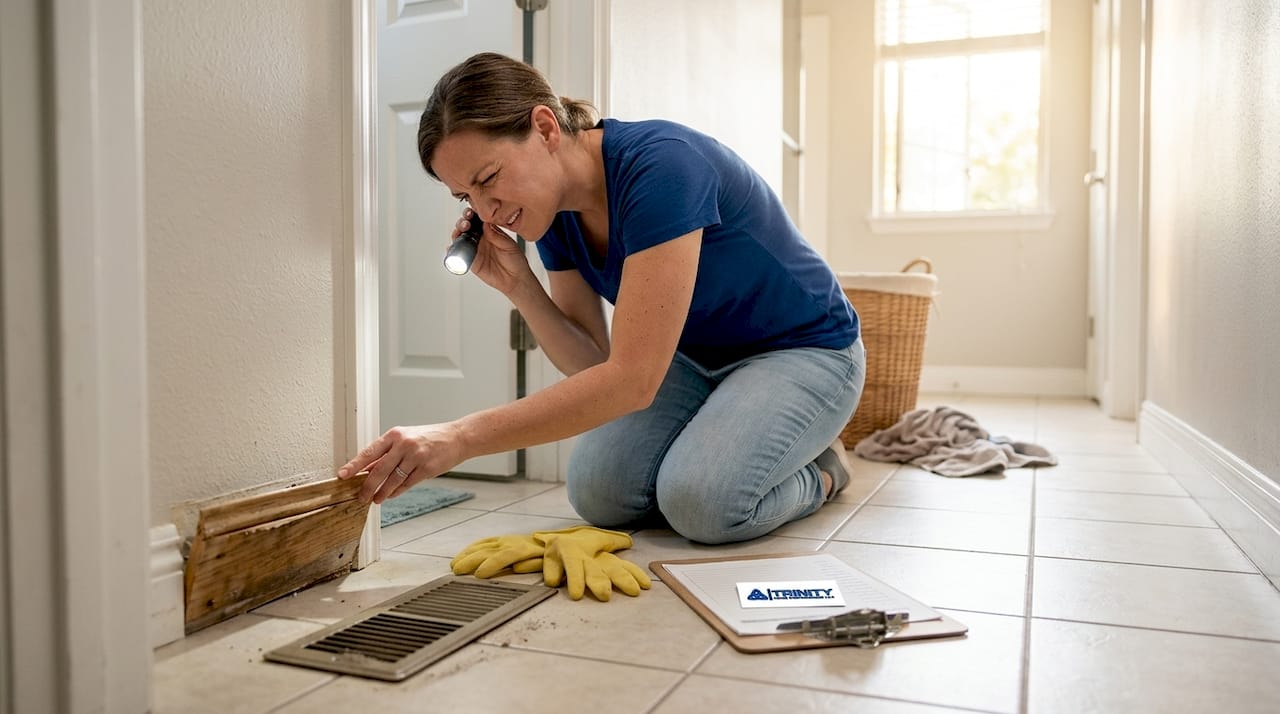
5. Check your HVAC vents and air handler. Look for dark spots around vent covers and inside the air handler cabinet. Mold in your HVAC system circulates spores through every room.
6. Move to your attic and crawlspace. These are the two areas most homeowners skip and the two areas where mold problems often start. Bring your flashlight and moisture meter.
7. Use your moisture meter on suspicious surfaces. Press it against walls, floors, and ceilings near any staining or soft spots. Readings above 16% in wood materials signal elevated moisture risk.
Important: A musty smell without visible mold is not a reason to relax. It is a reason to look harder. Hidden mold behind drywall or under flooring can be more extensive than anything you see on the surface. Do not wait for a visible colony to take action.
Here is a quick comparison of detection methods to help you decide what approach fits your situation:
Detection method | What it finds | Reliability | Cost |
Visual inspection | Surface mold, staining, water damage | Moderate | Free |
Odor detection | Hidden mold, airflow issues | Low to moderate | Free |
Moisture meter | Elevated moisture in materials | High | Low |
Professional air sampling | Airborne spore counts | Very high | $300–$1,050 |
Professional swab sampling | Species identification | Very high | Included in pro service |
For guidance on best practices for mold detection in Gulf Coast homes, local inspectors recommend combining visual checks with moisture meter readings before deciding whether professional sampling is needed. If you do find visible mold, review your options for removing mold inside walls before touching anything.
Pro Tip: Small, hidden leaks cause bigger mold problems than large visible ones. A slow drip inside a wall cavity can feed a mold colony for months before you notice any discoloration. If your water bill creeps up without explanation, treat it as a mold warning sign and investigate.
The EPA mold course provides additional detail on how mold spreads through building materials, which helps you understand why early detection matters so much.
Advanced detection methods: Moisture meters and thermal imaging
If visual checks reveal issues or if you suspect mold is hidden, consider these advanced detection options. They go beyond what the naked eye can see and give you a much clearer picture of what is happening inside your walls, ceilings, and floors.
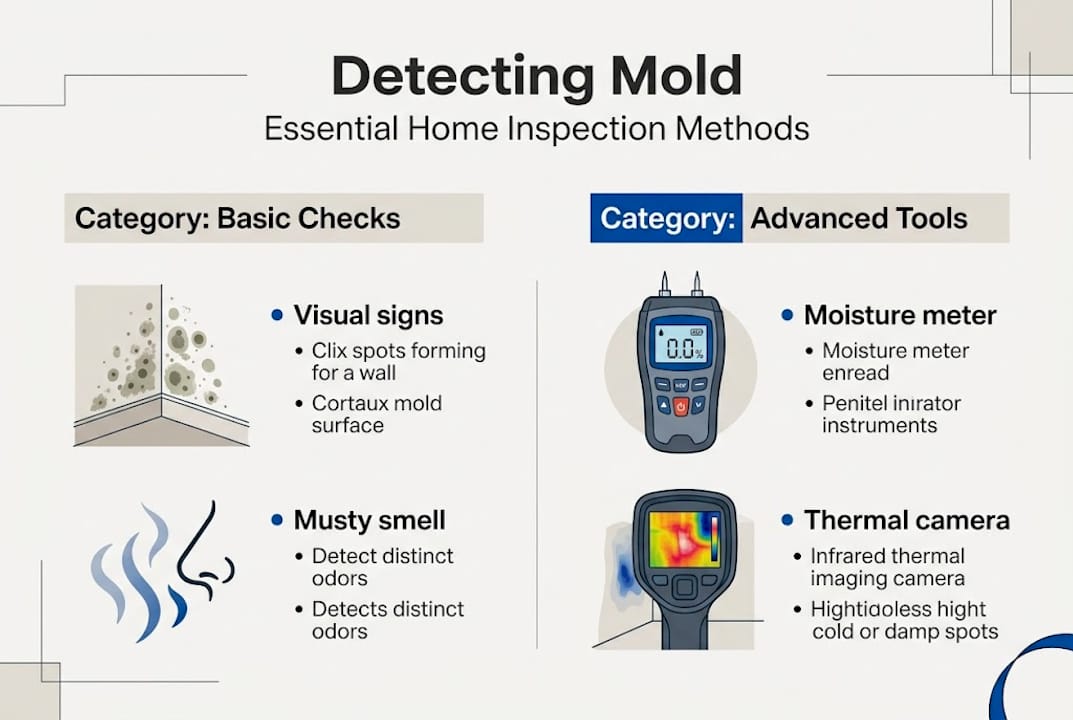
A moisture meter is a handheld device that measures the water content of building materials without cutting into them. You press the probes against a surface and get a reading in seconds. Elevated readings in areas with no visible damage are a strong indicator that moisture is migrating through the structure, which often means mold is not far behind.
Thermal imaging, also called infrared inspection, takes this a step further. A thermal camera detects temperature differences across surfaces. Wet materials cool down differently than dry ones, so thermal imaging identifies cooler wet spots behind walls and ceilings that would otherwise be completely invisible. This is one of the most powerful non-invasive tools available for mold detection.
At Trinity Home Inspections, we include thermal imaging at no extra charge with every inspection. Many inspection companies charge separately for this service, but we believe it is too important to leave out, especially in a climate like ours.
Here are the signs that suggest you need advanced tools rather than a basic visual check:
Recurring musty odors that return after cleaning or airing out the space
Soft or spongy spots in walls, ceilings, or floors without visible water damage
Unexplained allergy symptoms that improve when you leave the home
Recent water intrusion from storms, flooding, or plumbing failures
Elevated moisture meter readings in areas that look dry on the surface
Visible mold in one area that suggests a larger hidden source nearby
HVAC systems that have not been serviced or cleaned in several years
For homeowners in Mobile, Baldwin, and surrounding counties, learning about infrared inspection services can help you understand exactly what a thermal scan reveals and when it is worth scheduling one. If you already suspect a problem, connecting with local mold inspection experts gives you access to the right tools and trained eyes.
You can also explore mold testing services for Gulf Coast homes to understand the full range of options available in your area before committing to a course of action.
Pro Tip: Schedule annual thermal imaging if your home is in a high-risk Gulf Coast area, especially if you have a crawlspace, older ductwork, or a history of water intrusion. Catching moisture migration before it becomes a mold colony saves you thousands in remediation costs.
Professional mold sampling and verification: When and how to call the experts
If advanced methods confirm mold or you need formal documentation, here is how expert sampling and testing works. Professional sampling is not always the first step, but there are clear situations where it becomes necessary.
The CDC and EPA recommend professional sampling when mold is suspected but not visibly confirmed, when you need documentation for a real estate transaction, or when you want to verify that remediation was successful. Sampling gives you lab-confirmed results that a visual check simply cannot provide.
Here is what the professional sampling process typically looks like:
Initial consultation and visual assessment. The inspector reviews your concerns, examines the home, and identifies areas of elevated risk before deciding which sampling methods to use.
Air sampling. A pump draws air through a collection cassette for a set period. The cassette is sealed and sent to an accredited lab for analysis of spore counts and species.
Surface swab or tape lift sampling. The inspector swabs visible growth or suspicious surfaces. This identifies the specific mold species present, which matters for remediation planning.
Outdoor baseline sample. A sample taken outside the home establishes a baseline spore count for comparison. This is a step many DIY kits skip entirely, which is one reason their results are unreliable.
Lab analysis. Samples go to a certified, accredited laboratory with a documented chain of custody. Results typically return within two to three business days.
Report and recommendations. You receive a written report with spore counts, species identification, and clear guidance on next steps.
Note: DIY mold test kits from hardware stores are not a substitute for accredited lab analysis. They lack the outdoor baseline comparison, chain of custody documentation, and species-level identification that professionals provide. If results matter for a real estate deal or insurance claim, only accredited lab results will hold up.
Here is a general overview of costs and timeframes for professional mold testing in Gulf Coast Alabama:
Service | Typical cost | Turnaround time |
Visual mold inspection | $150–$300 | Same day |
Air quality sampling (per sample) | $75–$150 per sample | 2–3 business days |
Full inspection with sampling | $300–$1,050 | 2–3 business days for lab results |
Post-remediation clearance testing | $200–$400 | 2–3 business days |
For details on what mold swab testing involves and when it is the right choice, local experts can walk you through the process. If you are preparing for a home purchase or sale, a professional mold inspection combined with your standard home inspection gives you a complete picture in one visit. The EPA mold guidance also outlines when sampling adds genuine value versus when a visual inspection is sufficient.
Our take: What Gulf Coast homeowners should really focus on
After inspecting hundreds of homes across Mobile, Baldwin, and the surrounding Gulf Coast counties, we have a clear perspective on what actually protects homeowners from mold. And it is not what most people expect.
The biggest mistake we see is homeowners spending money on air sampling before they have addressed the moisture source. Testing tells you what is there. It does not fix anything. If you have a slow leak under your bathroom floor or an HVAC drain line that backs up every summer, no amount of testing changes that reality. Moisture control and regular checks consistently save homeowners more money and frustration than frequent air sampling ever will.
The second biggest mistake is treating mold as a one-time problem. Gulf Coast homes face humidity pressure every single day. A remediation job without addressing the underlying moisture source is a temporary fix. The mold will return.
Here is what actually moves the needle for local homeowners:
Fix every leak immediately, no matter how small it seems
Service your HVAC system at least once a year, including the drain lines and coils
Keep crawlspace vapor barriers intact and check them after every major storm
Use your hygrometer to monitor indoor humidity monthly, not just when something smells off
Schedule a professional inspection when buying, after storm damage, or every few years as a maintenance check
Reviewing common inspection findings for Gulf Coast homes gives you a realistic picture of what inspectors find most often, so you know where to focus your attention.
Pro Tip: Aim for prevention, not just detection. The homeowners who spend a little on maintenance every year almost never face the five-figure remediation bills that come from ignored moisture problems.
Connect with certified Gulf Coast mold inspectors
If you have worked through the steps in this guide and still have concerns, or if you simply want a professional set of eyes before closing on a home, Trinity Home Inspections is here to help. We serve Mobile, Baldwin, Escambia, Washington, Monroe, and Clarke counties with InterNACHI-certified inspections, free thermal imaging, and same-day reports packed with photos and video.

Our mold testing specialists use accredited labs, certified chain of custody, and advanced tools to give you results you can actually rely on. Whether you are buying, selling, or just want peace of mind, we bundle services to save you time and money. If you are selling, a pre-listing home inspection can surface mold issues before they become deal-breakers. Need to verify permits or property history before you buy? Our permit and deed search service gives you the full picture. Reach out today and protect your investment with a team that treats your home like their own.
Frequently asked questions
How quickly can mold develop after a leak or flooding?
Mold can begin growing within 24 to 48 hours of moisture exposure, which is why addressing any water intrusion immediately is critical, especially in the Gulf Coast’s warm, humid climate.
Should I use a DIY mold test kit or hire a professional inspector?
DIY kits have limited accuracy because they lack outdoor baseline comparisons and chain of custody documentation. Professionals use accredited labs and advanced tools to give you reliable identification and clear remediation guidance.
What areas in homes are most susceptible to mold in the Gulf Coast?
Wall cavities, HVAC ducts, crawlspaces, ceilings, attics, and under carpets are the most common mold hotspots in Gulf Coast homes due to persistent humidity and the frequency of water intrusion events.
When is professional mold sampling truly necessary?
Professional sampling is recommended when mold is suspected but not visible, when you need documentation for a real estate transaction, or when you want to confirm that remediation was successful before moving back into a treated area.
What’s the typical cost and turnaround for professional mold testing in Gulf Coast Alabama?
Professional inspection and testing in Gulf Coast Alabama typically costs between $300 and $1,050 depending on the number of samples, with lab results available within two to three business days.
Recommended

