
What Is a Home Warranty Inspection? Alabama Guide

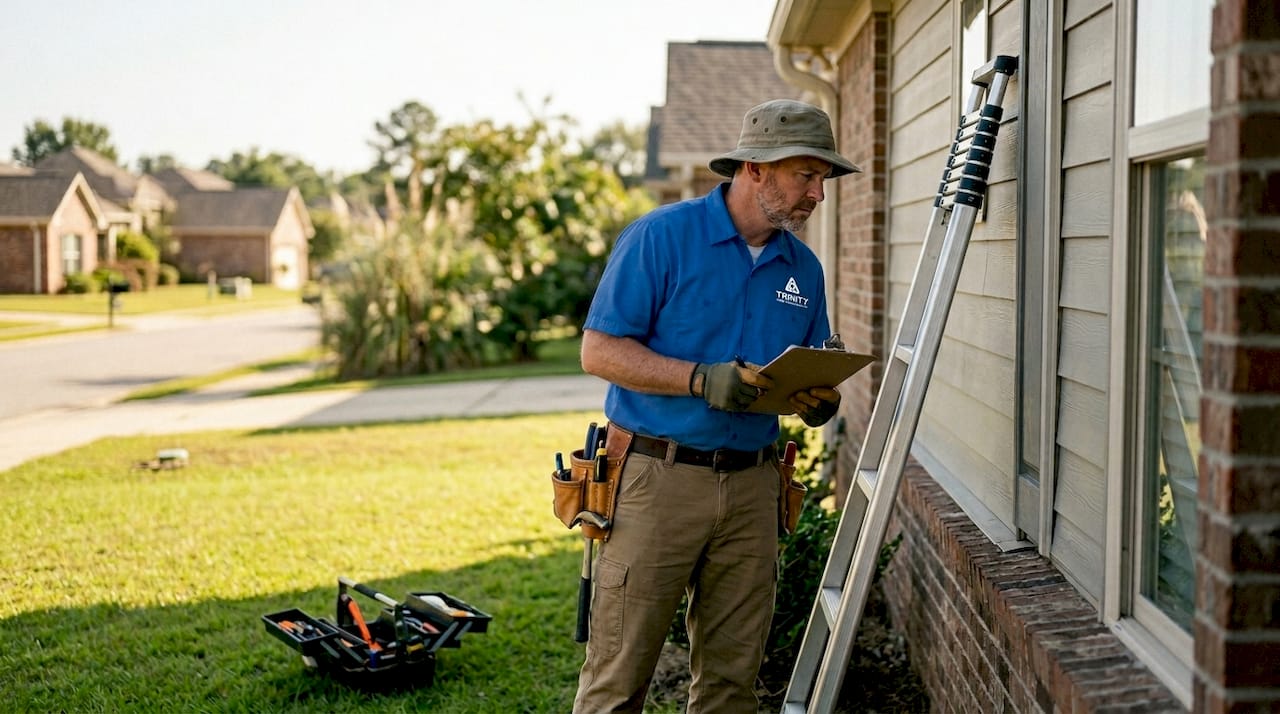
A home warranty inspection is a professional property evaluation performed before a builder or home warranty period expires, designed to document defects eligible for repair under your existing warranty coverage. In Alabama, where new construction is booming across Baldwin and Mobile counties, this inspection is one of the most financially protective steps a homeowner can take. Most people confuse it with a general home inspection or a home warranty service contract, but these are three distinct tools. Understanding the difference, and knowing when to act, can save you thousands of dollars before your coverage window closes.
What is a home warranty inspection and how does it differ from related terms?
A home warranty inspection is defined as a pre-deadline documentation inspection tied to a builder or structural warranty period, not a home warranty service contract. Home warranties pay for repairs after breakdowns occur, while a warranty inspection documents existing issues before your warranty expires. That distinction matters enormously. One is reactive coverage; the other is proactive documentation.
The industry term most professionals use is the “11-month warranty inspection,” named for the common practice of scheduling it during the 11th month of a one-year builder warranty. You may also hear it called a pre-warranty-expiration inspection or a new construction warranty inspection. All of these phrases describe the same process.
Home inspections, warranties, and warranty inspections each serve unique roles in protecting your investment at different stages of ownership. Here is how they compare:
Feature | General Home Inspection | Home Warranty Contract | Home Warranty Inspection |
Timing | Pre-purchase | Post-purchase, ongoing | Before warranty expiration |
Purpose | Assess visible condition | Cover repair/replacement costs | Document defects for warranty claims |
Who pays | Buyer | Buyer or seller | Homeowner |
Output | Inspection report | Service contract | Documented defect report |
Scope | Visible and accessible areas | Covered systems per contract | Systems covered under builder warranty |
A general home inspection assesses visible and accessible conditions at a single point in time. Inspectors are generalists and do not open walls or diagnose specialized systems, which means latent defects that develop after closing are not captured. That is exactly the gap a warranty inspection fills.
What to expect during a home warranty inspection in Alabama
A professional warranty inspection follows protocols established by organizations like InterNACHI and ASHI to evaluate all major systems and components of your home. Typical inspections cover HVAC, plumbing, electrical, structural components, and built-in appliances, giving you a thorough picture of what has developed since you moved in. In Alabama’s Gulf Coast climate, HVAC performance and moisture-related issues are among the most common findings, given the region’s heat and humidity.
Here is a standard home warranty inspection checklist of systems and areas evaluated:
HVAC systems: Heating and cooling equipment, ductwork, filters, and thermostat function
Plumbing: Water heater, supply lines, drains, fixtures, and visible pipe connections
Electrical: Panel, breakers, outlets, switches, and visible wiring
Structural components: Foundation, framing, roof structure, and attic
Exterior: Siding, grading, gutters, downspouts, and drainage patterns
Interior: Ceilings, walls, floors, windows, and doors
Built-in appliances: Dishwasher, range, garbage disposal, and exhaust fans
Insulation and ventilation: Attic insulation levels and ventilation adequacy
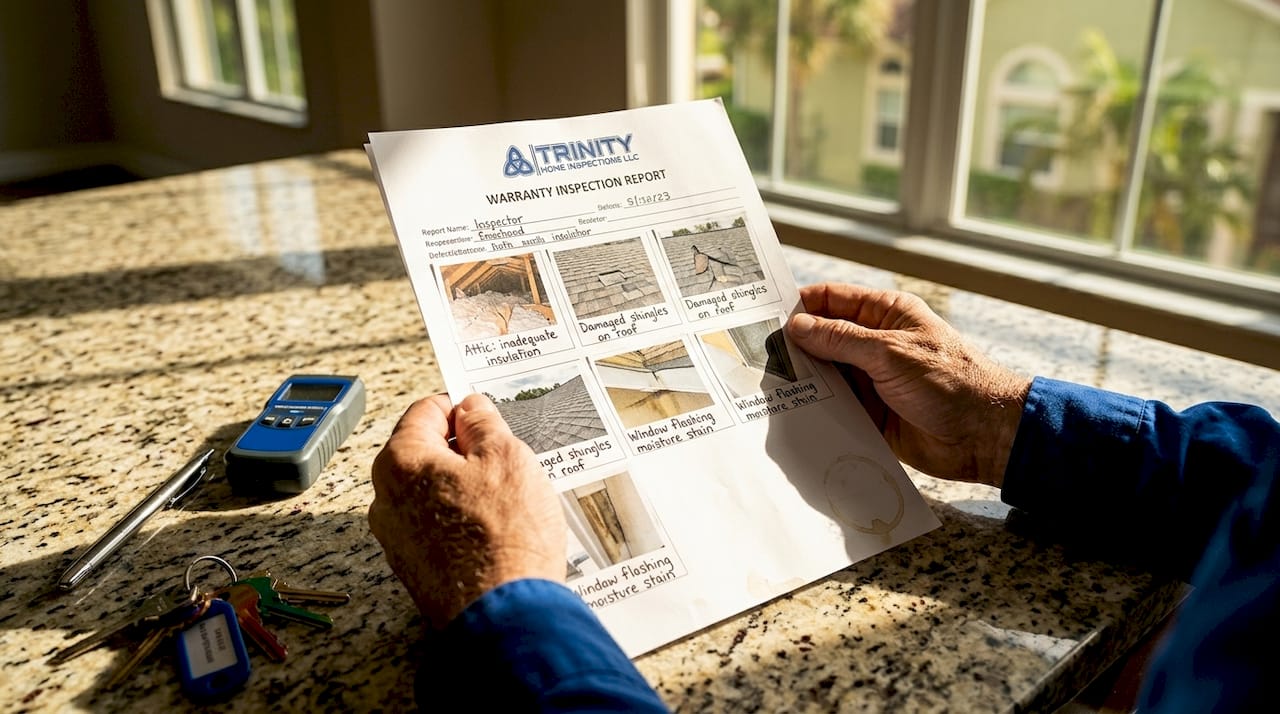
The inspector will document every finding with photos and written descriptions. At Trinity Home Inspections, reports include video for items that move, make noise, or show active issues, and 99% of reports are delivered the same day. That speed matters when you are working against a warranty deadline.
Pro Tip: Clear access to all systems before the inspector arrives. Move stored items away from the water heater, electrical panel, and HVAC equipment. Unlock attic hatches and crawl space entries. Inspectors can only evaluate what they can reach, so accessible systems mean a more thorough report.
For a deeper look at what a full inspection covers, the home inspection components guide from Trinity walks through each system in plain language.
When and why Alabama homeowners should schedule a warranty inspection
The standard recommendation is to schedule your warranty inspection during the 11th month of your builder warranty, but that timing is not always optimal. Scheduling too close to the expiration date cuts it close and may limit your leverage if the claim process moves slowly. Builder warranty departments are not always fast, and a dispute over a finding can take weeks to resolve.
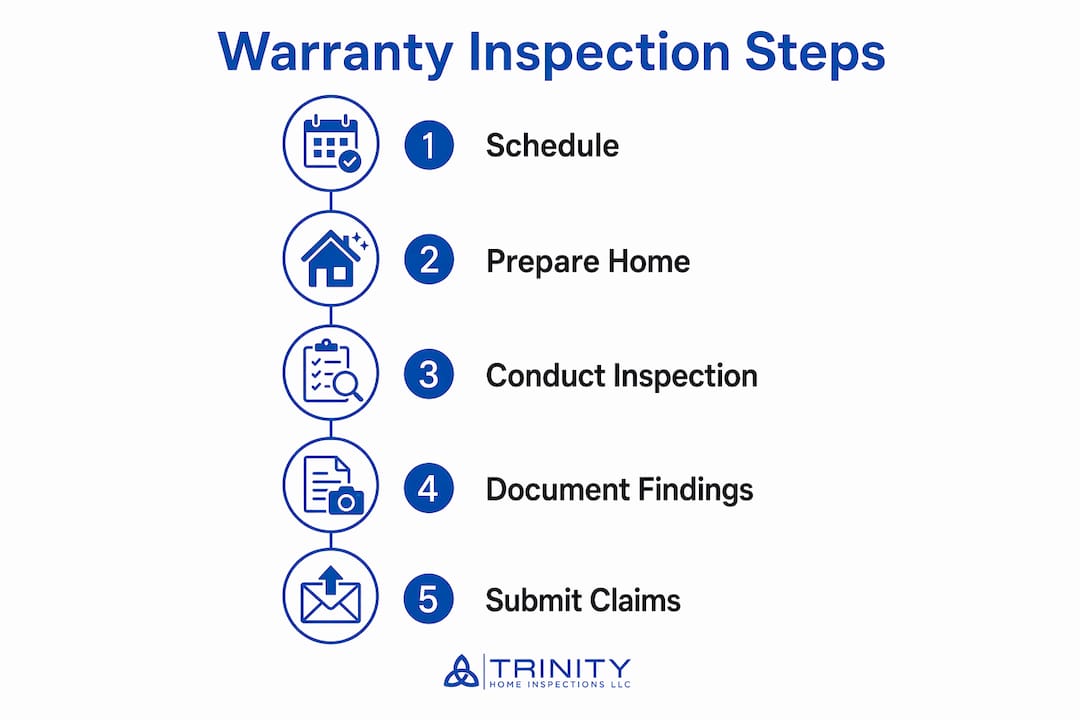
Here is a practical timeline to follow:
Month 6 to 9: Consider an early inspection if you have noticed specific concerns like settling cracks, moisture stains, or HVAC performance issues. This gives you the most time to file and resolve claims.
Month 10: The ideal window for most homeowners. You have lived through all four seasons, which reveals issues that only appear under real-world conditions.
Month 11: Acceptable, but leave yourself at least 30 days before expiration to file claims and receive responses.
Month 12 or later: Your builder warranty has expired. Any repairs are now your financial responsibility.
A warranty inspection at month 11 benefits from a home having experienced all seasons, which makes foundation settling and HVAC inefficiencies more visible. Alabama summers put significant strain on air conditioning systems, and that stress often reveals performance problems that were not apparent at move-in.
Scheduling between months 6 and 9 gives you more time to process claims before expiry, though there is a trade-off: some latent defects may not yet be visible. The right timing depends on your specific concerns and how responsive your builder has been to previous requests.
Pro Tip: Keep a running list of anything you notice throughout your first year, such as doors that stick seasonally, water stains that appear after heavy rain, or rooms that never cool properly. Share this list with your inspector before the walkthrough. It focuses the inspection on your real concerns and often leads to findings that a standard checklist alone would not prioritize.
For detailed guidance on picking the right date, the warranty inspection scheduling guide covers Alabama-specific considerations.
How much does a home warranty inspection cost in Alabama?
A professional home warranty inspection in Alabama generally costs between $300 and $500, with the final price shaped by several variables. Home size, location, and inspection scope are the primary cost drivers. A 1,500-square-foot home in Foley will cost less than a 3,500-square-foot home in Fairhope with a detached garage and a pool.
Key factors that influence your inspection cost include:
Square footage: Larger homes require more time and more detailed documentation
Inspector credentials: InterNACHI-certified inspectors with specialized tools typically charge more, and the added thoroughness is worth it
Add-on services: Sewer scope inspections, mold testing, and indoor air quality sampling carry separate fees but can be bundled for savings
Report format: Same-day photo and video reports represent a higher service level than basic written summaries
Location: Coastal areas like Gulf Shores and Orange Beach may carry slight premiums due to travel and the additional complexity of inspecting homes in high-humidity environments
The value calculation is straightforward. A small upfront inspection cost can prevent costly out-of-pocket repairs that would otherwise fall entirely on you after warranty expiration. A single HVAC replacement in Alabama can run $5,000 to $10,000. Catching a failing unit before your warranty closes costs a fraction of that.
Additional expenses to plan for include deductibles or service fees your builder may charge to process warranty claims. These vary by builder contract, so review your warranty documents before the inspection so you know exactly what is covered and what requires a formal claim submission.
Common challenges and limitations of home warranty inspections
A warranty inspection is a powerful tool, but it has real boundaries you should understand before scheduling one. Inspection findings do not guarantee repair approvals and may require homeowner advocacy with the builder or warranty provider. Knowing the limitations helps you use the inspection strategically rather than expecting it to solve every problem automatically.
The most common limitations include:
Concealed defects: Inspectors evaluate visible and accessible areas only. Issues inside walls, under slabs, or behind finished surfaces may not be detectable without invasive testing.
Warranty exclusions: Builder warranties often exclude cosmetic issues, normal wear and tear, and damage caused by homeowner modifications. Your inspector can document a finding, but the warranty company decides coverage.
Claim disputes: Builders sometimes dispute findings or classify defects as outside warranty scope. Having a detailed, photo-documented report from a certified inspector strengthens your position significantly.
Timing gaps: If a defect develops after your inspection but before the warranty expires, it may not be documented. This is one reason some homeowners schedule two inspections: one early and one near expiration.
Inspector access: Locked rooms, stored belongings blocking panels, and inaccessible crawl spaces all reduce inspection coverage. Prepare your home thoroughly before the inspector arrives.
The best response to these limitations is documentation. Request that your inspector note every finding with photos and specific locations. Submit your warranty claim in writing and keep copies of all correspondence with your builder. If a claim is denied, a detailed inspection report from an InterNACHI-certified inspector carries weight in any follow-up conversation or dispute process.
A roof inspection before repairs is one area where documentation is especially critical, since roofing defects are among the most disputed warranty claims and the most expensive to repair out of pocket.
Key takeaways
A home warranty inspection is your best financial defense before builder coverage expires, and timing it correctly determines how much leverage you actually have.
Point | Details |
Definition is specific | A warranty inspection documents defects before warranty expiration, not after a breakdown occurs. |
Timing drives results | Scheduling between months 10 and 11 captures seasonal issues while leaving time to file claims. |
Cost is justified | At $300 to $500, the inspection cost is a fraction of a single major repair like HVAC replacement. |
Limitations are real | Inspectors only evaluate visible areas; documentation and follow-up advocacy are your responsibility. |
Credentials matter | InterNACHI-certified inspectors follow national standards and produce reports that hold up in disputes. |
What I’ve learned from doing warranty inspections across Gulf Coast Alabama
After inspecting homes across Baldwin, Mobile, and Escambia counties, I can tell you that the homeowners who get the most out of a warranty inspection are the ones who treat it as a strategic appointment, not a formality. The ones who wait until month 11 and a half, with no notes and no preparation, often leave value on the table.
The most common findings I see in Alabama new construction are moisture intrusion at window and door penetrations, HVAC systems that are undersized for the square footage they are cooling, and grading issues that direct water toward the foundation rather than away from it. None of these are dramatic problems at first. All of them become expensive if they go undocumented and uncorrected.
What surprises most homeowners is how much a single season of Alabama heat reveals. An HVAC unit that seemed fine in March is often struggling by August, and that performance gap shows up clearly in an inspection. That is why I genuinely believe the 10th month is the sweet spot for most homeowners here. You have lived through a full summer, the home has settled, and you still have enough time to file a claim and get a real response before the clock runs out.
My honest advice: do not treat this inspection as optional. Your builder warranty is a financial asset with an expiration date. A professional inspection is how you use it before it disappears.
— Matt
Schedule your Alabama home warranty inspection with Trinity Home Inspections
[
Trinity Home Inspections serves homeowners across Baldwin, Mobile, and Escambia counties with InterNACHI-certified 11-month warranty inspections built to give you real leverage before your coverage expires.
What’s included with every warranty inspection:
Full evaluation of HVAC, plumbing, electrical, structural components, and appliances
Same-day photo and video report delivered digitally
Free thermal imaging to detect hidden moisture and insulation gaps
Color-coded report with clear priority levels
Post-inspection walkthrough by phone or in person
Whether you are in Daphne, Fairhope, Gulf Shores, or Mobile, Trinity is ready to document your home’s condition before that warranty window closes. You can also explore pre-listing inspection services and property permit searches for Baldwin, Mobile, and Escambia counties.
Call 251-210-7376 or visit TrinityInspectionsLLC.com to book your inspection today.
FAQ
What is a home warranty inspection?
A home warranty inspection is a professional evaluation performed before a builder or structural warranty expires, documenting defects so homeowners can file covered repair claims. It is distinct from a general home inspection and from a home warranty service contract.
When should I schedule a warranty inspection in Alabama?
Most Alabama homeowners should schedule between months 10 and 11 of their builder warranty to capture seasonal issues and still have time to file claims. Scheduling earlier, around months 6 to 9, gives more processing time but may miss defects that develop later.
How much does a home warranty inspection cost?
A professional warranty inspection typically costs between $300 and $500, depending on home size, location, inspector credentials, and whether add-on services like mold testing or sewer scoping are included.
Who conducts home warranty inspections?
InterNACHI-certified home inspectors are the recognized standard for warranty inspections. Certified inspectors follow national standards of practice and produce documented reports that carry weight in warranty claim disputes with builders.
What happens if my warranty expires before I schedule an inspection?
Once your builder warranty expires, any repair costs become your full financial responsibility. There is no retroactive coverage, which is why scheduling before expiration is the only way to protect your investment under the original warranty terms.
Recommended