
Household Water Purification Systems: A Homeowner's Guide

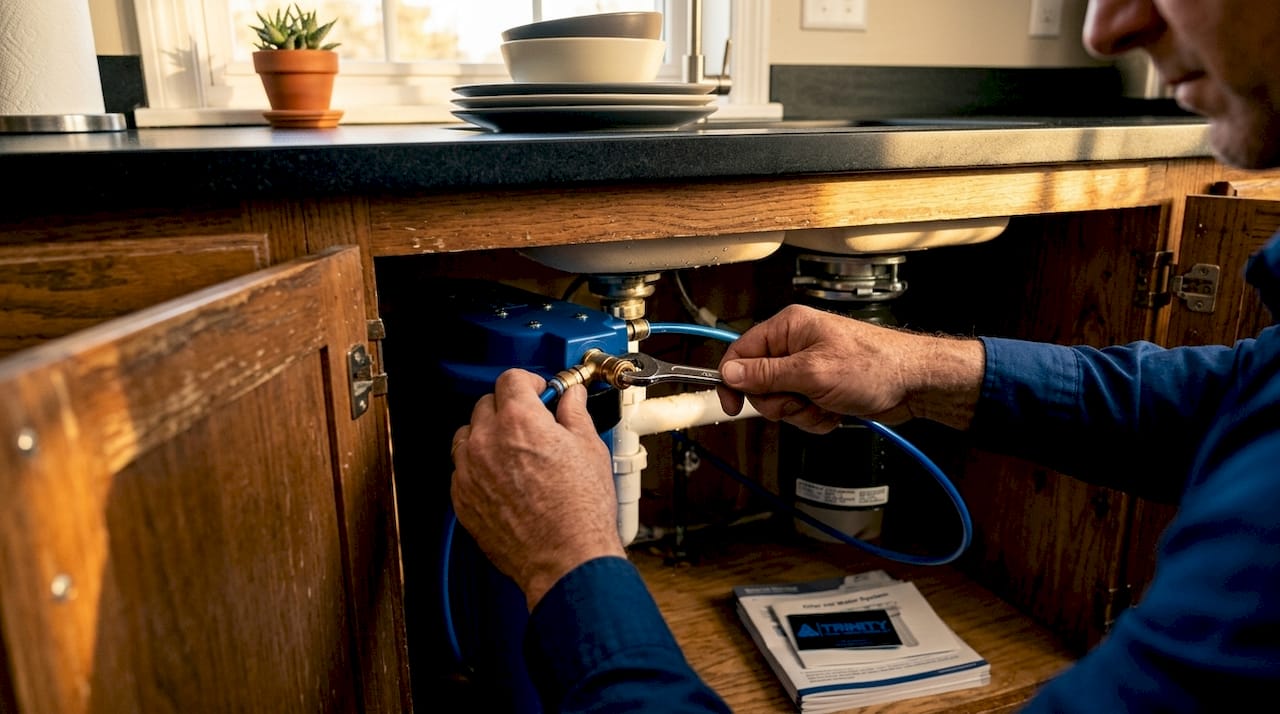
Household water purification systems are specialized setups that filter, treat, and improve your home’s water supply to remove contaminants and deliver clean, safe drinking water. Whether you’re on city water in Mobile or drawing from a private well in Baldwin County, the quality of your water is not something you can assume. Brands like iSpring and EcoPure offer widely available options, and certifications from NSF International set the performance standard every serious buyer should understand. This guide walks you through the main system types, what certifications actually mean, how to match a system to your water problems, and what to watch out for before you spend a dollar.
What are the main types of household water purification systems?
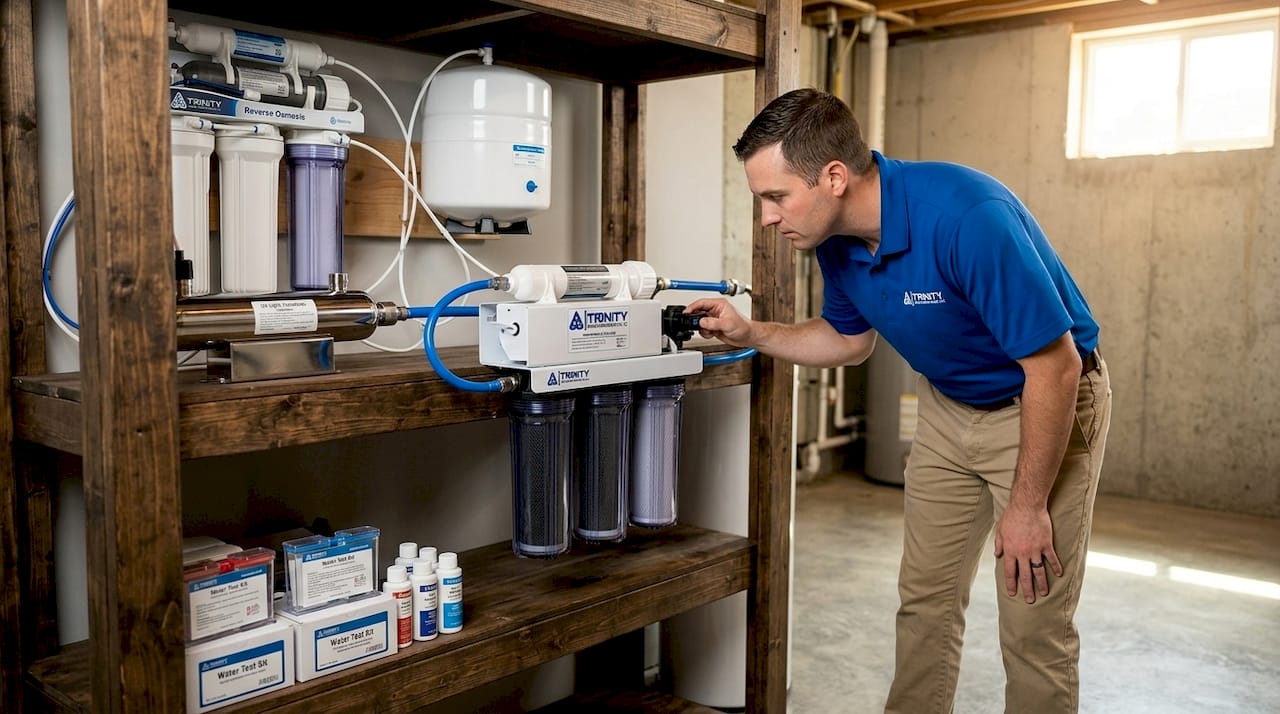
Whole-house filtration treats every drop of water entering your home, from the shower to the kitchen sink, using multi-stage combinations of sediment filters, activated carbon, UV disinfection, and sometimes reverse osmosis. Point-of-use systems, by contrast, treat water at a single location, typically under the kitchen sink or at a countertop faucet. There is no universal best system for all homes. Sizing and customization depend entirely on your water source, contaminant profile, and household demand.
Here is a breakdown of the four core technologies you will encounter:
Activated carbon filtration: Removes chlorine, chloramines, volatile organic compounds (VOCs), and many taste and odor issues. Carbon block filters are more effective than granular activated carbon because water contact time with the media is longer. This is the most common technology in pitcher filters, refrigerator filters, and under-sink units.
Reverse osmosis (RO): Forces water through a semi-permeable membrane that blocks dissolved solids, heavy metals like lead, nitrates, and many PFAS compounds. RO systems are point-of-use by design and typically include pre-filters and a post-carbon polishing stage. They produce a small storage tank of treated water and generate wastewater in the process.
UV disinfection: Uses ultraviolet light to inactivate bacteria, viruses, and protozoa without adding chemicals. UV systems do not remove chemical contaminants or dissolved metals, so they must be paired with other filtration stages to address the full range of water quality concerns.
Sediment filtration: Captures particles like sand, silt, rust, and debris. Sediment filters are almost always the first stage in any multi-stage system because they protect downstream components from clogging and premature wear.
System type | Best for | Limitation |
Whole-house carbon | Chlorine, taste, odor on city water | Does not remove dissolved metals or PFAS |
Under-sink RO | Lead, nitrates, PFAS, dissolved solids | Produces wastewater; slower flow rate |
UV disinfection | Bacteria and viruses in well water | No chemical or metal removal |
Sediment filter | Particles, rust, sand | No chemical or biological treatment |
Pro Tip: If you are on well water in a coastal Alabama county, a UV system without pre-filtration is a common and costly mistake. Sediment and iron must be removed first, or the UV lamp fouls quickly and loses effectiveness.
How do NSF/ANSI certifications work and why do they matter?
NSF/ANSI certifications are the most reliable way to verify that a water filter actually removes what the manufacturer claims. Without certification, a product label saying “reduces lead” is nothing more than a marketing statement. NSF International, working with the American National Standards Institute (ANSI), tests filters under controlled conditions and audits manufacturers on an ongoing basis.
Here are the five certifications you will encounter most often, and what each one actually covers:
NSF/ANSI 42: Covers aesthetic improvements like chlorine taste, odor, and particulate reduction. This certification does not address health-related contaminants. A filter with only NSF 42 is not designed to protect you from lead or PFAS.
NSF/ANSI 53: Focuses on health-related contaminant reduction including lead, cysts, and certain VOCs. A filter carrying NSF 53 must list the exact contaminants it reduces and the tested reduction percentages. This is the certification to look for if lead is a concern in your home.
NSF/ANSI 58: The certification standard specifically designed for RO systems, verifying total dissolved solids reduction and the performance of the full system, not just one filter stage. This distinction matters because a certified RO membrane inside an uncertified housing does not equal a certified system.
NSF/ANSI 61: Ensures that filter materials and components do not leach harmful substances into the water. This certification addresses the system itself as a source of contamination, not just what it removes.
NSF/ANSI 372: Confirms that filter hardware is lead-free, preventing the device itself from adding lead to your treated water. NSF 372 complements NSF 53 rather than replacing it.
One critical detail most buyers miss: NSF certification requires annual renewal with ongoing factory audits and random product testing. This ongoing oversight is what separates a certified product from a manufacturer’s self-declared “compliance” label. You can verify any product’s current certification status directly through the NSF product search database at nsf.org.
Consumers should verify certification claims on a model-by-model basis rather than relying on the certification number alone. A brand may hold NSF 53 certification on one model but not another in the same product line. Always search the specific model number, not just the brand name.
Pro Tip: Taste-focused NSF 42 and health-focused NSF 53 serve completely different purposes. If you are buying a filter because your water tastes like chlorine, NSF 42 is sufficient. If you are worried about lead or cysts, NSF 53 is the one that matters.
How to choose the right system based on your water source
Choosing among home water purification options starts with one question: what is actually in your water? The answer differs significantly depending on whether you are on a municipal supply or a private well.
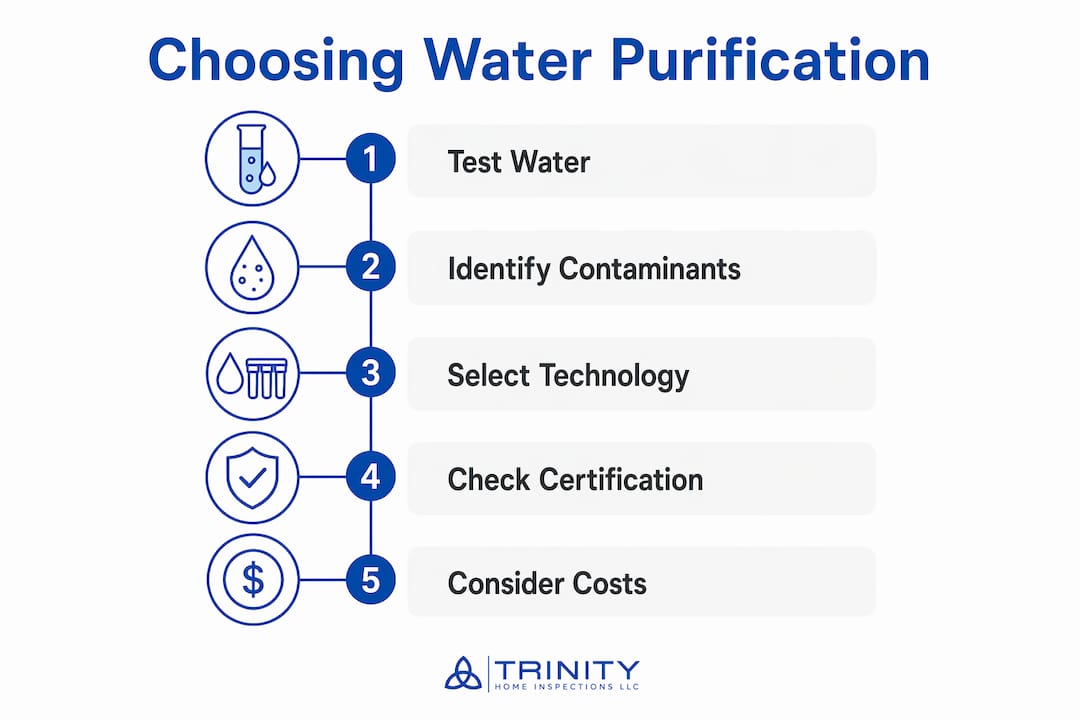
City water users in areas like Mobile or Daphne receive a Consumer Confidence Report (CCR) from their water utility every year. This report lists detected contaminants and their levels relative to EPA limits. Request yours or find it online through your utility’s website. Common concerns on city water include chlorine and chloramines used for disinfection, lead from older service lines or household plumbing, and disinfection byproducts. An under-sink carbon block filter certified to NSF 42 and NSF 53 handles most city water concerns at a reasonable cost.
Well water users face a broader and less predictable range of contaminants. Bacteria, nitrates, iron, manganese, hardness, and sediment are all common in Gulf Coast Alabama well water. The EPA finalized enforceable limits for PFAS chemicals including PFOA and PFOS, with public water systems required to comply by 2029. Private well owners are not covered by these rules and must test independently. A certified lab test is the only way to know what you are dealing with.
When mapping contaminants to technology, use this as your guide:
Lead: Under-sink RO (NSF 58) or a filter certified to NSF 53 for lead reduction
PFAS (PFOA, PFOS): Reverse osmosis or activated carbon with specific NSF certification for PFAS; carbon media effectiveness varies by type and contact time, so certification is non-negotiable
Bacteria and viruses: UV disinfection paired with sediment pre-filtration
Chlorine and taste: Activated carbon, NSF 42 certified
Sediment, iron, rust: Whole-house sediment filter as a first stage, followed by targeted treatment
Beyond contaminants, evaluate total cost of ownership rather than the sticker price. A $50 pitcher filter with $30 replacement cartridges every two months costs more annually than a $200 under-sink system with $40 filters replaced twice a year. Factor in filter replacement frequency, water waste from RO systems, and any professional installation costs before making your decision.
Installation, maintenance, and common pitfalls
Proper installation and consistent maintenance determine whether your system actually protects your family or just sits under the sink looking reassuring. Here are the steps and pitfalls that matter most:
Test your water before buying anything. A certified lab test through a state-accredited laboratory gives you a contaminant profile to match against system certifications. Without this, you are guessing.
Match the system to your plumbing. Whole-house systems install at the main water line, typically near the pressure tank or meter. Under-sink RO units require a dedicated faucet and a drain connection. Confirm your cabinet space, water pressure, and pipe compatibility before ordering.
Follow the manufacturer’s filter replacement schedule. Most activated carbon filters last 6 to 12 months depending on water quality and usage. RO membranes typically last 2 to 3 years. Skipping replacements does not just reduce performance. It can allow contaminants to pass through a saturated filter at higher concentrations than untreated water.
Protect UV lamp effectiveness. UV disinfection requires clear water reaching the lamp. In well water scenarios, pre-filtration for sediment and iron removal is critical. A fouled UV lamp provides little to no disinfection while appearing to function normally.
Account for RO wastewater. RO systems vary significantly in water recovery rates. Two systems producing the same daily output may send very different amounts of water down the drain. Higher-efficiency models with permeate pumps or zero-waste technology reduce this waste and lower your water bill over time.
The most common mistake homeowners make is buying a system based on marketing claims without checking the NSF certification database. A filter box that says “removes 99% of contaminants” with no certification number is not a promise you can rely on. The second most common mistake is installing a system and never replacing the filters, which is the equivalent of changing your car’s oil once and assuming it is good forever.
Pro Tip: Keep a calendar reminder for filter replacements and write the installation date on the filter housing with a permanent marker. It takes 10 seconds and prevents the most common maintenance failure.
Key takeaways
The right household water purification system is the one matched to your specific contaminants, verified by NSF certification, and maintained on schedule.
Point | Details |
Test before you buy | A certified lab water test identifies your actual contaminants before you select any system. |
Match technology to contaminants | RO for lead and PFAS, UV for bacteria, carbon for chlorine and taste. |
Verify NSF certification by model | Check the specific model number at nsf.org, not just the brand or certification number. |
Calculate total cost of ownership | Include filter replacements, water waste, and installation when comparing system prices. |
Maintain on schedule | Skipping filter replacements can allow contaminants to pass through at higher levels than untreated water. |
What I’ve learned from inspecting homes with water quality concerns
I have walked through hundreds of homes across Mobile and Baldwin County, and water quality issues come up more often than most buyers expect. What surprises people is not that problems exist. It is that they were invisible. A home can have a well-water supply with elevated iron or bacteria and look perfectly normal at the faucet.
The thing I keep telling people is this: do not let a water filter’s marketing do your thinking for you. I have seen homeowners spend good money on systems that carry no NSF certification at all, just confident-sounding packaging. And I have seen buyers skip water testing entirely because the water “looked fine.” Clear water is not the same as safe water.
If you are buying a home with a private well, get a water test done before closing. If you are on city water and concerned about lead, check whether your home was built before 1986, when lead solder in plumbing was still legal. That single fact narrows your filter selection considerably.
The other thing worth saying plainly: the cheapest system that carries the right NSF certifications for your water problems is almost always a better choice than the most expensive system with vague claims. Certification is the floor, not the ceiling. Start there, then compare cost and convenience.
— Matt
How Trinity Home Inspections can help with your home’s water quality
[

Alt text: Trinity Home Inspections inspector in khaki pants and blue shirt reviewing water quality findings at a Gulf Coast Alabama home
If you are buying or selling a home in Mobile, Daphne, Fairhope, Foley, Gulf Shores, or anywhere across Baldwin and Mobile County, Trinity Home Inspections can help you understand what your home’s water supply looks like before you commit. Our pre-listing and buyer inspections include a review of visible plumbing components, water heater condition, and signs of water quality concerns. We also offer add-on water testing and indoor air quality sampling with certified lab reports. You get a same-day report with photos, plain-English priorities, and a direct conversation about what matters. Call us at 251-210-7376 or visit TrinityInspectionsLLC.com to schedule.
FAQ
What is the most effective type of home water purification system?
Reverse osmosis is the most effective point-of-use technology for removing a broad range of contaminants including lead, nitrates, and PFAS, provided the system carries NSF/ANSI 58 certification. The right system depends on your specific water test results.
How do I know if a water filter actually works?
Look for NSF/ANSI certification on the specific model number, verified through the NSF product search database at nsf.org. Manufacturer claims without a certification number are not independently verified.
What is the difference between NSF 42 and NSF 53?
NSF/ANSI 42 covers aesthetic improvements like chlorine taste and odor, while NSF/ANSI 53 addresses health-related contaminants like lead and cysts. A filter needs NSF 53 to make verified health protection claims.
Do I need a water test before buying a purification system?
Yes. A certified lab water test identifies the specific contaminants in your water so you can match the right technology and certification to your actual needs. Without it, you may buy a system that does not address your real problem.
How often should I replace water filter cartridges?
Most activated carbon filters require replacement every 6 to 12 months, and RO membranes typically last 2 to 3 years, though your actual water quality and usage volume affect both timelines. Check the refrigerator filter replacement guide for point-of-use maintenance steps.
Recommended

