
Why Your Bathroom Vent May Be Causing Mold Problems

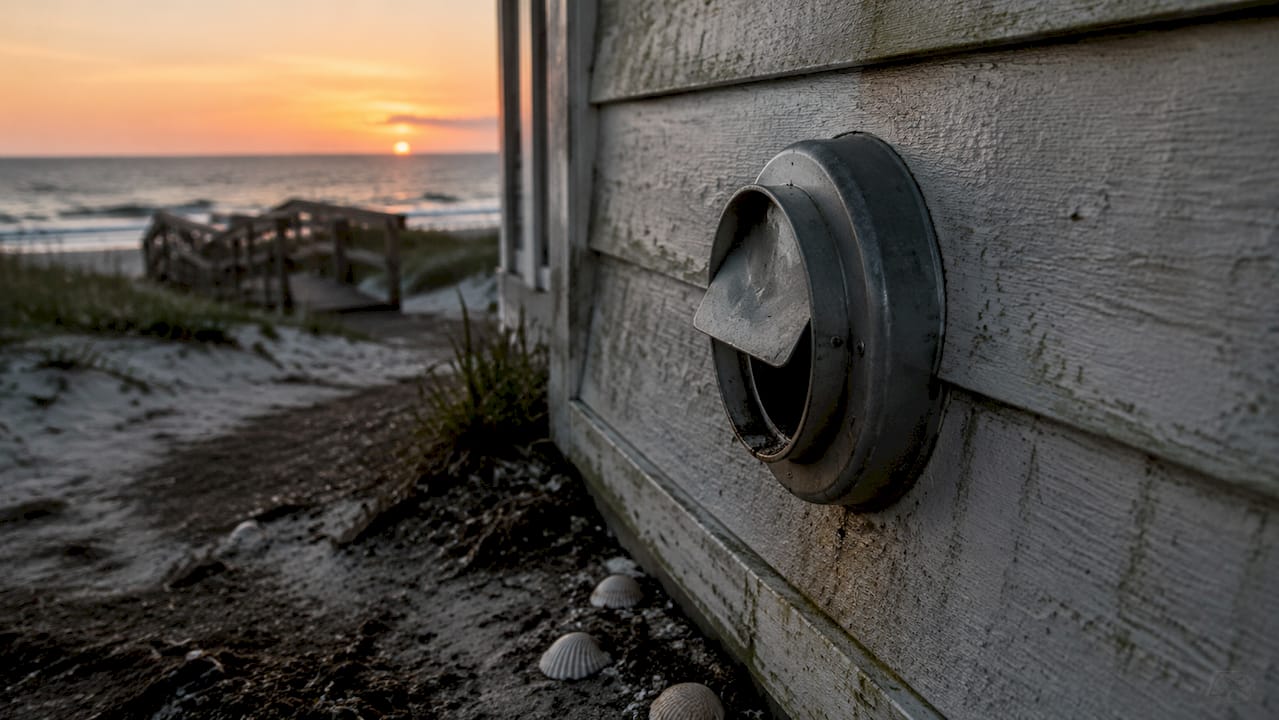
Your bathroom exhaust fan is the primary defense against mold growth caused by moisture buildup, yet a faulty or improperly installed vent can actively make moisture problems worse. Bathroom ventilation issues are one of the most overlooked causes of mold in American homes. Relative humidity above 50–60% creates conditions for mold to colonize porous surfaces within 24–48 hours. That means a single shower with a failing vent can push your bathroom past the danger threshold before the mirror even clears. Understanding why your bathroom vent may be causing mold and moisture problems is the first step toward protecting your home and your family’s health. Trinity Home Inspections sees this issue regularly across Gulf Coast Alabama homes, and the fixes are almost always straightforward once the root cause is identified.
Why your bathroom vent may be causing mold and moisture problems
The most common reason bathroom vents fail at moisture control is improper installation, not equipment failure. Fans that vent into attic spaces rather than directly outdoors are a code violation and a moisture pump. Fans venting into attics cause moisture buildup, mold growth, and structural wood rot. Every time you run that fan, you are pushing warm, humid air into a space that has no way to release it, and mold follows quickly.
Beyond termination errors, duct routing is the second biggest culprit. Many homeowners assume that if the fan is running, moisture is leaving. That assumption is wrong when the duct is kinked, sagging, or partially disconnected inside the wall or ceiling cavity. Poor duct installation causes fans to lose over 40% of their rated airflow. A fan rated at 80 CFM (cubic feet per minute) may only deliver 45 CFM in real conditions. That gap is where mold gets its foothold.
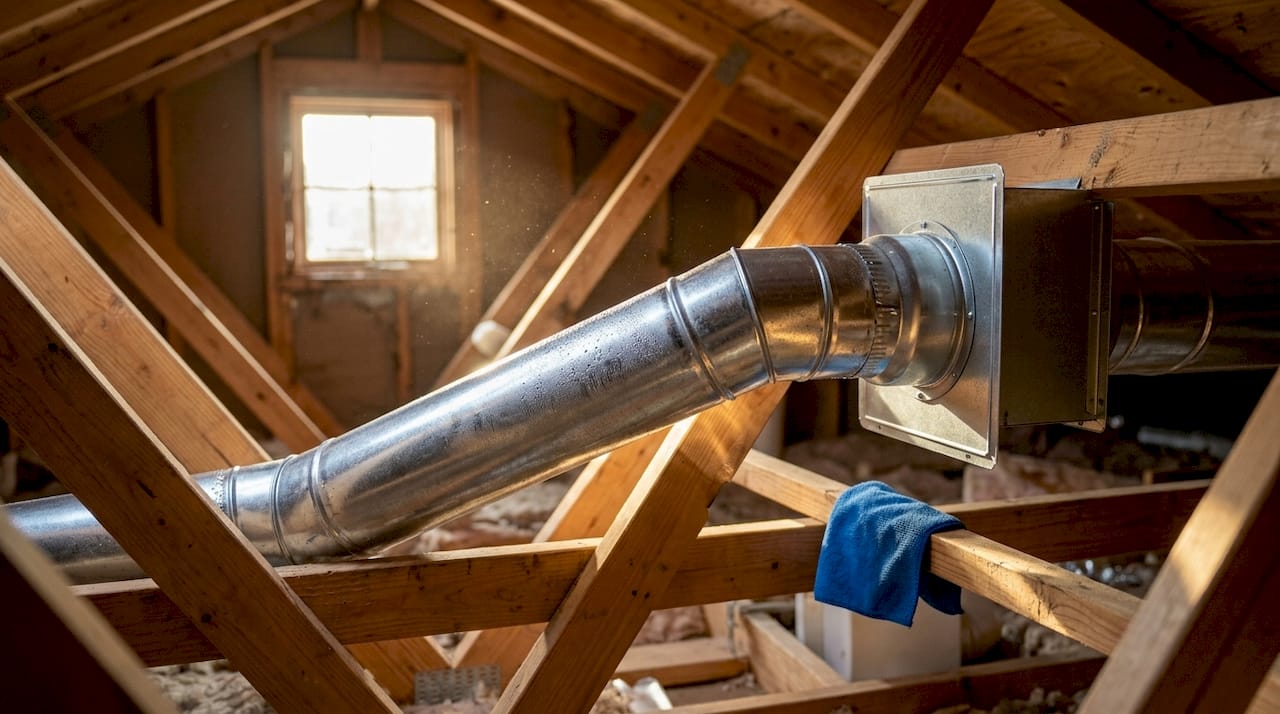
Backdraft dampers are another overlooked failure point. These small flaps sit inside the duct or at the exterior cap and prevent outdoor air from flowing back into the bathroom when the fan is off. When a damper sticks open or breaks, cold outdoor air pulls back in and condenses on warm interior surfaces, adding moisture rather than removing it. The result is condensation on ceilings and walls that looks like a leak but is actually a ventilation failure.
Here is a summary of the most common installation mistakes that lead to bathroom moisture problems:
Duct termination into attic or crawl space instead of directly outdoors through a wall or roof cap
Kinked, crushed, or sagging flexible duct that restricts airflow and traps condensation
Disconnected duct joints inside wall or ceiling cavities that vent moisture into hidden spaces
Broken or stuck backdraft dampers that allow outdoor air to re-enter the bathroom
Duct runs that are too long or have too many bends, reducing effective airflow below useful levels
Undersized duct diameter that chokes airflow even when the fan motor is functioning correctly
Pro Tip: Check your exterior vent cap from outside the house. If the damper flap does not open when the fan is running, the duct may be blocked or disconnected. A cap that never moves is a clear sign of a ventilation problem.
How do you know if your bathroom vent is working?
Visible mold on the ceiling near the fan grille is the most direct sign of a failing vent. Black or gray spots on painted drywall, grout lines that darken between cleanings, and peeling paint near the ceiling all point to chronic moisture that the fan is not removing. Water stains that appear without any plumbing leak above are another reliable indicator.
Musty odors are an early warning that mold is already present, even when you cannot see it. Mold produces microbial volatile organic compounds (MVOCs) as it grows, and that distinctive earthy smell is often detectable before visible colonies appear. If your bathroom smells musty within a day or two of cleaning, the ventilation system is not keeping up. You can learn more about airborne mold detection and its health effects to understand what you may be dealing with.
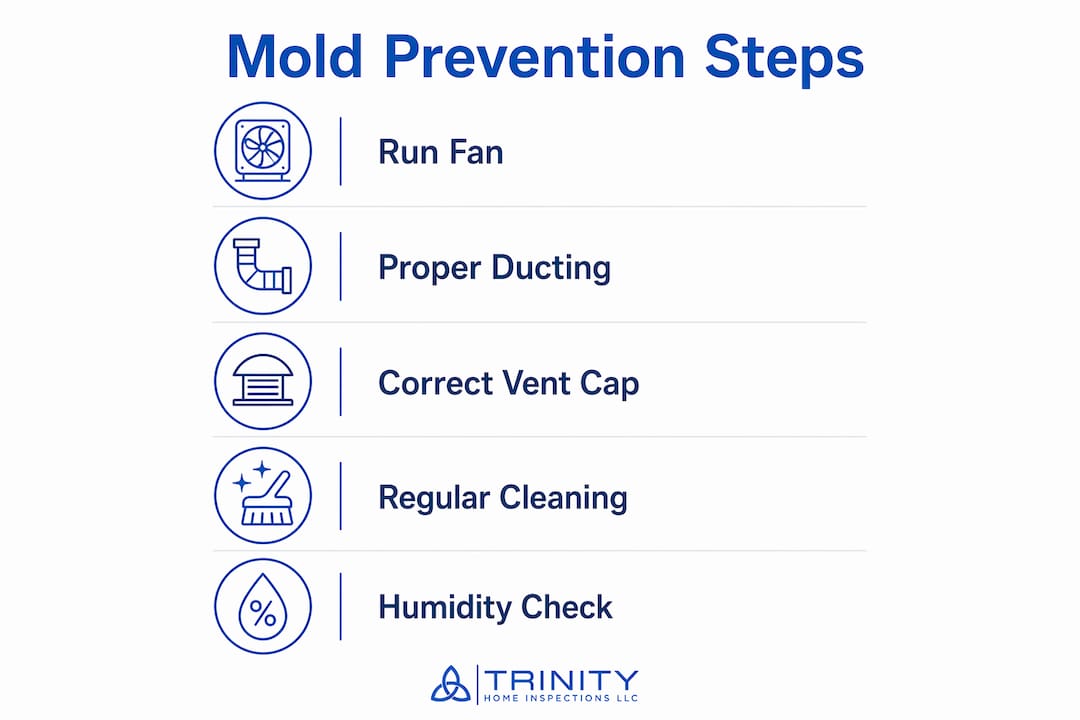
Hearing the fan run does not confirm it is working. A fan motor can spin freely while the duct is blocked, disconnected, or crushed, moving almost no air. The simplest field test is the tissue paper test. Hold a 4x4 inch sheet of toilet paper against the exhaust grille with the fan running. A properly working fan holds the tissue against the grille without your hand supporting it. If the paper falls or barely flutters, the fan is not pulling enough air to clear moisture effectively.
Here is a step-by-step process to test your bathroom vent at home:
Turn on the fan and let it run for 60 seconds before testing.
Hold a sheet of toilet paper flat against the center of the exhaust grille.
Release the paper. If it stays flat against the grille, airflow is adequate.
If the paper falls, the fan is underperforming. Check for a clogged grille first.
Remove the grille cover and clean the intake blades. Dust buildup alone can cut airflow significantly.
Repeat the test. If the paper still falls after cleaning, the problem is in the duct or the fan motor.
Inspect the exterior cap from outside. Confirm the damper flap opens when the fan runs.
Pro Tip: Do the tissue test during or immediately after a shower, not on a dry day. Humid conditions reveal how the fan performs when it matters most.
How long should you run your bathroom fan to prevent mold?
The industry standard is to run your bathroom exhaust fan during the entire shower and for 15–20 minutes afterward to clear residual moisture from the air. Most homeowners turn the fan off when they leave the bathroom, which leaves a significant amount of moisture suspended in the air. That moisture then settles on walls, ceilings, and grout, creating the exact conditions mold needs.
Running the fan longer is not always better, particularly in hot and humid Gulf Coast climates. Over-running bathroom fans in humid climates can pull moist outdoor air inside through gaps and leaks, actually increasing indoor humidity. The goal is a targeted run time, not continuous operation. A timer switch wired to the fan is the most reliable way to hit the 15–20 minute window without thinking about it.
Fan effectiveness also depends on having enough replacement air in the room. Bathroom fans do not create suction in a vacuum. Without adequate air supply, such as a gap under the door or a slightly open window, the fan airflow stalls because there is no air to replace what it is exhausting. A fully sealed bathroom door with no undercut can reduce fan performance dramatically, even with a perfectly installed duct.
Maintenance is the other half of the equation. Dust and lint accumulate on the fan grille and intake blades over time, reducing airflow without any obvious sign of failure. Clean the grille cover every three to six months by removing it and washing it with warm water. Inspect the duct connection at the fan housing annually. These two steps alone prevent most of the gradual performance losses that lead to moisture problems.
Here are the key operating and maintenance practices that keep bathroom ventilation working:
Run the fan during the shower and 15–20 minutes after every use, using a timer switch for consistency
Clean the grille and intake blades every three to six months to maintain rated airflow
Check the exterior cap once a year to confirm the damper opens freely and the cap is not blocked by debris or bird nests
Ensure a door gap of at least half an inch at the bottom to allow replacement air into the bathroom
Avoid running the fan for hours at a time in humid climates to prevent negative pressure and outdoor moisture ingress
Check duct connections at the fan housing annually, especially in homes with flexible duct that can pull loose over time
Pro Tip: Install a countdown timer switch in place of the standard fan switch. Set it for 20 minutes. You get consistent post-shower ventilation without running the fan all day.
How do you choose the right bathroom vent for moisture control?
Fan sizing is the foundation of effective bathroom ventilation. The standard rule of thumb is one CFM per square foot of bathroom floor area, with a minimum of 50 CFM for small bathrooms. A 100-square-foot bathroom needs at least a 100 CFM fan. However, proper fan sizing should account for air changes per hour (ACH) rather than just minimum CFM, especially in larger bathrooms or those with high ceilings. ACH measures how many times the fan replaces the full volume of air in the room per hour, which is a more accurate measure of moisture removal capacity.
Rated CFM and real-world CFM are two different numbers. A fan rated at 110 CFM in a lab test may deliver 65 CFM after accounting for duct length, bends, and friction losses. Installation losses reduce effective airflow by over 40% in many homes. The practical solution is to buy a fan rated 25–30% higher than your calculated need, and to keep the duct run as short and straight as possible. Every 90-degree elbow in the duct is equivalent to adding several feet of straight duct in terms of airflow resistance.
Duct material matters as well. Rigid metal duct outperforms flexible duct in every measurable way. Rigid duct has a smooth interior surface that reduces friction, does not sag or kink, and does not trap condensation in low spots. Flexible duct is easier to install but degrades faster and is far more likely to develop the kinks and sags that cut airflow. For bathroom ventilation during a remodel, treating duct paths as a priority rather than an afterthought prevents costly corrections later.
Feature | Minimum standard | Better choice |
Fan CFM rating | 1 CFM per sq ft of floor area | 25–30% above calculated need |
Duct type | Flexible insulated duct | Rigid metal duct |
Duct run length | Under 25 feet | Under 15 feet, fewest bends |
Termination point | Exterior wall or roof cap | Exterior wall cap with backdraft damper |
Fan noise level | Under 2.0 sones | Under 1.0 sone for quiet operation |
Noise is a practical consideration beyond comfort. Noisy bathroom fans often indicate motor imbalance or restrictive ducting, and they discourage use. A fan that sounds like a jet engine gets turned off quickly, which defeats its purpose entirely. Quieter fans rated under 1.0 sone are more likely to be used consistently, which is the single biggest factor in whether a bathroom vent actually prevents mold. You can review recommended exhaust fan options to find models that balance airflow and quiet operation.
Key Takeaways
A failing or improperly installed bathroom exhaust fan is one of the most direct causes of chronic mold and moisture damage in residential bathrooms.
Point | Details |
Humidity triggers mold fast | Relative humidity above 50–60% allows mold to colonize surfaces within 24–48 hours. |
Duct termination is critical | Fans must vent directly outdoors. Venting into an attic causes hidden mold and structural damage. |
Airflow losses are significant | Poor duct installation can cut a fan’s effective airflow by over 40% from its rated CFM. |
Run time and replacement air matter | Run the fan 15–20 minutes after showering and ensure a door gap allows replacement air into the room. |
Size up when buying a fan | Choose a fan rated 25–30% above your calculated CFM need to compensate for real-world duct losses. |
What I see on inspections that most homeowners miss
I have inspected hundreds of bathrooms across Mobile, Baldwin, and the surrounding Gulf Coast counties, and the same pattern shows up repeatedly. The fan is running. The homeowner has no idea there is a problem. And the attic above the bathroom looks like a science experiment.
The ducting issue is the one that surprises people most. Homeowners assume the fan was installed correctly when the house was built or remodeled. That assumption is wrong more often than you would expect. I have found flexible duct that was never connected to the exterior cap, duct that was crushed by insulation blown in after the fact, and duct that ran 35 feet with four elbows before reaching the outside. None of those fans were doing anything useful for moisture control.
The quiet fan misconception is the other thing I want to address directly. A loud fan is not a powerful fan. Noise usually means the motor is working against resistance, which means airflow is restricted. The quietest fans on the market today are also among the most effective, because they are engineered for low resistance and high airflow. If your fan sounds like it is struggling, it probably is.
My honest recommendation: if you have visible mold in your bathroom, do not just clean it and move on. Clean it, yes, but also test the fan with the tissue paper method and check the exterior cap. If you cannot confirm the duct runs straight to the outside and terminates correctly, have someone look at it. The cost of a professional evaluation is a fraction of what mold remediation costs after the problem spreads into the wall cavity or attic. For Gulf Coast homeowners dealing with our climate, humidity control is not optional. It is a maintenance priority.
— Matt
Concerned about bathroom mold? Trinity Home Inspections can help
If you have spotted signs of mold, noticed persistent moisture, or are not sure whether your bathroom ventilation is actually working, Trinity Home Inspections provides professional mold testing and home inspection services across Mobile, Baldwin, Escambia, and surrounding Gulf Coast Alabama counties.
[

Our mold inspection and testing services include moisture meter readings, thermal imaging to locate hidden damp areas, and indoor air quality sampling with certified lab reports. If you are preparing to sell, a pre-listing home inspection catches ventilation and moisture issues before they become a buyer’s negotiating point. Same-day reports, honest findings, and no upselling. Call us at 251-210-7376 or visit TrinityInspectionsLLC.com to schedule your inspection.
FAQ
What causes mold to grow in a bathroom even with a working fan?
Mold grows when relative humidity stays above 50–60% for extended periods, which happens when a fan vents into an attic instead of outdoors, when duct losses reduce airflow below useful levels, or when the fan is not run long enough after showering.
How do I test if my bathroom exhaust fan is working?
Hold a 4x4 inch sheet of toilet paper against the exhaust grille with the fan running. If the paper stays against the grille without support, the fan has adequate suction. If it falls, the fan is underperforming and the duct or motor needs attention.
How long should I run my bathroom fan after a shower?
Run the fan during the entire shower and for 15–20 minutes afterward. A countdown timer switch is the most reliable way to hit this window consistently without leaving the fan running all day.
Can a bathroom fan make moisture problems worse?
Yes. In hot, humid climates, running a fan for too long can create negative pressure that pulls moist outdoor air inside through gaps and leaks, increasing indoor humidity rather than reducing it.
What size bathroom exhaust fan do I need?
Use a minimum of 1 CFM per square foot of bathroom floor area, and buy a fan rated 25–30% above that calculated need to compensate for real-world duct losses. For larger bathrooms, size based on air changes per hour (ACH) rather than minimum CFM alone.
Recommended