
Soft Floors at Home: Subfloor, Joist, or Foundation?

Soft floors in a home are defined as areas where the floor surface deflects, bounces, or feels spongy underfoot, signaling subfloor damage, joist problems, or foundation movement beneath the surface. In Gulf Coast Alabama, where high humidity, heavy rainfall, and expansive clay soils create year-round stress on home structures, soft floor symptoms deserve immediate attention rather than a wait-and-see approach. Moisture intrusion is the leading cause of subfloor delamination and softness, often developing long before any visible water appears. Understanding whether your soft floor points to a subfloor issue, a joist problem, or foundation movement determines the right repair path and the true cost ahead. Trinity Home Inspections serves homeowners across Baldwin, Mobile, Escambia, and surrounding counties with InterNACHI-certified inspections built specifically for Gulf Coast conditions.
What causes subfloor damage leading to soft floors in Gulf Coast Alabama homes?
Subfloor damage is the most common explanation for soft floor symptoms in coastal Alabama homes. The subfloor is the structural layer of plywood or oriented strand board (OSB) that sits directly on top of your floor joists and beneath your finished flooring. When moisture saturates this layer, the wood fibers swell, delaminate, and lose rigidity, creating the spongy feeling you notice underfoot.
Wood moisture above 20% creates active rot conditions in plywood and OSB subfloors. That threshold matters because Gulf Coast crawlspaces regularly exceed it during summer months without proper vapor barriers and ventilation. A subfloor can reach dangerous moisture levels without a single drop of standing water ever appearing on your finished floor.
The most common moisture sources that cause subfloor issues in homes include:
Slow toilet flange leaks. A toilet that rocks slightly can allow water to seep past the wax ring with every flush. Over months, this saturates the subfloor directly beneath the toilet without any visible puddle.
Dishwasher and refrigerator supply line drips. These connections sit behind or beneath appliances and can drip undetected for years.
AC condensate line overflows. In Gulf Coast Alabama, air conditioners run hard from april through october. A clogged condensate drain line can overflow directly onto the subfloor in a utility closet or attic space above.
Exterior door thresholds. Poorly sealed thresholds allow wind-driven rain to push water under the door and saturate the subfloor at the entry.
Crawlspace ground moisture. High ambient humidity and wet soil in crawlspaces cause moisture to migrate upward into the subfloor even without a direct leak.
Pro Tip: If you notice a soft spot near a bathroom, kitchen, or exterior door, check for a musty odor in the crawlspace below that area. A musty smell is often the first sign of active subfloor rot, appearing before the floor feels soft from above.
The Gulf Coast climate makes crawlspace moisture control a non-negotiable maintenance task. Homes in Daphne, Fairhope, Foley, and Gulf Shores sit in one of the most humid regions in the country. Without a properly installed vapor barrier and adequate ventilation, crawlspace humidity climbs fast and stays high. Early signs of subfloor trouble include localized squeaking, trim gaps at baseboards, and soft spots that grow larger over time. Addressing the moisture source first is the only way to stop the damage from spreading. You can also review warning signs of plumbing problems to catch hidden leaks before they reach your subfloor.
How do joist problems cause soft or bouncy floors?
Floor joists are the horizontal framing members that span between your foundation walls or beams and carry the weight of the subfloor and everything above it. When joists are undersized, damaged, or improperly modified, the floor above them deflects more than it should, producing a bounce or sag that feels similar to subfloor damage but has a different cause and a different fix.
The most common joist-related contributors to soft floor symptoms are:
Undersized or widely spaced joists. Joists spaced at 24 inches on-center feel noticeably bouncier than joists at 16 inches on-center, even when both meet minimum code. Older Gulf Coast homes built before modern span tables were adopted sometimes have joists that are simply too small for the span they cover.
Rot from water intrusion. A joist directly beneath a leaking toilet or a wet crawlspace can lose significant structural capacity before it visibly sags. Rot softens wood fibers and reduces the joist’s ability to resist deflection under load.
Missing cross-bridging. Cross-bridging, also called blocking, connects adjacent joists laterally and prevents them from twisting independently. Without it, each joist can rotate slightly under load, increasing the springy feeling across the whole floor.
Improper notching or boring. Plumbers and electricians sometimes cut notches or drill holes in joists to run pipes and wires. When these cuts exceed building code limits, they reduce the joist’s load-carrying capacity at the weakest point.
Termite or pest damage. Gulf Coast Alabama has one of the highest termite pressures in the United States. Subterranean termites can hollow out a joist from the inside, leaving it looking intact from the outside while it has almost no structural strength remaining. A detailed look at termite damage in floor joists explains how to spot this specific threat.
The standard repair for a damaged or undersized joist is sistering, which means fastening a new full-length joist alongside the damaged one to restore carrying capacity. Sistering works well when the moisture source causing the rot has been fully eliminated. Attempting to sister a joist while an active leak continues is a waste of money and materials.
Pro Tip: Walk the floor slowly and pay attention to where the bounce is concentrated. Joist problems tend to create a consistent bounce across a wider strip of floor running parallel to the joists. Subfloor damage tends to feel more localized and spongy in a smaller patch.
What signs indicate foundation movement versus subfloor or joist damage?
Foundation movement is the third cause of soft or uneven floors, and it is the one that carries the most significant repair cost. The key is learning to distinguish it from the more localized problems caused by subfloor rot or joist failure.
Slopes exceeding 1/2 inch per 10 feet strongly suggest foundation movement and require prompt professional assessment. New construction tolerates up to 1/4 inch per 10 feet. A slope greater than 1 inch per 10 feet signals significant settlement that has likely been progressing for years. These are not subjective feelings. They are measurable thresholds that separate a cosmetic concern from a structural one.
The table below summarizes how foundation movement differs from subfloor and joist problems in terms of symptoms and scope:
Symptom | Subfloor or joist issue | Foundation movement |
Area affected | Localized patch or strip | Multiple rooms, consistent direction |
Floor slope | Little to none | Measurable tilt across rooms |
Exterior signs | Usually none | Cracks in brick, displaced masonry |
Bounce vs. sag | Bounce or spongy feel | Persistent downward slope or tilt |
Repair category | Carpentry and moisture control | Structural engineering, underpinning |
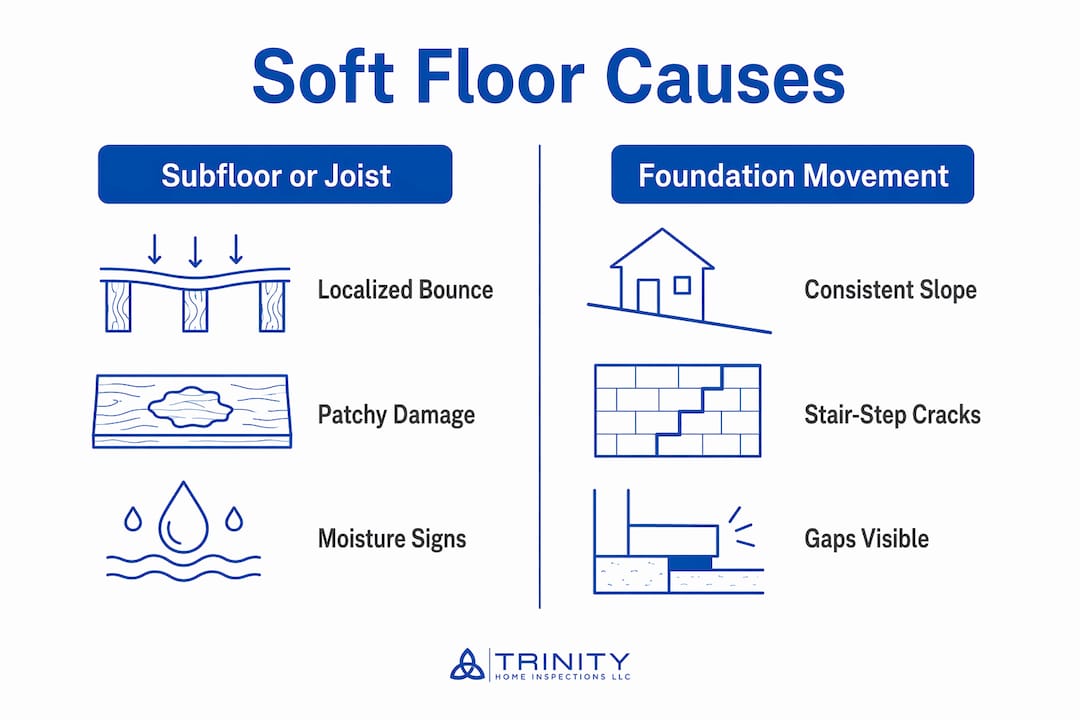
Localized bounce without overall house tilt almost always points to a joist or subfloor problem rather than foundation movement. Foundation issues produce a consistent directional tilt that you can measure with a long level or a marble test across multiple rooms. If the floor slopes the same direction in the living room, hallway, and bedroom, foundation settlement is the likely cause.
Exterior clues confirm the diagnosis. Stair-step cracks in brick veneer, gaps between the foundation and the sill plate, and doors that stick in the same corner of the frame all point to foundation movement. Gulf Coast Alabama soils, particularly the expansive clay soils common in Mobile and Baldwin counties, shrink and swell with seasonal moisture changes. This movement can cause perimeter settlement that gradually tilts an entire section of the home.
Water damage and foundation movement can coexist and amplify each other. Poor drainage erodes soil beneath footings, causing settlement. That settlement creates cracks in the foundation, which allow moisture to enter and rot the sill plate and joists above. Treating only one problem while ignoring the other guarantees the damage returns.
How can you assess and plan repairs for soft floors?
Diagnosing the root cause of a soft floor before spending money on repairs is the most cost-effective decision you can make. The assessment process moves from simple observation to targeted measurement.
Start with these steps:
Walk the floor systematically. Note exactly where the softness or bounce occurs. Mark the spots with tape so you can compare their location to the framing below.
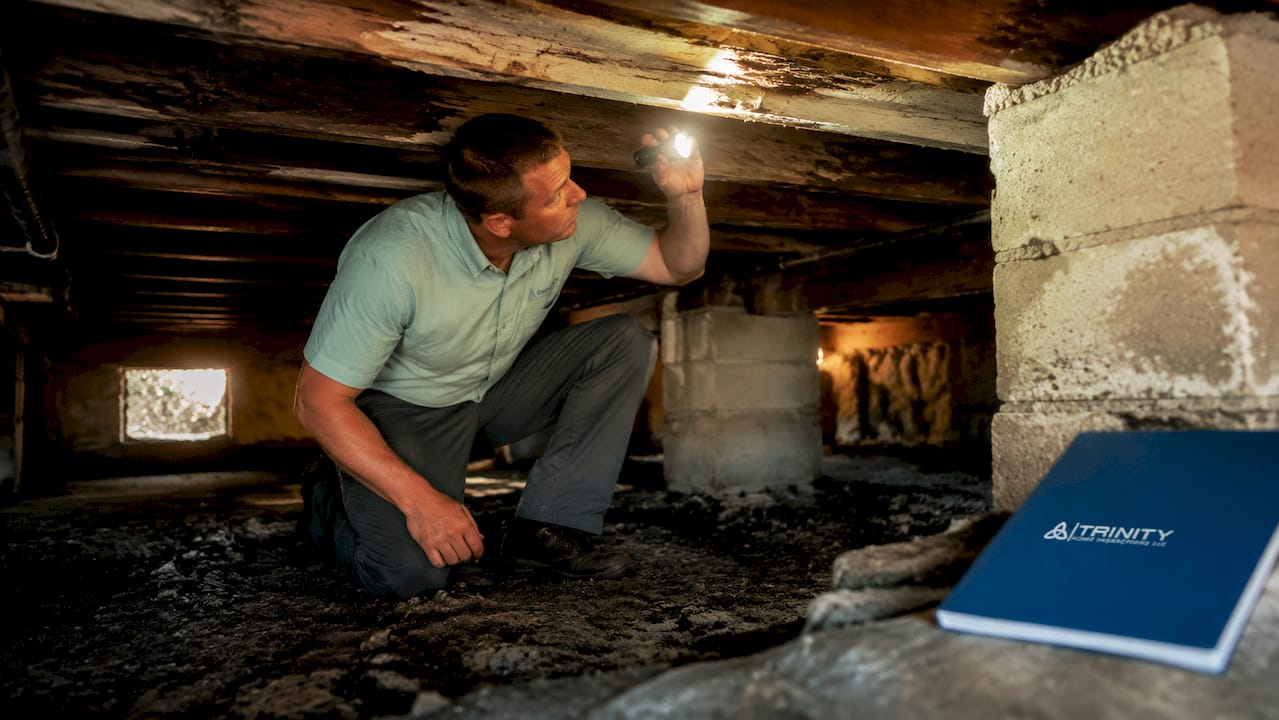
Check the crawlspace. Bring a flashlight and look for discolored or sagging subfloor panels, white fungal growth on joists, standing water, or a strong musty odor. These are direct evidence of moisture damage.
Use a pinless moisture meter. Pinless moisture meters detect elevated moisture above 20% in subfloor wood even when no surface water is visible. Focus on areas near bathroom walls, perimeter walls, and any point where a pipe penetrates the subfloor.
Measure floor slope. Place a 4-foot or 6-foot level on the floor and measure the gap at the low end. Do this in multiple rooms and note whether the tilt follows a consistent direction.
Look for exterior foundation cracks. Walk the perimeter of the home and photograph any cracks in the foundation, brick, or masonry. Note whether cracks are horizontal, vertical, or stair-step patterns.
Once you have identified the likely cause, repair planning follows a clear priority order. Fix the water source first. Sistering joists or replacing subfloor panels fails if the moisture source remains active, because the new wood will rot just as the old wood did. A leaking toilet flange, for example, requires a plumber to reset the toilet with a new flange and wax ring before any carpentry repair begins.
Repair scope varies significantly by cause. Patching a small section of subfloor around a toilet costs far less than replacing an entire bay of subfloor and sistering multiple joists. Foundation underpinning, which involves installing steel piers or helical piers beneath the footing to stabilize and lift the foundation, carries a substantially higher cost than either carpentry repair. Getting a professional inspection before committing to any repair path protects you from spending money on the wrong fix.
Early intervention for soft spots prevents costly major structural repairs later. A soft spot caught early may require only subfloor patching and a plumber visit. The same spot ignored for two more years may require joist sistering, subfloor replacement, mold remediation, and potentially foundation evaluation. Gulf Coast homeowners benefit from annual crawlspace checks, particularly after heavy rain seasons. Reviewing crawlspace ventilation practices for coastal homes is a practical starting point for prevention.
For water-damaged areas that show signs of mold growth, coordinating structural repairs with water and mold remediation is the correct sequence. Mold can colonize subfloor panels and joist surfaces within 24–48 hours of sustained moisture exposure. Encapsulating or replacing affected materials without professional remediation can leave spores behind that continue to affect indoor air quality.
Key Takeaways
Soft floors in a home signal one of three structural problems: subfloor moisture damage, joist failure, or foundation movement, and correctly identifying which one determines the repair path and total cost.
Point | Details |
Moisture is the primary cause | Wood moisture above 20% causes subfloor rot and softness, often before any visible water appears. |
Joist problems feel different | Bouncy floors across a wide strip usually point to joist undersizing, rot, or missing bridging rather than subfloor damage. |
Slope measurement matters | A floor slope exceeding 1/2 inch per 10 feet suggests foundation movement, not a localized subfloor or joist issue. |
Fix the water source first | Sistering joists or patching subfloors fails if the leak or moisture source is still active. |
Early action limits cost | Catching soft spots early reduces repair scope from full structural work to targeted patching and plumbing repair. |
What I’ve learned inspecting soft floors across Gulf Coast Alabama homes
After inspecting homes from Mobile to Gulf Shores, one pattern stands out clearly. Homeowners almost always underestimate how long the damage has been developing. A soft spot that feels minor today has usually been building for six months to two years. By the time you feel it through your finished floor, the subfloor beneath it is often significantly compromised.
The second thing I see regularly is homeowners treating the symptom rather than the cause. A contractor replaces a section of subfloor, the floor feels solid again, and everyone moves on. Twelve months later, the new subfloor is soft in the same spot because the toilet flange was never properly repaired or the crawlspace vapor barrier was never installed. The repair money was spent twice, and the second repair cost more than the first.
Gulf Coast Alabama’s climate demands a different level of crawlspace vigilance than most of the country. The combination of high ambient humidity, warm temperatures, and frequent heavy rain creates conditions where moisture problems develop faster and spread further than they would in a drier climate. A vapor barrier alone is not always enough. Proper ventilation, grading away from the foundation, and functional gutters all work together to keep crawlspace moisture at safe levels.
My honest recommendation is this: if you feel a soft spot, do not wait to see if it gets worse. Get a professional assessment that includes a crawlspace inspection, moisture readings, and a floor slope measurement. That combination of data tells you exactly what you are dealing with and what it will cost to fix it correctly the first time.
— Matt
Get a clear answer on what’s causing your soft floors
If you have noticed soft spots, bouncy areas, or uneven floors in your home, Trinity Home Inspections provides thorough structural evaluations built for Gulf Coast Alabama conditions. Every inspection includes moisture meter readings, crawlspace assessment, and a same-day photo-rich report that tells you exactly what is happening beneath your floors and what to do about it.
[

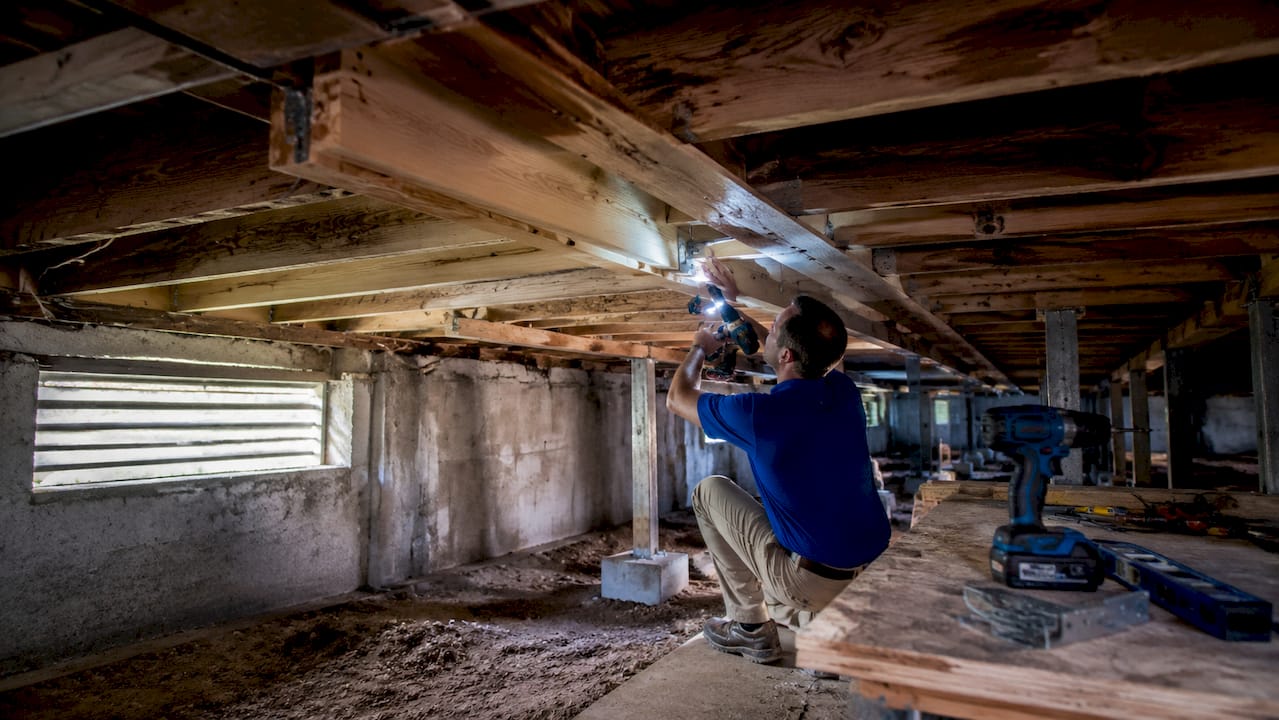
Alt text: Trinity Home Inspections inspector in khaki pants and blue shirt with white pocket logo inspecting a crawlspace for subfloor damage and joist problems in Gulf Coast Alabama.
For homeowners preparing to sell, a pre-listing inspection identifies soft floor issues before buyers do, giving you time to repair on your terms. If moisture damage has reached the point where mold is a concern, Trinity also offers mold inspection and testing services to confirm whether remediation is needed. Call 251-210-7376 or visit TrinityInspectionsLLC.com to schedule your inspection today.
FAQ
What does a soft spot in the floor usually mean?
A soft spot in the floor most often means the subfloor has been damaged by moisture, causing the wood to delaminate and lose rigidity. It can also indicate a weakened or rotted floor joist directly beneath that area.
How do I know if my soft floor is a foundation problem?
Foundation movement typically causes a consistent floor slope across multiple rooms rather than a localized soft patch. Slopes exceeding 1/2 inch per 10 feet are the standard threshold that suggests foundation settlement rather than a subfloor or joist issue.
Can I repair a soft floor myself?
Small subfloor patches are within reach for experienced DIYers, but the moisture source must be fully resolved first. Repairs fail if the leak remains active, and joist sistering or foundation work requires a licensed contractor.
How quickly does moisture damage a subfloor?
Moisture above 20% creates rot conditions that can degrade plywood or OSB subfloors within months of sustained exposure. Gulf Coast humidity accelerates this process, making annual crawlspace checks a practical maintenance habit.
What is the difference between a bouncy floor and a soft floor?
A bouncy floor deflects under foot traffic and springs back, usually pointing to undersized or widely spaced joists. A soft or spongy floor compresses and does not spring back cleanly, which typically indicates subfloor rot or delamination from moisture damage.
Recommended

