
4 Money First Moves New Home Buyers Must Do Before Touring Homes


Check your credit and dispute any errors, set a realistic budget instead of the maximum a lender offers, get preapproved before you tour homes, and schedule a professional home inspection on any property you seriously consider. These four moves, backed by CFPB guidance, HUD housing counseling resources, and a qualified inspector like Trinity Home Inspections, prevent most of the costly mistakes new buyers make.
TL;DR:
Most buyers significantly underestimate ongoing costs such as insurance, taxes, and maintenance, which can exceed their initial affordability estimates.
Checking and fixing your credit before applying helps maximize your mortgage rate, especially by paying down debt and disputing errors early.
Prioritize saving for down payment, closing costs, and an emergency reserve, adjusting timelines based on your planned purchase date rather than solely relying on lender estimates.
An inspection should evaluate roof age, water signs, and HVAC condition to prevent costly future repairs and support effective negotiations.
Comparing mortgage offers thoroughly, including APR and rate-lock terms, improves your chances of obtaining favorable loan conditions aligned with your financial situation.
Assess Readiness: How to Determine What You Can Comfortably Afford
Lenders will often approve you for more house than you should actually buy. That gap between “approved” and “affordable” is where a lot of first-time buyers get into trouble.
Most mortgage lenders use a rule of thumb: your housing payment should land around 28% of your gross monthly income, and your total debt payments, including that mortgage, shouldn’t exceed roughly 36% to 43%. Those percentages assume you can pay the bill. They say nothing about whether you can pay it and still save for retirement, fix a broken water heater, or take a vacation without panic. The CFPB notes that real readiness includes steady income, usually two years of it, solid credit, and the ability to cover ongoing costs beyond the mortgage itself.
Those ongoing costs add up fast, and they surprise almost every new buyer:
Homeowner’s insurance, which runs higher near the Gulf Coast due to wind and flood exposure
Property taxes, billed annually or rolled into your monthly payment through escrow
HOA dues, if the property has them
Routine maintenance, generally 1% of the home’s value per year
Moving costs and immediate repairs you didn’t plan for
Try this exercise before you start house hunting: take your take-home pay, subtract your current expenses and debt payments, and see what’s left. Compare that number to what a lender says you qualify for. If there’s a big gap, trust your own number, not theirs. Then build a target emergency reserve, ideally three to six months of expenses, that stays untouched after closing. Buyers who skip this step often end up house rich and cash poor within the first year, scrambling when an HVAC unit fails or a roof needs patching.
Credit: Check, Fix, and Protect Your Score Before Applying
Your credit score isn’t one mysterious number. It’s built from specific habits, and knowing the breakdown tells you exactly where to focus.
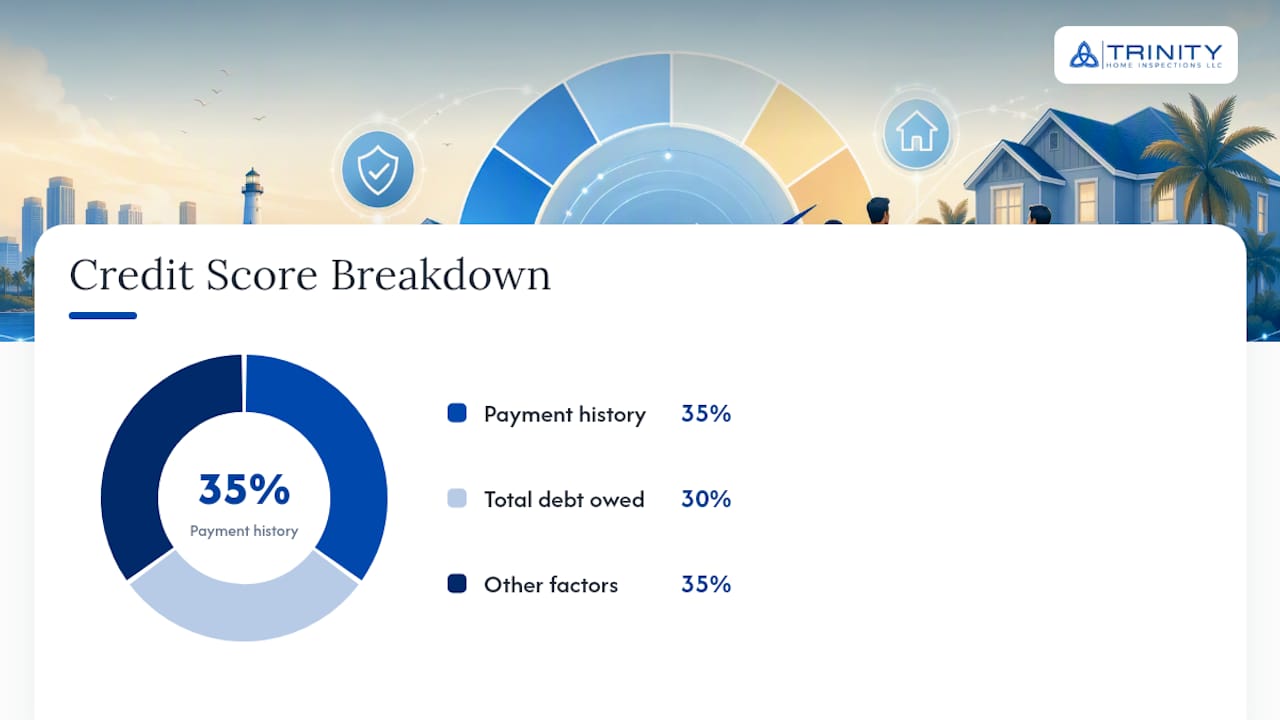
According to the CFPB, about 35% of your score comes from payment history and about 30% comes from total debt owed. Together, those two factors make up nearly two thirds of your score, which means the fastest path to a better rate isn’t some clever trick. It’s paying every bill on time and knocking down credit card balances.
Here’s the practical sequence to follow:
Pull your free credit reports and check every line for errors, old accounts that should be closed, or debts that aren’t yours.
Dispute anything inaccurate immediately. Errors can sit on a report for months if nobody flags them.
Pay down revolving balances, especially credit cards, since utilization has an outsized effect on your score.
Avoid opening new credit accounts or making large purchases (a car, furniture on a store card) until after closing.
Concentrate your mortgage shopping into a short window, generally 14 to 45 days, since scoring models typically treat that cluster of inquiries as one, according to CFPB guidance on lender credit checks.
Timing changes the strategy. If you’re buying in under six months, focus entirely on payment history and utilization. Big score jumps from disputing errors or paying down cards can show up within one or two billing cycles. If you have more than six months, you have room to also work on debt mix, length of credit history, and any collections accounts that might be worth negotiating down or paying off entirely. Either way, the CFPB’s guidance on getting your finances in order is worth reading before you apply for anything.
Saving: Down Payments, Closing Costs, and Practical Timeline Planning
The 20% down payment myth keeps a lot of people renting longer than they need to. Plenty of loan programs accept far less, but the trade-offs matter, and you should understand them before you decide.
Putting down 20% avoids private mortgage insurance, an extra monthly cost that protects the lender, not you. Many first-time buyers put down far less, sometimes 3% to 5%, and pay PMI until they build enough equity. That’s a reasonable trade if it gets you into a home year sooner, but budget for that extra line item.
On top of that, budget for movers, utility deposits, and the inevitable list of small fixes every new house seems to need in the first month.
A simple savings checklist:
Down payment (whatever percentage fits your loan program)
Closing costs (2% to 5% of the loan)
Moving expenses
An emergency reserve, separate from the above
A small “first month” fund for immediate repairs or missing appliances
Pro Tip: Ask your lender for a written estimate of closing costs the same week you get preapproved, not the week before closing. Numbers shift, and you want time to adjust your savings plan instead of scrambling at the closing table.
If you’re buying in under six months, prioritize the down payment and closing costs first, since those are due at a fixed date. If your timeline is longer, use the extra months to build your emergency reserve simultaneously rather than sequentially. Waiting to start that fund until after you close is a common and avoidable mistake.
Mortgage Basics and Lender Shopping: Compare Offers and Get Preapproved
Not all mortgages work the same way, and picking the wrong structure can cost thousands over the life of the loan.
Fixed-rate mortgages lock your interest rate for the full term, which gives you predictable payments. Adjustable-rate mortgages start lower but can rise later, which works better for buyers who plan to sell or refinance within a few years. First-time buyers with limited savings often look at FHA loans, which allow lower down payments and more flexible credit requirements. Veterans and active service members should look at VA loans, which often require no down payment at all. Buyers in eligible rural areas may qualify for USDA loans with little to no down payment either.
Prequalification and preapproval sound similar but are not the same thing. Prequalification is a quick estimate based on information you self-report. Preapproval involves the lender verifying your income, assets, and credit, and it results in a conditional commitment for a specific loan amount. In a competitive market, sellers take preapproved buyers seriously and often dismiss offers without one.
Before choosing a lender, compare these items side by side:
The APR, not just the interest rate, since APR includes fees and gives a truer cost comparison
Origination fees and other lender charges
Rate-lock terms and how long the lock lasts
What documentation they require and how fast they process it
How responsive they are to calls and emails during the process
The CFPB’s Home Loan Toolkit walks through loan features, points versus rate trade-offs, and questions to ask before signing anything. Reading it before you meet with a lender puts you in a stronger negotiating position from the first conversation.
House Hunt Priorities and Red Flags That Affect Ownership Costs
Every buyer starts with a wish list. The trick is separating what actually matters from what looks good on a listing photo.
Rank your priorities by what’s hardest to change later. Commute time, school district, and lot size are essentially fixed. Paint color and cabinet hardware are not. Weight your search accordingly, and think about resale even if you plan to stay for decades, because life circumstances change more often than people expect.
During showings, train your eye on details that predict future repair bills:
Roof age and condition, since a roof nearing the end of its life is a five-figure expense
Water stains on ceilings or in closets, which often point to a slow leak
HVAC system age, since units over 12 to 15 years are due for replacement
Cracks in the foundation, uneven floors, or doors that stick, all possible signs of foundation movement
Location-specific features change your ongoing costs too. A home in a flood zone will carry additional insurance requirements, sometimes a separate policy entirely. A pool adds maintenance costs and insurance considerations most buyers underestimate. Older electrical panels or plumbing systems, common in historic Gulf Coast homes, may need upgrades that don’t show up in the asking price but absolutely show up in your first year of ownership.
Inspections and Due Diligence: How to Use the Inspection Report to Protect Your Purchase
A home inspection is not a formality you check off before closing. It’s the single best tool you have to see past the fresh paint and staged furniture into what the house actually needs.
HUD strongly urges buyers to get an independent inspection before finalizing any purchase, and explains that findings directly shape negotiations, not just peace of mind, according to HUD’s homebuyer protection guidance. A qualified inspector examines the structure, roof, electrical panel, plumbing, HVAC system, and safety items like smoke detectors and handrails, then documents everything with photos and a written report.
Once you have that report, read it in three categories:
Safety or major issues — things that need attention before you’d feel comfortable moving in, like an outdated electrical panel or active roof leak.
Repairs or defects — items that aren’t urgent but will cost money soon, like an aging water heater or worn weatherstripping.
Maintenance items — small things you or a handyman can handle over time, like caulking or minor touch-ups.
That breakdown becomes your negotiating script. If the report flags a major issue, you can ask the seller to complete the repair before closing, request a credit at closing to cover the cost, or negotiate a price reduction that reflects the finding. Minor maintenance items generally aren’t worth fighting over. Save your leverage for the categories that actually affect safety and long-term cost.
Pro Tip: Attend the inspection in person if you possibly can. Seeing an issue firsthand, and asking the inspector questions on the spot, gives you far more confidence than reading about it in a PDF later.
What Modern, Professional Inspections Deliver
A thorough inspection should feel like getting a second set of trained eyes on the biggest purchase of your life, not a rushed walk-through with a clipboard.
Expect a same-day digital report loaded with photos and video, not just a checklist with vague notes. Thermal imaging, when conditions allow, helps spot hidden moisture and missing insulation that a visual inspection alone would miss. A well-organized report color-codes findings into safety and major issues, repairs and defects, and minor maintenance, so you’re not left guessing what actually matters. If something unusual turns up, like signs of a sewer line issue or suspected mold, you should have the option to add a sewer scope or mold testing without hiring a separate company.
Before you hire anyone, ask these questions:
What certifications do you hold, and are you InterNACHI certified?
What tools do you use, and do you carry thermal imaging as a standard part of the inspection?
How fast will I get my report, and what does it include?
What insurance do you carry, and how much?
Can I attend the inspection, and will you walk me through the findings?
Those answers separate a hobbyist with a flashlight from a trained professional who can back up every finding. For a deeper look at what a strong inspection preparation process looks like, see this first-time buyer inspection guide.
From Accepted Offer to Closing: The Timeline, Documents, and Final Checks
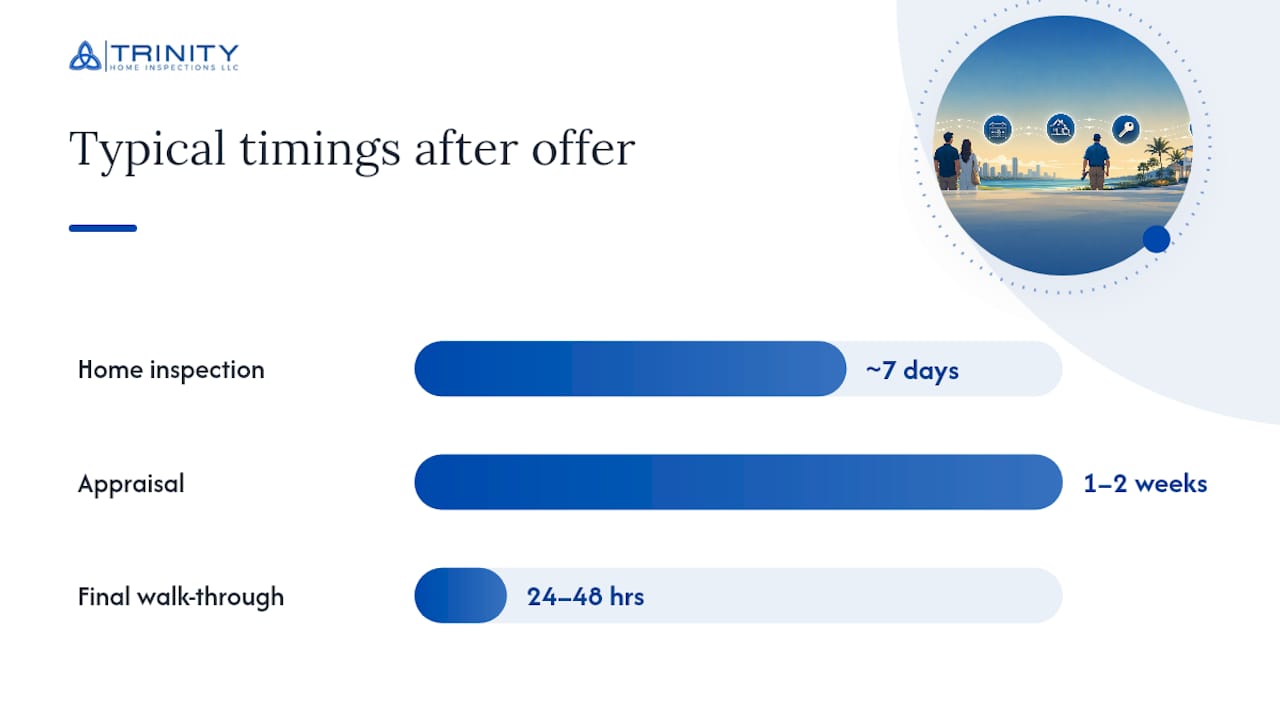
Once your offer is accepted, the clock starts on a fairly predictable sequence of events, and knowing what’s coming keeps you from feeling blindsided.
Home inspection, typically scheduled within a week of acceptance, followed by any negotiation over findings.
Appraisal, ordered by your lender to confirm the home’s value supports the loan amount, usually taking one to two weeks.
Underwriting, where the lender verifies your financial documents and finalizes loan approval.
Title search, confirming the seller has clear legal ownership with no liens or disputes.
Homeowner’s insurance binder, which you’ll need in place before closing.
Final walk-through, usually within 24 to 48 hours of closing, to confirm the home’s condition hasn’t changed and any agreed repairs were completed.
Before closing day, gather proof of insurance, a government photo ID, and updated bank statements, since lenders often ask for refreshed documents if underwriting drags on. Confirm wiring instructions directly with your title company by phone, using a number you look up yourself, never one from an email, since wire fraud targeting closings is a real and growing scam.
At closing, expect prorated property taxes, an initial escrow deposit for insurance and taxes, and your down payment plus closing costs. Set aside a separate post-closing fund for the immediate expenses that always show up in week one. For the full walkthrough of this stretch, the step-by-step buying process guide covers it in more detail.
How to Choose a Real Estate Agent and What to Ask Them
Your agent should work for your interests, not just move the transaction along quickly. That distinction shapes which questions actually matter during an interview.
Ask how many transactions they’ve closed in the past year, and specifically how many involved first-time buyers, since that experience shapes how much hand-holding you’ll get. Ask how they get paid and whether that changes based on price point, since buyer’s agent compensation structures have shifted in recent years and vary by market. Ask about their availability, particularly whether they’ll personally show homes or hand that off to an assistant.
A good agent should also be comfortable recommending you walk away from a home, not just closing the deal. If every property they show you gets glowing praise regardless of condition or price, that’s worth noticing.
Beyond experience, look for local knowledge specific to your target neighborhoods, since flood zones, school boundaries, and HOA quirks vary block by block along the Gulf Coast. Ask how they handle multiple-offer situations and whether they’ll attend your home inspection. An agent who shows up, asks questions alongside you, and helps interpret findings adds real value beyond just opening doors and submitting paperwork.
Common Mistakes New Home Buyers Make and How to Avoid Them
Most first-time buyer mistakes trace back to one root cause: moving faster than the process allows.
Skipping preapproval before house hunting wastes time on homes outside your real budget and weakens your offer against buyers who came prepared. Making a large purchase or opening new credit between preapproval and closing can change your debt-to-income ratio enough to jeopardize the loan, something plenty of buyers learn the hard way days before closing.
Waiving the inspection to seem competitive in a hot market is another costly shortcut. It might win the house, but it also means absorbing every hidden problem with no leverage to negotiate. Underestimating ongoing costs, insurance, taxes, and maintenance, leaves buyers house rich and cash poor within the first year. And skipping the final walk-through means finding out too late that an agreed repair never happened.
The fix for nearly all of these is patience paired with preparation: get your financing locked down early, keep your credit stable through closing, and never treat the inspection as optional.
Post-Purchase Tips: Moving In and Home Maintenance Basics
Closing day isn’t the finish line. It’s the start of a new set of responsibilities that reward buyers who plan ahead.
In your first month, locate your main water shutoff, breaker panel, and gas shutoff if applicable, so you’re not searching for them during an emergency. Change the locks, since you have no idea how many keys exist from previous owners. Set up a basic maintenance calendar: HVAC filter changes every one to three months, gutter cleaning twice a year, and water heater flushing annually.
Keep a folder, physical or digital, with your inspection report, closing documents, and warranty information for major systems and appliances. That inspection report becomes a useful maintenance roadmap for years, flagging which systems are aging and when to start budgeting for replacements. A detached structure or repair-focused review of your report can help you prioritize which fixes matter most in year one versus which can wait.
Finally, revisit your insurance coverage after the first year to confirm it still matches the home’s value and any improvements you’ve made, and if you’re weighing energy-efficiency upgrades down the road, research on interior door replacements and older home efficiency is a useful starting point for smaller projects that add up.
Trusted Resources: Official Guides, Counseling, and Local Next Steps
Two federal agencies publish the guidance nearly every reputable homebuying resource draws from:
The CFPB’s Home Loan Toolkit covers credit, shopping for loans, and budgeting for ongoing homeowner costs in plain language.
HUD’s homebuying resources walk through the full process and consistently recommend a professional inspection before closing.
If your credit history is thin or your finances are complicated, a HUD-approved housing counselor offers free, unbiased guidance on budgeting and program eligibility.
For deeper reading on the buying process itself, Trinity Home Inspections’ first-time buyer guide and step-by-step buying process breakdown both expand on the sections above.
A Local Inspector’s Take on What Actually Protects Buyers
An inspection isn’t about finding reasons to walk away from a home. It’s about walking into the biggest purchase of your life with your eyes open instead of hoping for the best. When I’m on a roof or crawling under a house, I’m thinking about three things every buyer should ask themselves during a showing: how old is the roof, how old is the HVAC system, and are there any signs of water where there shouldn’t be. Those three items predict more future headaches than almost anything else on a listing. Ask your inspector questions during the walk-through, and use what they find to negotiate fairly. Nobody wins when a deal falls apart over a caulking gap, but plenty of buyers save real money by catching a failing roof before it becomes their problem.
— Matt
Ready for an Inspection That Actually Protects Your Purchase?
Trinity Home Inspections gives Gulf Coast buyers something most inspection companies charge extra for or skip entirely: a same-day digital report with high-resolution photos and video, plus free thermal imaging whenever conditions allow.
[

What’s included:
Same-day digital report, color-coded into DIY/minor, issues/defects, and safety/major categories
Free thermal imaging to spot hidden moisture and missing insulation
Plain-English priority breakdown so you know what’s urgent versus what can wait
Optional add-ons like sewer scope inspections and mold testing, bundled to save you a second phone call
If you’re touring homes in Baldwin, Mobile, Escambia, Washington, Monroe, or Clarke County, get in touch before you go under contract on a property. If you’re selling, a pre-listing inspection can catch issues before a buyer’s inspector does, and if you need property records pulled ahead of a purchase, our deed and permit search service can help. Call 251-210-7376 or visit Trinityinspectionsllc to schedule and see exactly what a same-day, thermal-imaging-included report looks like.
This article is general information, not a substitute for advice from a qualified financial advisor. Consult a qualified financial professional about your own circumstances before acting on anything here.
Sources
FAQ
Does Checking My Own Credit Hurt My Score?
No. Pulling your own free credit reports is a soft inquiry and does not affect your score, and the CFPB recommends checking them for errors before you apply for a mortgage.
What’s the Difference Between Prequalification and Preapproval?
Prequalification is a quick, self-reported estimate, while preapproval involves the lender verifying your income, assets, and credit for a conditional loan commitment, which carries far more weight with sellers.
Is a Home Inspection Really Necessary if the House Looks Fine?
Yes. Many serious issues, like electrical hazards, roof deterioration, or hidden moisture, aren’t visible without professional tools, which is why HUD strongly recommends an independent inspection before every purchase.
Can I Negotiate After a Bad Inspection Report?
Yes. You can typically request repairs before closing, ask for a credit at closing, or negotiate a price reduction, depending on what your purchase contract’s inspection contingency allows.
What Does Trinity Home Inspections Include With Every Inspection?
Every inspection includes a same-day digital report with photos and video, free thermal imaging when conditions allow, and color-coded findings so you know what’s urgent versus what can wait, with optional add-ons like sewer scope and mold testing.
Recommended