
Air Sealing Shiplap Ceilings: Save 10-20% on Energy

TL;DR:
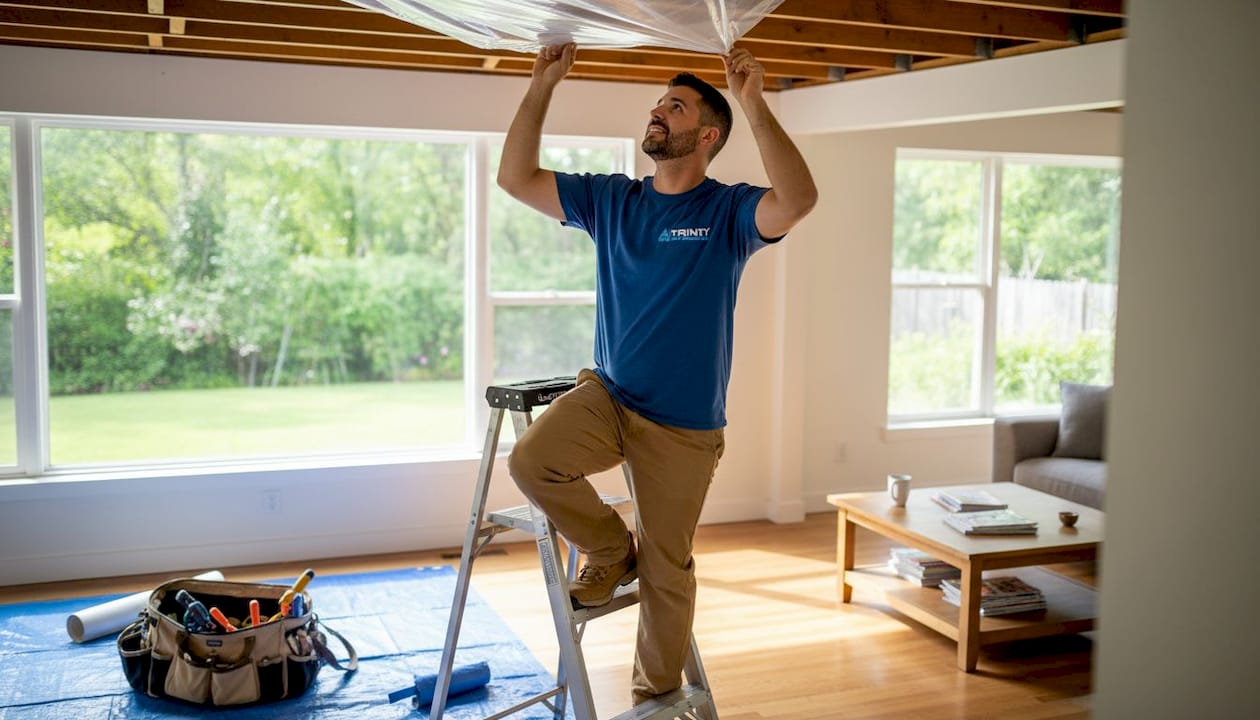
Gaps in shiplap ceilings allow outdoor humid air to enter and conditioned air to escape, increasing energy costs.
Proper air sealing with continuous barriers like vapor membranes, drywall, or spray foam improves energy efficiency and reduces moisture risks.
DIY testing methods such as smoke pencils and thermal imaging help verify effective sealing and detect hidden leaks.
If your energy bills keep climbing and your home never quite feels comfortable despite running the AC nonstop, your shiplap ceiling could be the problem. Those charming, character-filled boards that make Gulf Coast homes so appealing come with a built-in weakness: gaps. Every gap between boards is a channel for hot, humid Alabama air to push straight into your living space. According to the U.S. Department of Energy, air sealing reduces energy loss by 10 to 20 percent. This guide walks you through why it matters, what you need, how to do it step by step, and how to verify the job is done right.
Key Takeaways
Point | Details |
Seal before insulating | Always install your air barrier or sealant before you insulate for the best energy savings. |
Prioritize air barrier continuity | A continuous air barrier blocks humidity and air leaks, improving comfort in Gulf Coast homes. |
Verify with tests | Confirm effective air sealing with simple tests or professional inspections to prevent hidden leaks. |
Choose the right method | Smart membranes and spray foam both work, but match the approach to your ceiling type and home access. |
Watch out for penetrations | Seal around lights, vents, and hatches, as these are notorious for letting air and moisture slip through. |
Why air sealing your shiplap ceiling matters
Shiplap ceilings are beautiful. They add warmth and character to any room, and they are incredibly popular in homes across Baldwin and Mobile counties. But here is the thing most homeowners do not realize until their utility bill arrives: shiplap is not an air barrier. It was never designed to be.
Each board sits alongside the next with small gaps between them. In older Gulf Coast homes, those gaps can be significant. Hot, moisture-laden outdoor air forces its way through those openings and into your home every single day during summer. In winter, the same gaps let your conditioned air escape upward into the attic. Either way, your HVAC system works harder than it should, and you pay for it.
The numbers tell a clear story. Floors, walls, ceilings, and attics together account for 31% of total air leakage in a typical home. Ceiling and attic connections are among the biggest contributors in that group. In a Gulf Coast climate, that air movement carries more than just temperature. It carries humidity, and air movement is the main moisture driver in cathedral and shiplap ceiling assemblies.
Humidity infiltration is a serious concern here. When warm, humid outdoor air meets your cooler interior surfaces, moisture condenses. Over time, that hidden moisture feeds mold growth, degrades insulation, and can rot the wood structure above your shiplap. Addressing shiplap gap problems early prevents far more expensive repairs later.
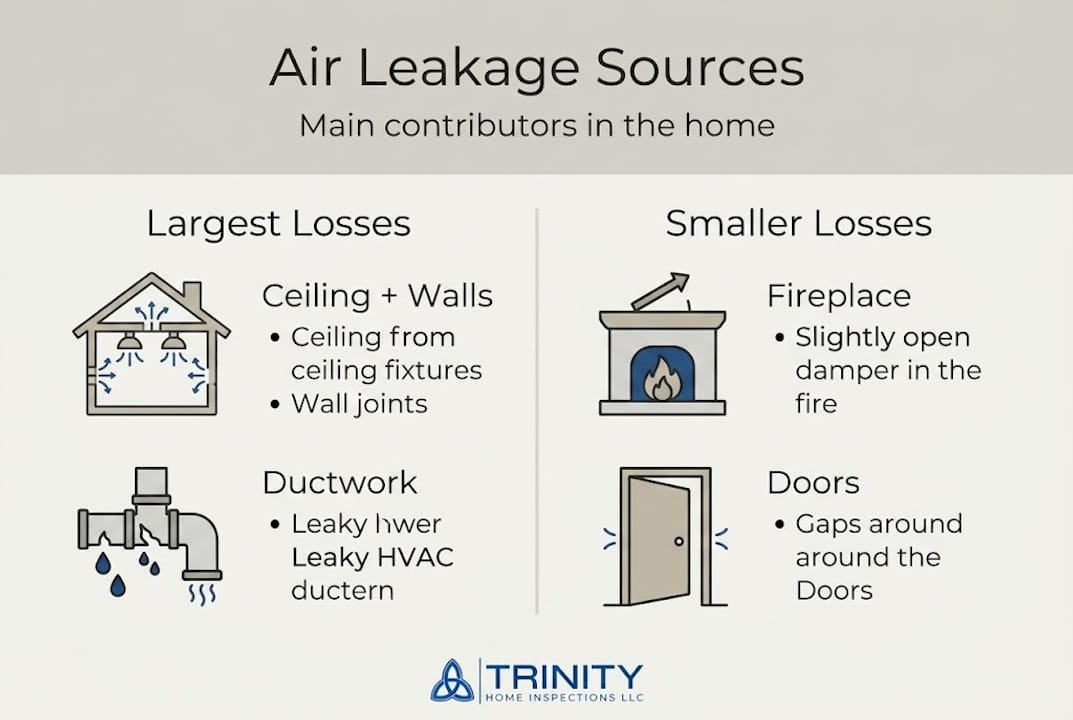
Here is a breakdown of where air escapes in a typical home:
Area of home | Approximate share of air leakage |
Floors, walls, and ceiling | 31% |
Ducts | 15% |
Fireplace | 14% |
Plumbing penetrations | 13% |
Doors and windows | 11% |
Fans and vents | 4% |
Electrical outlets | 2% |
Other | 10% |
The ceiling portion of that 31% adds up fast in a home with exposed shiplap. Proper air sealing and energy savings go hand in hand, and the investment typically pays back within a few years through reduced cooling and heating costs.
Beyond the bills, there is comfort to consider. A home with a leaky shiplap ceiling will feel stuffy and uneven. Rooms farthest from the air handler may feel warmer or more humid. You might notice condensation on windows or a musty smell near the ceiling. These are all signals that your air barrier is missing or compromised.
For Gulf Coast homeowners, effective Gulf Coast humidity control is not optional. It is a baseline requirement for a healthy, comfortable home. Addressing attic ventilation issues alongside air sealing creates the most complete solution.
With the benefits and challenges clear, let’s look at what you need before starting.
What you need: Tools, materials, and prep
Before you start sealing anything, you need the right materials and a clear understanding of what type of shiplap ceiling assembly you are working with. Not all shiplap ceilings are the same. Some have accessible attic space above them. Others are cathedral ceilings with no attic at all. Your approach and materials will differ based on that reality.
Choosing your air barrier
The most effective way to seal a shiplap ceiling is to install a continuous air barrier between the shiplap boards and the framing above. There are three main options, each with trade-offs:
Air barrier option | Ease of installation | Durability | Cost | Notes |
Smart vapor retarder membrane | Moderate | Good | Low to moderate | Easier to handle; easier but less durable than drywall |
Drywall (taped and sealed) | Moderate to difficult | Excellent | Moderate | Most durable; requires taping all seams |
Closed-cell spray foam | More difficult | Excellent | Higher | Eliminates need for a separate barrier; good for inaccessible assemblies |
For a new installation or renovation where you have ceiling access, a vapor barrier installation between the framing and the shiplap is the cleanest approach. On existing ceilings with attic access, spray foam applied from above to seal penetrations is often the most practical path.
Tools and materials checklist
Two-part closed-cell spray foam kit or cans for small gaps and penetrations
Acoustic sealant or non-hardening caulk for joints and edges
Smart vapor retarder membrane (if doing a full barrier install)
Drywall and joint compound (if using drywall as barrier)
Utility knife, staple gun, and tape measure
Respirator rated for spray foam fumes, safety glasses, and gloves
Headlamp and knee pads for attic work
Marker or painter’s tape for labeling penetrations
Safety first in tight spaces
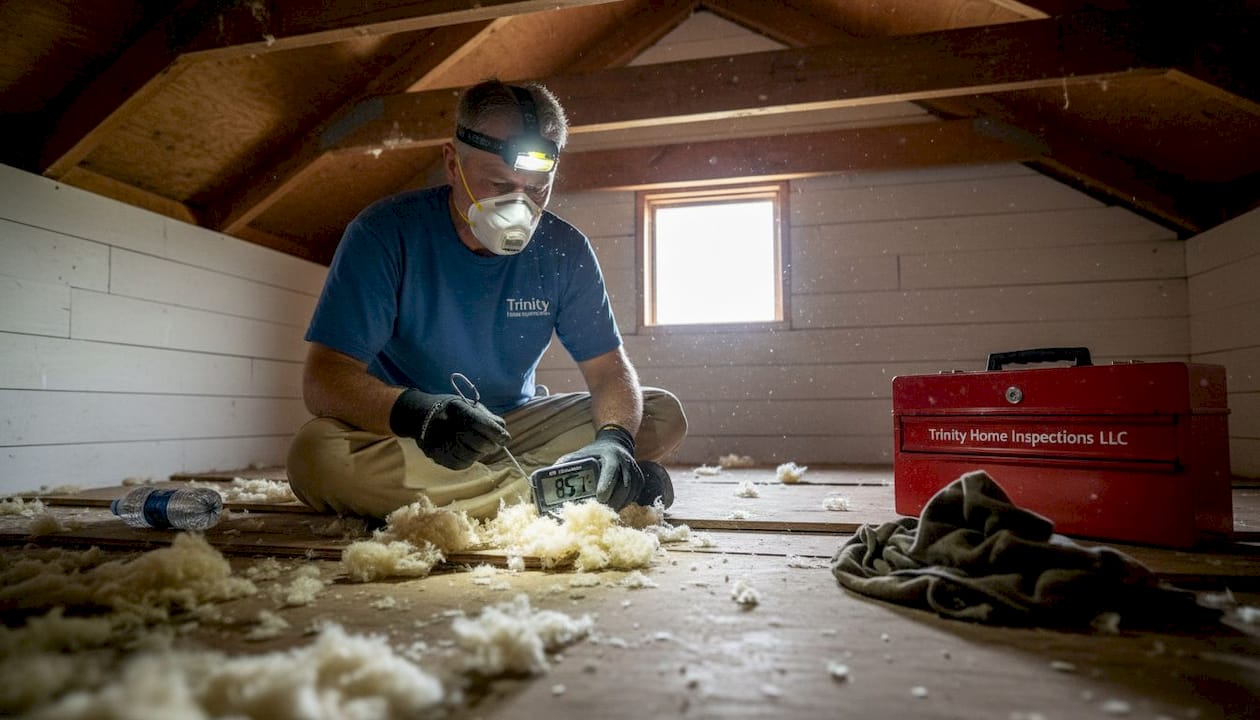
Attic work in Gulf Coast Alabama during summer is genuinely dangerous. Temperatures above the ceiling can exceed 150 degrees Fahrenheit on a hot July afternoon. Always work in the early morning hours, keep water nearby, and never work alone in a confined attic space. Proper respiratory protection matters too, especially when using spray foam products.
Prepping the ceiling surface
Before any sealant goes on, inspect every penetration in your shiplap ceiling. That means light fixtures, ceiling fans, HVAC vents, and any plumbing or electrical lines passing through. Clean dust and debris from each area before applying sealant so materials bond properly. For tips on the installing shiplap walls and ceiling process from the start, that resource covers the installation sequence in detail.
Pro Tip: Label each ceiling penetration with painter’s tape before you begin sealing. It sounds simple, but in a dusty attic with limited visibility, it is easy to lose track of which penetrations you have already sealed and which ones you missed. A quick label on each one eliminates that problem entirely.
Now that you’re equipped and ready, let’s tackle the step-by-step process.
Step-by-step: Air sealing a shiplap ceiling
Sealing a shiplap ceiling is not a single action. It is a sequence of careful steps, and skipping any one of them can leave gaps that undermine everything else you do. Follow this process based on your specific ceiling type.
Step 1: Inspect from above if possible
If you have attic access, get up there with a headlamp and look down at the top of the shiplap. Look for daylight coming through gaps, dirty insulation near penetrations (a telltale sign of air movement), and any wiring or plumbing that punches through the ceiling plane. Mark every gap and penetration you find.
Step 2: Install the air barrier layer
For new shiplap installations or full renovations, install your air barrier directly to the underside of the rafters or joists before attaching the shiplap boards. A continuous air barrier must connect seamlessly with your wall barriers. Tape all seams and seal all edges with acoustic caulk. Avoid creating a double vapor barrier situation by layering materials incorrectly, as that traps moisture between layers.
Step 3: Seal all penetrations
This is the most critical step. Every wire, pipe, duct, recessed light, and junction box is a potential air pathway. Use closed-cell spray foam for gaps larger than a quarter inch and acoustic caulk for smaller ones. Spray foam applied to the back of shiplap creates a combined air and moisture barrier, which is ideal for accessible ceiling assemblies.
Important safety note: Never seal an attic space completely without verifying that ventilation is maintained at the eaves and ridge. Trapping heat and moisture in an unvented attic without the proper insulation system in place can cause serious structural damage and mold growth.
Step 4: Handle cathedral and unvented assemblies differently
Cathedral ceilings with no attic access need a different strategy. For cathedral ceiling assemblies, use closed-cell spray foam as the primary insulation and air barrier, or design a vented assembly with rigid baffles that maintain an airflow channel from eave to ridge. In Gulf Coast conditions, the unvented approach with closed-cell foam is often the better fit because it controls both heat and moisture.
Also, fixing shiplap gaps at the board-to-board level and addressing humidity in ceilings together creates the most durable result in our hot, humid climate.
Step 5: Verify coverage before closing up
Before you reinstall boards or cover any work, do a slow visual check of every sealed area. Press gently around foam to check for soft spots that indicate incomplete coverage. Make sure no gaps remain at the wall-to-ceiling transition, which is one of the most commonly missed zones in any sealing project.
Pro Tip: The wall-to-ceiling junction is the single most overlooked air leak in shiplap ceiling assemblies. Run a bead of acoustic caulk along every inch of that perimeter joint before you call the job done.
After sealing, it’s crucial to ensure the job was done right for lasting benefits.
Verifying your work: Testing and troubleshooting
Completing the sealing work is only part of the job. Knowing whether it actually worked is just as important, especially in a climate like ours where hidden moisture problems can develop quietly over months.
DIY verification methods
You do not need expensive equipment to get a reasonable read on your air sealing results. Start with these:
Smoke pencil test: Hold a lit incense stick or smoke pencil near suspected leak areas on a windy day. Smoke that bends or gets sucked toward the ceiling indicates air movement.
Hand test: On a hot or cold day, run your hand slowly along the ceiling perimeter and around light fixtures. Even a slight temperature difference signals a leak.
Visual gap check: Use a flashlight and mirror to inspect joints, penetrations, and board edges for any remaining openings.
Dirty insulation check: Dirty or discolored insulation near any ceiling penetration is a reliable indicator of ongoing air leakage. Dust in the air stream settles into the insulation fibers over time.
Professional testing options
For a definitive result, a blower door test is the gold standard. A certified energy auditor or home inspector depressurizes the home with a calibrated fan and measures how much air flows back in. That number tells you exactly how leaky your building envelope is and where the worst areas are. Professional guidance recommends conducting a blower door test after sealing to verify ceiling continuity at walls and penetrations.
Verification method | Cost | Accuracy | Best for |
Smoke pencil/hand test | Free | Low to moderate | Quick spot checks |
Visual gap inspection | Free | Moderate | Finding obvious missed areas |
Thermal imaging camera | Rental or pro fee | High | Hidden moisture and temperature gaps |
Blower door test | $300 to $500 | Very high | Whole-house envelope confirmation |
Thermal imaging for air leaks is one of the most reliable ways to find problems that the naked eye simply cannot see. At Trinity Home Inspections, thermal imaging is included in every inspection at no extra charge, which sets us apart from many other inspectors in the area.
Common problem spots to troubleshoot
Recessed light fixtures (these are notorious air leaks)
Attic hatch or pull-down stair frames
Where interior walls meet the ceiling plane
Around ceiling fan mounting boxes
Any point where wiring enters from the attic
If you discover issues after the fact, address them early. Moisture trapped behind sealed shiplap can lead to mold quickly in Gulf Coast humidity. Reviewing home inspection red flags related to ceiling moisture gives you a clearer picture of what to watch for going forward.
Let’s take the conversation further with a fresh expert perspective.
A professional perspective on shiplap ceiling air sealing
Here is something that does not get said enough: the biggest mistake homeowners make is not which material they choose, but whether they maintain continuity. We see it during inspections regularly. Homeowners spend money on quality spray foam or a name-brand membrane, but they skip the wall-to-ceiling junction or leave a gap around a single junction box. That one gap undoes a significant portion of the benefit.
The second most common mistake? Layering vapor barriers without understanding what they do. Adding a plastic sheet below an existing drywall ceiling that already acts as a vapor barrier creates a moisture sandwich. Trapped moisture has nowhere to go, and mold follows. In Gulf Coast Alabama, where outdoor humidity regularly exceeds 80 percent, that scenario plays out fast.
What we have learned from inspecting homes across Baldwin and Mobile counties is that real solutions are always tailored. An old cottage in Fairhope with tongue-and-groove shiplap from the 1940s needs a different approach than a new coastal build in Gulf Shores. There is no single product that solves every situation. What matters is understanding your specific assembly and maintaining a continuous barrier from one connection point to the next.
“The material matters less than the continuity. A smart membrane or drywall barrier done right beats spray foam done sloppily, every time.”
Focus on the junctions. Focus on penetrations. And if your ceiling is inaccessible, accept that spray foam from below at every gap may be your most practical path forward. For practical solutions to ceiling gap fixes, that resource offers additional field-tested options.
With this perspective in mind, here’s how you can take the next step toward a healthier, more energy-efficient home.
Connect with a pro for lasting results
DIY air sealing goes a long way, but some situations call for a trained set of eyes and specialized tools. If you have completed your sealing work and still notice humidity swings, unexplained energy bills, or visible moisture near the ceiling, it is time to bring in a professional.

At Trinity Home Inspections, we use thermal imaging cameras on every inspection to help identify hidden moisture, missing insulation, and air leakage at no extra cost to you. If mold is a concern after discovering moisture behind your shiplap, our mold inspection services include certified lab testing with full chain-of-custody reports. We can also run a property permit search to verify that any prior ceiling work was permitted and done to code. Reach out today and let us help you get clear, honest answers about your home.
Frequently asked questions
What is the best method for air sealing a shiplap ceiling?
The most effective method is installing a continuous smart vapor retarder or membrane on the warm interior side before attaching shiplap, or using spray foam if the ceiling is already in place and accessible from above.
Should I use drywall or a smart membrane as an air barrier under shiplap?
Both work well when installed continuously. Drywall is more durable long-term, but smart membranes are easier to handle and cut during installation, making them a practical choice for most homeowners.
How much energy can air sealing a shiplap ceiling save?
Proper air sealing can reduce energy loss by 10 to 20 percent, which translates to meaningful savings on cooling and heating costs, especially in the Gulf Coast’s long, hot summers.
How do I check for air leaks around shiplap ceilings?
Look for dirty or discolored insulation near ceiling penetrations, or use a smoke pencil near joints and light fixtures on a windy day to reveal hidden air movement.
Why prioritize air sealing in humid Gulf Coast homes?
In high-humidity climates, a continuous ceiling air barrier blocks moist outdoor air from entering and condensing on interior surfaces, which is your best defense against mold, structural damage, and runaway energy costs.
Recommended
