
Energy Efficient Metal Roofing: Lower Costs, Boost Home Value

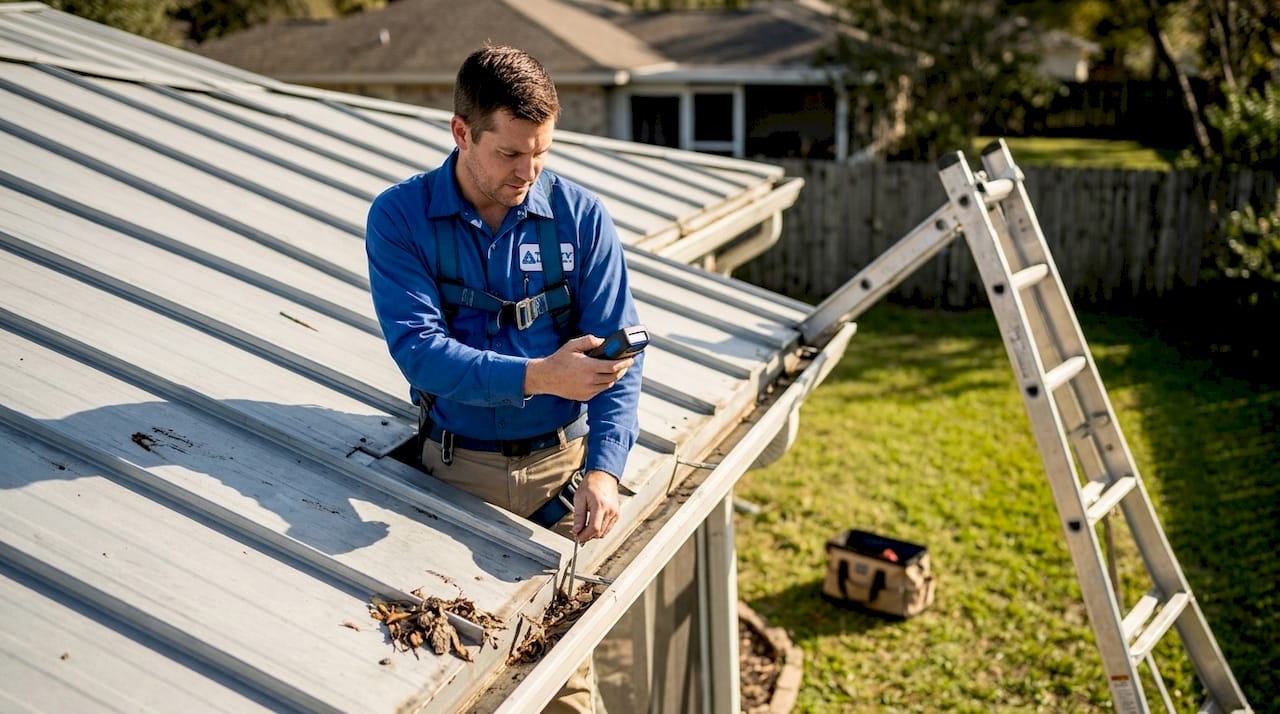
Many homeowners assume that any metal roof automatically delivers big energy savings. That assumption can be costly. Not all metal roofs are created equal, and in coastal Alabama’s intense heat, humidity, and storm exposure, the wrong choice can leave you with a roof that underperforms and underwhelms buyers. Energy efficient metal roofs can reflect up to 70% of solar energy and lower cooling bills by 5% to 40%, but only when the right materials, coatings, and installation methods are used. This guide walks you through what actually works for Gulf Coast homes, so you can make a confident, informed decision whether you are buying, selling, or upgrading.
Key Takeaways
Point | Details |
SRI and coatings matter | Choosing metal roofing with high Solar Reflectance Index and cool coatings is key for coastal Alabama energy savings. |
Right materials for the coast | Aluminum or Galvalume perform best in humid, salt-laden air and resist corrosion better than basic steel. |
Ventilation is critical | Proper installation and attic ventilation can significantly improve your roof’s cooling efficiency and overall performance. |
Long-term value focus | Energy efficient metal roofs pay off most for owners who plan to keep their home over 10 years. |
Professional inspections help | A roof inspection can identify energy upgrades and boost both efficiency and resale value for buyers and sellers. |
How energy efficient metal roofing works
To understand why some metal roofs save you money and others barely move the needle, you need to know two key terms: solar reflectance and thermal emissivity.
Solar reflectance measures how much of the sun’s energy a roof bounces back instead of absorbing. A value of 1.0 means perfect reflection; 0.0 means total absorption. Thermal emissivity measures how efficiently a roof releases the heat it does absorb. A roof that scores high on both metrics stays cooler and keeps your attic from turning into an oven during an Alabama July.
The Solar Reflectance Index (SRI) combines both values into a single number, making it easier to compare roofing products. Higher SRI equals a cooler roof. For hot, humid climates like the Gulf Coast, roofing experts and energy programs recommend an SRI of 29 or higher for low-slope roofs and 16 or higher for steep-slope roofs.
Roof Type | Typical Reflectance | Estimated Cooling Savings | Attic Temp Reduction |
Unpainted dark metal | 0.05 to 0.15 | Minimal | Near zero |
Standard painted metal | 0.25 to 0.40 | 5% to 15% | 5 to 10°F |
Cool roof coated metal | 0.60 to 0.70+ | 20% to 40% | 10 to 30°F |
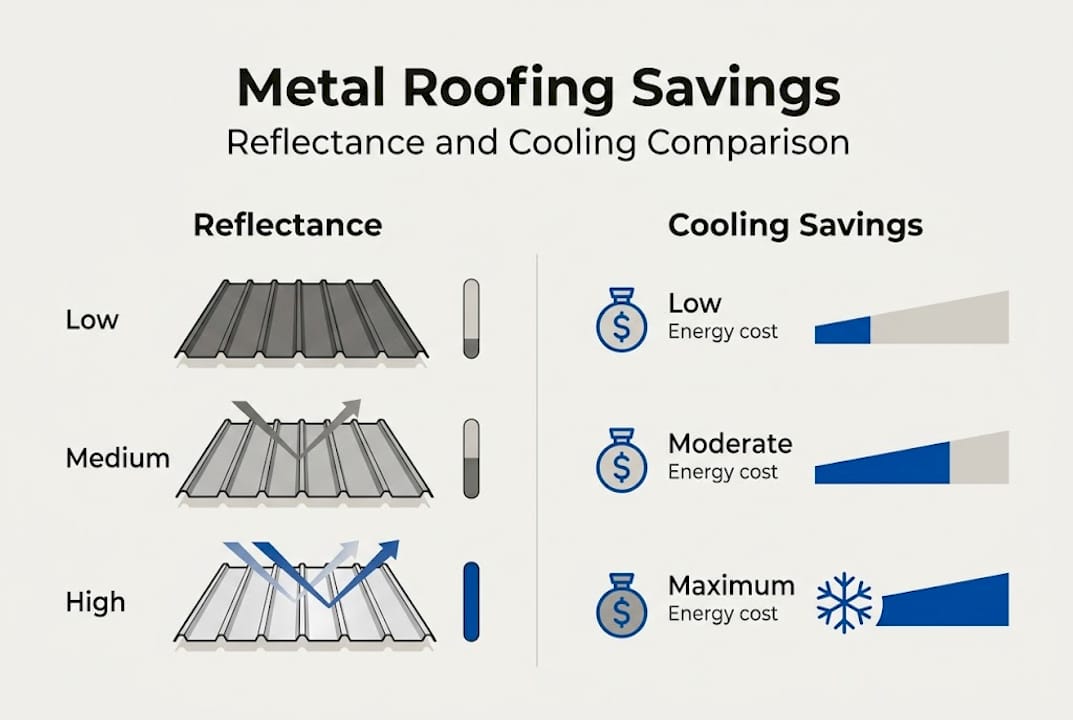
Cool roof coatings can boost reflectance from 0.25 to over 0.60, reducing attic temperatures by 10 to 30°F. That temperature drop matters because a cooler attic puts less strain on your air conditioner, which runs constantly during Gulf Coast summers.
Proper attic ventilation in Alabama works hand in hand with a high-SRI roof. Without good airflow, even the most reflective metal roof cannot prevent heat buildup from creeping into your living space.
Stat callout: Up to 40% lower cooling bills are possible with a properly coated, well-ventilated metal roof in a hot climate like coastal Alabama.
Pro Tip: When shopping for metal roofing products, look for the ENERGY STAR label or a rating from the Cool Roof Rating Council (CRRC). These certifications verify that the product meets tested performance standards, not just marketing claims. You can also explore best energy-efficient roofing options to compare metal against other materials before committing.
Metal roofing materials and coatings for coastal Alabama
Knowing how roof efficiency works, the next step is choosing the right metal and finish for maximum value in humid, storm-prone areas like Alabama’s coast.
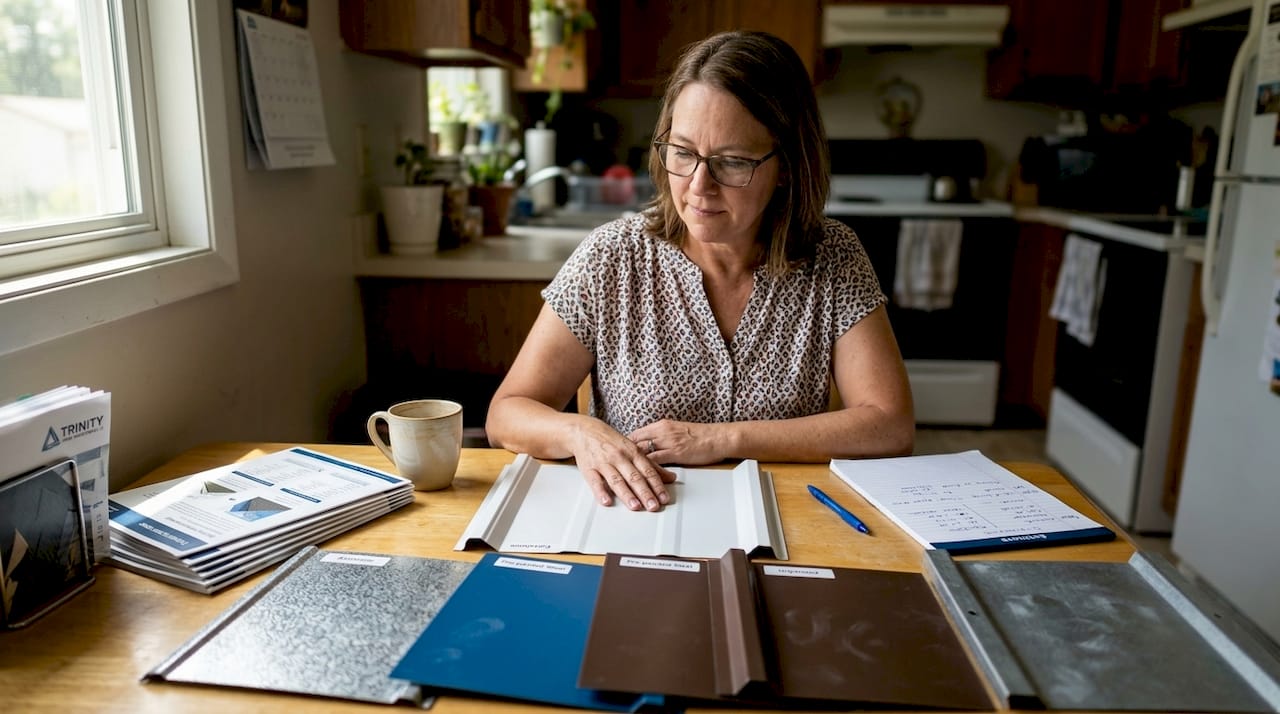
Not every metal performs the same when exposed to salt air, heavy rain, and hurricane-force winds. Here is how the three most common options compare:
Material | Corrosion Resistance | Reflectivity Potential | Best For |
Aluminum | Excellent | High with coating | Coastal homes, salt exposure |
Galvalume (steel + zinc + aluminum) | Very good | High with coating | Coastal and inland homes |
Standard galvanized steel | Moderate | Moderate | Inland, lower humidity areas |
Aluminum and Galvalume outperform basic steel in high-humidity coastal zones and deliver even better results when paired with proper coatings. This is not just a preference; it is a practical reality for homes in Gulf Shores, Orange Beach, Foley, and Daphne.
Coatings are where the real efficiency gains happen. A Kynar 500 or PVDF coating, for example, locks in color and reflectivity for decades while resisting salt-driven corrosion. Without a quality coating, even aluminum can fade and lose reflectance over time.
Key benefits by material:
Aluminum: Naturally rust-resistant, lightweight, and ideal for homes close to the water. Pairs well with high-SRI coatings.
Galvalume: Offers strong corrosion resistance at a slightly lower price point than aluminum. Widely available and compatible with most cool roof coatings.
Painted steel with cool coating: Can work well inland but requires more maintenance near the coast due to higher corrosion risk.
Storm resistance is another factor you cannot ignore on the Gulf Coast. Metal roofs generally handle high winds better than asphalt shingles, but the fastening system and panel profile matter. Standing seam panels, where fasteners are hidden, offer better wind uplift resistance than exposed fastener systems.
Before you invest, it helps to review factors for choosing roof materials so you weigh all the variables together. And once a metal roof is installed, scheduling roof inspections for coastal homes on a regular basis protects your investment from the slow damage that salt air and storm debris can cause.
Pro Tip: Prioritize light-colored, reflective finishes with a high SRI rating. A white or light gray Galvalume roof with a PVDF coating can outperform a dark unpainted metal roof by a wide margin in both energy savings and long-term durability.
Installation factors that impact energy efficiency
Material choice is crucial, but installation details are just as important for achieving real savings and comfort in your home.
A high-quality metal panel installed poorly can perform worse than a basic asphalt roof installed correctly. Here is what to watch for:
Ventilation design: A ventilated air gap between the metal panel and the roof deck allows heat to escape before it enters your attic. Ventilated installs in hot-humid climates maximize metal roof performance and energy savings. Without this gap, heat transfers directly into the structure.
Color and finish selection: Light colors reflect more solar energy. A white or light tan finish can have an SRI of 80 or higher, while a dark bronze finish might score below 20. The difference shows up directly on your electric bill.
Roof slope: Steeper slopes shed water faster and tend to receive less direct sun exposure on the surface, which helps with heat load. Low-slope roofs need higher SRI ratings to compensate.
Underlayment choice: A radiant barrier underlayment adds another layer of heat resistance beneath the metal panel. In Alabama’s climate, this addition can meaningfully reduce heat transfer into the attic.
Understanding roof ridge vent pros and cons is important because ridge vents are a key part of passive ventilation systems that work with metal roofs to exhaust hot air at the peak. Combined with proper attic ventilation, they create a system that keeps your home cooler without extra energy use.
Local building codes in Baldwin and Mobile counties may also influence what installation methods are approved, especially for wind uplift ratings in coastal zones. Older homes sometimes require structural reinforcement before a metal roof can be installed correctly. Knowing the signs of poor attic ventilation before you start a roofing project helps you address underlying issues that would otherwise undercut your investment.
“The biggest mistake we see is homeowners choosing the right metal panel but skipping the ventilation gap. In Gulf Coast heat, that gap is not optional. It is what separates a roof that saves money from one that just looks good.”
Weighing costs, savings, and real value for buyers and sellers
Understanding materials and installation, it is essential to zoom out and see how the economics and practical value actually play out for homebuyers and sellers.
Energy efficient metal roofing is not cheap upfront. Installed costs typically run two to three times higher than standard asphalt shingles. For a 2,000 square foot home, you might spend $15,000 to $25,000 or more depending on material and complexity. That is a real number, and it deserves an honest look.
Metal roofs can lower cooling costs 5 to 40% and drop attic temps by 10 to 30°F, which translates to meaningful monthly savings on your electric bill. In Alabama, where summer cooling costs can run $200 to $400 per month for average homes, even a 20% reduction adds up to $480 to $960 per year.
What you gain with an energy efficient metal roof:
Lower monthly cooling costs, especially during peak summer months
Reduced wear on your HVAC system, which extends its lifespan
Increased resale appeal, particularly for buyers focused on long-term ownership costs
A roof lifespan of 40 to 70 years compared to 15 to 25 years for asphalt
Potential insurance discounts in storm-prone coastal zones
However, savings depend on climate, insulation, and HVAC, and metal roofing is not ideal for short-term owners planning to sell within a few years. If you are staying less than 10 years, the upfront cost may not be recovered through energy savings alone, even though the roof adds measurable value to the home.
For sellers, a documented energy efficient metal roof can be a strong selling point, especially in a coastal market where buyers are aware of storm risk and utility costs. Pairing the roof upgrade with other efficiency improvements, like those covered in our guide on high efficiency water heater advantages, builds a compelling story for energy-conscious buyers.
You can also review tips for long-lasting roofs to understand what maintenance practices protect your investment over time. Addressing attic ventilation issues before or after installation ensures you get the full benefit of your new roof.
Stat callout: A well-chosen metal roof with proper coatings and ventilation can cut your cooling bills by up to 40%, which in coastal Alabama’s climate means real money back in your pocket every single summer.
Our perspective: What most guides miss about energy efficient metal roofing
Most articles focus on the numbers and leave out the nuance. Here is what we see on the ground inspecting homes across Baldwin and Mobile counties.
Marketing materials love to lead with the 40% savings figure. What they rarely mention is that this number assumes ideal conditions: optimal ventilation, light-colored coating, proper underlayment, and a well-insulated home beneath the roof. Homes with aging insulation, poor attic airflow, or an oversized HVAC system will see much smaller gains.
Coastal Alabama adds another layer of complexity. Salt air accelerates coating degradation faster than manufacturers often account for in their warranty language. A roof that performs beautifully in North Carolina may need more frequent maintenance checks here.
Installation quality is the single biggest variable that guides skip over. The best panel on the market, installed by an inexperienced crew, will underperform a mid-grade panel installed correctly every time.
Our honest advice: before you buy or sell a home with a metal roof, have it evaluated. Knowing the condition of the coating, fasteners, and ventilation system tells you whether you are getting the efficiency you are paying for. Check for metal roof repair signs before any sale or after a major storm to protect your negotiating position and your peace of mind.
Take the next step: Protect your investment with expert help
You now have a clear picture of what makes energy efficient metal roofing work and what can hold it back. The next move is making sure the roof on your home, or the one you are about to buy, is actually delivering on its promise.
At Trinity Home Inspections, we serve homebuyers and sellers across Baldwin, Mobile, Escambia, and surrounding Gulf Coast Alabama counties. Our InterNACHI-certified inspections include free thermal imaging to identify insulation gaps and hidden heat transfer issues that affect your roof’s real-world performance. We walk roofs, use FAA-licensed drones when needed, and deliver same-day reports packed with photos and video. Whether you need a pre-listing home inspection or want to run a quick property and permit search before closing, we are ready to help you move forward with confidence.
Frequently asked questions
How much can I really save on cooling costs with energy efficient metal roofing in coastal Alabama?
Depending on your home’s design, insulation, and local climate conditions, cooling savings range from 5 to 40% during peak summer months, with the highest savings coming from light-colored, coated metal roofs paired with good attic ventilation.
Which metal roofing type is best for salt air and hurricane zones?
Aluminum and Galvalume outperform basic steel in coastal zones, and when paired with a high-SRI reflective coating, they deliver the best combination of energy savings and corrosion resistance for Gulf Coast Alabama homes.
Do cool roof coatings really make a difference with metal roofs?
Yes. Cool roof coatings boost reflectance from around 0.25 to 0.60 or higher, which can drop attic temperatures by 10 to 30°F and meaningfully reduce the load on your air conditioning system throughout the summer.
Is it worth installing an energy efficient metal roof if I plan to sell my home soon?
Energy savings pay off best over 10 or more years, so short-term owners may not recoup the installation cost through utility savings alone, though the roof can still add resale appeal and negotiating leverage in a competitive coastal market.
Recommended

