
How to Insulate Single-Pane Windows: Save 10-25% on Bills

TL;DR:
Single-pane windows cause significant energy losses and condensation issues in Gulf Coast Alabama homes.
Insulating options include weatherstripping, caulking, film kits, and secondary glazing, often layered for best results.
Proper moisture management and ventilation are essential to prevent mold and maximize insulation benefits.
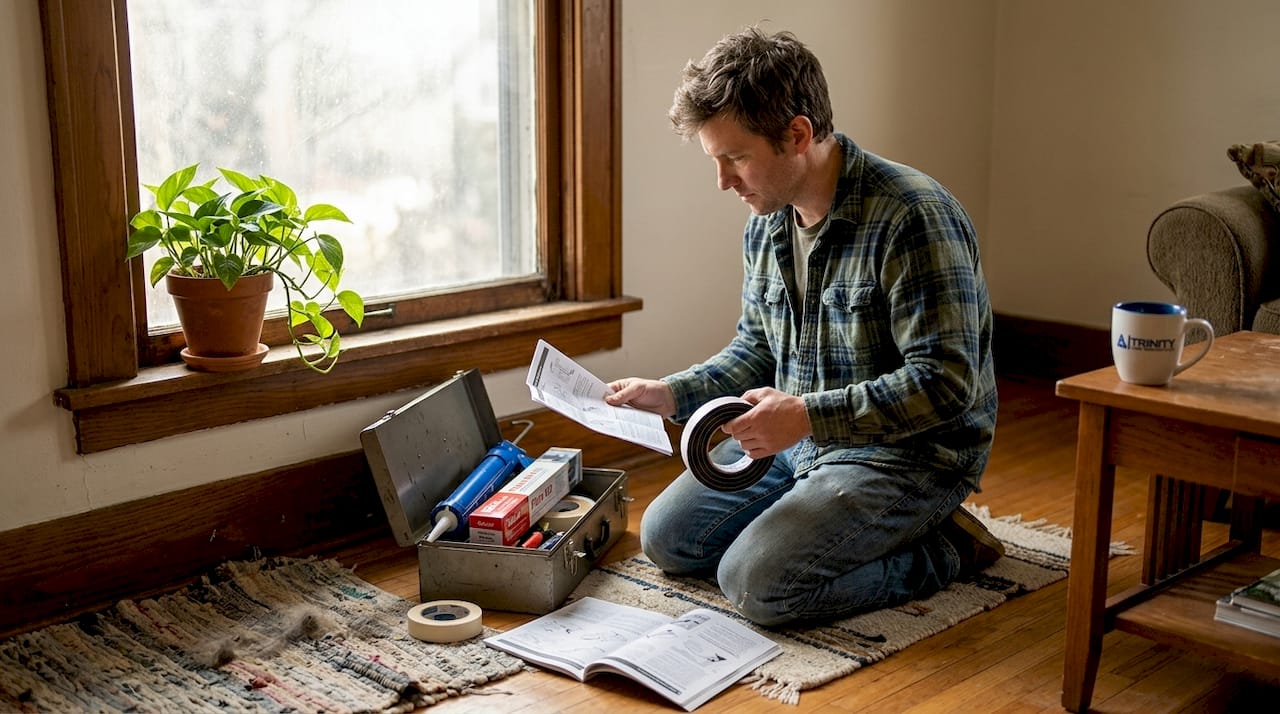
Single-pane windows are one of the biggest energy drains in Gulf Coast Alabama homes. They let in summer heat, allow winter drafts, and create the condensation that leads to mold on your sills and walls. If your energy bills feel unreasonably high or you notice a chill near your windows even with the AC running, your single-pane glass is likely the culprit. The good news is that proven solutions exist at every budget level, from a $10 weatherstripping roll to a long-lasting interior storm panel. This guide walks you through every option step by step so you can take action today.
Key Takeaways
Point | Details |
Start with air sealing | Weatherstripping and caulking are essential first steps before adding window insulation. |
Upgrade to advanced panels | Interior storm panels or secondary glazing triple window insulation and often have the best ROI over time. |
Consider local climate | Tailor your insulation method to Gulf Coast humidity to avoid condensation and mold. |
Layer for energy savings | Combine basic and advanced solutions to maximize comfort and lower utility costs year-round. |
What you need to insulate single-pane windows
Now that you know what causes those uncomfortable drafts and energy spikes, gather the right tools for an efficient insulation upgrade. Before you spend a single dollar, it helps to understand which methods are available and what each one requires.
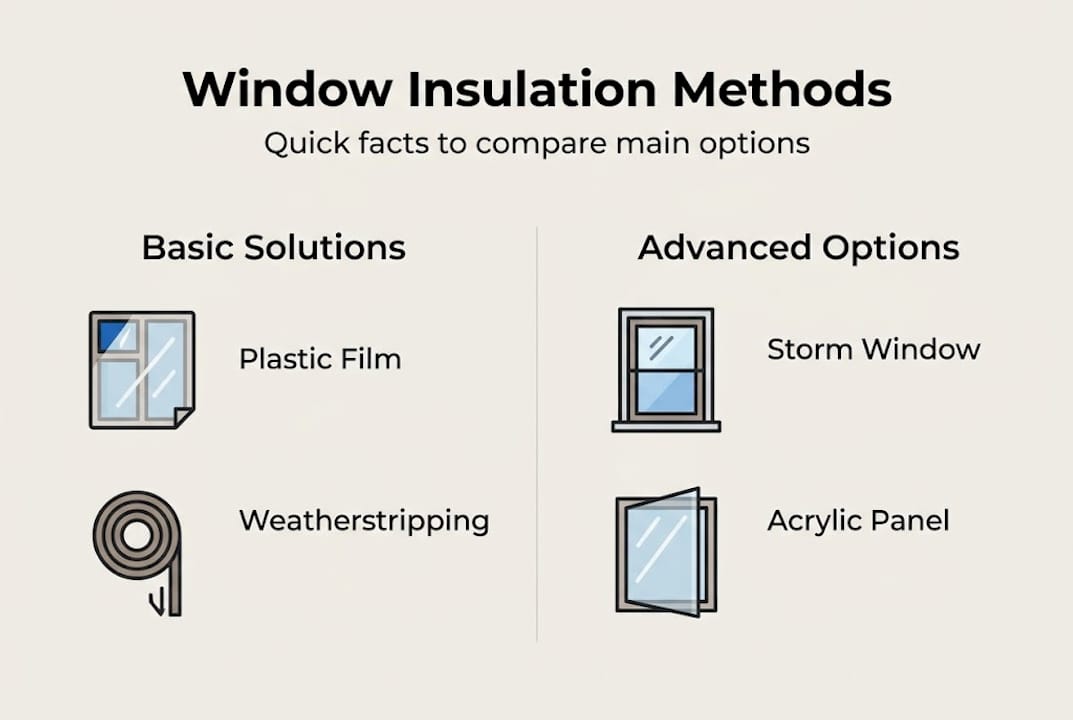
The five main approaches are: weatherstripping, caulking, plastic shrink film kits, thermal curtains or cellular shades, and secondary glazing or interior storm panels. Each one targets a slightly different problem, and the best results come from combining two or more of them.
Method | Materials needed | Estimated cost | Difficulty |
Weatherstripping | Foam or V-strip tape, scissors | $5 to $15 per window | Easy |
Caulking | Silicone or latex caulk, caulk gun | $8 to $20 per window | Easy |
Plastic shrink film kit | Film kit, double-sided tape, hair dryer | $10 to $25 per window | Easy |
Thermal curtains or cellular shades | Curtain rod, curtains or shades | $25 to $100 per window | Easy |
Secondary glazing or interior storm panel | Magnetic acrylic panel or storm insert | $75 to $300 per window | Moderate |
Plastic window film kits are a strong starting point because they reduce heat loss by 30-50%, saving you 10 to 25% on heating costs. That is a meaningful return for a $15 investment.
Before buying anything, ask yourself these quick questions:
Budget: Are you looking for a $20 seasonal fix or a $200 multi-year upgrade?
Permanence: Do you rent, or do you own and want a lasting solution?
Visibility: Does the window face a main living area where aesthetics matter?
DIY skill: Are you comfortable using a caulk gun and measuring tape?
Pro Tip: Before purchasing materials, run your hand slowly around the window frame on a breezy day. Feel for cold air movement, especially at the corners and along the bottom sill. You can also learn about humidity control in Gulf Coast homes to understand how moisture interacts with your windows before you seal anything. For a detailed breakdown of how to seal drafty windows, that resource covers the basics well.
Step-by-step: Air sealing and basic insulation
Once you’ve assembled your supplies, it’s time to tackle air leaks and quick insulation upgrades. Air sealing is always the first step because no film or curtain can compensate for a gap that is actively pulling conditioned air out of your home.
Inspect for leaks. On a windy day, hold a lit incense stick near the window frame and watch the smoke. If it wavers or gets pulled toward the glass, you have an air leak at that spot. Mark each problem area with a small piece of painter’s tape.
Apply weatherstripping. Clean the window frame with a dry cloth. Cut foam or V-strip tape to length and press it firmly into the channel where the sash meets the frame. This seals the moving parts of the window.
Caulk the stationary gaps. Run a thin bead of silicone caulk along the joint between the window frame and the wall. Smooth it with a wet finger. Weatherstripping and caulking are foundational steps before adding films or panels, and skipping them wastes the benefit of every other upgrade.
Install plastic shrink film. Apply the double-sided tape from the kit around the entire window frame. Press the film onto the tape, leaving it slightly loose. Use a hair dryer on medium heat to shrink the film until it is taut and wrinkle-free. These film kits trap a layer of air, reducing heat loss by 30 to 50% and cutting drafts noticeably.
Check your work. Repeat the incense test. The smoke should now rise straight up near every treated window.
Safety note: When applying caulk indoors, open a nearby door or window for ventilation. Solvent-based caulks release fumes that can irritate your eyes and lungs. Water-based latex caulk is a safer choice for interior use and cleans up with water.
Common mistakes to avoid:
Stretching the film too tight before using the hair dryer, which causes it to tear at the corners
Missing the bottom corners of the frame where the most air movement typically occurs
Applying weatherstripping over a dirty or damp surface, which prevents it from sticking
Pro Tip: Pair your air sealing work with Coastal HVAC maintenance tips to make sure your system is not working overtime to compensate for the leaks you just fixed. For more detail on draught proofing windows, that guide covers additional techniques worth reviewing.
Adding secondary glazing and advanced solutions
Basic air sealing helps, but for lasting savings and comfort, consider advanced solutions. Secondary glazing means adding a second layer of glazing on the interior side of your existing window, creating an insulating air gap without replacing the original glass.
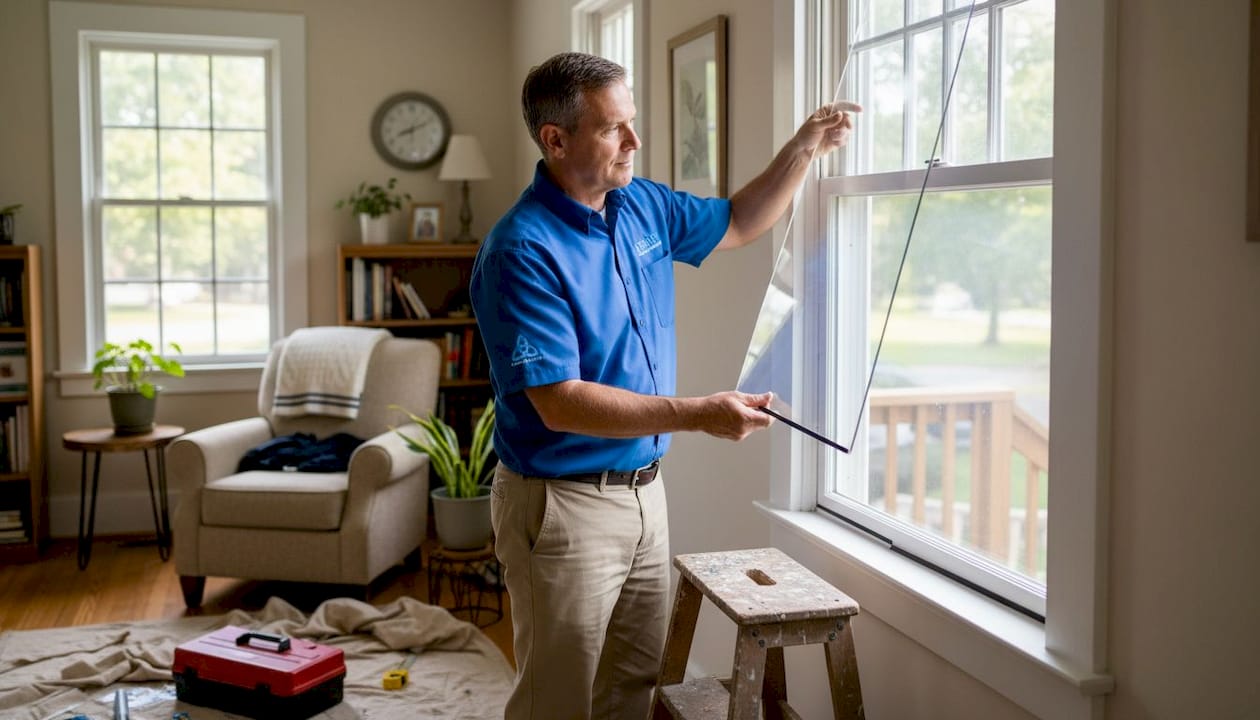
The two most common options are magnetic acrylic panels and interior storm windows. Magnetic panels attach to a thin metal frame you install around the window opening. Interior storm windows are rigid inserts that press-fit or clip into the frame. Both are removable, making them ideal for historic homes or rental properties where permanent changes are restricted.
Solution | R-value | Typical cost | Reusable | Visual clarity |
Plastic shrink film | R-1.5 to R-2 | $10 to $25 | No (seasonal) | Moderate |
Magnetic acrylic panel | R-2 to R-3 | $75 to $150 | Yes (10+ years) | High |
Interior storm window | R-2.5 to R-3+ | $100 to $300 | Yes (10+ years) | High |
Original single-pane glass | R-1 | N/A | N/A | N/A |
Interior storm windows with a 20 to 25mm air gap boost single-pane R-value from R-1 to R-3, matching double-pane performance. That is a significant jump in thermal resistance for a fraction of the cost of full window replacement.
To install a DIY magnetic acrylic panel:
Measure the window opening carefully, adding 1/4 inch on each side for the magnetic channel.
Order or cut the acrylic panel to size.
Attach the self-adhesive magnetic tape to the window frame.
Press the panel into place and confirm there are no visible gaps around the edges.
Remove and store the panel each spring if you want to allow natural ventilation during mild weather.
If you prefer professional installation, ask the contractor to verify proper ventilation clearance so moisture does not get trapped between the panel and the original glass. Pairing secondary glazing with energy-saving glass tinting can further reduce solar heat gain during Alabama summers. For a deeper look at the benefits of insulated glass, that resource explains the science behind air gap performance.
Special Gulf Coast considerations: Humidity, condensation, and mold prevention
Advanced insulation delivers savings, but Gulf Coast humidity demands extra care. Alabama’s coastal climate brings high relative humidity year-round, and that moisture creates specific risks when you start sealing windows more tightly.
Single-pane windows promote mold because the glass surface stays cold relative to the warm, humid interior air. When warm air touches that cold surface, moisture condenses and collects on the sill. Honeycomb shades, Low-E films, and sealing drafts all reduce condensation by raising the temperature of the interior glass surface.
Insulation methods best suited for humid Gulf Coast climates:
Removable interior panels: Allow you to air out the window cavity during dry stretches to prevent moisture buildup.
Cellular or honeycomb shades: Trap air in individual cells without creating a sealed pocket where condensation can collect.
Proper air gap: When installing secondary glazing, maintain at least a 20mm gap between the panel and the original glass to allow air circulation.
Low-E window film: Reflects radiant heat while slightly raising the glass surface temperature, reducing condensation risk.
Ventilation and dehumidification are equally important. Running a dehumidifier in rooms with single-pane windows keeps indoor relative humidity below 50%, which is the threshold where mold growth slows significantly. You can also review strategies for managing home humidity and protecting HVAC in humid climates to build a complete moisture management plan.
Signs of condensation problems include water droplets on the glass each morning, soft or discolored wood on the sill, or a musty smell near the window. If you notice any of these, check your ventilation for coastal homes before adding more insulation layers.
Pro Tip: Use seasonal solutions like plastic film in winter when heating costs spike, and switch to cellular shades in summer. This rotation keeps moisture from getting trapped and gives you the right protection for each season.
Why quick fixes aren’t enough: Our take on window insulation
Here is something most articles won’t tell you: the cheapest fix applied correctly beats an expensive fix applied wrong, every single time. We see homeowners in Gulf Coast Alabama spend $200 on secondary glazing panels and then trap moisture behind them because they skipped the ventilation step. That creates a mold problem that costs far more to fix than the energy savings ever delivered.
The honest approach is to start with low-cost solutions for quick wins, then layer upgrades based on your actual results. Caulk and weatherstripping first. Film kits next. Then evaluate whether secondary glazing makes financial sense for your specific windows and rooms.
For Gulf Coast homeowners, balancing insulation with ventilation is not optional. It is the difference between a comfortable, healthy home and a mold remediation bill. Secondary glazing lasts 10 or more years and delivers better comfort than reapplying film every season, but only if moisture is managed alongside it. We always recommend pairing any window upgrade with a review of your humidity control strategies. Insulation is not one-size-fits-all. Plan for your climate first, then choose your materials.
Get expert help for safer, healthier, more efficient windows
Ready to avoid drafts, mold, and high bills for good? Here’s where local experts can help. Sometimes insulation upgrades reveal bigger issues hiding behind your walls or inside your window frames. Hidden moisture, failed seals, and early mold growth are not always visible to the naked eye.

Trinity Home Inspections serves Baldwin, Mobile, and surrounding Gulf Coast Alabama counties with InterNACHI-certified inspections, free thermal imaging, and same-day reports. If you suspect moisture damage or want a clear picture before investing in window upgrades, our mold inspections and home inspection services give you the facts you need. We also offer a property permit and deed search if you want to verify prior work on your windows before committing to upgrades.
Frequently asked questions
What is the cheapest way to insulate single-pane windows?
Plastic window insulation kits and weatherstripping are the most affordable options, and they are easy to install yourself. Plastic kits reduce heat loss by up to 50% and typically cost less than $25 per window.
How can I prevent condensation and mold on single-pane windows in a humid climate?
Seal air leaks first, then add insulating layers and run a dehumidifier to keep indoor humidity below 50%. Sealing drafts and adding layers help reduce condensation and mold risk in humid climates like Gulf Coast Alabama.
Are interior storm windows or secondary glazing worth the investment?
Yes, especially for rooms you use daily. Interior storm windows boost R-value to R-3 and can last 10 or more years, making them a smart long-term value compared to replacing film every season.
Can insulating my single-pane windows really lower my energy bills?
Absolutely. Plastic kits and advanced panels can save 10 to 25% on heating and cooling costs, with well-installed panels reaching even higher savings depending on your home’s overall air sealing.
How often do I need to replace window film or panels?
Plastic shrink film kits are a seasonal product and should be replaced each year. Secondary panels are reusable for 10 or more years when stored and maintained properly between seasons.
Recommended

